


The Strait of Hormuz has been effectively closed for over two months due to the Iran war. The damage is spreading well beyond oil markets. Jet fuel prices are up 80%. Spirit Airlines collapsed under the strain — the first U.S. airline to fail since the Iran war began. QatarEnergy declared force majeure on LNG exports. That removes 20% of global LNG supply overnight. The Strait normally handles one-third of the global fertilizer trade. Fertilizer prices are up 31%. Global oil reserves have dropped from 105 days of supply in February to 101 days. JPMorgan warns OECD inventories could hit “operational stress” levels by August 2026.
The Strait of Hormuz Crisis: Energy Markets Set to Crash?
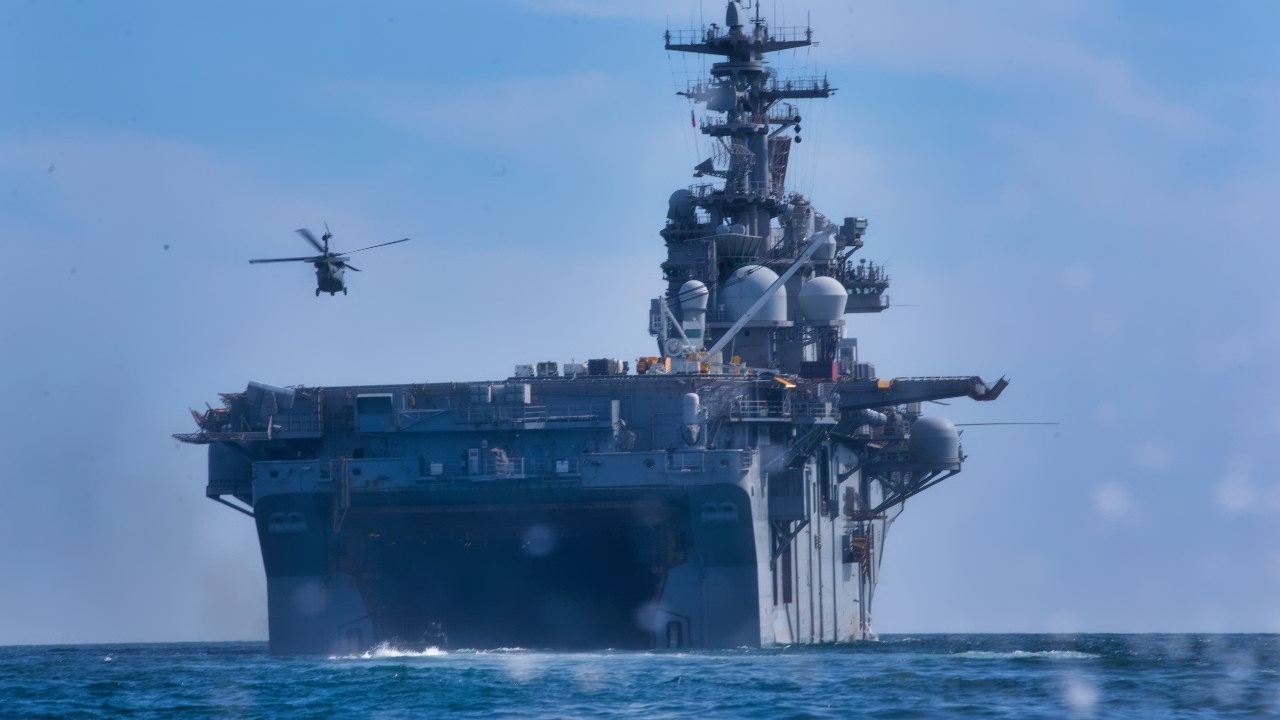
U.S. Marines with Bravo Company, 2d Assault Amphibious Battalion, 2d Marine Division approach the USS Wasp (LHD 1) in assault amphibious vehicles off of Onslow Beach during a three-day ship-to-shore exercise on Camp Lejeune, N.C., June 27, 2020. During the exercise, the Marines conducted amphibious maneuvers and dynamic ship-to-shore operations with the USS Wasp (LHD 1). (U.S. Marine Corps photo by Lance Cpl. Jacqueline Parsons)
The Strait of Hormuz’s closure is no longer just a temporary crisis but a systemic global threat. If shipping traffic does not resume within weeks, the current recession could transition into a proper depression.
Hormuz is so influential because it is the world’s energy chokepoint, handling oil, LNG, fertilizer, and petrochemicals to an extent that partially dictates the global economy. If a resolution can’t be reached soon, and the Strait is reopened, the situation will escalate from a regional war issue to a global supply, energy, and financial crisis.
The Reserves Clock
Global inventories are collapsing due to the closure. Oil reserves are at their lowest levels in eight years. The stock is steadily declining, from 105 days’ worth of supplies in February to 101 days now; if the Strait remains closed through May, the stock will fall to 98 days’ worth.
Every day the Strait remains closed, the world loses 10–13 million barrels of oil. And even if the Strait reopened today, the degraded infrastructure would need to be rebuilt, meaning much of the supply damage is not immediately reversible. Analysts estimate that one billion barrels are already effectively lost for 2026.
JPMorgan is warning that OECD inventories could hit “operational stress” levels by August 2026. Clearly, the world is operating on a rapidly shrinking energy cushion that dwindles further with each day the Strait remains closed.
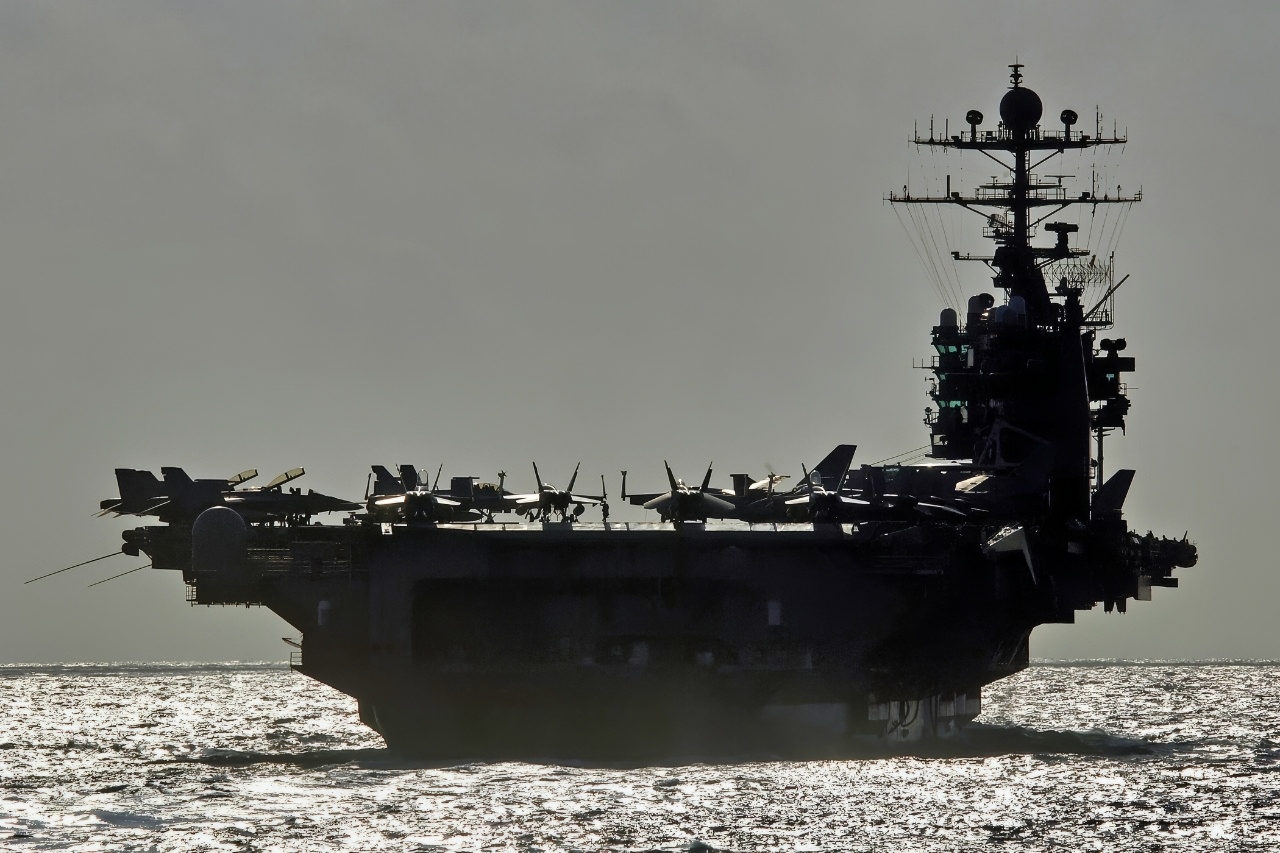
The aircraft carrier USS George Washington (CVN 73) prepares to conduct a refueling at sea with the guided missile cruiser USS Monterey (CG 61) as the two ships operate in the Caribbean Sea on April 20, 2006. The George Washington Carrier Strike group is participating in Partnership of the Americas, a maritime training and readiness deployment of U.S. Naval Forces along with navies of Caribbean and Latin American countries for enhanced maritime security.
(DoD photo by Petty Officer 3rd Class Michael D. Blackwell II, U.S. Navy. (Released))
Hard to Fix
Negotiations over Epic Fury and the Strait have stalled. The Trump administration recently rejected Iran’s most recent proposal, calling the five-point terms “totally unacceptable.” Iran demanded sovereignty over the Strait, war reparations, and an end to the naval blockade.
The US wants a temporary ceasefire first—and for the Strait to be reopened and kept open for 30 days —before issuing sanctions relief. The demands for conflict resolution have created an impasse. Iran sees adherence to the US terms as outright surrender; the US sees Iranian demands as unreasonable. Both sides are desperate to save face and hesitant to accommodate the other side.
The Ghost Reopening
Iran has intermittently claimed that the Strait is “open.” But in reality, insurers are still refusing coverage; war-risk insurance has largely been canceled, leaving tankers unwilling to transit the Strait unless heavily escorted by naval vessels.
So even when Iran “opens” the Strait legally, it does not directly translate into an operational reopening. Again, reversing the damage of the war and the closures—in this case, reviving shipping confidence—may not immediately revert to normal.
Beyond Oil
The Strait and the region are correctly understood to be vital for global oil stock. But the closure affects more than just oil. LNG has taken a hit; QatarEnergy declared force majeure, removing 20% of global LNG supply overnight.
The Strait also handled one-third of the global fertilizer trade; fertilizer prices are already up 31 percent. Of deepest concern is the effect closures will have on food prices. Higher fertilizer prices will reduce crop yields, leading to higher prices for staples like wheat, corn, and beef.
The UN is warning that food will become unaffordable for millions in Asia and Africa, and more expensive for everyone everywhere. The closure is also having industrial ramifications, as the Strait is crucial for naphtha and aluminum, which will result in higher costs for plastics, batteries, electronics, and shipping. Basically, the crisis is rippling through the entire global supply chain—not just fuel markets.
Consumer Impact
You’ve probably already felt the financial sting of the closures. Fuel and travel costs are way up. Jet fuel, for example, is up 80%, causing a spike in ticket prices, leading to international cancellations, and proving the final straw in Spirit Airlines’ collapse. Food inflation is coming, with a lag effect of 60–90 days.
The expected peak should be in early 2027, but expect a nearly ten percent increase in food prices by the end of 2026.
And because shipping reroutes that avoid the Strait are longer and more expensive, costs will be passed on to consumers; expect higher prices for appliances, imported goods, and EV batteries.
Inflation could spike, delaying interest-rate cuts, meaning that, indirectly, Operation Epic Fury will keep mortgages and credit expensive. Consumers are being hit in waves: first, fuel; then, food; and finally, debt pressure.
Off Ramps for Strait of Hormuz Crisis
The window to avert disaster is closing rapidly. The US could devise a naval escort system to protect commercial tankers. The Trump-China summit that begins this week is viewed as a potential make-or-break moment for reaching a durable solution.
Alternative pipelines could be developed, like a Saudi East-West pipeline. But this would only offset about half of the lost Hormuz volume.
Whatever the solution, it must be implemented quickly; a potential “cliff” looms in Q3 2026 if the deadlock continues. “Demand destruction” is predicted, where prices become too high to sustain consumption. Iran has successfully demonstrated the ability to threaten the global economy through chokepoint control. The risk is no longer theoretical.
About the Author: Harrison Kass
Harrison Kass is a writer and attorney focused on national security, technology, and political culture. His work has appeared in City Journal, The Hill, Quillette, The Spectator, and The Cipher Brief. He holds a JD from the University of Oregon and a master’s in Global & Joint Program Studies from NYU. More at harrisonkass.com.


