

U.S. President Donald Trump heads to Beijing this week for a May 14-15 summit with Chinese President Xi Jinping. The IEA director recently called the Iran war “the largest supply disruption in the history of the global oil market.” U.S. gas prices are up more than $1 per gallon since February. Brent crude is trading around $107 per barrel. The World Bank projects energy prices will rise 24% this year. Trump needs an Iran win at the summit. China buys roughly 90% of Iranian crude oil exports. Beijing’s economic leverage over Tehran is real. Xi will likely offer Trump an Iran energy off-ramp at the summit. In return, Xi will likely seek softened Taiwan language in the joint communiqué. Taipei, Tokyo, and Seoul will analyze the communiqué for omissions. Japan is rearming at a pace not seen since the postwar constitutional settlement.
The Trump-Xi Summit: What Will China Charge for an Iran Deal?

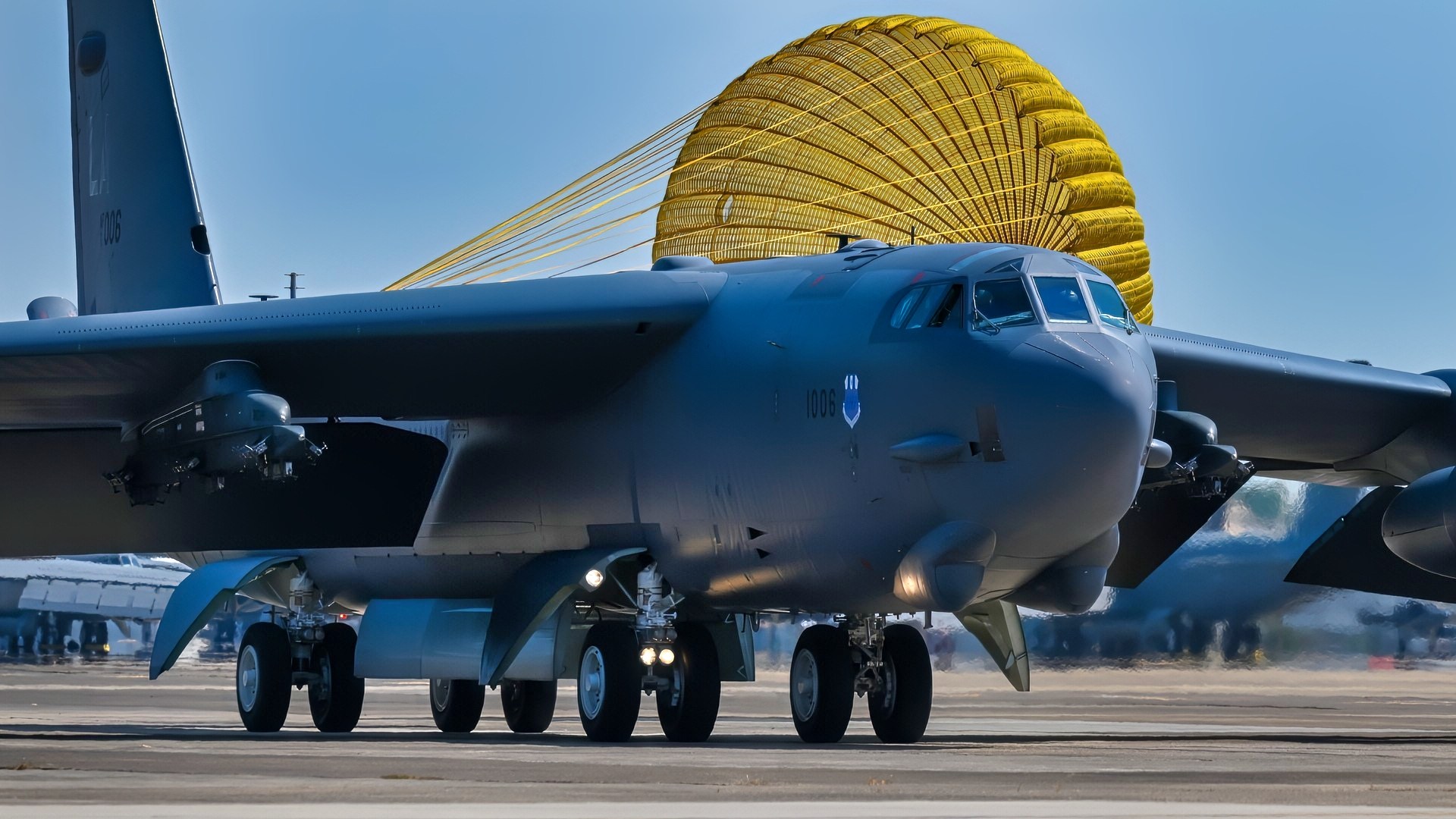
Iran’s missile capabilities. Image Credit: Creative Commons.
Watch what Xi puts on the table in Beijing this week.
What he asks for in return won’t be the same thing—and the gap between the two is where U.S. strategy is most exposed going into the May 14-15 summit.
The meeting arrives at a peculiar moment of American vulnerability.
The Iran war has produced a global energy crisis severe enough that the IEA’s director called it “the largest supply disruption in the history of the global oil market.” Gas prices in the United States have risen more than a dollar a gallon since February. Brent crude was still trading around $107 a barrel this week, and the World Bank is projecting that energy prices will rise by 24 percent this year.
That is the context in which Trump boards a plane to Beijing. He needs something he can call a win, and Xi has spent nine months watching him under exactly this kind of pressure. He knows what to offer.
The offer will be in Iran.
What Xi Is Selling — And What It Actually Costs
Strip away the trade agenda and the rare earth negotiations, and the single most valuable thing Xi can put on the table is relief from the energy shock. The Hormuz blockade — still disrupting global oil flows more than two months after the ceasefire framework stalled — is the most politically costly consequence of the war for Trump domestically. No tariff schedule fixes pump prices.
No bilateral communiqué corrects the fertilizer shortage rippling into next year’s food costs. What could actually move those numbers is Iranian willingness to reopen the Strait, and Chinese diplomatic pressure on Tehran is one of the few levers with any realistic prospect of accelerating that.
Beijing has spent weeks positioning itself for exactly this moment. The April assurances that China would not transfer weapons to the Iranian military cost Beijing almost nothing operationally — Tehran is not waiting on Chinese air defense systems — but they landed precisely where intended: as a signal of Chinese restraint and potential usefulness to Washington.
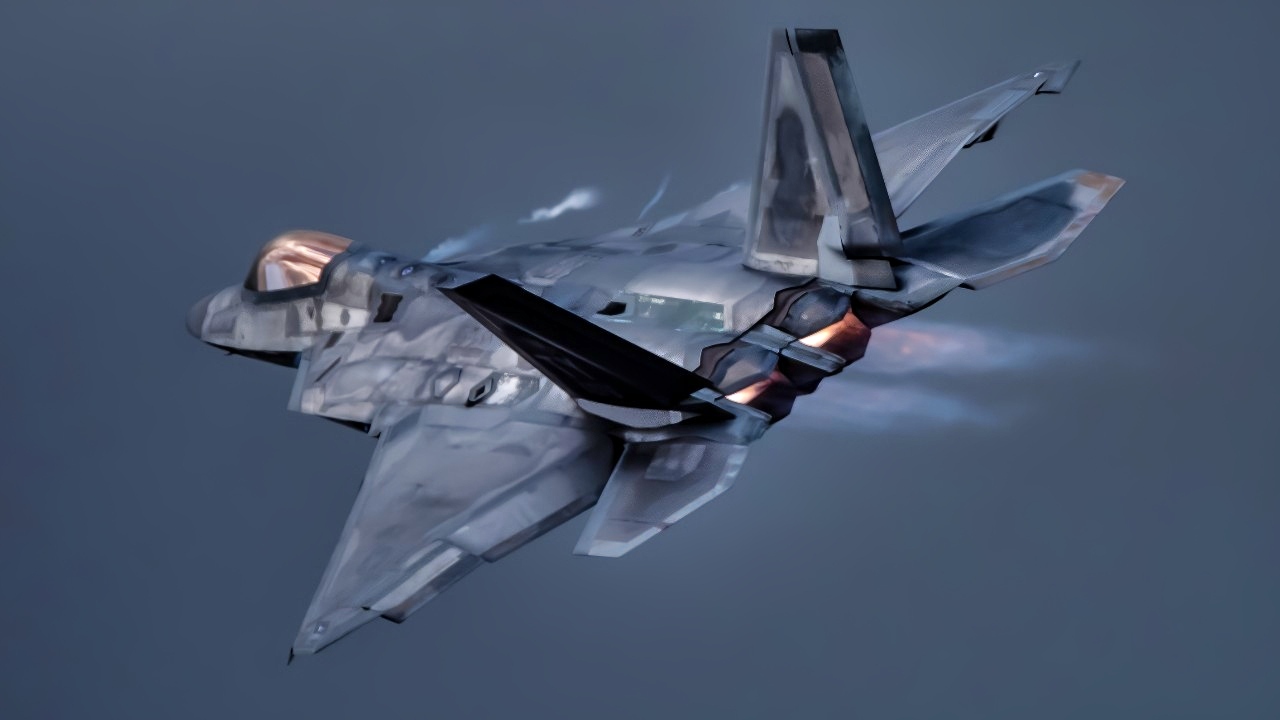
U.S. Air Force Maj. Josh Gunderson, F-22 Raptor Demonstration Team commander and pilot, flies a practice demo at Joint Base Langley-Eustis, Va., Dec. 6, 2019. Representing Air Combat Command, the F-22 Demo Team travels to air shows all across the world showcase the performance and capabilities of the world’s premier 5th-generation fighter. (U.S. Air Force photo by 2nd Lt. Sam Eckholm)
Xi arrives in Beijing this week with clean hands and a plausible argument that he can do what the U.S. military campaign alone has not: give Iran a structured off-ramp that doesn’t require complete capitulation.
China’s leverage over Tehran is real, but not unlimited. Beijing’s economic lifeline to Iran — it purchases roughly ninety percent of Iranian crude exports — gives it genuine influence over Tehran’s incentive structure, not command over its decisions.
The Islamic Republic has its own political constraints and its own reading of acceptable terms. Any framework Xi commits to this week will be ambiguous enough that non-performance will have no accountability attached.
He is not offering a concrete deliverable. He is offering the credible appearance of one, and Trump is in a position where the appearance may be politically sufficient. That is the transaction Xi has been building toward since the Hormuz crisis made this summit a necessity for Washington rather than a diplomatic choice.
The Price Is Smaller Than You’d Expect
Xi does not need anything dramatic out of this room. He does not need Trump to repudiate the Taiwan Relations Act or issue an explicit statement of U.S. disengagement from the Indo-Pacific.
What he needs is considerably smaller — a clause that disappears, a formulation that runs two degrees softer than Busan, a Taiwan section that handles the subject in one paragraph, where October’s statement used three.
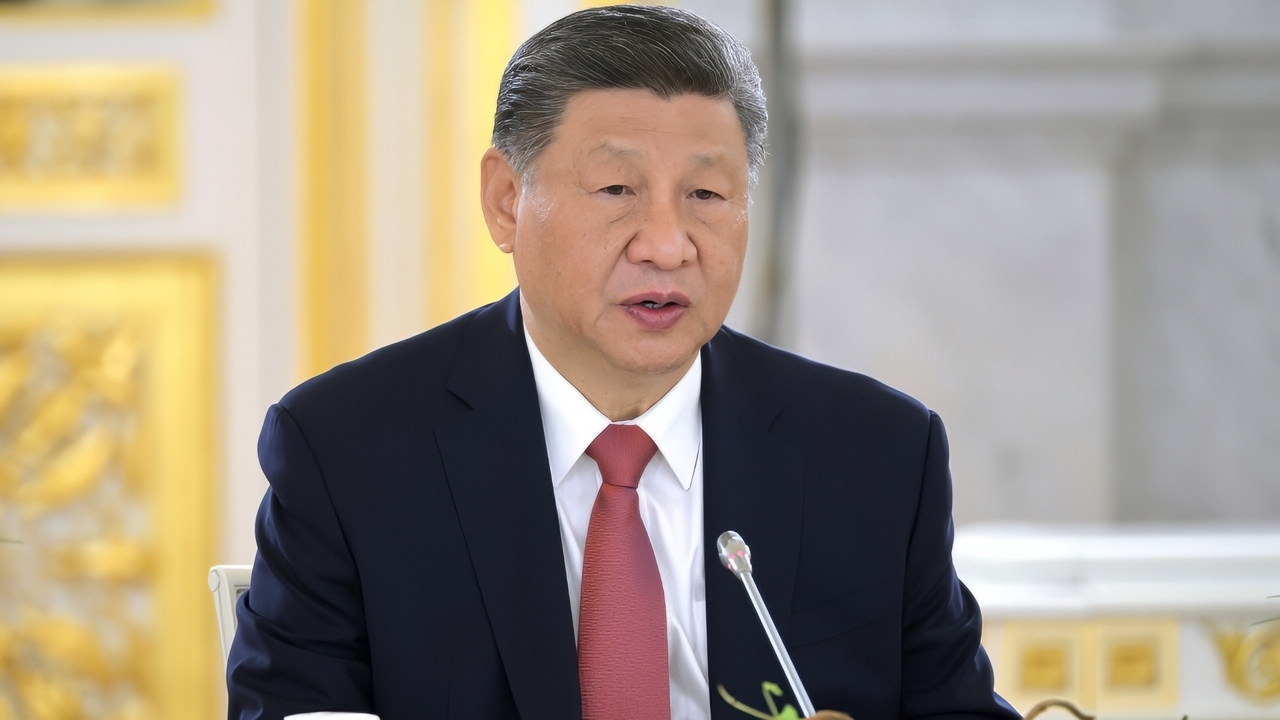
China’s Xi Jinping. Image Credit: Creative Commons.
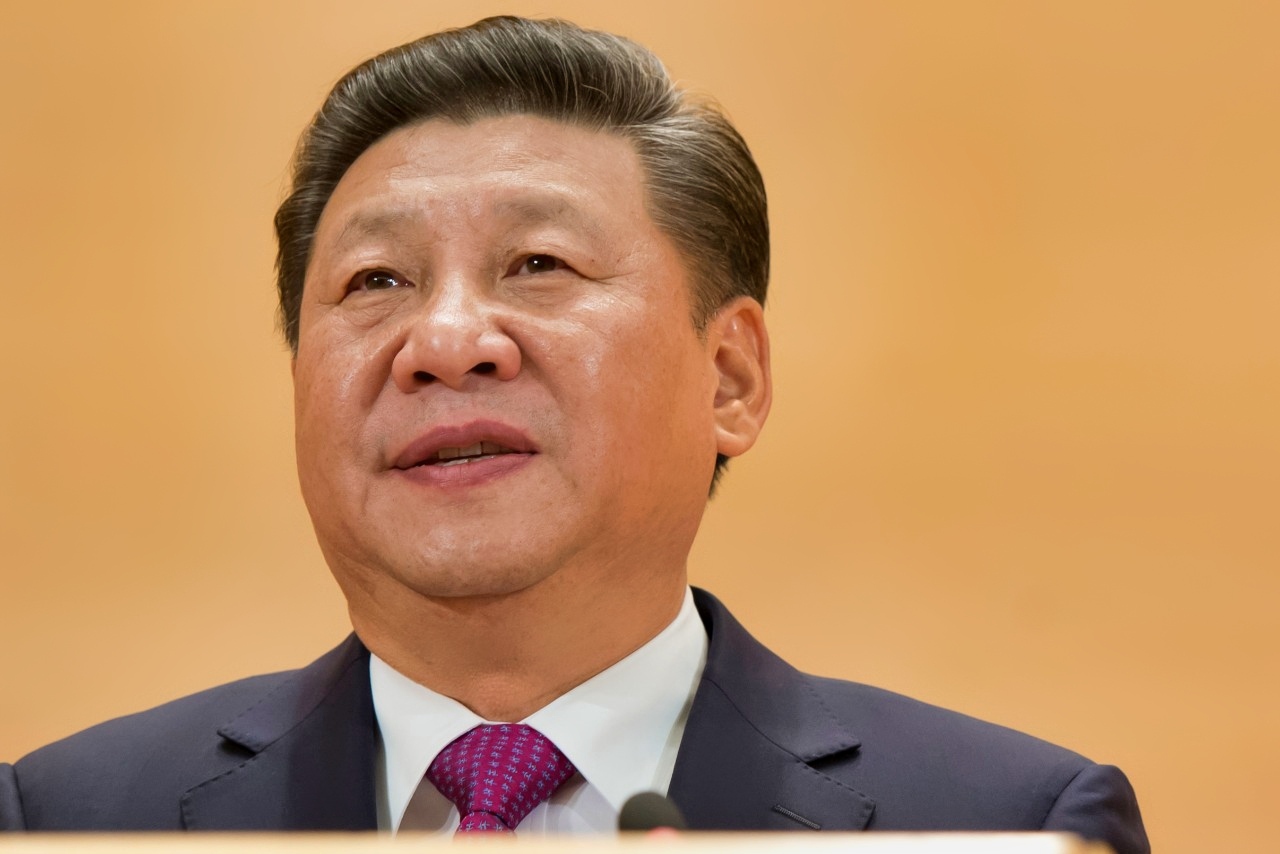
Xi Jinping President of the People’s Republic of China speak’s at a United Nations Office at Geneva. 18 january 2017. UN Photo / Jean-Marc Ferré
This matters because Beijing reads diplomatic language differently.
If “one China policy consistent with U.S. law” becomes simply “one China policy,” Beijing treats that as a movement. A dropped reaffirmation of U.S. security commitments to Taiwan registers the same way. So does a Taiwan section that shrinks into boilerplate while the Iran and trade passages run for pages. Xi’s strategic vocabulary operates on exactly these kinds of omissions — on what changed between one communiqué and the last, and what the gap implies about American resolve under pressure.
Trump may not be tracking any of this. He came for the energy narrative.
The communiqué language is for analysts and alliance managers, and there is a press conference to run. That asymmetry of attention is not incidental to Xi’s calculation — it is the calculation. When one man in that room is thinking about Thursday’s news cycle and the other is thinking about 2035, the outcome is not hard to predict.
The Audience That Actually Matters
The summit’s real audience is not in the room.
Taipei, Tokyo, and Seoul have analytical agencies whose function is to parse the delta between successive communiqués — what was said, what was not, and how both compare to the language that came before.
They will have the Taiwan section read and assessed within minutes of Thursday’s release. A single softened clause is not a diplomatic formality. It is a data point feeding directly into questions those capitals are already asking about the durability of U.S. extended deterrence and the reliability of Washington’s commitments under the kind of pressure the Iran war has applied.
Japan is rearming at a pace not seen since the postwar constitutional settlement became substantive policy. Taiwan is monitoring every statement from Washington with the intensity of a government that knows its survival depends on accurately reading American intent. Seoul is recalibrating quietly.
All three will draw conclusions from Thursday’s omissions, and those conclusions will compound into decisions — about hedging, about procurement, about diplomatic positioning — that reshape the strategic environment Washington inherits well beyond the Iran war.
Trump will leave Beijing with something. Xi will make sure of it — you don’t invite a counterpart to your capital without giving him something to carry home. The question is what sits on the other side of that ledger, and whether anyone in Washington examined it before the communiqué went to print.
When the joint statement drops Thursday, read the Taiwan section first. Count the clauses. Compare them to Busan. What isn’t there will tell you more than everything that is.
About the Author: Dr. Andrew Latham
Andrew Latham is a professor of international relations and political theory at Macalester College in Saint Paul, MN. You can follow him on X: @aakatham.


