


Iran has functionally closed the Strait of Hormuz during Operation Epic Fury, halting roughly 20% of the world’s oil supply and triggering an immediate energy price shock. But the Strait of Malacca carries $3.5 trillion in annual trade and one-third of global GDP — and 80% of China’s oil imports flow through it. If the U.S. or Indian Navy ever closed Malacca, the result wouldn’t be a price spike — it would be the gradual industrial strangulation of China.
The Strait of Hormuz Problem Is Bad: The Strait of Malacca Being Cut Off Would Be Far Worse

ATLANTIC OCEAN (June 14, 2011) The Nimitz-class aircraft carrier USS Dwight
D. Eisenhower (CVN 69) conducts rudder turns during sea trials. Dwight
D. Eisenhower completed a nine-month planned incremental availability at Norfolk Naval Ship Yard on June 10 and is scheduled to resume underway operations this summer. (U.S. Navy photo by Mass Communication Specialist 1st Class Christopher Stoltz/Released)
The Strait of Hormuz, long considered the world’s most critical chokepoint, is proving a central point of contention in Operation Epic Fury, which is now on hold due to a ceasefire.
Iran has functionally closed Hormuz, through which roughly twenty percent of the world’s oil flows, destabilizing energy markets and enforcing a degree of leverage over the Americans and the global community.
But the Strait of Hormuz is probably not the world’s most decisive chokepoint; rather, the Strait of Malacca is increasingly seen as more strategically decisive.
While Hormuz triggers immediate energy crises, Malacca controls the long-term flow of global trade and industrial power, making Malacca more decisive in a major conflict.
The Basic Comparison
The Strait of Hormuz functions as an energy checkpoint through which 20–21 million barrels of oil flow per day. The impact of a closure, as we are experiencing now, is an immediate price shock.
The Strait of Malacca, meanwhile, is a global trade artery through which 25–40 percent of global seaborne trade flows, including 23 million barrels of oil per day. So while Hormuz has the potential to create a price shock, Malacca can cause systemic disruption.
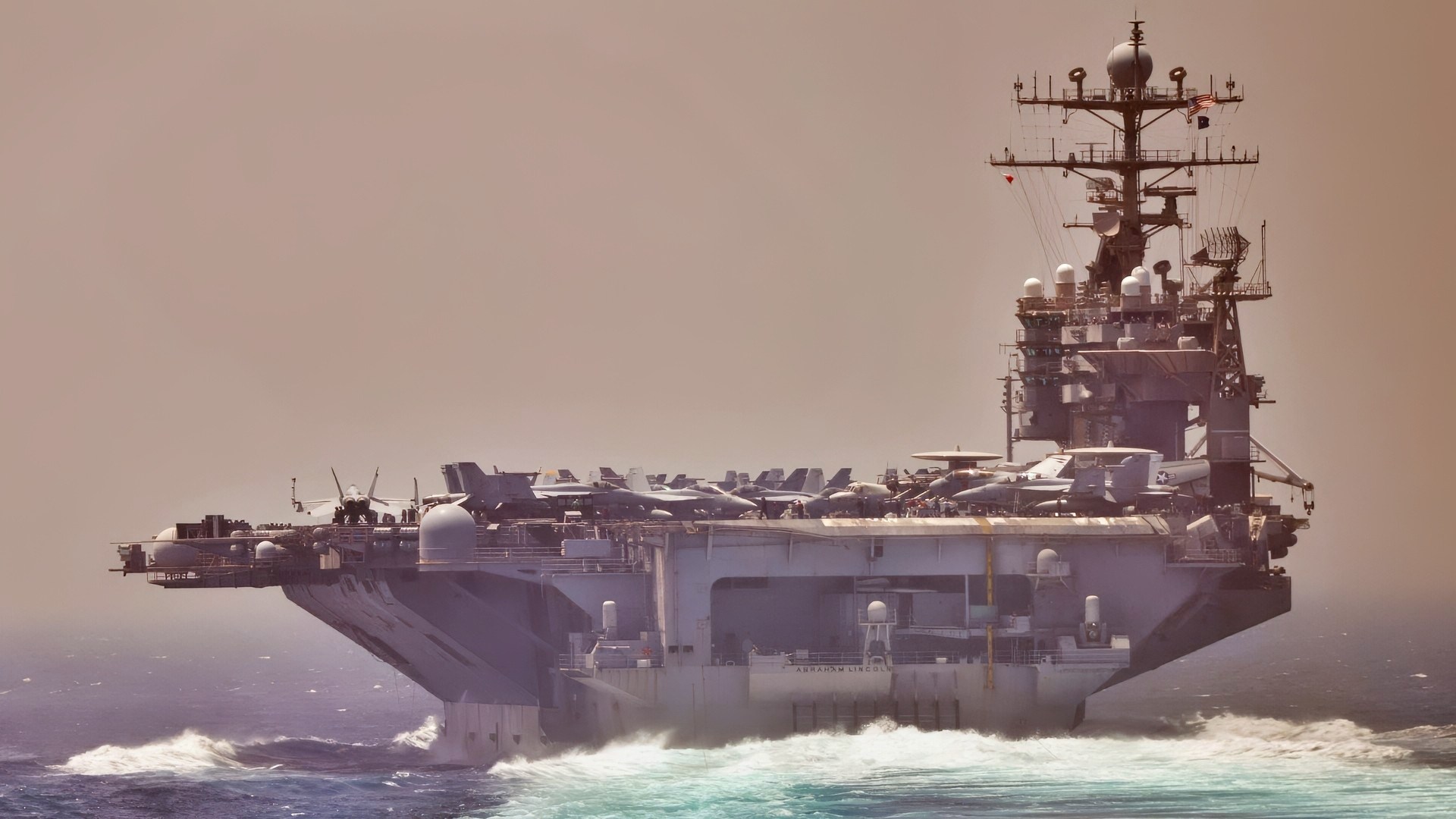
STRAIT OF HORMUZ (May 1, 2012) The aircraft carrier USS Abraham Lincoln (CVN 72), left, and the guided-missile cruiser USS Cape St. George (CG 71) transit the Strait of Hormuz. Abraham Lincoln and Cape St. George are deployed to the U.S. 5th Fleet area of responsibility conducting maritime security operations, theater security cooperation efforts and support missions as part of Operation Enduring Freedom. (U.S. Navy photo by Mass Communication Specialist 3rd Class Alex R. Forster/Released)
Geographic and Technical Constraints
Hormuz is 21 miles across, relatively wide, but tightly controlled, with designated shipping lanes only about two miles wide in each direction, separated by a narrow buffer zone.
The surrounding terrain, especially Iran’s mountainous coastline, provides ideal positions for missiles, surveillance, and other asymmetric means of control.
By contrast, the Strait of Malacca is narrower in key sections (1.5–2 miles wide), congested, and shallow, with heavy maritime traffic and limited maneuvering space.
Running between Malaysia, Singapore, and Indonesia, Malacca is both a logistical bottleneck and a complex, multi-jurisdictional operating environment for naval forces.
Malacca’s length (roughly 500 miles) also complicates control, as monitoring the entire corridor requires sustained naval and air presence across multiple sectors.
Unlike Hormuz, which is dominated by a single regional actor, Malacca sits at the intersection of several sovereign territories, making coordinated control or closure more complex and more geopolitically sensitive.
The Strait of Malacca Dilemma
The core vulnerability of Malacca is that 80 percent of China’s oil imports flow through the strait. The implication is that, in a blockade scenario, China’s economy would slow and its military logistics would degrade.
This leads to a pronounced strategic fear, coined as the “Malacca Dilemma.” The area falls outside of Chinese control; the US Navy and the Indian Navy both exert influence, meaning Malacca isn’t just a chokepoint—it’s China’s strategic Achilles’ heel.
Closing Hormuz spikes oil prices, leading to immediate global inflation.

The Ohio-class ballistic-missile submarine USS Maine (SSBN 741) begins a dive into the Strait of Juan de Fuca off the Washington Coast, March 18, 2025, during routine operations. Special units within the Coast Guard are tasked with the protection of U.S. Naval submarines while surfaced and transiting U.S. territorial waters to and from their patrol stations. (U.S. Coast Guard photo by Petty Officer 1st Class Steve Strohmaier)
But the impact is broadly distributed among the global community, hurting just about everyone. A closure of Malacca would cause more focused harm, specifically to China, which would bear the brunt of the closure.
Economic Strangulation
Closing Malacca would equate to economic strangulation for China.
The trade volume that flows through Malacca is staggering—$3.5 trillion annually and one-third of global GDP. Electronics, semiconductors, automotive parts, pharmaceuticals—they all flow through Malacca.
The effects of disruption wouldn’t be immediate but would cause a gradual industrial breakdown. Over weeks, supply shortages would manifest; over months, production would likely halt. Malacca is crucial to the global supply chain, generally, not just energy (like Hormuz).
Military Application of Each Strait
Hormuz is useful as a tactical lever for regional actors (such as Iran) to cause short-term disruption. Malacca is a strategic lever that great powers can use to influence long-term war outcomes.
Potential conflict scenarios include a naval blockade, enforced by the US and/or India, which would be uniquely controversial. In effect, Malacca is potentially where great power competition converges; Hormuz is not.
State of Affairs
In 2026, Hormuz is already disrupted, and the result has been an energy shock. Malacca is still open but is increasingly contested. But current events highlight the difference in importance between the two straits.
The closure of Hormuz leads to a crisis, while the closure of the Strait of Malacca is a potential decider in a much larger conflict. The strategic takeaway is that Hormuz can cause an immediate global panic; Malacca is a long-term strategic lever.
Both straits matter, but in different ways. Hormuz can shock the global economy; Malacca can stop it.
About the Author: Harrison Kass
Harrison Kass is a writer and attorney focused on national security, technology, and political culture. His work has appeared in City Journal, The Hill, Quillette, The Spectator, and The Cipher Brief. More at harrisonkass.com.


