


The Lockheed S-3 Viking was the only purpose-built, carrier-based, jet-powered submarine hunter the U.S. Navy ever flew. From 1974 to 2009, 188 of these distinctive twin-engine aircraft — nicknamed the “War Hoover” for the vacuum-cleaner whine of their turbofans — patrolled ahead of American carrier strike groups hunting Soviet nuclear submarines. The Viking found them. It also flew as a tanker, an electronic spy, a surface-attack jet, and even a presidential transport. The Navy retired it in 2009 just as Russian and Chinese submarine fleets began their modern resurgence — and the carrier-based area ASW capability the Viking represented has never been replaced.
The U.S. Navy Would Love to Have the S-3 Viking Back Right About Now
The Lockheed S-3 Viking was the U.S. Navy’s only purpose-built, carrier-based, jet-powered submarine hunter. Between 1974 and 2009, two hundred of these distinctive twin-engine aircraft — nicknamed the “War Hoover” because of the vacuum-cleaner whine of their high-bypass turbofans — flew off American aircraft carriers with one job above all others: find and kill Soviet nuclear submarines before those submarines could reach the carriers, the troop convoys reinforcing NATO, or the American homeland.
For three and a half decades, the Viking did that job. It also did a dozen other jobs along the way — tanker, electronic spy, surface-attack jet, presidential transport, mine hunter. When the Navy finally retired the type in 2009, it took four different aircraft to absorb the missions the Viking had been performing alone.
The Russian submarine threat is back. The carrier-based submarine hunter, the Viking, is gone. This is how the Navy built the aircraft, what it did across its operational life, and the consequences of the decision to retire it.
Why The Navy Needed The S-3
The Viking was conceived in the mid-1960s as a direct response to a specific shift in Soviet capabilities.
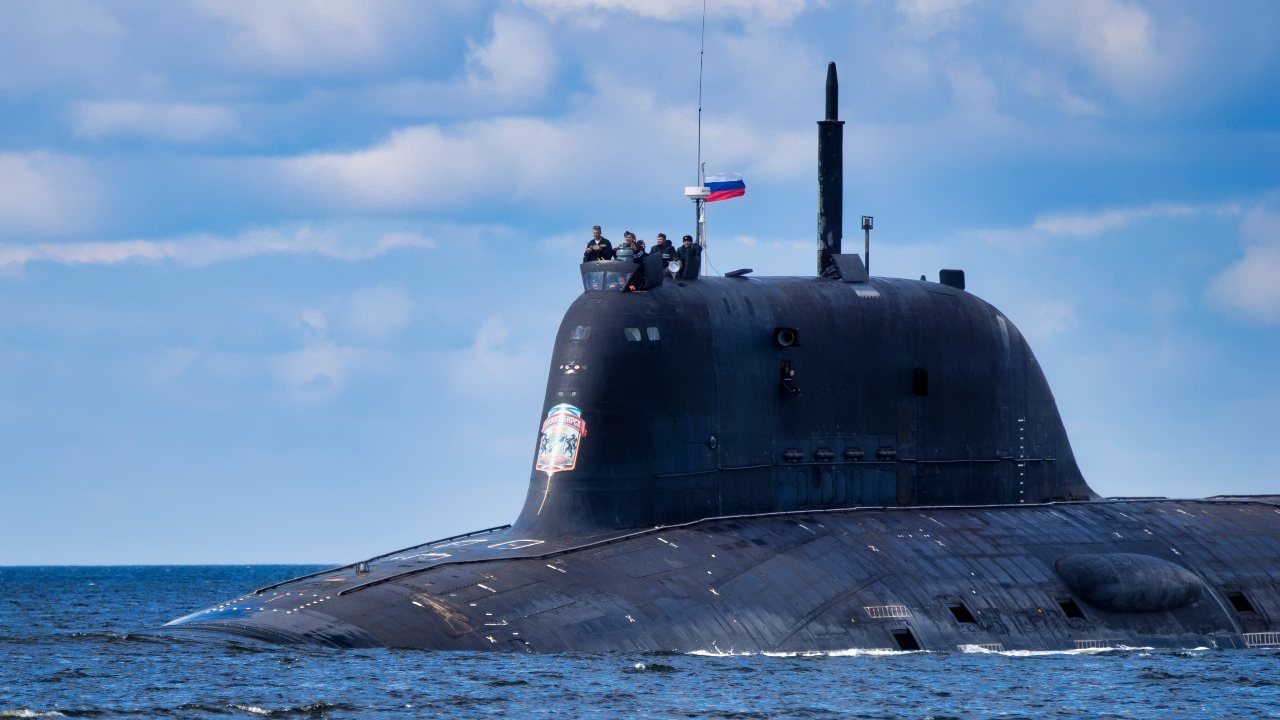
Yasen-Class Submarine Russian Navy. Image Credit: Creative Commons.

Akula-Class Submarine from Russian Navy. Image Credit: Creative Commons.
By the late 1950s, the Soviet Navy had begun fielding nuclear-powered submarines that could remain submerged for weeks at a time and approached speeds that no previous Soviet submarine had achieved. The first-generation November-class attack boats entered service in 1958. The Hotel-class ballistic-missile boats followed in 1959. By the mid-1960s, the Soviets were producing Yankee-class ballistic-missile submarines and Victor-class attack boats — quieter, faster, deeper-diving than anything the U.S. Navy had previously been required to hunt.
The carrier-based submarine hunter at the time was the Grumman S-2 Tracker — a piston-engine, propeller-driven aircraft introduced in 1954. The S-2 had been adequate against diesel-electric boats that had to surface or snorkel to recharge their batteries. Against Soviet nuclear submarines that could stay underwater indefinitely, the Tracker was too slow, too short-ranged, and too limited in sensor capability to do the job.
The strategic problem was straightforward. If a NATO-Warsaw Pact war broke out, the U.S. Navy’s most important mission was going to be combating the Soviet submarine fleet. Ballistic-missile submarines threatened American cities. Attack submarines threatened the convoys that would reinforce NATO ground forces in Europe and the carrier strike groups projecting force from the open ocean. Without a carrier-based aircraft that could hunt those boats at the operating ranges and tempos the threat demanded, the entire U.S. carrier fleet was exposed to an undersea attack it could not adequately defend against.
The Navy’s solution was the VSX program — Carrier-Based Anti-Submarine Aircraft Experimental — formally launched in late 1966, following roughly 2 years of internal deliberation. The requirement specified an aircraft with at least twice the speed, twice the range, and twice the ceiling of the Tracker, capable of operating from a standard American carrier deck.

Russian Titanium Submarine. Image Credit: Creative Commons.

Russian Kilo-Class Submarine. Image Credit: Creative Commons.
Testing And Development
Lockheed won the VSX competition on August 4, 1969. The company’s design beat proposals from a Grumman-led team, a General Dynamics-Convair team, and McDonnell Douglas. Lockheed received an initial order for eight YS-3A prototypes.

Grumman F9F-8 Cougar Original National Security Journal Photo. Taken on September 18. 2025.
The design partnership was the critical element. Lockheed had limited experience with carrier-based aircraft, so the company brought in Ling-Temco-Vought — the Texas-based aerospace firm that had built the A-7 Corsair II and F-8 Crusader — to handle the folding wings, the empennage, the engine nacelles, and the landing gear. The main landing gear was derived from the F-8 Crusader.
The nose gear came from the A-7 Corsair II. Sperry Univac Federal Systems was assigned the most consequential subsystem: the AN/AYK-10 digital general-purpose computer that would integrate sensor data from sonobuoys, radar, magnetic anomaly detection, and infrared search systems into actionable attack solutions.
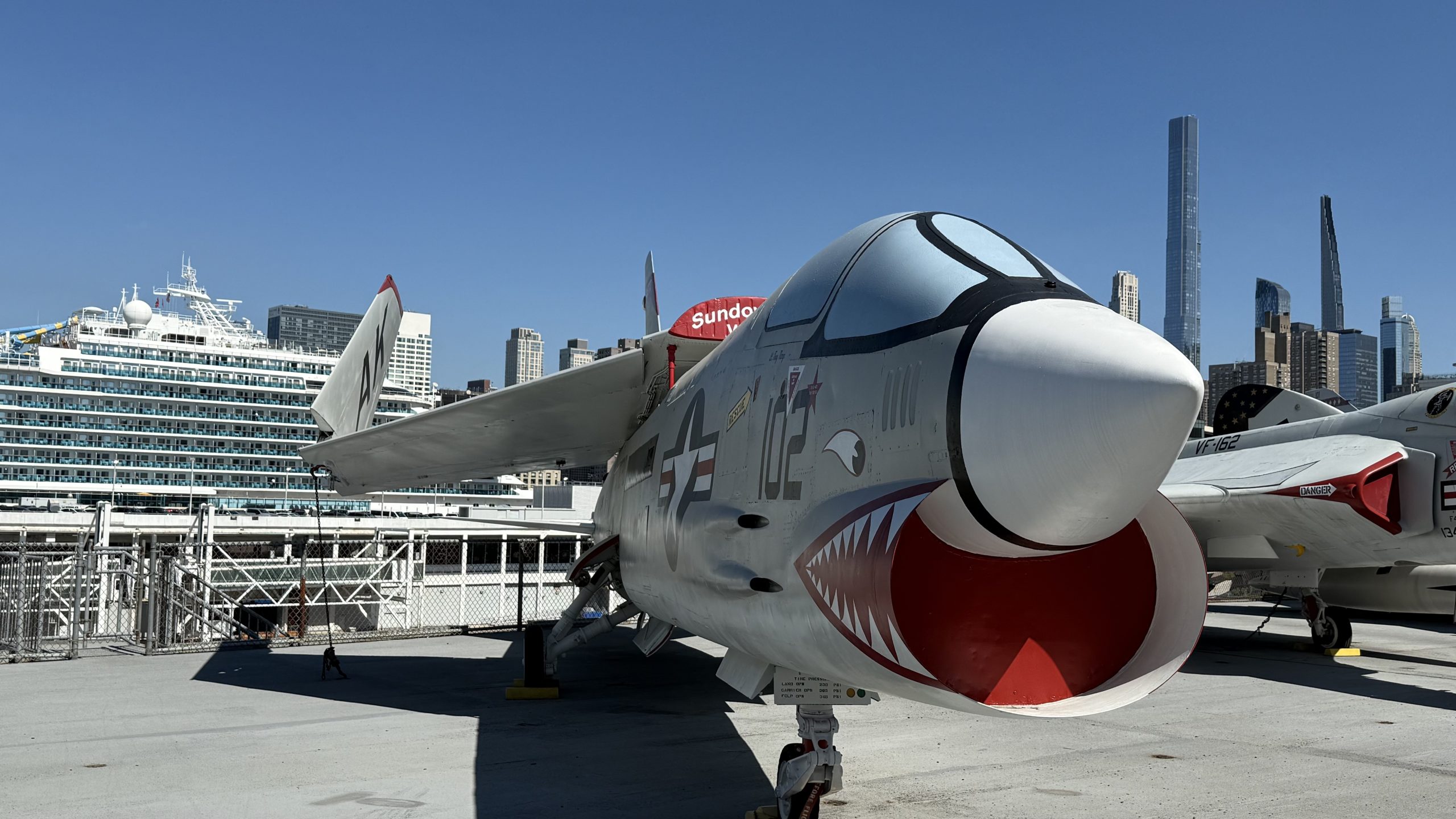
F-8 Crusader. National Security Journal Image.
The Univac computer was the breakthrough. It was the first digital general-purpose computer ever installed on a U.S. Navy aircraft, and it allowed the four-person crew — pilot, copilot, tactical coordinator, and sensor operator — to process the kind of multi-source acoustic and electromagnetic data that hunting a quiet nuclear submarine actually required. Without that processing capability, no amount of airframe performance would have produced an effective ASW platform.
The first YS-3A prototype made its maiden flight on January 21, 1972, in the hands of Lockheed test pilot John Christiansen. Carrier qualifications followed in November 1973. The aircraft formally entered operational service on February 20, 1974, with VS-41, the Fleet Replacement Squadron at NAS North Island.
Deployment And Operational History
VS-21 — the Fighting Redtails — became the first deployable squadron when it took the Viking aboard USS John F. Kennedy in 1975. Within a few years, every American supercarrier in the fleet had an embedded S-3 squadron of roughly ten aircraft, designated VS for Sea Control Squadron.
The Cold War operational pattern was geographic. In the Atlantic, Vikings worked the Greenland-Iceland-United Kingdom gap — the choke point Soviet submarines had to transit to reach the open Atlantic — refining search patterns and integrating with the broader SOSUS undersea surveillance network that the Navy maintained across the North Atlantic. In the Pacific, Vikings screened carrier groups on Western Pacific deployments, flying patterns out to the limits of carrier strike group operating areas to find Soviet boats before they could close to weapons range.
Each Viking carried 60 sonobuoys in vertical chutes mounted in the rear fuselage. The AN/APS-116 search radar could spot a submarine periscope or snorkel at extended range. The AN/ASQ-81 magnetic anomaly detector — extended from the tail on a retractable boom — could detect the magnetic signature of a submerged submarine. The forward-looking infrared system was equipped with a passive thermal sensor. The combat load was straightforward: Mark 46 and later Mark 50 anti-submarine torpedoes, depth bombs, mines, and from the 1980s onward, AGM-84 Harpoon anti-ship missiles.
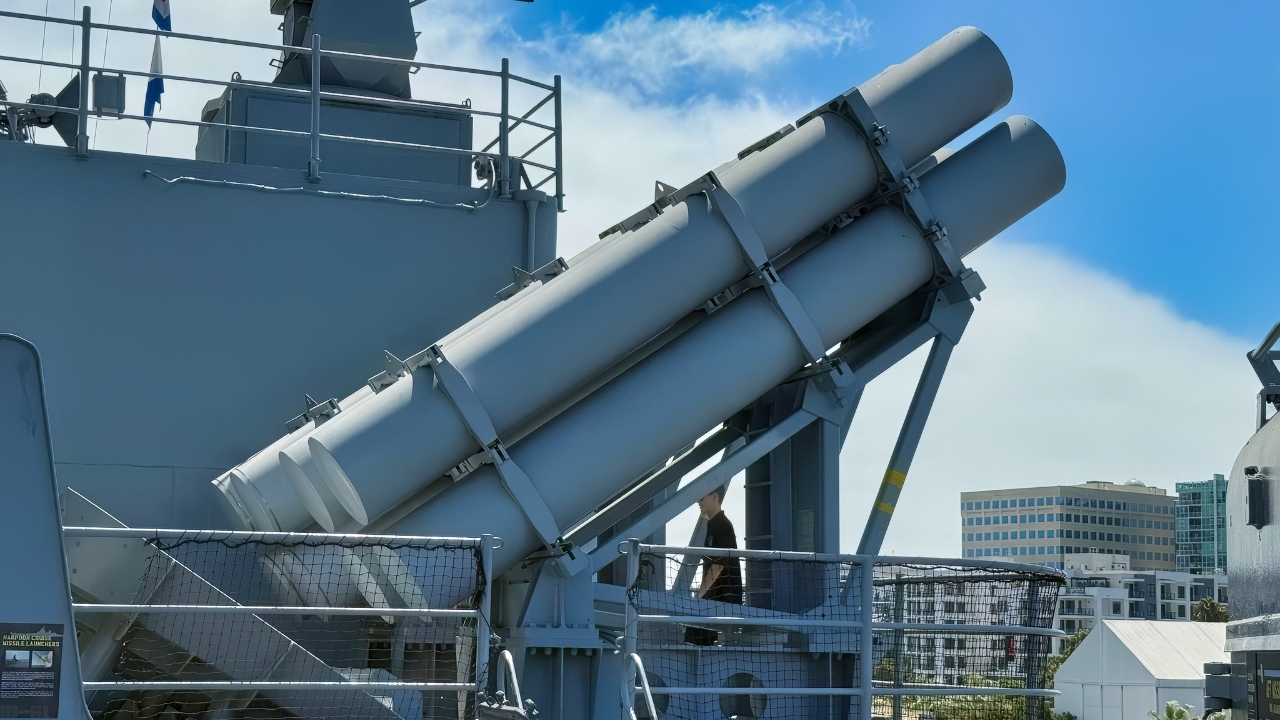
USS Iowa Harpoon Canister. Image Credit: Harry J. Kazianis/National Security Journal.
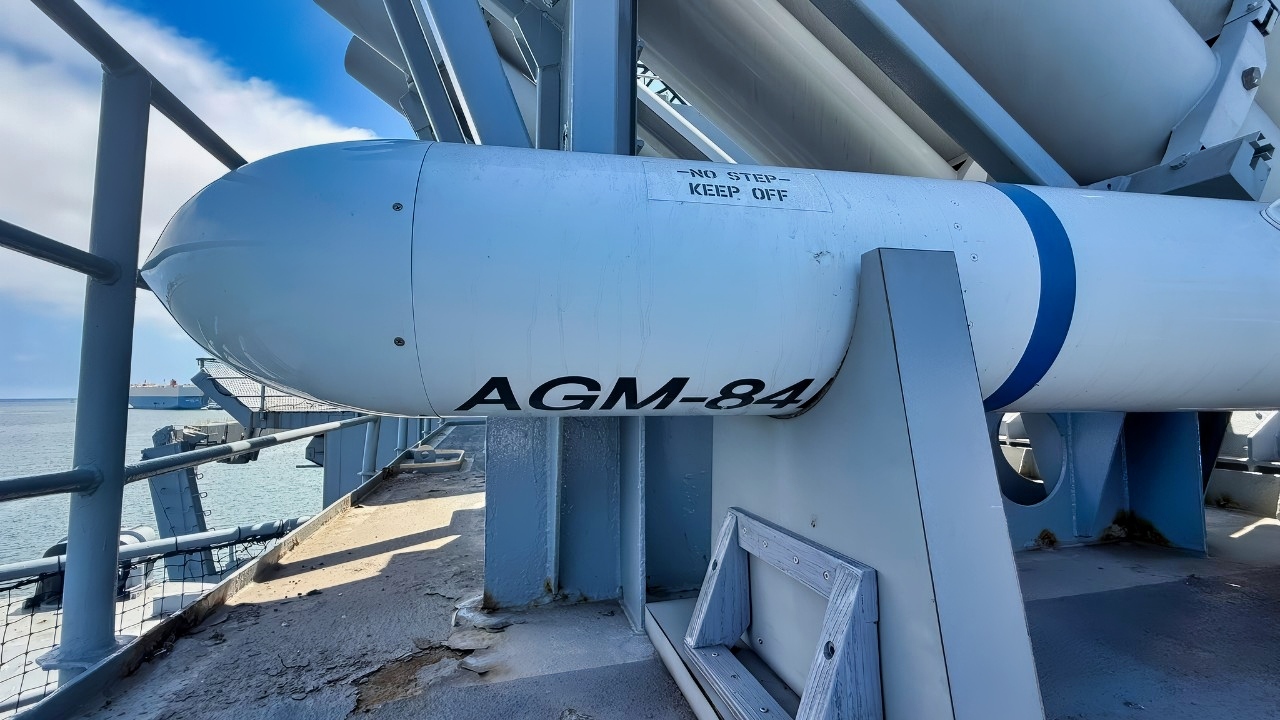
Harpoon Missile Onboard USS Iowa. Image Credit: National Security Journal.
A 1984 patrol produced what is generally cited as the type’s most consequential single detection: an S-3 from a deployed squadron became the first NATO platform ever to detect a new class of Soviet submarine, providing intelligence that drove subsequent acoustic library updates across the entire Western alliance. In 1986, S-3s from VS-28 flying off USS Independence detected submarines from eight different countries during a single Mediterranean cruise. Those detections happened because the aircraft was where it was supposed to be — patrolling 75 to 150 nautical miles ahead of the carrier, in the area ASW zone that no other platform could cover persistently.
The Cold War crews learned to husband sonobuoys and time on station, to prosecute faint contacts without giving away the fact they had a contact, and to hand off tracks to surface ships and helicopters for the kill.
According to a retired Cold War-era Viking aircrew officer writing in The War Zone, the Viking sat at the center of carrier ASW choreography because it could be anywhere in the operational bubble quickly and stay on station for hours after it got there.
Through the 1980s, the Navy upgraded more than 100 airframes to the S-3B configuration. The new variant added the AN/APS-137 inverse synthetic aperture radar — capable of resolution high enough to identify ships by class — improved acoustic processing, the Harpoon anti-ship missile capability, and additional electronic warfare gear. Six aircraft were modified into US-3A Carrier Onboard Delivery transports for high-priority cargo.
Sixteen others were rebuilt as ES-3A Shadow signals-intelligence platforms — carrier-based electronic spies that flew in support of strike operations until their retirement in 1999.
Combat History
The Vikings’ combat record is real, if smaller than the platform’s submarine-hunting credentials suggested it would be.
The first combat use came in the 1991 Gulf War, when Vikings of VS-24 aboard USS Theodore Roosevelt used AGM-84 SLAM missiles to destroy an Iraqi Silkworm anti-ship missile battery. S-3s also sank Iraqi patrol boats, destroyed anti-aircraft artillery and coastal radars, and provided maritime surveillance through the duration of Operation Desert Storm. The aircraft proved itself in the surface-strike role despite never having been built for it.

Souda Bay, Crete, Greece (Feb. 22, 2006) Nimitz-class aircraft carrier USS Theodore Roosevelt (CVN 71) heads to sea following a brief logistics stop on the Greek island of Crete. Roosevelt and Carrier Air Wing Eight (CVW-8) are currently underway on a regularly scheduled deployment supporting maritime security operations. Roosevelt is the fourth ship in the NIMITZ – class of nuclear-powered aircraft carriers and is homeported in Norfolk, VA. U.S. Navy photo by Mr. Paul Farley.
During the Bosnia and Kosovo air campaigns of the late 1990s, S-3s and ES-3As provided refueling, electronic surveillance, and over-the-horizon targeting for NATO strike packages. In Operation Iraqi Freedom in 2003, an S-3 from VS-38 used a Maverick missile to cripple Saddam Hussein’s 350-foot personal yacht Al Mansur in Basra harbor — the type’s most famous individual combat engagement.
The Viking’s most public moment came on May 1, 2003, when an S-3B from VS-35 landed President George W. Bush aboard USS Abraham Lincoln for the now-infamous “Mission Accomplished” speech. The carrier was 30 miles from shore — a helicopter trip — but the Viking was selected for the dramatic visual impact of a tailhook landing on a moving carrier deck.
The last operational Vikings flew out of Al Asad Air Base in Iraq’s Anbar Province in 2008, using LANTIRN infrared targeting pods to identify ambushes and roadside bombs ahead of friendly convoys. The aircraft’s adaptability to that mission — finding hidden targets at low altitude using sensors and processing systems originally designed to hunt submarines — was the final demonstration of the airframe’s versatility.
Why The Navy Retired The Viking
The Navy retired the S-3 in stages between 2005 and 2009. The last fleet squadron — VS-22, the Checkmates — stood down in January 2009. Three airframes continued in the experimental VX-30 unit until 2016.
The official rationale combined several factors. The S-3A model lacked a radar warning receiver, and the airframe had no flares or decoys to protect against missile attacks. At a maximum speed of 518 miles per hour, the Viking was too slow to outrun any modern fighter and presented a significant survivability problem in contested air environments. Avionics modernization to address those gaps was projected to be expensive, and the post-Cold War Navy was prioritizing strike aircraft and electronic warfare platforms over a niche ASW jet whose primary threat — the Soviet submarine fleet — appeared to have disappeared along with the Soviet Union.
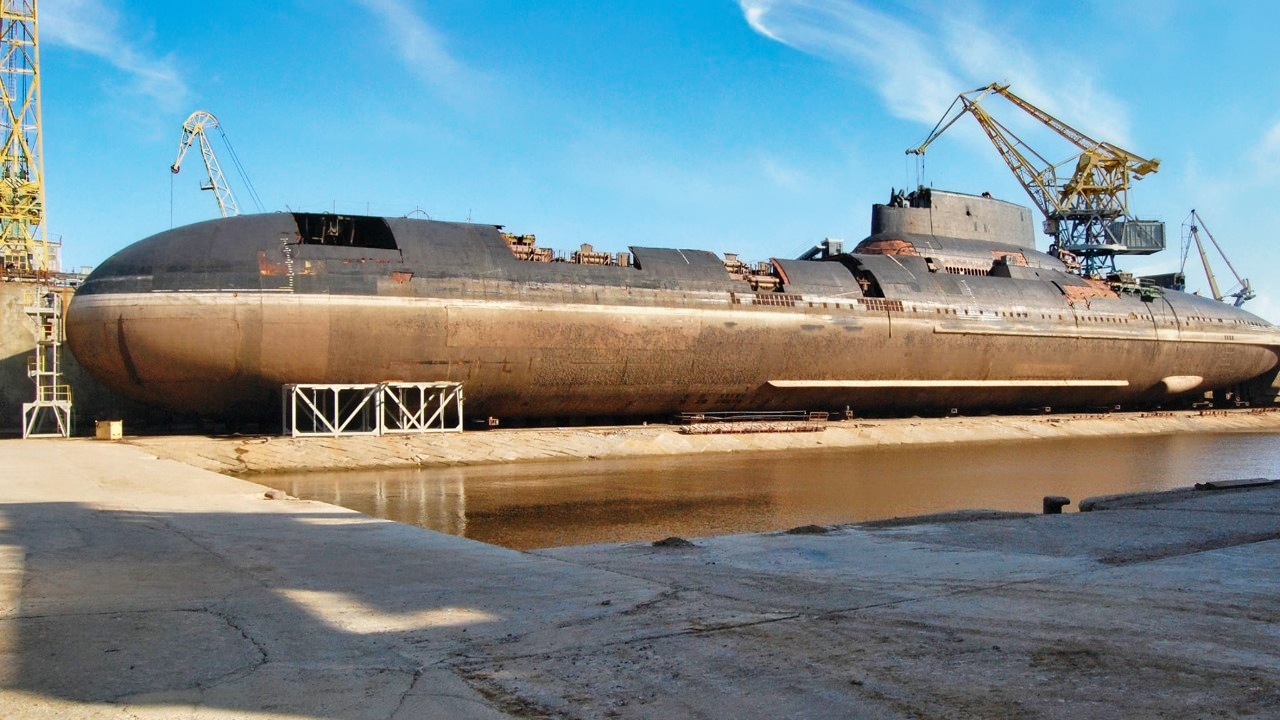
Typhoon-Class Submarine. Image Credit: Creative Commons.
The replacement plan moved the area ASW mission to the land-based P-3C Orion and its successor, the P-8A Poseidon. Carrier-based ASW was reduced to local-defense coverage by embarked SH-60 helicopters operating within roughly 75 nautical miles of the formation. The tanker mission was absorbed by buddy-store-equipped F/A-18E/F Super Hornets. The Carrier Onboard Delivery role transferred to the C-2 Greyhound and later the CMV-22B Osprey. The electronic intelligence role moved to a series of replacement programs that never quite materialized.
Total production was 188 airframes — 187 production aircraft plus the YS-3A prototypes — built between 1971 and 1978. By the time the type retired, roughly 87 surviving Vikings were in storage at Davis-Monthan Air Force Base in Arizona, with the rest scrapped or distributed to museums.
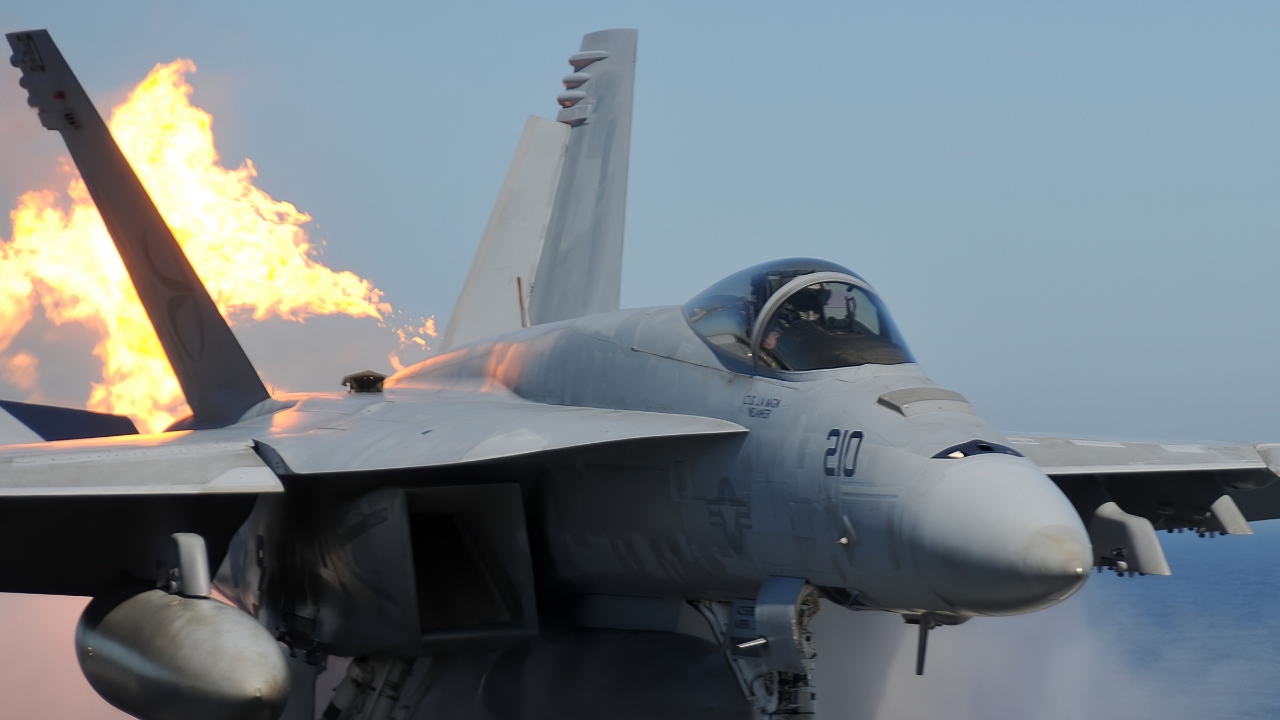
A U.S. Navy F/A-18E Super Hornet aircraft assigned to Strike Fighter Squadron 137 is launched from the flight deck of the aircraft carrier USS Abraham Lincoln (CVN 72) while underway in the Pacific Ocean on Feb.2, 2009.
(DoD photo by Petty Officer 2nd Class James R. Evans, U.S. Navy. (Released))
Legacy of the S-3: No Replacement?
The legacy of the S-3 Viking has been substantially complicated by what came after.
China has built a large and increasingly capable submarine fleet over the past two decades. Russia has continued to invest in its undersea force, with the Yasen-class attack submarine entering serial production and the older Akula-class and Sierra-class boats receiving modernization upgrades. Iranian and North Korean submarine programs add additional regional pressure. The undersea threat environment in 2026 is, by every measure, more challenging than the Cold War environment that produced the Viking in the first place.
The carrier-based area ASW capability that the Viking provided no longer exists. Helicopter ASW covers the local defense zone. Land-based P-8s provide maritime patrol coverage where bases and over-flight permission allow it. But the persistent, organic, jet-speed, long-endurance, carrier-based submarine hunting capability the Viking represented has not been replaced — and there is no current program to replace it.
A 2015 Hudson Institute report titled “Sharpening the Spear” specifically identified the carrier air wing’s ASW gap as a critical vulnerability. Multiple subsequent analyses have argued that reviving the Viking — either by pulling airframes from storage and modernizing them, or by developing a new carrier-based ASW jet — would be a relatively low-cost way to plug the gap. None of those proposals has produced a procurement program. The Republic of Korea Navy considered acquiring 12 stored S-3Bs in the 2010s before shelving the plan in 2018.
The Navy Could Really Use the Viking Now, But It Won’t Happen
The Viking is a closed chapter. Its legacy is the gap it left behind. Retired just before the Navy began rediscovering that the undersea threat had never actually gone away. That is the assessment that hangs over every modern American carrier deployment. The Viking did its job. The Navy decided the job no longer needed to be done. The Russian, Chinese, Iranian, and North Korean submarine fleets did not get the memo.
There is no S-3 successor in the budget. There is no plan to build one. The carrier-based submarine hunter built during the Cold War is gone. The submarines it was built to hunt are not.
About the Author: Harry J. Kazianis
Harry J. Kazianis (@Grecianformula) was the former Senior Director of National Security Affairs at the Center for the National Interest (CFTNI), a foreign policy think tank founded by Richard Nixon based in Washington, DC. Harry has over a decade of experience in think tanks and national security publishing. His ideas have been published in the NY Times, The Washington Post, The Wall Street Journal, CNN, and many other outlets worldwide. He has held positions at CSIS, the Heritage Foundation, the University of Nottingham, and several other institutions related to national security research and studies. He is the former Executive Editor of the National Interest and the Diplomat. He holds a Master’s degree focusing on international affairs from Harvard University. Kazianis is Editor-In-Chief of 19FortyFive.


