


Key Points and Summary – The S-3 Viking was the U.S. Navy’s go-to carrier-based sub-hunter for a generation, pairing long range, high endurance, and a then cutting-edge sensor suite to track increasingly quiet Soviet submarines.
-Entering service in 1974, it combined turbofan efficiency, sonobuoys, MAD gear, and a four-person crew to cast a wide anti-submarine net.
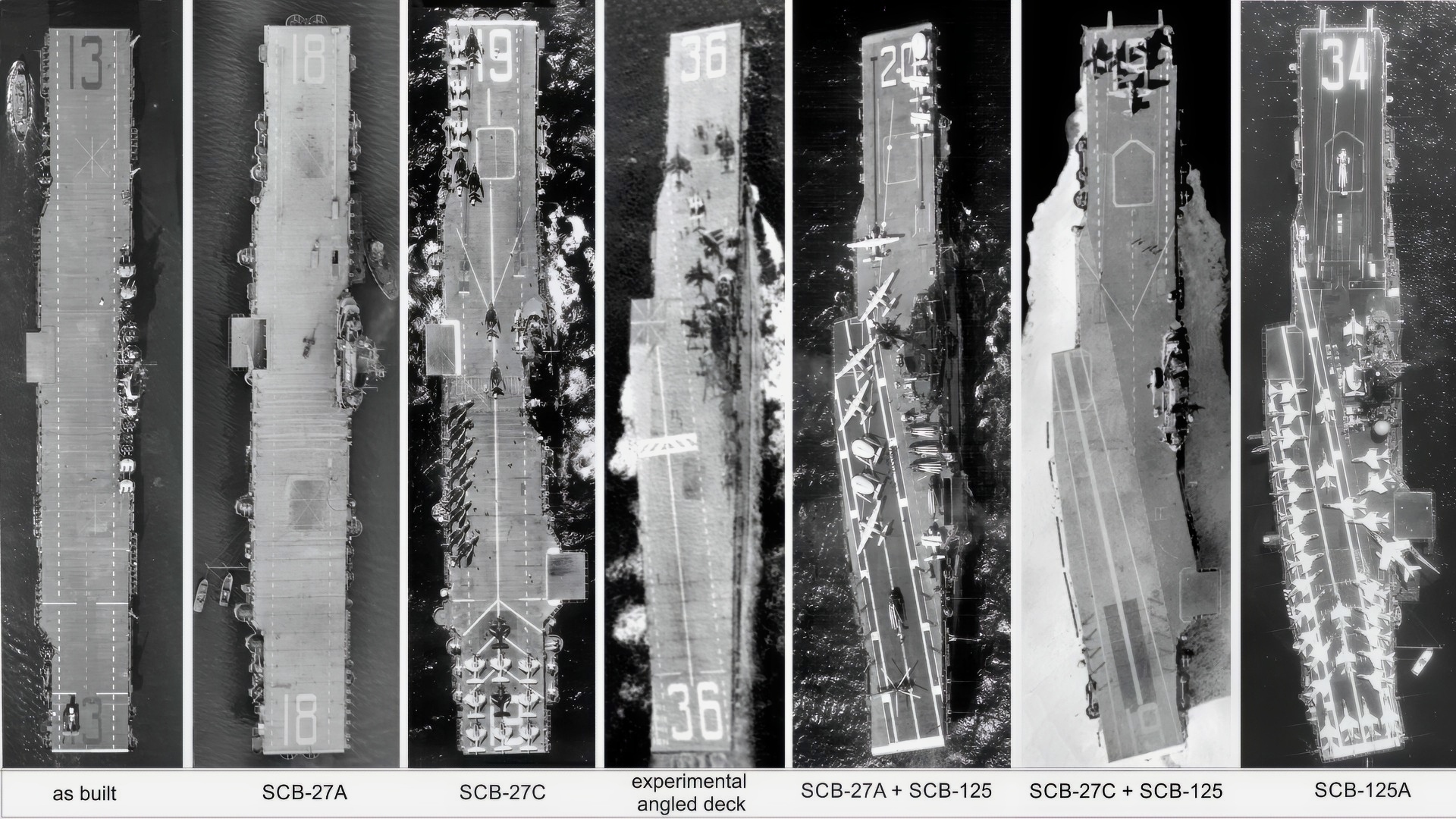
The Mighty Essex-Class Aircraft Carrier. Image Credit: Creative Commons.
-After the Cold War, doctrine shifted: the Viking morphed into a tanker, surveillance, and light strike platform before rising maintenance costs and a perceived lack of threats drove its retirement in 2009.
-Its missions were split among helicopters, P-3/P-8s, Hawkeyes, and Super Hornets, but its tight-knit community still remembers it fondly.
S-3 Viking: The Quiet Sub-Hunter That Kept U.S. Carriers Safe
The S-3 Viking was the United States Navy’s carrier-based anti-submarine warfare mainstay for about a quarter of a century.
The Viking offered the Navy a potent mix of long range, high endurance, and, for the era, a sophisticated sensor suite.
When it entered service, the Viking proved a valuable asset at a time when Soviet submarines were becoming increasingly sophisticated and challenging to detect.
The new platform offered the Navy a real edge over its anti-submarine warfare predecessors.
As the Navy wrote, “the Viking boasted the latest in radar, sonar, and magnetic anomaly detection (MAD) gear as well as torpedoes and sonobuoys” when it entered service in 1974.
The airplane’s two turbofans gave it a lower acoustic signature than similar turboprop aircraft, and greater fuel efficiency — crucial for the S-3’s ability to patrol the ocean far away from its carrier and stay on station for prolonged periods of time. In tandem with the Viking’s ability to drop sonobuoys, it could cast its detection net quite widely indeed.
The Viking had a crew of four.
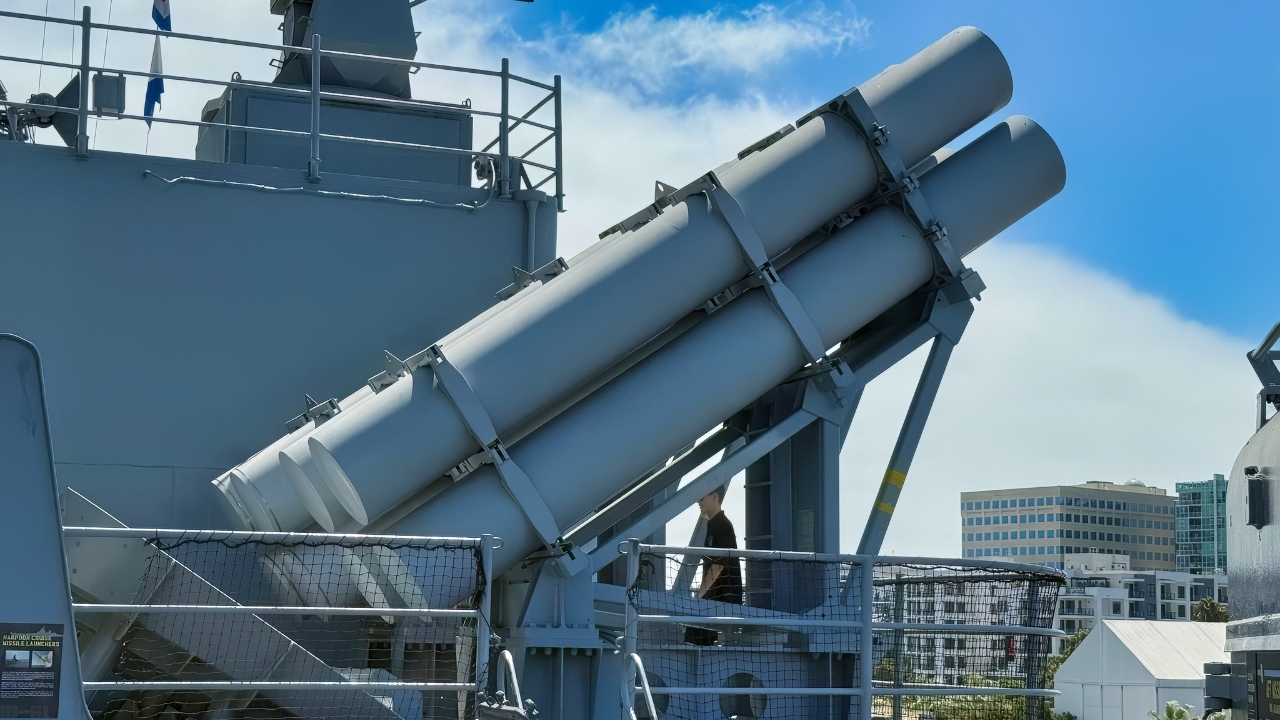
USS Iowa Harpoon Canister. Image Credit: Harry J. Kazianis/National Security Journal.
Two flight officers in the back of the cockpit operated the jet’s sensors, sonobuoys, communications, and tactical displays.
In contrast, the pilot and copilot in the front of the cockpit conducted flight operations and communications.
But in addition to its electronics and fuel, the Viking also had payload capacity for a variety of weapons, including air-dropped torpedoes, naval mines, and depth charges.
Shifting Doctrine
As time went on, the Viking adjusted its role within the Navy, particularly after the end of the Cold War and the drawdown of hostilities between the United States and the former Soviet Union.
No longer worried that its qualitative edge would erode, the Navy recast the Viking.
Thanks in part to its fuel-efficient engines, the S-3 became an aerial tanker for carrier air wings.
The plane also conducted surveillance, intelligence gathering, and some light strike roles, too.
Paired with AGM-84 Harpoon missiles or other long-range precision weapons gave the aircraft a long-range maritime strike opportunity, too, albeit one that was limited by the S-3’s relatively small numbers compared to other embarked carrier wing aircraft.
But despite the Vikings’ multi-role flexibility, by the early 2000s, it had begun to show its age.
The threat environment the Navy faced had changed as well, and the maintenance costs for a platform were difficult to justify considering the dearth of threats to the Navy in the post-Cold War environment.
The Navy retired the last S-3 Viking in 2009, though several airframes were picked by Lockheed Martin, a defense prime, and NASA as weapons testbeds and research aircraft.
There was not a single aircraft that replaced the S-3 on a one-for-one basis. The Vikings’ anti-submarine warfare mission moved to MH-60 R on carriers and escort aircraft, whereas ASW at longer ranges were taken up by P-3 and eventually P-8 aircraft. Electrinc surveillance from the air fell in part to the the E-2 Hawkeye, whereas the F/A-18E/F aircraft retained the Viking’s ability to fuel its stablemates.

P-8A Poseidon. Image Credit: Creative Commons.
Off into the Sunset
After the last Viking aircraft left its naval test squadron in 2016, U.S. Navy Captain John Rousseau reminisced wistfully about the decision on the part of the Navy to remove the Viking from service.
“In a perfect world, if there were accessible parts and maintenance, we would have loved to have been able to keep the Viking flying with VX-30. At some point though we had to look at the viability of keeping an aircraft as a business case…”
The Navy faced a difficult decision amid competing priorities that clamored for precious defense dollars. In Captain Rousseau’s words, the Navy had to weigh “cost against the little time you could still get out of them as well as having to begin sourcing out parts… and it became apparent that the costs involved in doing any of that would not have made it justifiable.”
“At the end of the day though,” Captain Rousseau said, “as much as the S-3 was a truly great aircraft, I think what made our Viking community so unique [was] the amazing community of professionals. The aircrew, maintainers, and program support folks… all felt a special kinship with the aircraft.”
Seemingly, the final resting place for one of the last S-3 Vikings was found earlier this year.
In April, NASA retired its S-3B Viking from Glenn Research Center in Cleveland and sent the airplane to the National POW/MIA Memorial and Museum in Florida.
About the Author: Caleb Larson
Caleb Larson is an American multiformat journalist based in Berlin, Germany. His work covers the intersection of conflict and society, focusing on American foreign policy and European security. He has reported from Germany, Russia, and the United States. Most recently, he covered the war in Ukraine, reporting extensively on the war’s shifting battle lines from Donbas and writing on the war’s civilian and humanitarian toll. Previously, he worked as a Defense Reporter for POLITICO Europe. You can follow his latest work on X.


Pingback: S-3 Viking sub hunter has a warning for Russia’s navy – Morning Overview