


The Chengdu J-20 made its maiden flight on January 11, 2011, deliberately timed to coincide with U.S. Defense Secretary Robert Gates’ meeting with Chinese President Hu Jintao in Beijing that same morning. The flight was a diplomatic message. What the West did not know was how much of the aircraft had been stolen — from Lockheed Martin’s F-35 program, from Boeing’s F-22 files, from the wreckage of an F-117 shot down over Serbia, and from Russia’s canceled MiG 1.44. Sixteen years later, more than 300 J-20s are in PLAAF service, and 1,000 are projected by 2030.
The J-20 “Mighty Dragon”: How China Built A Fifth-Generation Stealth Fighter Out Of Stolen Blueprints, Russian Aerodynamics, And A Decade Of Engine Failures

J-20 Stealth Fighter in China. Image Credit: PLAAF.
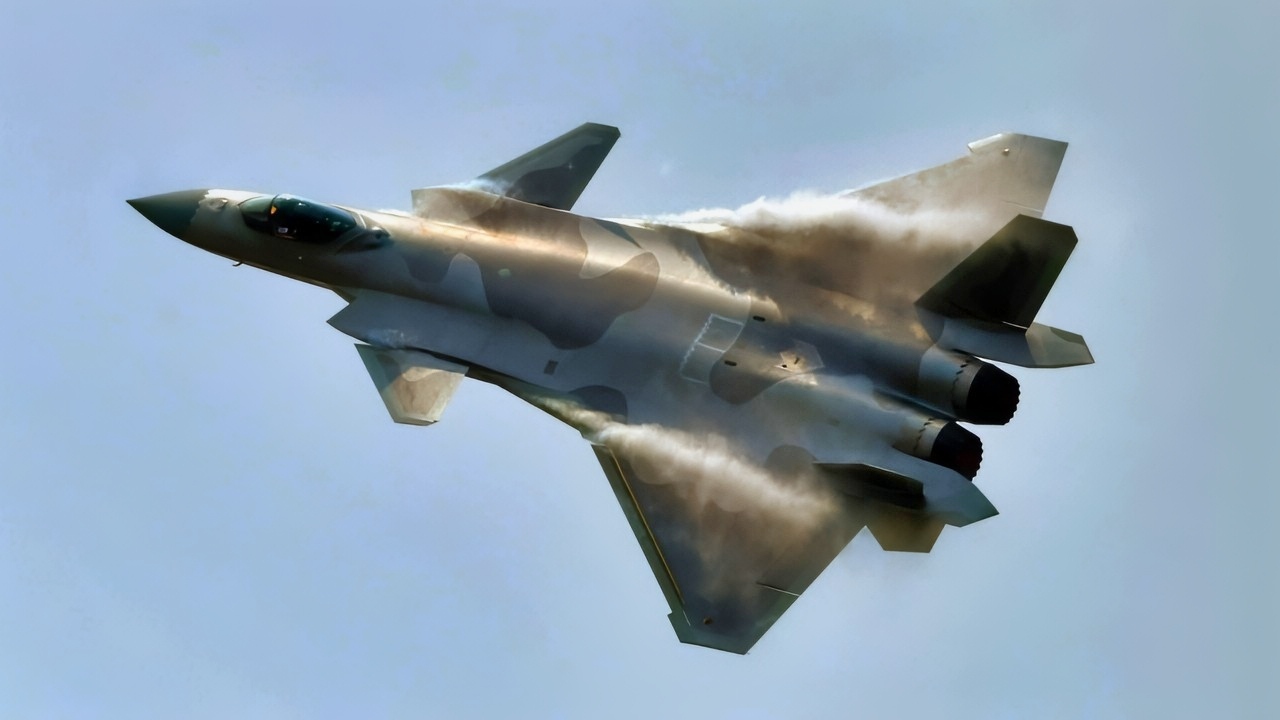
China J-20 Fighter in Camo 2021. Image Credit: Creative Commons.
“Yes, she can shoot down an F-22 and an F-35. Would it be easy? No. But China’s J-20 stealth fighter is the real deal. And that plane makes the U.S. Air Force think twice about a war with China.” That’s what a retired U.S. Air Force Officer told me this week, speaking on background, on the Chengdu J-20 stealth fighter. He was clearly impressed, but we need to know how this fighter hit the skies before anything else. And the story is pretty wild.
The J-20 Has A Shock and Awe Moment
The first photographs of the Chengdu J-20 appeared on Chinese social media in late December 2010, when a prototype was caught preparing for high-speed taxi trials at the Chengdu Aircraft Corporation airfield. The maiden flight followed on January 11, 2011, deliberately timed to coincide with U.S. Defense Secretary Robert Gates’s visit to Beijing. Gates was meeting Chinese President Hu Jintao that same morning. The flight was a deliberate diplomatic message.
What the West did not know at the time was how the J-20 had actually been built — and how much of its design had been lifted from American and Russian programs that the Chinese aerospace industry had spent the previous decade systematically penetrating through cyber espionage, recruiting human assets, and reverse-engineering of foreign hardware.
Sixteen years later, the J-20 is the centerpiece of Chinese tactical aviation. More than 300 aircraft are in service. Annual production has reached roughly 120 airframes. Two operational variants — the upgraded single-seat J-20A and the world’s first twin-seat fifth-generation fighter, the J-20S — entered formal PLAAF service on September 3, 2025. The Pentagon’s most recent assessment projects approximately 1,000 J-20s in the PLAAF inventory by 2030.
The aircraft is real. The strategic implications are real. And the story of how it was built — including how much of it was stolen — is one of the most consequential intelligence failures in modern Western defense history.
J-20: What The PLAAF Needed
China’s strategic problem in the late 1990s and early 2000s was straightforward: every American tactical aircraft program in the pipeline was widening the gap between the U.S. Air Force and the PLAAF. The F-22 Raptor entered operational service in 2005. The F-35 Lightning II program was producing operational aircraft by 2006. Both platforms combined stealth, sensor fusion, supercruise, and networked combat capabilities that no Chinese fighter could match.
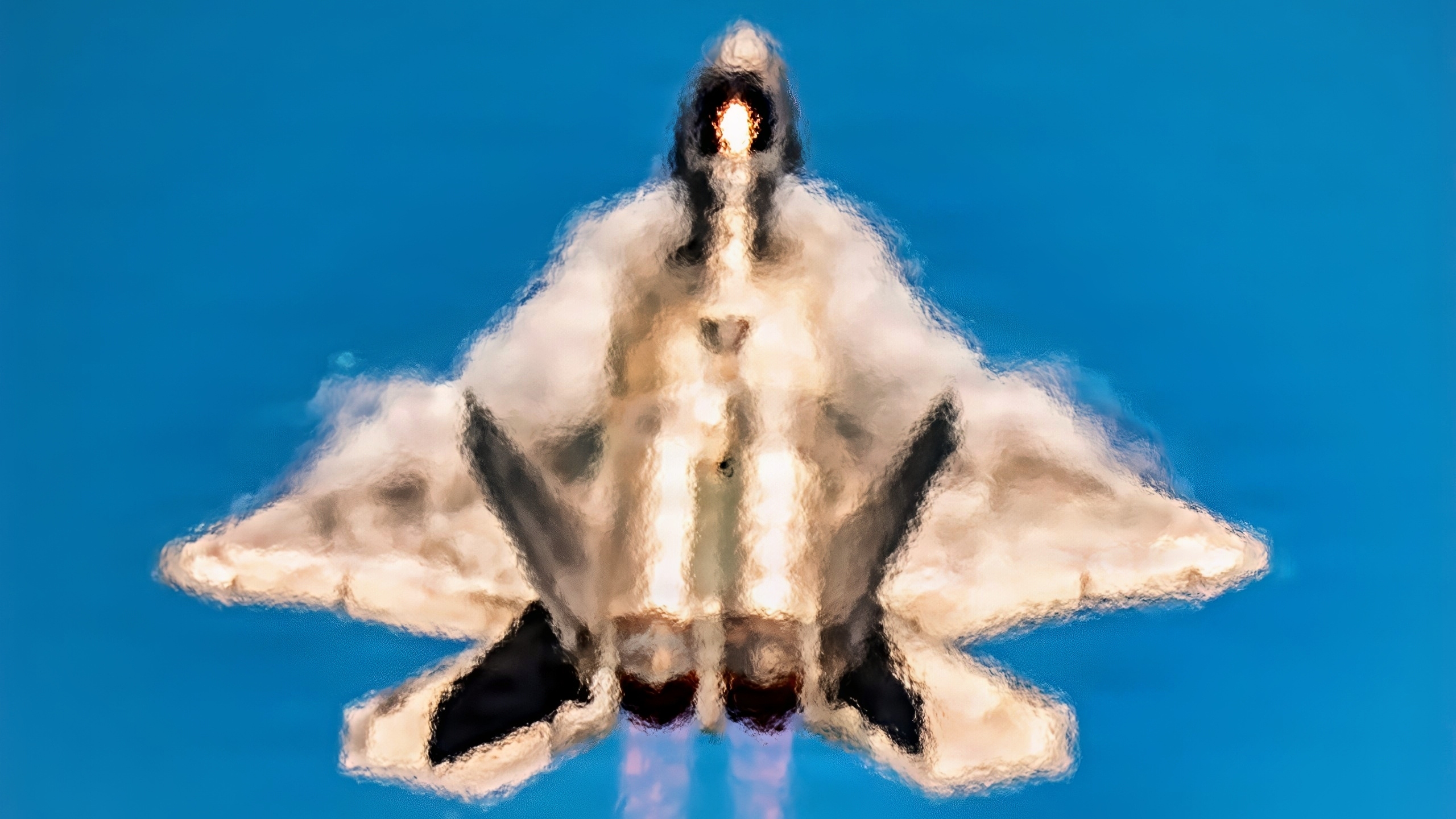
U.S. Air Force Capt. Nick “Laz” Le Tourneau, pilot and commander of the F-22 Raptor Aerial Demonstration Team, performs an aerial demonstration at Air Dot Show Tour Fort Lauderdale, Florida, May 9, 2026. Capt. Le Tourneau showcased the unmatched capabilities of the F-22 by performing a series of combat maneuvers. (U.S. Air Force photo by Staff Sgt. Mary Bowers)
The PLAAF’s existing fleet was a generation behind. The J-11 was a license-built copy of the Soviet Su-27. The J-10 was a domestic fourth-generation light fighter heavily influenced by the canceled Israeli Lavi program. Neither aircraft could engage a fifth-generation fighter on equal terms. In any Western Pacific conflict involving Taiwan, the PLAAF would be operating at a substantial technological disadvantage against an American carrier air wing.
The Chengdu Aircraft Corporation received the formal development contract for what would become the J-20 in 2008, under the codename Project 718. The platform was designated as the PLAAF’s first fifth-generation air superiority fighter with secondary precision-strike capability.
The aircraft was supposed to deliver a credible counter to the F-22 and F-35 in the air-to-air engagement envelope, while providing the range and payload to project Chinese airpower across the first and second island chains.

F-22 and F-35 and the Flag. Image Credit: Creative Commons.
How Much Of The Design Was Stolen
The espionage record around the J-20 is now extensively documented in U.S. court filings, declassified intelligence community assessments, and open-source defense analysis. Three distinct sources of foreign technology were folded into the program.
The first was the Lockheed Martin F-35 cyber breach. In 2007, a Chinese cyber operation codenamed Operation Byzantine Hades by U.S. intelligence agencies penetrated F-35 subcontractor networks and exfiltrated significant volumes of sensitive design data. Per Fox News reporting on the breach, defense officials confirmed that the stolen data was obtained by a Chinese military unit designated a Technical Reconnaissance Bureau in Chengdu province and passed to the Aviation Industry Corporation of China. The Chengdu Aircraft Industry Group — the J-20’s prime contractor — used elements of the stolen data in building the J-20.
The second was the Su Bin case. In 2014, Canadian authorities arrested Chinese national Su Bin, who pled guilty in 2016 in a U.S. federal court to charges associated with a years-long conspiracy to steal sensitive American military aviation data. Per the excellent Sandboxx investigation into the case, Su admitted to working with two Chinese military hackers to exfiltrate more than 630,000 files — approximately 65 gigabytes of data — from Boeing networks, including design and engineering data on the C-17 Globemaster, the F-22 Raptor, and the F-35 Lightning II. The files were passed to Chinese military contacts and ultimately integrated into Chinese fighter development programs.
The third was the F-117 wreckage from Serbia. On March 27, 1999, Serbian air defense forces shot down a U.S. Air Force F-117 Nighthawk stealth attack aircraft during the NATO bombing campaign over Kosovo. Per Deccan Herald’s reporting on the Chinese acquisition, the Croatian military chief of staff at the time of the Kosovo war later alleged that Chinese agents recovered substantial portions of the downed aircraft from Serbian government channels, including pieces of the radar-absorbent coating that gave the F-117 its low-observable characteristics. Chinese sources have publicly denied the claim. Western analysts have generally concluded that F-117 coatings from 1999 would have been substantially obsolete by the time China was designing the J-20 a decade later. Nonetheless, surely a technology derived from this would have helped in some way, even if no lessons were to be learned or maybe things to avoid.

F-117 at the US Air Force Museum July 2025. Image taken by National Security Journal.
Russian influence is the fourth piece. The J-20’s overall canard-delta planform — with broad triangular wings and small forward control surfaces — closely resembles the Mikoyan MiG 1.44, a cancelled Russian fifth-generation prototype that flew only a handful of times in the late 1990s and early 2000s before being shelved. Per Defence Aviation’s comparative analysis, the J-20 and the MiG 1.44 share comparable delta-wing canard configurations, V-shaped tail sections, and closely mounted engines. The J-20’s frontal aspect, by contrast, bears stronger resemblance to the F-22 Raptor — including the canopy design, which some analysts have described as nearly identical to the Raptor’s.
Chinese sources have consistently rejected the espionage characterizations. Chinese test pilot Xu Yongling, quoted in early Western media coverage of the J-20, described the aircraft as a masterpiece of indigenous Chinese innovation and rejected the F-117 wreckage allegations specifically. Per BBC reporting on the Chinese denials, the Global Times newspaper dismissed Western media coverage of the technology transfer claims as a smear campaign against Chinese military modernization.
Where the Stolen Secrets Helped the J-20
The most credible Western technical assessment is that the J-20 is neither a pure copy nor a wholly indigenous design. Chinese engineers used stolen American data to skip development steps on stealth shaping, sensor integration, and combat system architecture.
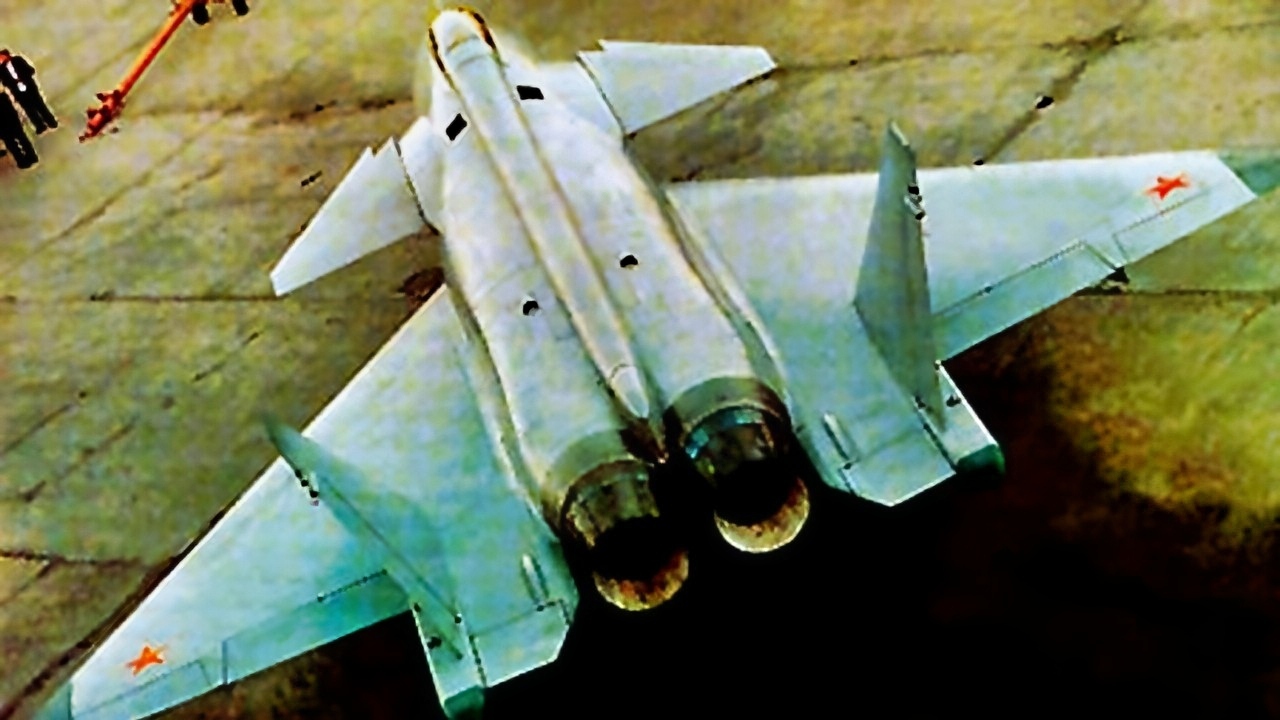
MiG 1.44 Russian State Media Picture

MiG 1.44 Fighter. Image Credit: Creative Commons.
They borrowed Russian thinking on canard-delta aerodynamics and high-altitude maneuvering. They then iterated on those foundations through their own design and testing process. The result is an aircraft that combines genuinely Chinese engineering work with elements traceable to multiple foreign programs.
The Engine Problem That Took Fifteen Years To Solve
The J-20 had one persistent technical problem that no amount of stolen data could fix: a Chinese fifth-generation airframe needed a Chinese fifth-generation engine, and Chinese aerospace engine development was substantially behind both Russian and Western capability.
The first production J-20s used Russian Saturn AL-31F and AL-31FN turbofan engines — the same engine family that powered the Russian Su-27 family that the PLAAF had been operating since the late 1990s. The AL-31s produced approximately 27,000 pounds of thrust with afterburner. That was enough to get the J-20 into the air and meet basic performance specifications. It was not enough to deliver the sustained supercruise capability — supersonic flight without afterburner — that defines a true fifth-generation fighter.

J-20 Fighters from China. Image Credit: Creative Commons.
The Chinese alternative was the WS-10 family, an indigenous engine reverse-engineered in substantial part from the AL-31. The WS-10C variant, introduced into J-20 service in the early 2020s, delivered approximately 32,000 to 35,000 pounds of thrust with afterburner — a meaningful improvement over the Russian baseline, but still not optimized for a fifth-generation airframe.
The real solution was the Shenyang WS-15 — a clean-sheet Chinese turbofan designed from the outset for fifth-generation tactical aircraft applications. Per The War Zone’s analysis of the WS-15 program, prototype WS-15 engines were reported to produce at least 36,000 pounds of thrust with afterburner, with target performance figures reaching 40,000 pounds — performance comparable to the Pratt & Whitney F119 that powers the F-22 Raptor.
The WS-15 took 15 years longer to develop than originally projected. The principal technical obstacles were the single crystal superalloy turbine blades and powder metallurgy turbine disks required for the engine to operate at the extreme temperatures and stresses of fifth-generation performance. Chinese metallurgy and high-precision manufacturing had to mature independently before the engine could enter serial production.
Per Military Watch Magazine’s coverage of the WS-15 production milestone, the first serial production WS-15 engines completed manufacturing in late 2025, with the first footage of WS-15-equipped J-20A serial production aircraft appearing in December 2025. The engine is now expected to remain in production for several decades and may provide the technical basis for Chinese sixth-generation fighter engines.
The Variants
The J-20 has produced three distinct operational variants throughout its program.
The original J-20 — sometimes referred to retroactively as the J-20 baseline — entered serial production in October 2017 and initial operational capability with PLAAF combat units in February 2018. Early production aircraft used the Russian AL-31, later replaced by the WS-10C as Chinese engine production matured.
The J-20A is the upgraded variant that entered service on September 3, 2025. Per Military Watch Magazine’s coverage of the J-20A debut, the new variant integrates the WS-15 engine, a redesigned rear canopy that reduces aerodynamic drag, refined airframe materials, improved low-observable characteristics, and upgraded avionics and sensors. The variant is sometimes described as a “5+ generation” platform reflecting the cumulative depth of improvements over the baseline J-20.
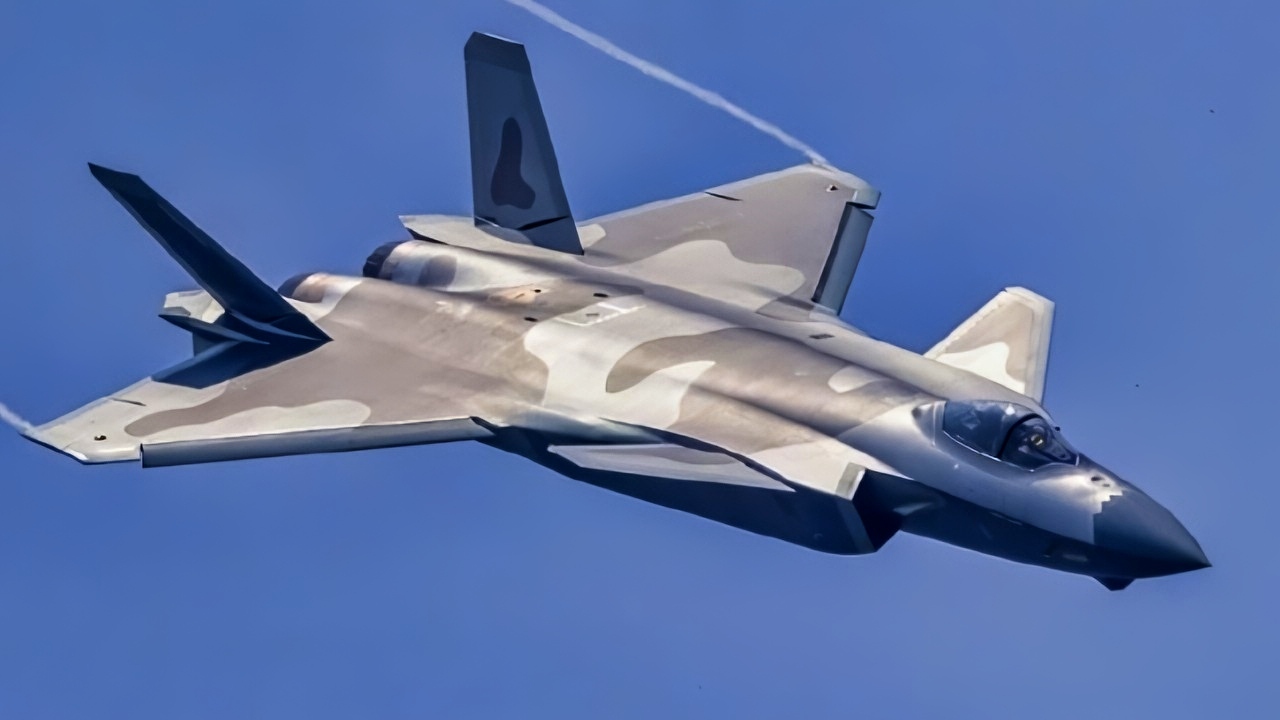
China J-20A Fighter in the Sky. Image Credit: Creative Commons.
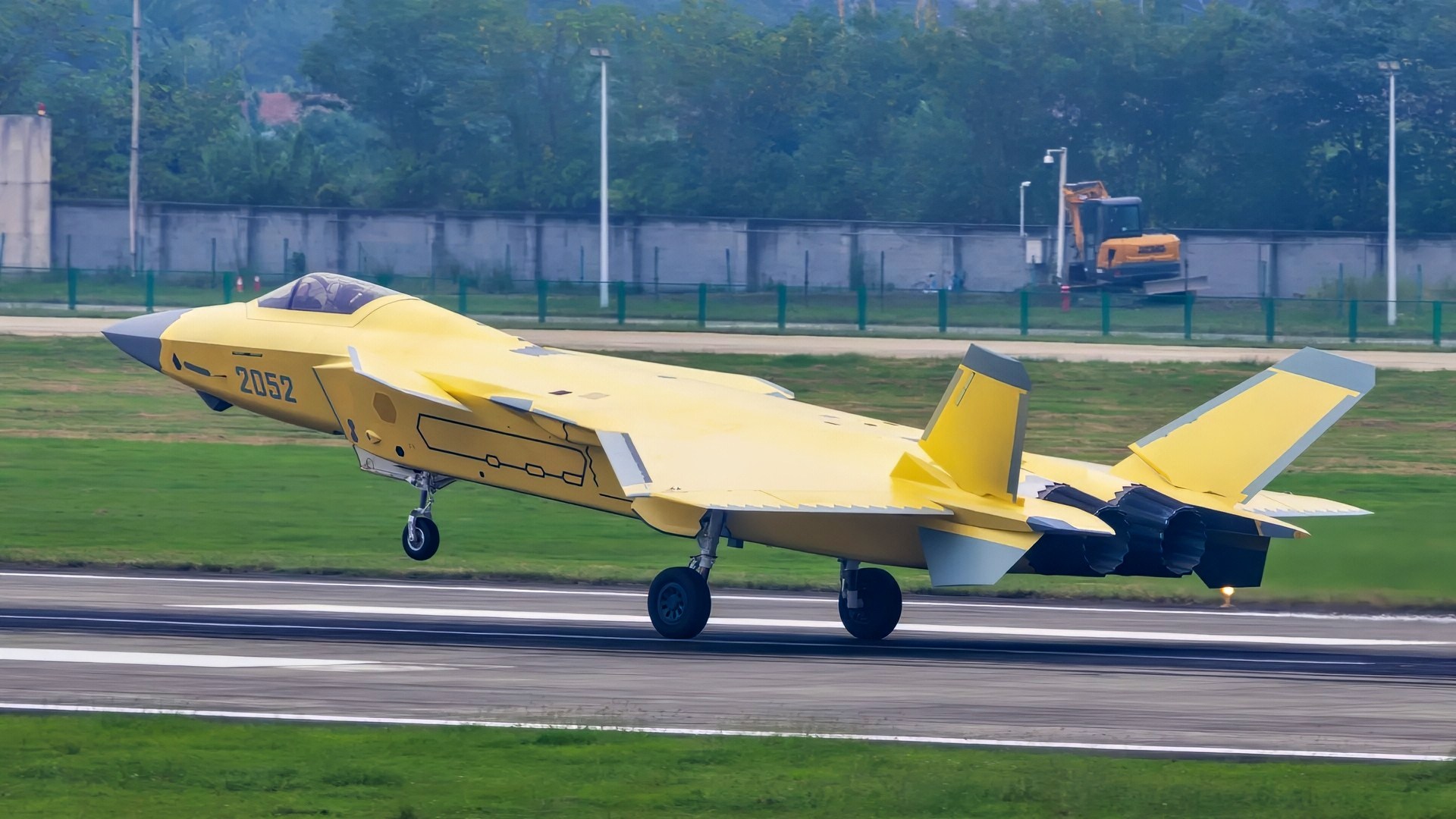
J-20A Fighter in Yellow. Image Credit: X Screenshot.
The J-20S is the twin-seat variant — the world’s first fifth-generation tactical aircraft with a tandem-seat configuration. The aircraft was first publicly displayed at the 2024 Zhuhai Airshow and entered formal PLAAF service on September 3, 2025. Per The Defense Watch’s analysis of the variant, the back-seat crew member is intended to function as a mission systems officer responsible for managing electronic warfare, coordinating strike packages, and potentially controlling unmanned combat aerial vehicles in loyal-wingman formations.
The J-20S has also been observed serving as a chase plane during flight testing of the Chengdu J-36 sixth-generation fighter prototype, suggesting close institutional connections between the J-20 program and the next-generation Chinese tactical aviation pipeline.
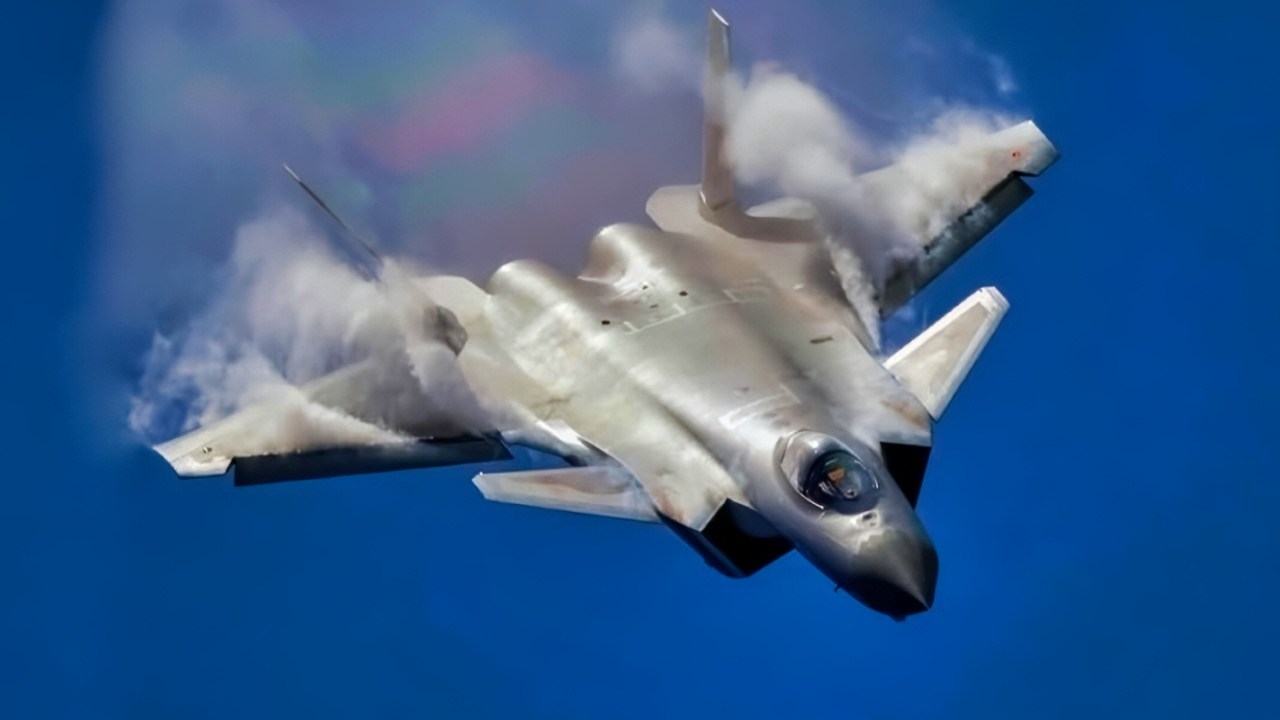
J-20S Fighter Chinese Internet Image.
How The J-20 Compares To The F-22 And The F-35
The honest technical comparison between the J-20 and its American counterparts produces a more nuanced picture than either Chinese or American partisan coverage typically allows.
Against the F-22 Raptor, the J-20 has several disadvantages and one notable advantage. The F-22 is the more agile aircraft — the Raptor’s thrust-vectoring engines and superior power-to-weight ratio give it dogfighting capability that the J-20 has not been demonstrated to match. The F-22’s sensor fusion software, developed across two decades of operational use, remains substantially more mature than what Chinese systems are believed to offer. The Raptor’s stealth performance against high-frequency air defense radars is widely considered superior.
The J-20’s advantage lies in range and payload. The aircraft’s larger airframe carries substantially more fuel internally than the F-22, and the J-20’s main weapons bay can carry up to six air-to-air missiles compared to the Raptor’s six (though the J-20’s bay accommodates larger weapons). Per the SP’s Aviation analysis of the J-20 weapons configuration, the main internal weapon bay can house both short and long-range air-to-air missiles including the PL-9, PL-12, PL-15, and the future PL-21, with two smaller lateral bays carrying short-range PL-10 infrared-guided missiles.
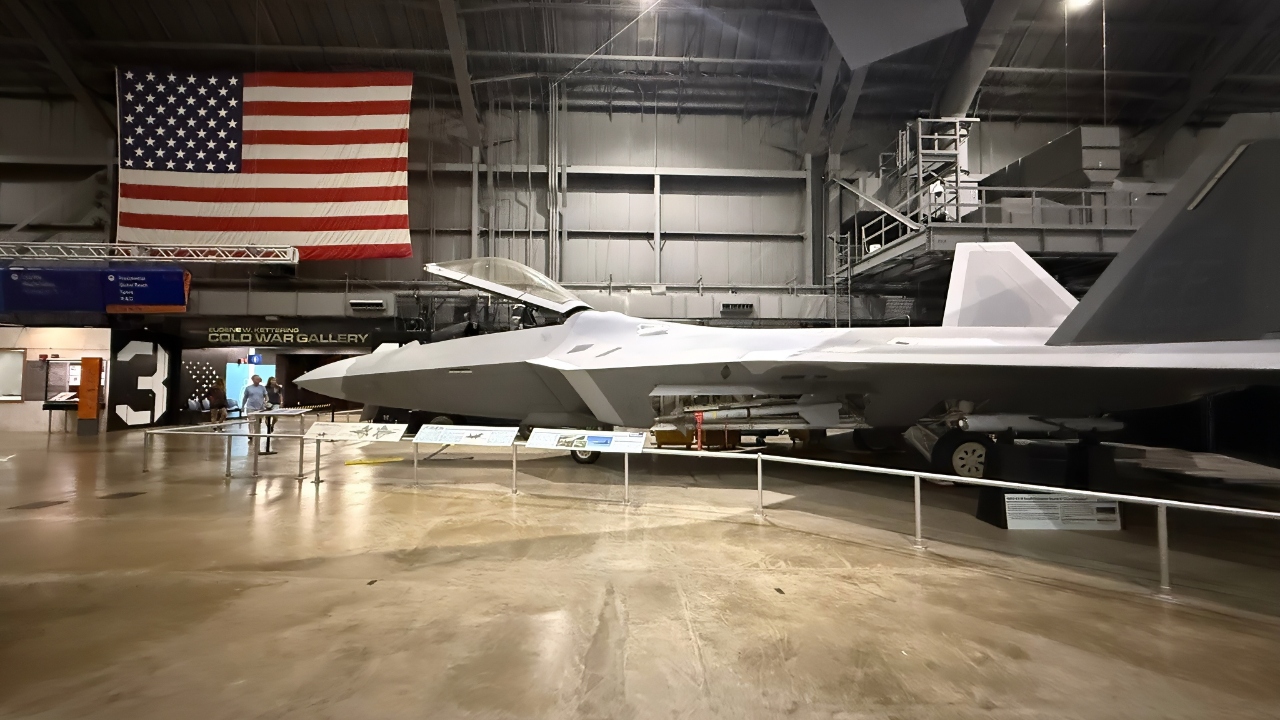
F-22 Resting at the U.S. Air Force Museum. Image Credit: National Security Journal.
Against the F-35, the J-20 is the larger, faster aircraft with greater payload capacity but less sophisticated sensor fusion and a less developed combat system. The F-35’s networked combat architecture — the ability to share sensor and weapons data in real time across an entire strike package — is the Lightning II’s defining advantage and one that no Chinese fighter has demonstrably replicated. The J-20’s countervailing advantage is the PL-15 air-to-air missile, which is widely assessed to have substantially greater range than the AIM-120D AMRAAM currently in U.S. service.
The Bomb Truck Configuration
The J-20’s bomb truck or “beast mode” capability is what has drawn the most recent attention from Western analysts.
Per Warrior Maven’s analysis of the J-20 weapons payload, the aircraft can take off with approximately 27,988 pounds of internal and external ordnance — substantially more than the F-35’s 18,000-pound maximum loadout. In stealth configuration, the J-20 carries weapons internally to preserve low-observable characteristics. In beast mode, four external underwing pylons allow the aircraft to carry an additional eight PL-15 long-range air-to-air missiles, with images circulating in late 2024 and early 2025 showing J-20s configured with the full external loadout.
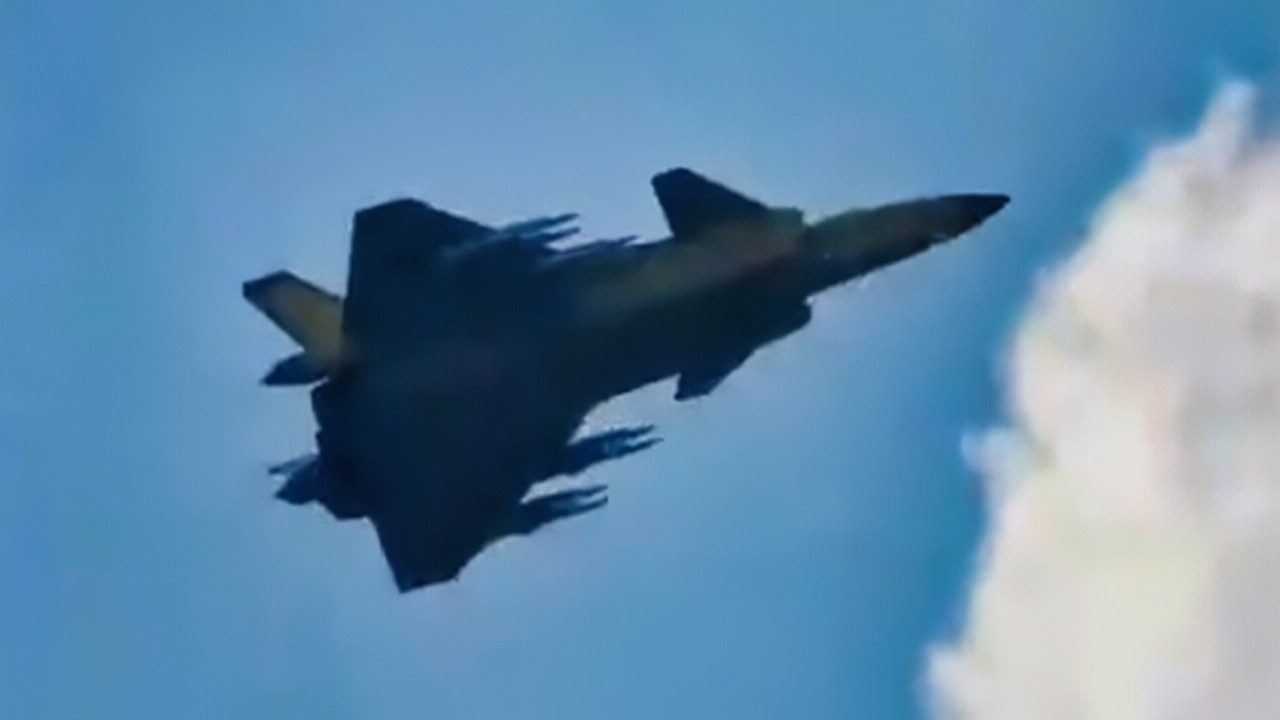
China J-20 Fighter in Beast Mode. Image Credit: X Screenshot.
Per Eurasian Times’ coverage of the beast mode imagery, the PLAAF could operate combined formations — stealth-configured J-20s leading the strike package with beast mode J-20s providing missile mass behind them. The combination would allow the PLAAF to push U.S. tankers and airborne early warning aircraft well outside the engagement envelope of any current American air-to-air missile, while maintaining stealth penetration capability at the leading edge of the formation.
The PL-15’s reported range — 200 to 300 kilometers depending on launch conditions — and the future PL-21’s projected range of 300 to 400 kilometers create a strategic engagement geometry that the U.S. Air Force is actively working to counter through the AIM-260 Joint Advanced Tactical Missile program.
The Sixth-Generation Transition

J-36 Fighter in the Sky. Image Credit: X Post.

China J-36 Fighter Takeoff. Image Credit: X Screenshot.

J-36 Fighter X Screenshot Image.
The J-20 program is not the endpoint of Chinese tactical aviation. It is the foundation for what comes next.
The Chengdu J-36 — a tailless, trijet, modified-delta-wing prototype widely described as a Chinese sixth-generation fighter candidate — made its first publicly documented flight on December 26, 2024. Per The Aviationist’s coverage of the second test flight, the J-20S has served as the chase plane during J-36 flight test operations, with the twin-seat fifth-generation fighter providing data collection and safety chase support for the next-generation airframe. A second Chinese sixth-generation candidate, sometimes designated J-50 and apparently developed by Shenyang Aircraft Corporation, made its own first flight around the same time in late December 2024.
Per Interesting Engineering’s coverage of the broader Chinese stealth pipeline, China is testing two sixth-generation concepts in parallel — the J-36 and J-50 — and the J-20 program is expected to transition through a series of incremental upgrades through the late 2020s and into the early 2030s before being supplanted by the sixth-generation platforms.
The J-20 will continue in production through at least the end of the decade. The PLAAF expects to field approximately 1,000 J-20s by 2030 — a force structure that, combined with the J-35A fleet and the early sixth-generation aircraft, would give China the largest fifth-generation and sixth-generation tactical aviation force outside the United States.
What The Mighty Dragon Actually Means
The strategic significance of the J-20 is not that it is a one-for-one match for the F-22 or F-35. It is not. The Raptor remains the more agile dogfighter. The F-35 remains the more sophisticated networked combat platform. American sensor fusion software and operational experience continue to provide capability advantages that Chinese tactical aviation has not yet replicated.
What the J-20 is, is a credible fifth-generation tactical aviation platform that exists in numbers, operates from PLAAF bases across China, can be configured for stealth penetration or mass missile delivery as the mission demands, and is now being upgraded with engines and weapons systems that close substantial portions of the capability gap.
The aircraft was built faster than the U.S. defense community expected. It incorporates stolen American and Russian technology. It is now being produced at rates that exceed annual American F-35 procurement. And the sixth-generation Chinese fighters that will eventually replace it are already in flight test.
The “Mighty Dragon” name, when first applied to the J-20 in the early 2010s, was a Chinese propaganda exaggeration. By 2026, the description is closer to accurate than most Western defense analysts would have predicted a decade ago.
“The J-20 is, at the end of the day, an 80 percent solution. She likely has 75-80 percent of the capabilities of an F-22 and F-35, to put it simply,” explained the same U.S. Air Force officer who spoke to me. “And that might just be enough to win a fight against the best fighters on Earth.”
About the Author: Harry J. Kazianis
Harry J. Kazianis (@Grecianformula) was the former Senior Director of National Security Affairs at the Center for the National Interest (CFTNI), a foreign policy think tank founded by Richard Nixon based in Washington, DC. Harry has over a decade of experience in think tanks and national security publishing. His ideas have been published in the NY Times, The Washington Post, The Wall Street Journal, CNN, and many other outlets worldwide. He has held positions at CSIS, the Heritage Foundation, the University of Nottingham, and several other institutions related to national security research and studies. He is the former Executive Editor of the National Interest and the Diplomat. He holds a Master’s degree focusing on international affairs from Harvard University.


