

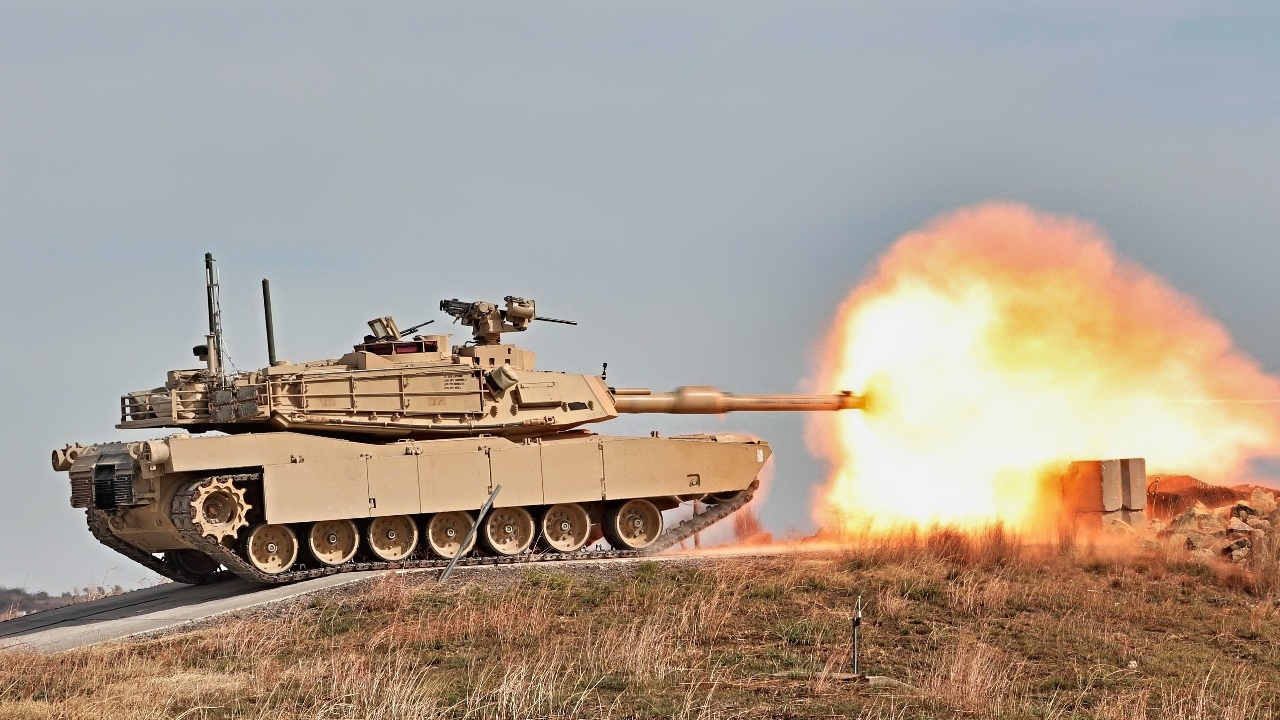
Australia transferred 49 retired M1A1 Abrams Main Battle Tanks to Ukraine as part of a roughly $160 million military aid package, with Washington’s approval. The tanks were being replaced in Australian service by newer M1A2 SEPv3 Abrams. Ukraine’s First Separate Assault Regiment then welded anti-drone cope cages, explosive reactive armor bricks, electronic warfare protection, anti-FPV spike barriers, and locally adapted communications onto the tanks before sending them into combat. American officials had privately opposed the transfer, noting that the Abrams gas turbine engine requires extensive logistics and that Ukraine was already struggling to sustain the first batch of U.S.-supplied Abrams from 2023.
The M1A1 Abrams Is the Mad Max Tank of Ukraine
Australia’s controversial decision to transfer 49 retired M1A1 Abrams Main Battle Tanks (MBTs) to Ukraine remains a source of contention among Western allies. That’s because the performance of those older Australian tanks has highlighted the weaknesses of MBTs in modern combat more generally, and, specifically, has shown that the vaunted Abrams MBT might not be the king of battle any longer.
Why Australia Sent the Tanks
The tanks Australia donated were older M1A1 AIM SA Abrams variants that the Australian Army had operated for years before Canberra committed to replacing them with newer US-made M1A2 SEPv3 Abrams MBTs.
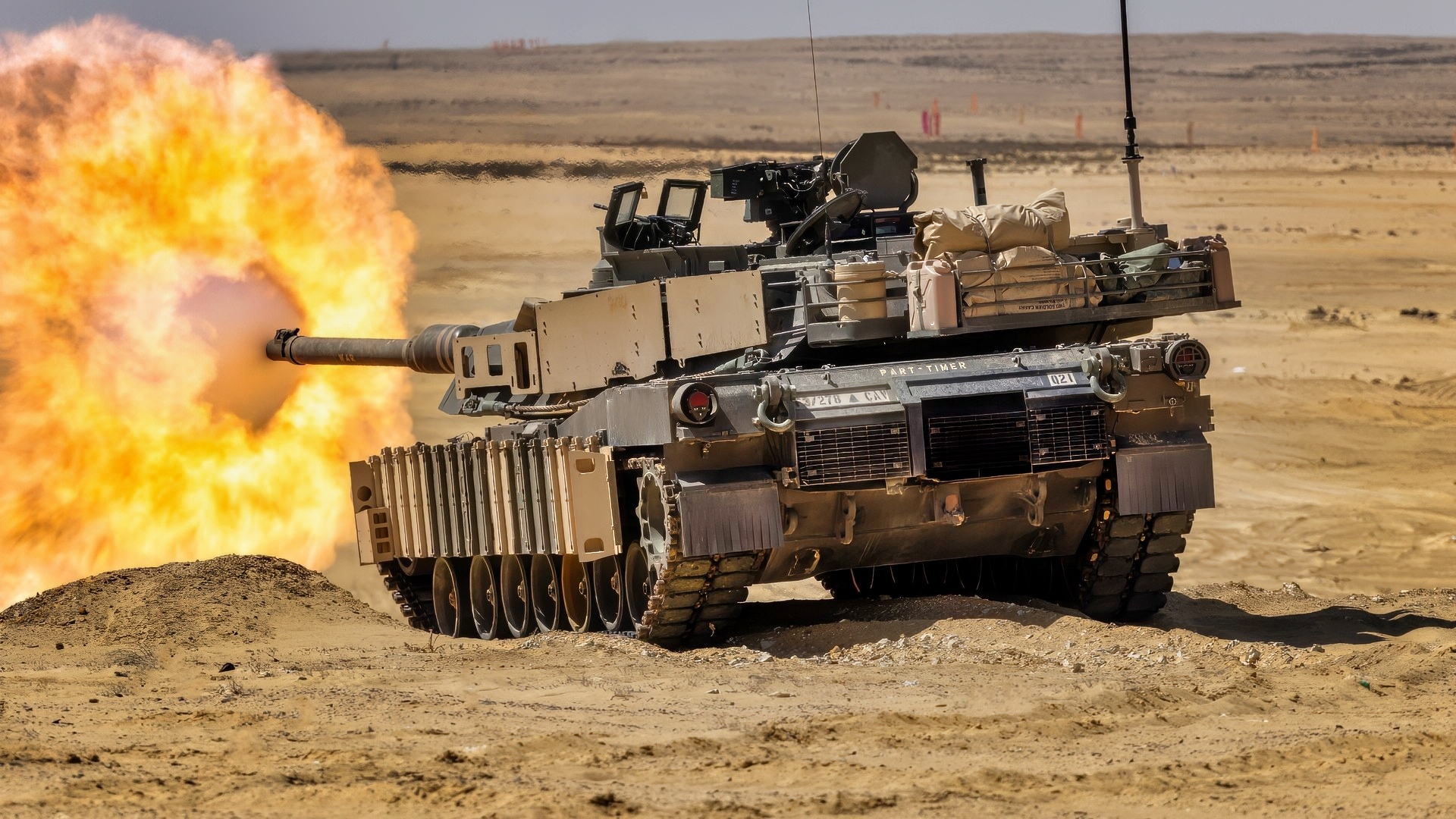
U.S. Army soldiers assigned to 3-278 Armored Cavalry Regiment, Task Force Reaper, fire the 120mm cannon on an M1A2 SEPv3 Abrams tank during live fire training for exercise BRIGHT STAR 25 at Mohamed Naguib Military Base (MNMB), Egypt, Sep. 2, 2025. BRIGHT STAR 25 showcases our unified resolve and ability to respond to evolving challenges together. Strong defense partnerships like BRIGHT STAR build lasting capacity, improve interoperability, and send a clear message of deterrence to those who threaten (our partners) and regional peace and stability. (U.S. Army Photo by Joseph Kumzak)

Soldiers with the Ohio National Guard’s 1st Combined Arms Battalion – 145th Armor Regiment conduct live fire training with the M1A2 SEPv3 Abrams Main Battle Tank at the Camp Ripley Training Center near Little Falls, Minnesota, on July 28th, 2025 (Minnesota National Guard Photo by Mr. Tony Housey).
Rather than simply mothballing the outgoing fleet, Australia chose to transfer the tanks to Ukraine as part of a broader military aid package. The package costs around $160 million.
Canberra framed the transfer as a way to help Ukraine sustain its armored force after heavy combat losses while simultaneously deepening Australia’s role in the Western coalition backing Kyiv.
The transfer required approval from Washington because the Abrams MBTs are American-made systems and are therefore subject to export-control rules.
After much consternation between Canberra and Washington over the transfer, Washington approved the shipment (despite ABC Australia reporting that some US officials privately opposed the move).
Why Some Americans Were Angry
American officials understood that Abrams tanks are extraordinarily maintenance-intensive platforms. Unlike Soviet-derived tanks, such as the T-72 or even Germany’s Leopard-1, the Abrams uses a gas turbine engine that consumes enormous amounts of fuel and requires extensive logistical support.

A M1A2 SEPV3 Abrams Tank fires at multiple range targets during a range warfighter exercise, April 11, 2021, Fort Hood, Texas. The visit with foreign allies allows the U.S. Army to boost interoperability of staff members and warfighting capabilities with the M1A2 SEPv3 Abrams Tank. (U.S. Army photo by Sgt. Melissa N. Lessard)
Ukraine was already struggling to sustain the first batch of American-supplied Abrams they received in early 2023. Items such as spare parts, recovery vehicles, maintenance crews, and specialized repair structures were in short supply.
Essentially, the US government realized after that first tranche of Abrams tanks they sent to Ukraine, that the blessed tanks would be more of a hindrance for the Ukrainians than they would be of help for their war effort. Sending anymore would just be a waste in Washington’s view.
The M1 Abrams Meets the Drone War
The biggest issue facing the Abrams (and any tank, for that matter) is the ubiquity of drones and even advanced anti-tank munitions. When the Abrams first entered the gauntlet that is the Ukraine War, expectations were enormous (ridiculously so, as I cautioned in my old Asia Times column).
Abrams MBTs enjoyed near-mythical status since their brilliant performance in Desert Storm. From that point on, with its reputation locked in, the Abrams was the great MBT of our era. It continued serving in the Iraq War as well. Although that conflict was primarily a counterinsurgency mission, the Abrams still saw some action. When it fought, it acquitted itself with honor.
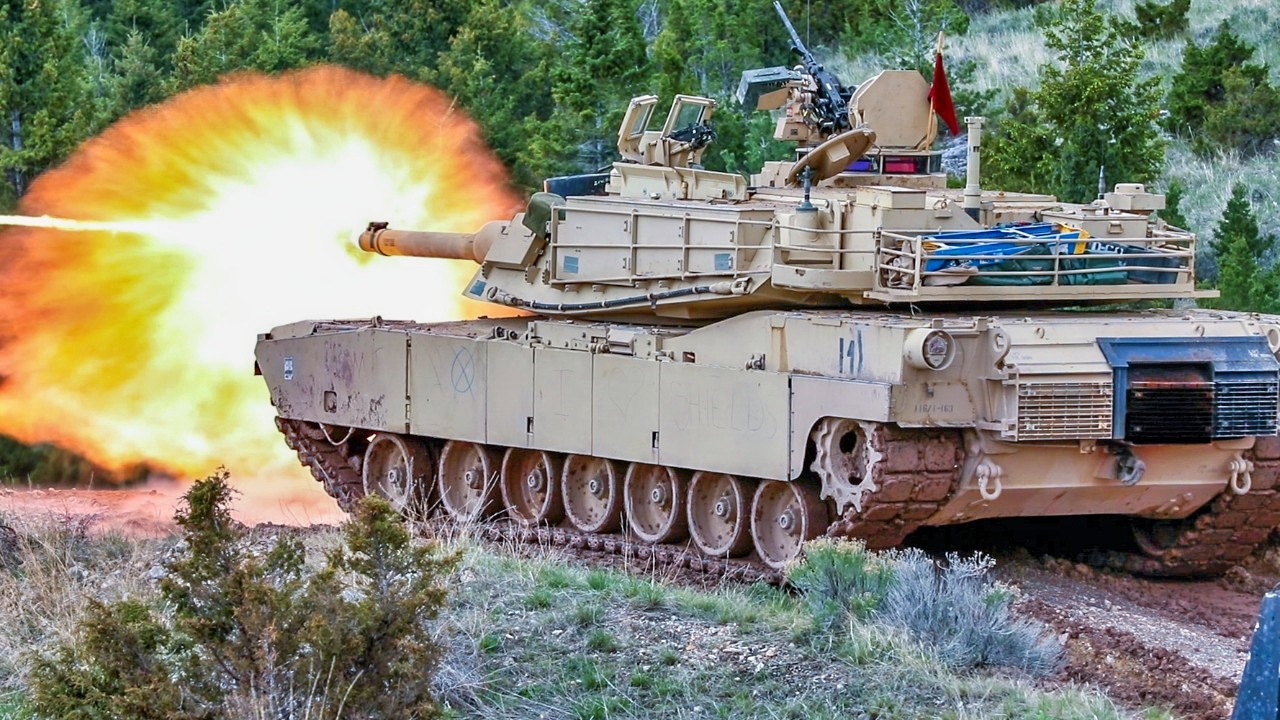
On May 16th 2025, Montana’s 1-163rd Combined Arms Battalion hosted over a dozen British Army Soldiers of the Royal Wessex Yeomanry (RWxY) at the Limestone Hills Training Facility in a joint training event to help their armored crewmembers transition to the Challenger 3 tank which is currently in production. Training involved British armored crewmembers serving in their assigned roles on the M1A2 Abrams alongside our Montana National Guard Soldiers.
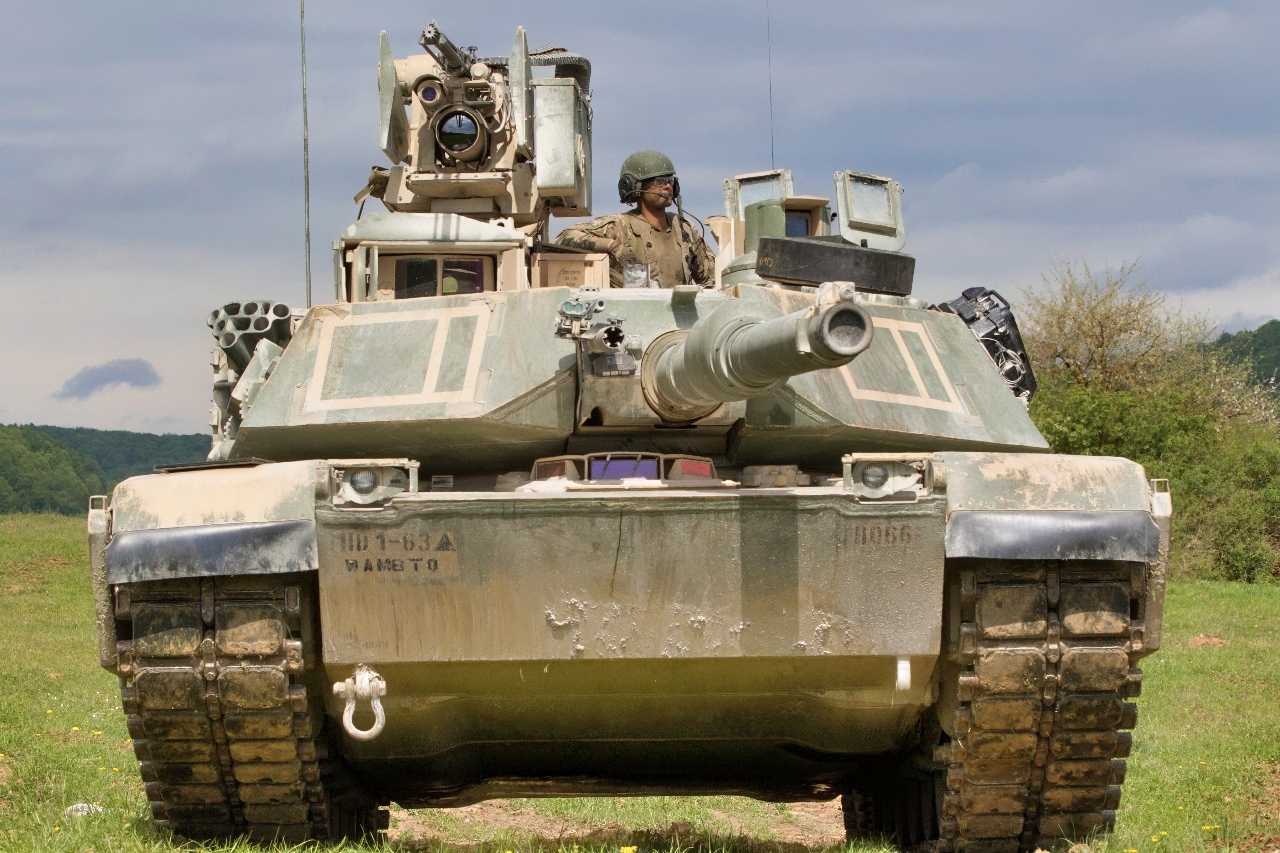
An M1A2 Abrams tank from 1st Battalion, 63rd Armor Regiment, “Dragons,” 1st Infantry Division, Fort Riley, Kansas, pulls during Combined Resolve X at the Hohenfels Training Area, Germany, May 1, 2018. Exercise Combined Resolve X is a U.S. Army Europe exercise series held twice a year in southeastern Germany. The goal of Combined Resolve is to prepare forces in Europe to work together to promote stability and security in the region. (U.S. Army photo by Spc. Andrew McNeil / 22nd Mobile Public Affairs)

A U.S. Army tank crew assigned to 2nd Battalion, 5th Cavalry Regiment, 1st Armored Brigade Combat Team, 1st Cavalry Division, maneuvers an M1A2 Abrams tank at a railhead in preparation to transport it to Hohenfels, Germany during a railhead operation, Corbu, Romania, October 24, 2018. The Battalion has deployed to Europe in support of Atlantic Resolve, an enduring training exercise between NATO and U.S. Forces. (U.S. Army National Guard photo by Sgt. Jamar Marcel Pugh, 382nd Public Affairs Detachment/ 1st ABCT, 1st CD/Released)
But what the folks in Washington and eventually Canberra didn’t seem to grasp was that Ukraine was not Iraq.
An enemy can hunt even the most advanced tank if that tank is constantly observed from above, as tanks in the Ukraine War are by drones. More importantly, most tanks are vulnerable to top-side attacks of the kind that drones subject MBTs to in the Ukraine War.
In fact, multiple Abrams tanks supplied earlier by the United States were damaged or destroyed in combat operations.
In many cases, enemy tanks were not penetrated frontally by anti-tank munitions or rival tanks in traditional battles.
Instead, they were attacked from above, immobilized by mines, or swarmed by drones.
Welcome to the new face of war.
So, armor still matters. But only if that armor integrates into layered electronic warfare and drone defense systems.
Ukraine’s Improvised Solution
The need for adaptation is where the Australian M1 Abrams gets interesting.
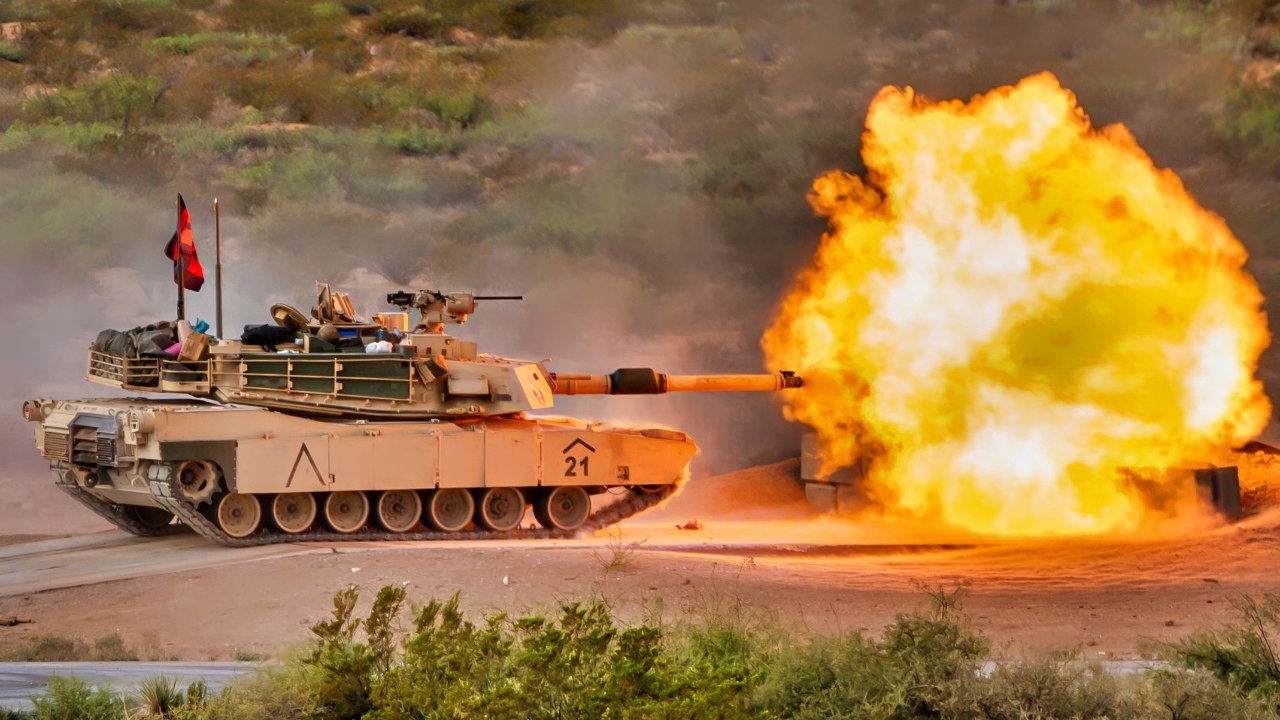
A U.S. Army M1A2 SEPv2 Abrams assigned to Alpha Company, 1st Battalion, 67th Armor Regiment, 3rd Brigade Combat Team, 1st Armored Division fires at a target before quickly disengaging into a defilade to load a new round at McGregor Range, New Mexico, Sept. 29, 2023. Alpha Co. executed Gunnery Table VI, which evaluates crews on engaging stationary and moving targets while utilizing all weapons systems in offensive and defensive positions, ensuring our crews are trained and ready for any mission. (U.S. Army photo by Spc. David Poleski)
Multiple reports suggest that Ukraine’s First Separate Assault Regiment heavily modified the tanks before deploying them into combat. Those modifications included anti-drone cage armor, overhead “cope cage” structures, explosive reactive armor (ERA) bricks, improvised electronic warfare (EW) protection, anti-FPV drone spike barriers, and locally adapted communications systems.
Rather than resembling US tanks during Operation Desert Storm, these Ukrainian mutants resembled armored fortresses, covered in welded steel, frameworks, and layered protective systems. So, these tanks were less Star Wars and more Mad Max.
The (Modern) Tank In Attack
Ukraine’s modifications reflect a greater transformation underway in armored warfare everywhere. Western military doctrine emphasized mobility, sensor fusion, long-range precision fire, all under the protective umbrella of air superiority.
Ukraine, on the other hand, has charted an entirely new path in modern armored warfare.
Ukrainian tanks today value drone defense, concealment, EW, and survivability under constant aerial observation.
The Real Lesson
The Australian Abrams controversy ultimately reveals something bigger than a disagreement over 49 tanks. This spat revealed the uncomfortable reality that warfare is changing much faster than modern militaries can adapt.

Soldiers with 1st Battalion, 68th Armor regiment, 3rd Armored Brigade Combat Team, 4th Infantry Division execute platoon live fire exercises Dec. 7, 2021, Fort Carson, Colorado. Platoon live fire exercises prove a platoon’s ability to engage targets and maneuver together on their M1A2 Abrams main battle tanks. (U.S. Army photo by Capt. Tobias Cukale)
Sure, the Abrams remains one of the most powerful tanks ever built. But in Ukraine, power alone is insufficient.
Survivability now depends on adapting to and overcoming the ever-present drone threat.
Ukraine’s battlefield engineers understand this reality better than any other group besides their Russian foes.
Thus, iconic American tanks, like the Abrams, are transmogrifying into something entirely new: armored assault systems built for the age of drones, when tanks are needed less to punch through fortified enemy lines than to conduct mobile, long-range fires while remaining concealed.
That’s a far different kind of war from what the Americans designed the Abrams for.
About the Author: Brandon J. Weichert
Brandon J. Weichert is a Senior National Security Editor. Recently, Weichert became the editor of the “NatSec Guy” section at Emerald. TV. He was previously the senior national security editor at The National Interest. Weichert hosts The National Security Hour on iHeartRadio, where he discusses national security policy every Wednesday at 8 p.m. Eastern. He hosts a companion show on Rumble entitled “National Security Talk.” Weichert consults regularly with various government institutions and private organizations on geopolitical issues. His writings have appeared in numerous publications, among them Popular Mechanics, National Review, MSN, and The American Spectator. And his books include Winning Space: How America Remains a Superpower, Biohacked: China’s Race to Control Life, and The Shadow War: Iran’s Quest for Supremacy. Weichert’s newest book, A Disaster of Our Own Making: How the West Lost Ukraine, is available for purchase at any bookstore. Follow him via Twitter/X @WeTheBrandon.


