


The Eurofighter Typhoon is often positioned as a comparatively lower-cost alternative to the F-35 Lightning II. Despite lacking comparable stealth systems, the Eurofighter is still a highly capable multi-role fighter.
Recent delivery tranches, such as tranches 4 and 5, have further enhanced the aircraft’s multi-role capabilities, with state-of-the-art avionics and electronic warfare suites.
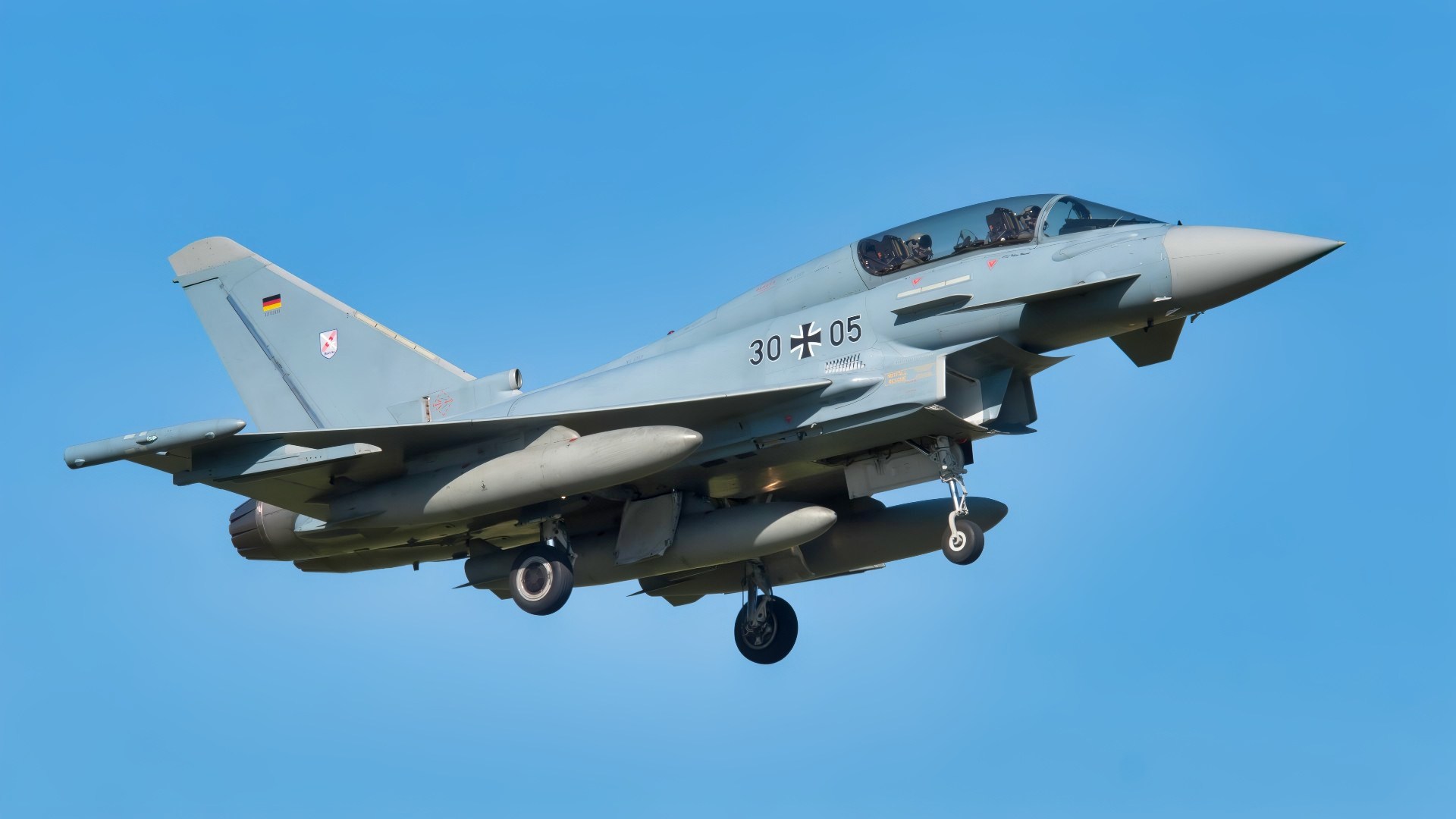
Eurofighter Typhoon Training in Sky. Image Credit: Creative Commons.
But how does the aircraft match up against the F-35? Is it really an advanced alternative for the fifth-generation stealthfighter, or does the F-35 still remain supreme?
The Eurofighter vs the F-35
The Eurofighter Typhoon tranche 5 is the latest iteration of the aircraft. Some are even calling for the ‘super’ version of the fighter.
It has a large following in defense circles and even managed to best the F-22 Raptor in wargames years back.
Developed by a consortium comprising BAE Systems, Airbus, and Leonardo, it was intended to become the premier aircraft of the European Union.
While that dream was never realized, the Eurofighter is still a formidable aircraft in its own right. It sports a canard delta-wing configuration, typical of European fighters, which provides excellent lift and maneuverability.
Initially designed as an air-superiority fighter, the Typhoon has since been transformed into a fully multi-role aircraft capable of both air-to-air and air-to-ground strike missions.
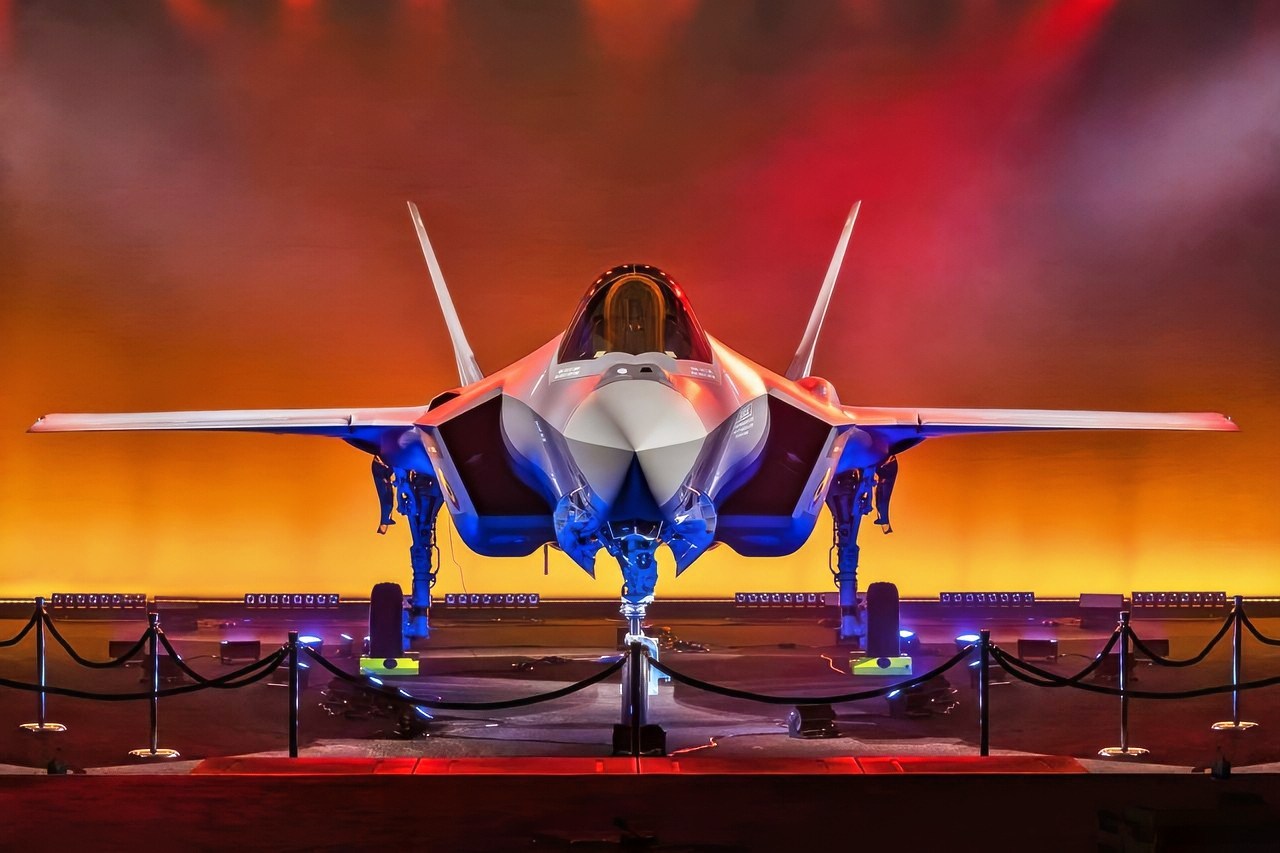
F-35 Fighter in Belgium. Image Credit: Creative Commons.

An F-35 Lightning II assigned to the 56th Fighter Wing performs a strafing run during exercise Haboob Havoc, April 26, 2023, over Barry M. Goldwater Range, Ariz. Haboob Havoc is a total force competition enabling pilots from various bases to demonstrate their skills across a diverse range of aircraft while also testing their abilities in different mission sets such as dogfighting and gun-runs. (U.S. Air Force photo by Airman 1st Class Mason Hargrove)
Newer models of the aircraft are equipped with more sophisticated avionics and sensors to give the pilot better situational awareness and better networked capabilities.
The F-35 needs no introduction. Built by Lockheed Martin for the Joint Strike Fighter program, the F-35 is one of the most advanced fighter jets ever built by the United States.
Built with state-of-the-art avionics and sophisticated stealth systems, the aircraft was designed for a wide range of missions, including air superiority, SEAD/DEAD, close air support, electronic warfare, and more.
One of the few major criticisms of the aircraft is its insanely high price, with an individual unit costing between $80 and $100 million. However, given the F-35’s capabilities, many argue that the aircraft is worth the price tag.
Stealth Capabilities
Stealth is the great divider between the F-35 and the Eurofighter. The F-35 is one of the most widely acclaimed fighters in the world for its low-observability design. The aircraft uses shaping techniques combined with radar-absorbent materials to lower its radar cross-section from all aspects.
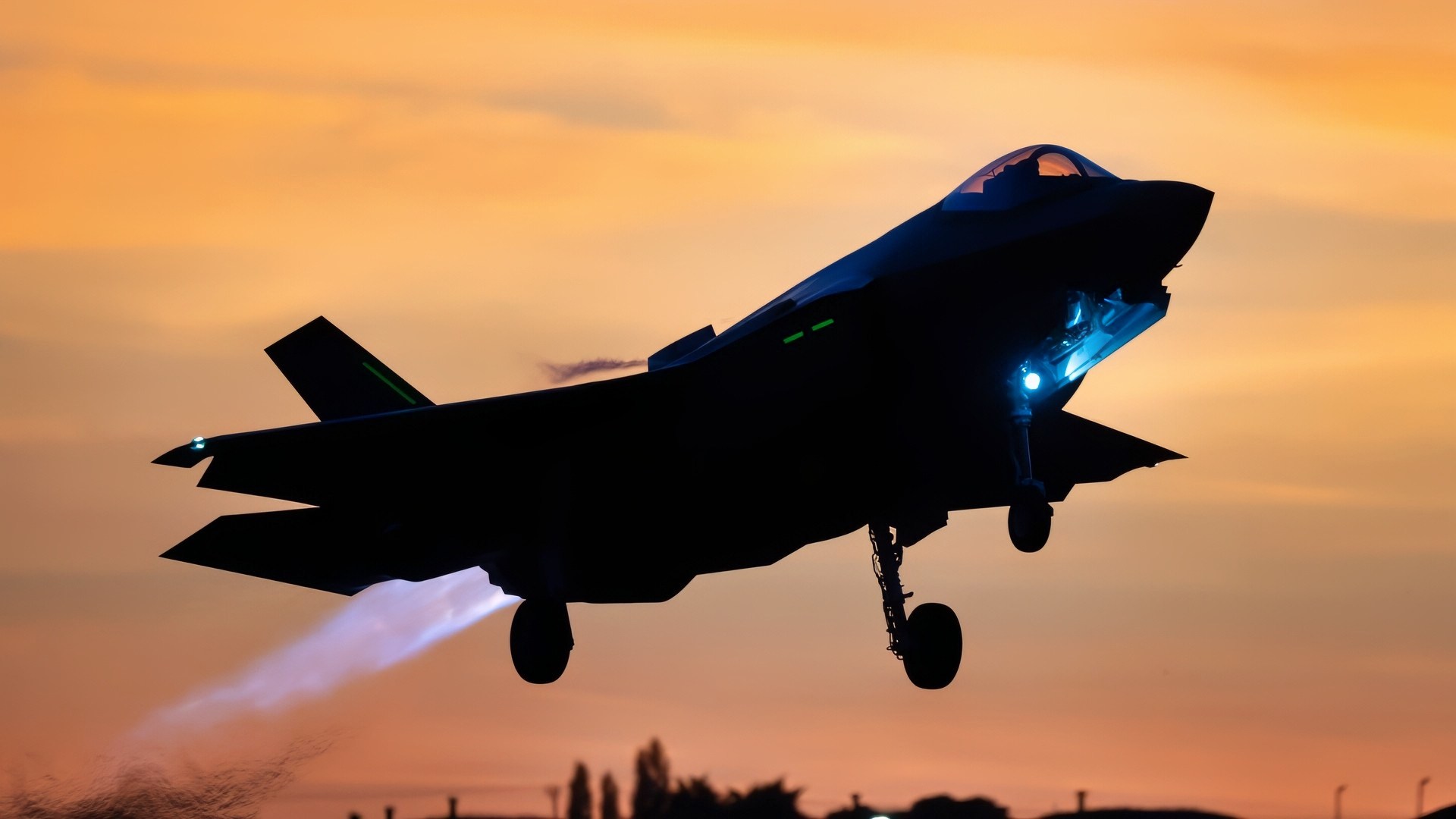
A U.S. Air Force F-35A Lightning II takes off at RAF Lakenheath, England, Sept. 16, 2024. The 48th Fighter Wing dedicates allotted flying hours during hours of darkness to ensure Airmen are prepared to deter potential adversaries and defend NATO territory anytime, anywhere. (U.S. Air Force photo by Airman 1st Class Alexander Vasquez)
Even without RAM coatings, the F-35 has a median frontal RCS of around 0.06 square meters, depending on the frequency. Its engine is also designed to reduce its infrared signature. Although it is not completely invisible, the aircraft is a masterpiece of stealth technology, enabling it to penetrate heavily contested airspace undetected.
The Eurofighter is not a stealth fighter by any stretch of the imagination, but it does include several measures to reduce its visibility.
The aircraft was built with S-duct air intakes, which hide the engines’ turbine blades from radar waves. Its wings, canards, and fin trailing edges are heavily swept to bring down its frontal RCS, and some areas of the aircraft are coated with RAM paints. These measures help bring the Eurofighter’s frontal RCS down, but the sides and the back are still heavily exposed to radar returns. What few measures the Typhoon does take still pale in comparison to the F-35’s stealth systems.
Sensors and Avionics
In the realm of avionics, the Eurofighter has undergone several improvements. Initially equipped with a CAPTOR multi-pulse Doppler radar, which was later replaced with the CAPTOR-E AESA radar. This new radar significantly enhances the aircraft’s tracking range and lock-on speed.
Tranche 5 versions of the Eurofighter are expected to further enhance these capabilities. The aircraft is also equipped with the PIRATE (Passive Infra-Red Airborne Track Equipment) system, which, as the name suggests, is an infrared search-and-track (IRST) system. The PIRATE system can track up to 200 targets simultaneously using its various tracking modes. Once a target is selected, the plane’s computer will automatically cue a short-range missile.
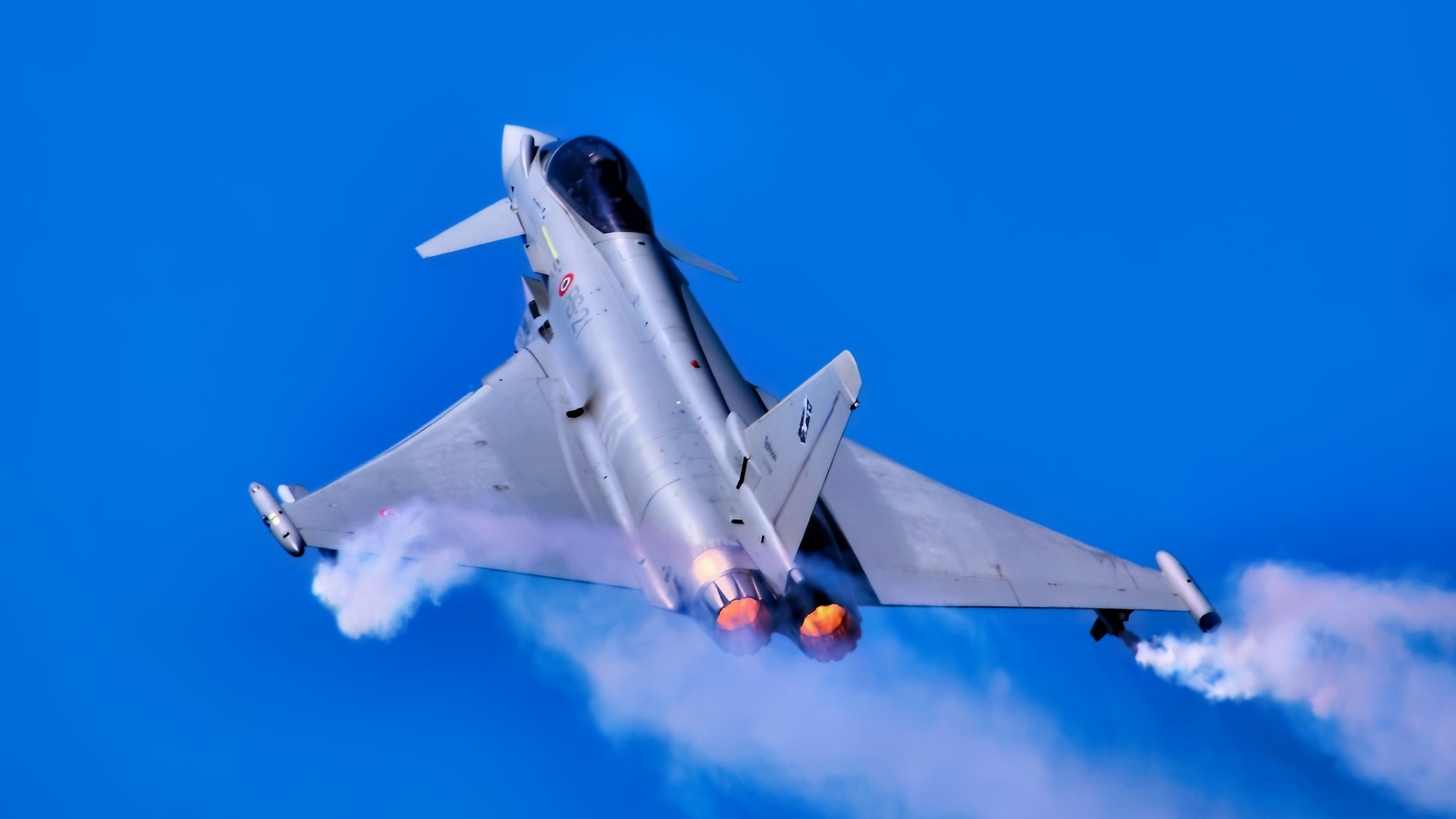
Eurofighter Typhoon Test Flight in 2013. Image Credit: Creative Commons.
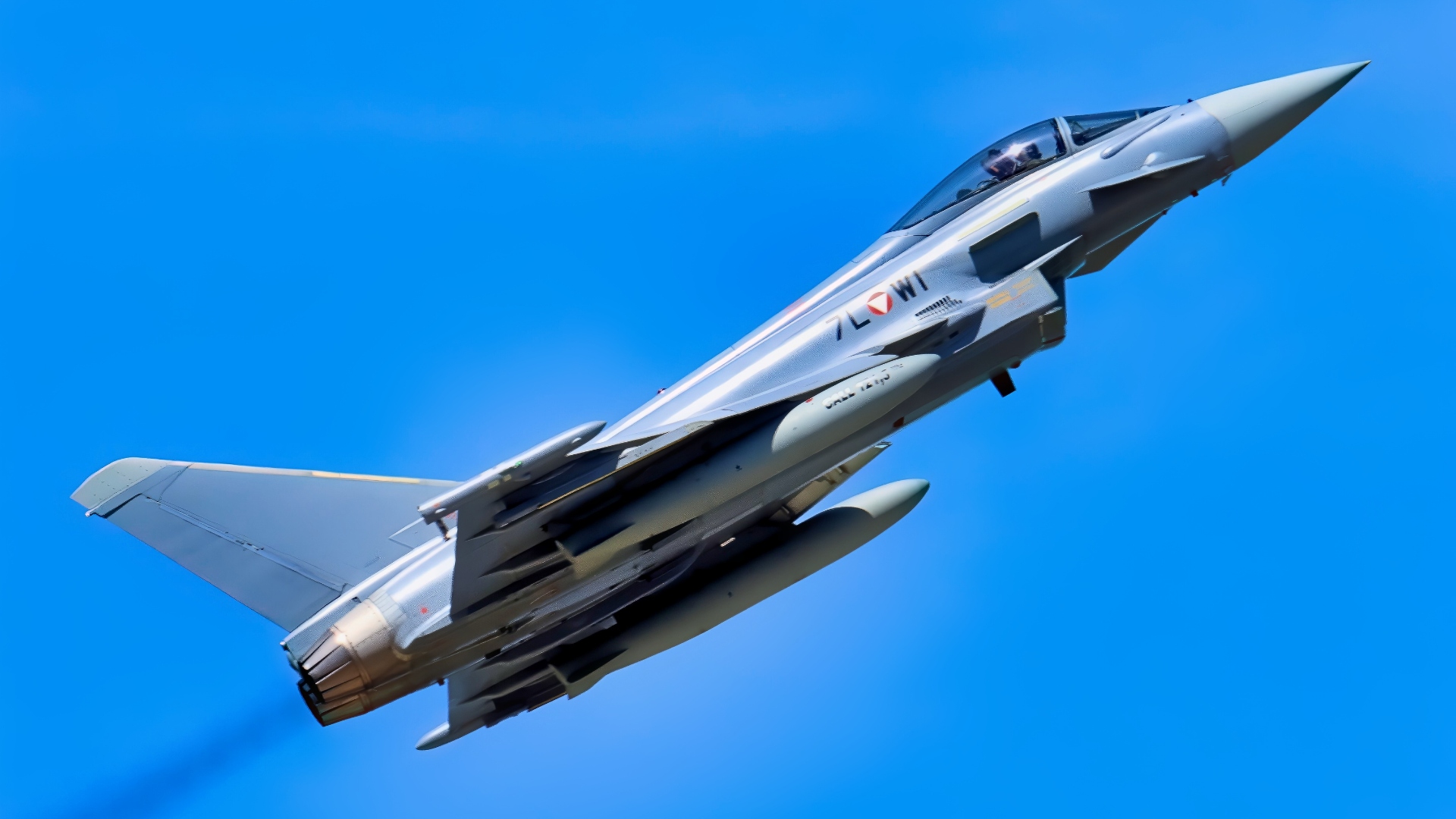
Eurofighter Typhoon. Image Credit: Creative Commons.
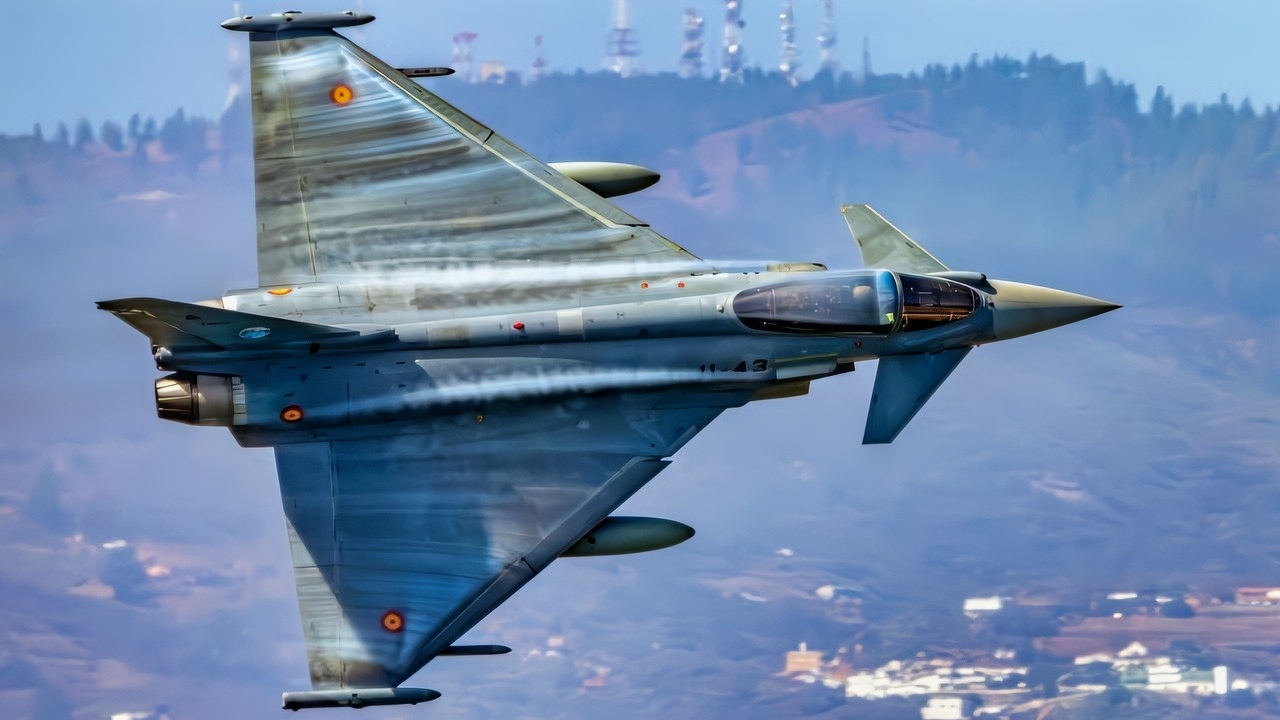
Eurofighter Typhoon Powering Through. Image Credit: Industry Handout.
While the Typhoon is no pushover in the realm of avionics, the F-35 is a completely different beast. Designed for sensor fusion and network-centric warfare, the avionics onboard the F-35 are among the most complex components.
The centerpiece is the AN/APG-81 AESA radar and the AN/ASQ Barracuda electronic warfare system. The aircraft is also fitted with a distributed aperture system (DAS) and an electro-optical targeting system (EOTS), and a communications, navigation, and identification (CNI) suite. What sets the F-35 apart, however, is how all of these systems work together. The computer aboard the F-35 fuses data from internal and external systems and presents a clear picture of the battlefield to the pilot.
Flight Performance: The Only Area Where the Eurofighter Beats the F-35
Flight performance is perhaps the one area where the Eurofighter beats the F-35.
The Typhoon is powered by two Eurojet EJ200 turbofan engines, which give the aircraft a maximum speed of Mach 2.35 at high elevations, and a combat range of 750 nautical miles. The F-35 is equipped with a single Pratt and Whitney F135-PW-100 engine, which gives it a top speed of Mach 1.6 at high altitudes and a combat range of 500 to 670 nautical miles. While maneuverability is not a deciding factor in close-range combat, it does still play a role.
The Eurofighter is quicker and more nimble than the F-35, which is still a capable dogfighter in the right hands, but lacks the maneuverability of other aircraft.
Who Wins?
Overall, however, the F-35 retains a decisive advantage over the Eurofighter Typhoon.
While tranche 5 deliveries are expected to improve the Eurofighter’s capabilities, the F-35 possesses better stealth and better avionics than its opponent.
In a one-on-one engagement, the F-35 would like to target and engage the Typhoon long before the European aircraft even knows it’s there. If, however, the Eurofighter managed to close the distance, then the encounter comes down to pilot skill.
About the Author: Isaac Seitz
Isaac Seitz, a Defense Columnist, graduated from Patrick Henry College’s Strategic Intelligence and National Security program. He has also studied Russian at Middlebury Language Schools and has worked as an intelligence Analyst in the private sector.


