

Summary and Key Points: For centuries, Russia’s enormous size has been its greatest defense, swallowing armies from Napoleon to Hitler. Ukrainian drones are now flipping that strength into a weakness.
-Ukraine’s domestic Firepoint FP1 and RS1 Bars kamikaze drones, paired with British Storm Shadow cruise missiles, have shut down six of Russia’s ten oil refineries, cost Moscow more than one trillion rubles in refinery damage, destroyed 250 Russian air defense units in April alone, and forced Moscow to close civilian airspace below 5,100 meters starting June 1.

T-72 Russian Tank. Image Credit: Creative Commons.
-In mid-May, Ukraine launched 600 drones at Moscow in a single attack. Crimea is now effectively isolated.
Russia’s Size Was Its Greatest Defense Against Napoleon and Hitler — Now Ukraine’s Drones Have Turned It Into Russia’s Worst Weakness
For hundreds of years, Russia’s enormous size has been widely regarded as the country’s greatest asset. From Napoleon Bonaparte and Adolf Hitler, a long line of invaders has made incursions into Russia only to see their armies swallowed up by the vastness of the steppes.
Ukraine is now flipping the script with a strategic drone and missile campaign that aims to exploit Russia’s immensity and transform it from a key strength into a fatal weakness. Russia’s immense size makes it difficult to defend.
Ukraine’s escalating long-range drone and missile strikes have increasingly crippled Russia’s economic and logistical foundations.
By deploying advanced, domestically produced kamikaze drones—such as the Firepoint FP1 and RS1 Bars, and Western “Storm Shadow” missiles—Ukraine has systematically targeted Russia’s oil infrastructure, supply chains, and military-industrial sites.
Coordinated, massive drone barrages targeting Russian regions have frequently breached regional electronic warfare defensive umbrellas, temporarily forcing major closures of Moscow’s busiest airports.
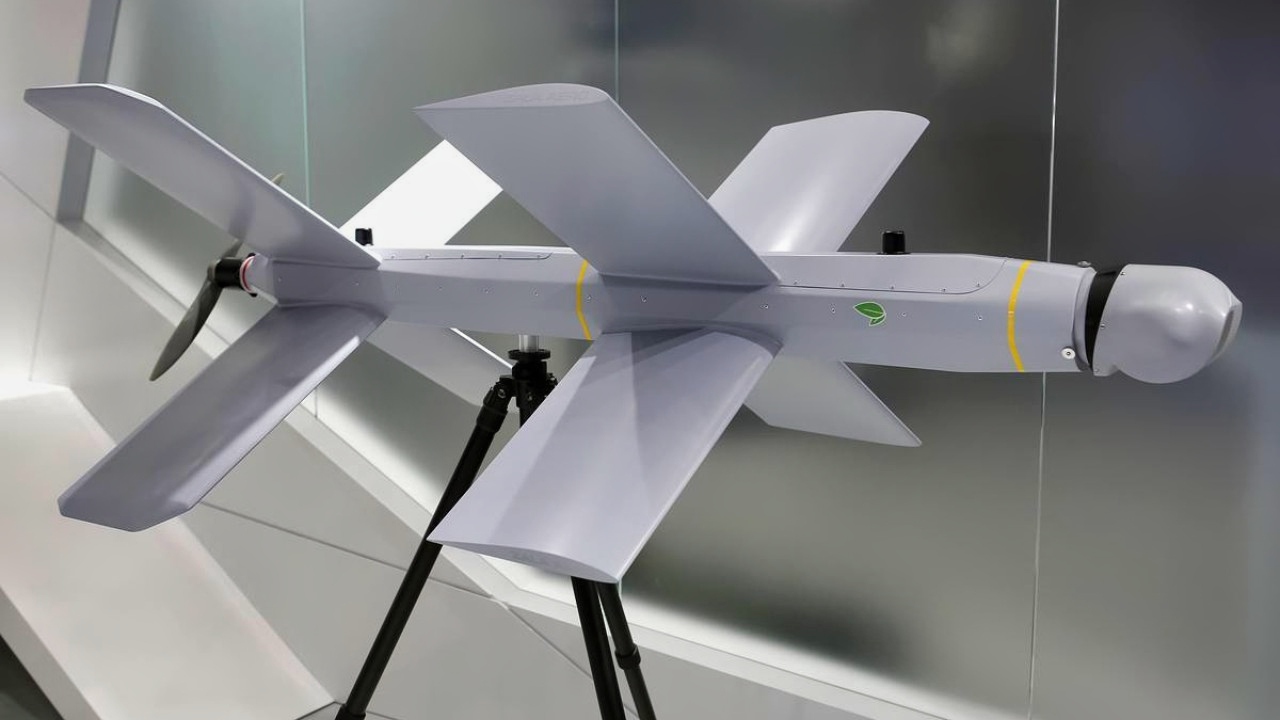
Lancet Drone. Image Credit: Russian State Media.
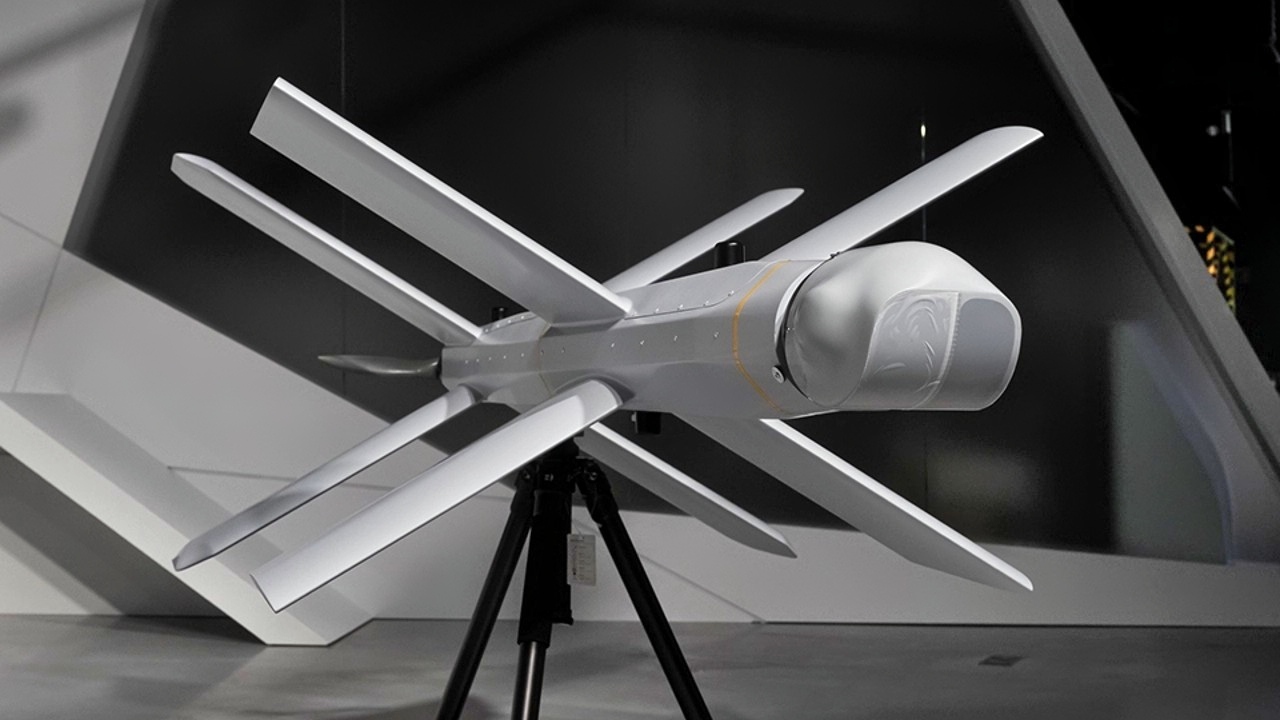
Lancet Drone from Russia. Image Credit: Creative Commons.
This is changing the entire outlook of the war, as the tide has turned toward a possible Ukrainian victory.
Ukrainian Drone and Missile Strikes Are Destroying The Economy
Ukrainian drone strikes have increasingly hit deep inside of Russia, and the Institute for the Study of War reported that Putin’s major embarrassment was the annual May Day parade, where Ukraine “permitted” the Kremlin to hold the very scaled-down parade (without tanks and rockets) without conducting strikes.
Because of these drone threats, the ISW also reported that Russian authorities are being forced to restrict the use of airspace in the Moscow air zone. The Russian Aircraft Owners and Pilots Association (AOPA) claimed on May 25 that Russian authorities will begin prohibiting civilian flights in the Moscow air zone at altitudes from 0 to 5,100 meters starting on June 1.
Russian authorities closed the Kaliningrad airport for a few hours due to a reported drone threat for the first time on May 25. That is significant, as the airport’s location, over 800 kilometers from Ukrainian-controlled territory and bordered by NATO states, underscores the growing reach of Ukraine’s drones.
One drone strike targeting a navigation service in Rostov-on-Don led to suspensions of air service at 13 major Russian airports.
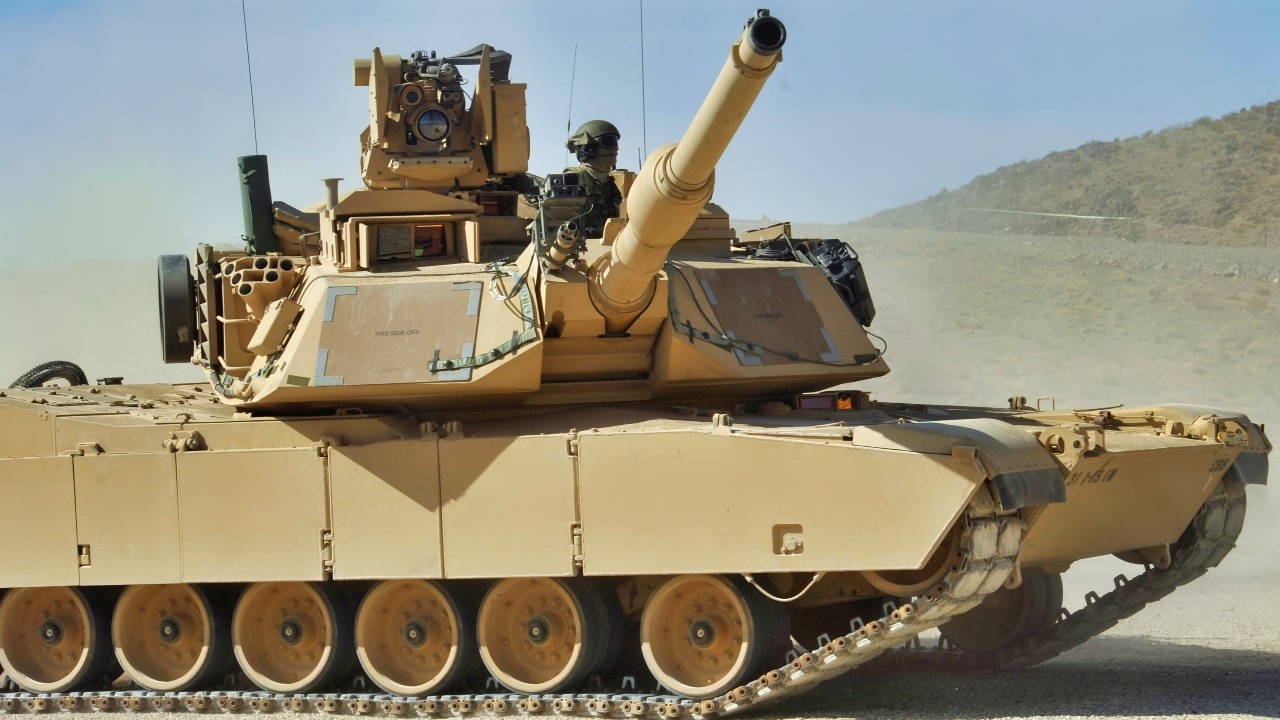
Australia is sending 49 of its retired M1A1 Abrams tanks to Ukraine, a move that bolsters Kyiv’s armored firepower but raises significant questions about survivability on the modern battlefield. While the donation is a welcome gesture, US officials have reportedly expressed private frustration, warning that Ukraine struggles to sustain the complex tanks and highlighting their vulnerability to cheap, top-attack FPV drones. The war in Ukraine has become a “drone war,” where even advanced main battle tanks are at constant risk. The effectiveness of these donated Abrams will ultimately depend on Ukraine’s ability to counter this pervasive threat.
Ukrainian drone attacks continue to target Moscow’s oil production facilities, effectively shutting down the Syzran Oil Refinery, which refines about 170,000 barrels a day. Six of Russia’s ten oil refineries were forced to shut down production, at least for a short time. The strikes on Russia’s refineries have cost them over one trillion rubles in the past year.
Storm Shadow Missiles Hit Sevastopol
Authorities in Russian-occupied Crimea said Ukraine attacked the port city of Sevastopol using Storm Shadow missiles.
Mikhail Razvozhayev, the Russian-installed governor of the occupied Crimean peninsula, said on Telegram that, “ Ukrainian Armed Forces attacked the city using various aerial weapons, preliminarily including Storm Shadow missiles.”
The Storm Shadow missile is built by a UK/French company and is an air-launched, long-range, conventionally armed, deep-strike weapon with a range of up to 560 km.
The situation has forced Moscow to work on an agreement with Belarus to allow the Russians to use Belarus as a launch site for drone strikes against Ukraine.
With the current state, it would be foolish for Ukraine to grant Russia the favorable conditions that Moscow is insisting upon.
How Ukraine’s “Middle Strike” Drones Are Changing The War
The Ukrainian drone attacks are savaging Russia’s air defense networks. According to United24, drones destroyed more than 250 air defense units in April; in March and February, the figures were similar—up to 300 units each month.
The destruction of Moscow’s air defenses is the basis of Ukraine’s Middle Strike Drone strategy and allows it to hit targets deeper inside Russia.
The “Middle Strike” refers to the range between battlefield first-person-view (FPV) tactical drones and the long-range deep-strike missile systems.
These fixed-wing drones have eviscerated Moscow’s air defenses, allowing for deeper and more successful strikes against Russian infrastructure. This includes weapons and ammunition depots, warehouses, and command posts.
These attacks have basically isolated the entire Crimean peninsula, as Moscow is wary of sending equipment, large troop concentrations, and ships to the ports there, lest they be attacked with virtual impunity.
In mid-May, Ukraine sent more than 600 drones on an attack on Moscow itself. The attacks hit microelectronics plants, fuel infrastructure, and missile-related targets in the Moscow area.
Russia, thus far, has been powerless to stop the Ukrainian drone attacks. If anything, they are only growing in size and effectiveness.
Russia is growing even more vulnerable to Ukrainian attacks, as Kyiv, after four years of having its citizens and civilian infrastructure targeted, has turned the tide on Moscow. This is a game-changer for Kyiv.
About the Author: Steve Balestrieri
Steve Balestrieri is a National Security Columnist. He served as a US Army Special Forces NCO and Warrant Officer. In addition to writing on defense, he covers the NFL for PatsFans.com and is a member of the Pro Football Writers of America (PFWA). His work was regularly featured in many military publications.


Swamplaw Yankee
May 28, 2026 at 3:55 am
Ukraine had it’s ‘Rocket City” producing missiles for decades. Ukrainians were the blood of this missile industry.
The old engineer type guys are now re-adjusting their skills.
The simple sentence MAGA POTUS Trump refuses to state is, “Putin, immediately withdraw all Kolonizers, parasites, troops back to the 2013 border line with Ukraine and make reparations paid in gold bullion.”
That one sentence stops the 1000 year old ancient Genocide of Ukrainians carried out by Kremlin Muscovy ethnics.
The Ukrainian kids running the drone business will say it with drones if Trump is a moral failure in his statements. The Yellow sweat is starting! Any minute the Yellow Belly Panic run back to Moscow will exponentially explode.
The Kremlin Kolonizers will see the obvious lack of gas to even drive back to Moscow. The panic to leave before International war crimes courts start to catch the child mass abductors, etc., will be total bright Yellow!