


Summary and Key Points: The United States Navy originally planned a fleet of 29 Seawolf-class attack submarines, but only 3 were built before the program was canceled following the collapse of the Soviet Union.
-Each Seawolf used HY-100 steel, which allowed the boat to operate at greater depths and could carry as many as 50 Tomahawk cruise missiles. The cancellation directly contributed to the Navy’s current submarine deficit. To close the firepower gap, Block V Virginia-class submarines are now being built with an 80-foot Virginia Payload Module that adds up to 28 Tomahawks, bringing each submarine’s total firepower from 12 to 40.
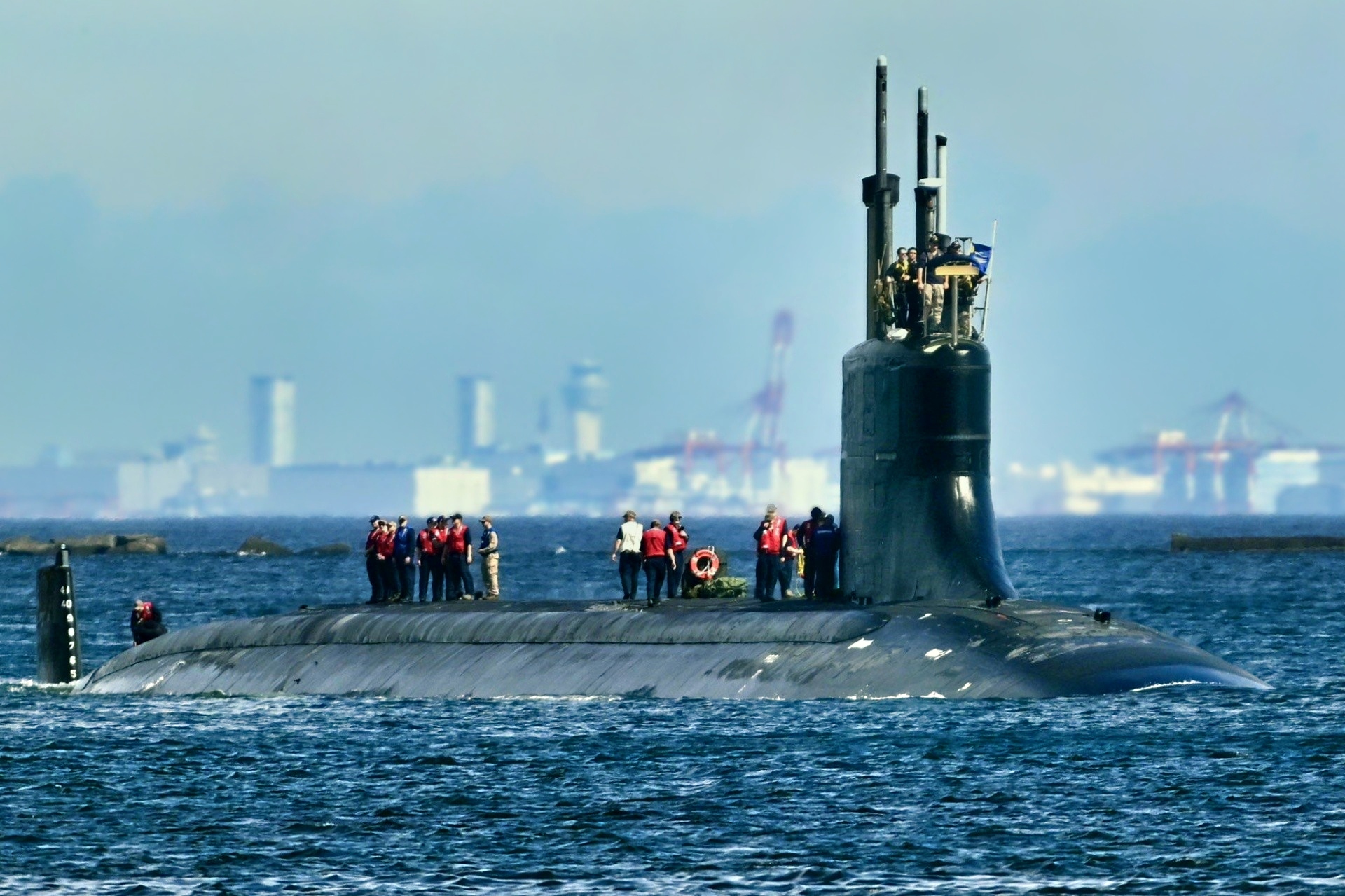
Seawolf-Class Submarine. Image Credit: Creative Commons.
The Seawolf-Class Submarine Shortage Won’t Ever Go Away
The end of the Cold War brought an early end to the promising, heavily armed Seawolf-class submarines, capable boats that arguably would have continued if Pentagon decision-makers had embraced a longer-term view of potential global threats.
Just 3 Seawolf-Class Submarines: F-22 of Subs
Only three Seawolf subs were built, yet the Navy initially planned a fleet of 29 boats, something that would arguably have helped avoid, diminish, or offset the service’s current submarine deficit. This is the reason they call this class of subs the F-22 Raptor of submarines, as they were cut down to size for similar reasons, just as years later the U.S. military would surely love to have their numbers.

An F-22 Raptor assigned to the 1st Fighter Wing, Joint Base Langley-Eustis, Va., takes off for a training mission during Northern Lightning, a training exercise held annually at Volk Field, Wisc., Aug. 12, 2020. This is the first time the 158th has participated in the exercise with the F-35s, which sees them working with F-22 Raptors assigned to the 1st Fighter Wing, Joint Base Langley-Eustis, Va., F/A-18E Super Hornets assigned to VFA-151, Naval Air Station Lemoore, Calif., F-16 Falcons assigned to the Wisconsin National Guard, as well as T-38 Talons and L-159Es from Draken International acting as aggressor aircrafts conducting simulated combat missions in a joint-service environment. (U.S. Air National Guard photo by Airman 1st Class Jana Somero)
What appears to have been an overly narrow or short-term view of the future global threat environment has arguably diminished or compromised the US Navy’s undersea superiority.
While the end of the Cold War may have decreased the need for military buildup in the short term, any realistic longer-term threat assessment could have quickly and easily determined that the US would continue to need a large, capable fleet of attack submarines to ensure deterrence and undersea superiority.
Should the U.S. Navy Push for More of These Style Subs?
For many years now, Navy commanders have been clear that the demand for submarines exceeds the number available. This has increased the threat equation for U.S. surface ships and forward-stationed forces, particularly in the Pacific.
While the collapse of the former Soviet Union undoubtedly drove a need to adjust strategic military planning, it seems in retrospect that the decision to truncate Seawolf-class submarines indicated that Pentagon planners massively underestimated or did not envision the kind of undersea threat Russia’s submarine technology would present to NATO over the long term.
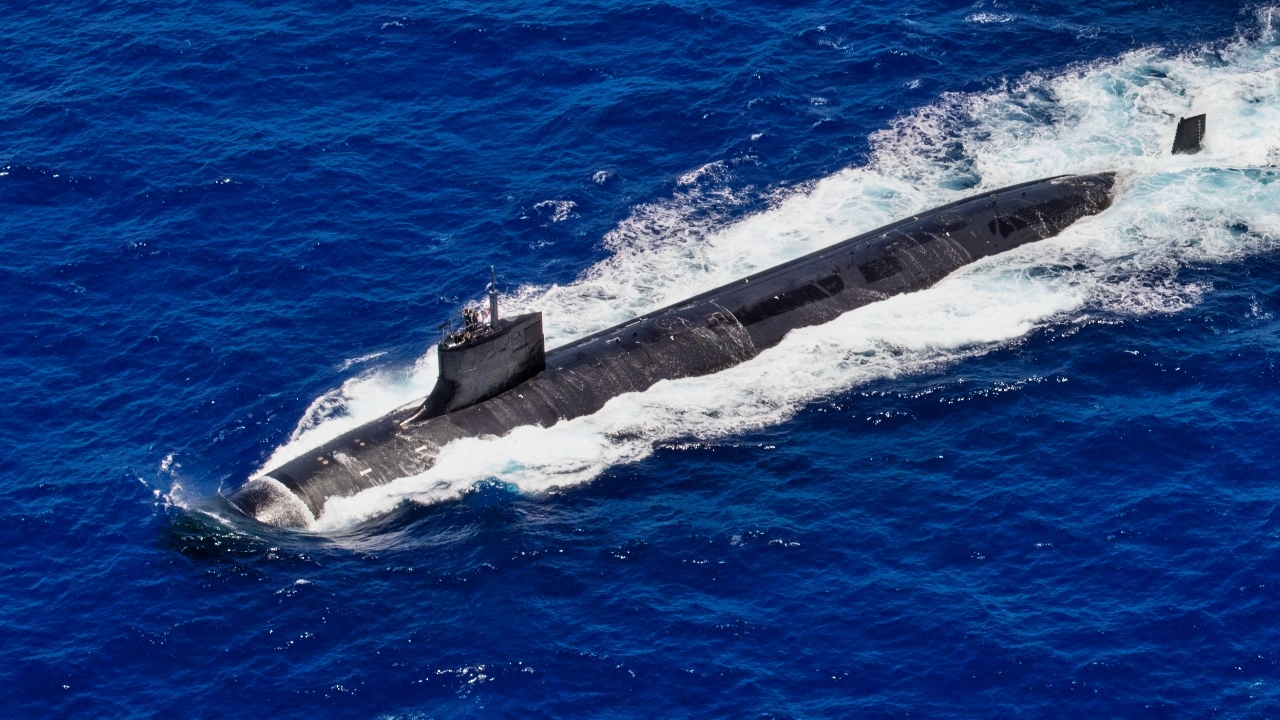
(June 22, 2021) Seawolf-class fast attack submarine USS Seawolf (SSN 21) transits the Pacific Ocean, June 22, 2021. Seawolf is currently underway conducting routine maritime operations in U.S. 3rd Fleet. (U.S. Navy photo by Mass Communication Specialist 3rd Class Olympia O. McCoy)
Russia has never had much of a surface Navy and has for decades largely presented a land threat, yet its submarine fleet has been and appears to be extremely dangerous to the West, the U.S., and NATO.
Short-term Vision and Seawolf-Class
Perhaps Pentagon planners would have been well served to more fully anticipate the possibility that Russia could remain or easily re-emerge as a major threat to the U.S., despite the Soviet collapse in the late 1980s.
Continued production of Seawolf submarines would not have precluded the need for Virginia-class submarines, but may have significantly reduced U.S. Navy vulnerability during the transition years as Los Angeles-class submarines continued to retire.

241204-N-VW723-2064 PACIFIC OCEAN (Dec. 4, 2024) The Los Angeles-class fast-attack submarine USS Greeneville (SSN 772) transits the Pacific Ocean while supporting a distinguished visitor embark, Dec. 4, 2024. Greeneville is one of four Los Angeles-class fast-attack submarines assigned to Commander, Submarine Squadron 11. These submarines are capable of supporting various missions, including: anti-submarine warfare; anti-ship warfare; strike warfare; and intelligence, surveillance, and reconnaissance. (U.S. Navy photo by Mass Communication Specialist 1st Class Keenan Daniels)
Clearly, continued Seawolf-class boats would have prevented the troubling submarine deficit the U.S. now faces.
Added to this is the fact that Seawolf submarines themselves were extremely capable boats, built with HY-100 steel that could withstand water pressure at greater depths. Perhaps of even greater relevance, the Seawolf submarines were heavily armed boats, as they could carry as many as 50 Tomahawk cruise missiles.
Submarine Deficit
Given this, the cancellation of the Seawolf-class certainly explains some of the urgency with which the Navy has been building Block V Virginia-class attack submarines with greatly increased Tomahawk missile capability.
Virginia Payload Modules, now built into Block V Virginia-class submarines, add an 80-foot section to the boats, sufficient to add as many as 28-more Tomahawk missiles. This brings the firepower of Virginia-class boats from 12 Tomahawk missiles up to 40.
Firepower, particularly in great-power threat scenarios, is increasingly important, and the need for rapid production of Block V Virginias certainly took on greater urgency with the premature cancellation of the Seawolf-class submarines.
There are other similarities between the Seawolf concept and upgrades to the Virginia-class boats, such as the addition of a Large Aperture Bow sonar system to Virginias, which appears somewhat aligned with the Seawolf’s larger “spherical sonar array, wide aperture array and new towed-array sonar,” as explained by Harpoondatabases.com.
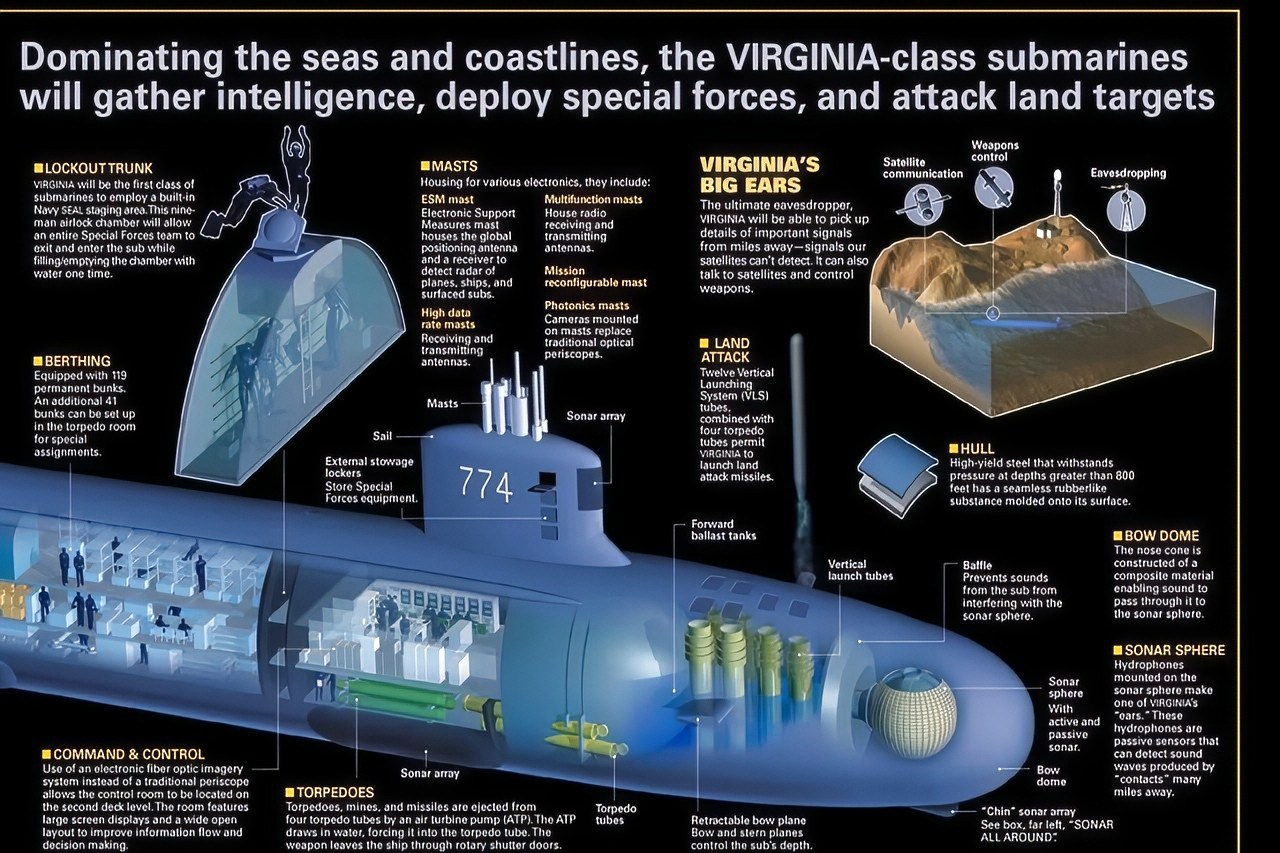
Virginia-Class Submarine Cut Out. Image Credit: Creative Commons.
The Seawolf-Class was also reportedly designed for shallow operations and Special Operations Forces mission support and delivery.
This is also quite similar to Virginia boats, as Block III Virginias are built with a special “Lock Out Trunk” designed to fill with water and quietly enable special operations forces to deploy on clandestine missions.
About the Author: Kris Osborn, Warrior Maven President
Kris Osborn is the Military Technology Editor. Osborn is also President of Warrior Maven – Center for Military Modernization. Osborn previously served at the Pentagon as a highly qualified expert in the Office of the Assistant Secretary of the Army—Acquisition, Logistics & Technology. Osborn has also worked as an anchor and on-air military specialist at national TV networks. He has appeared as a guest military expert on Fox News, MSNBC, The Military Channel, and The History Channel. He also has a Master’s Degree in Comparative Literature from Columbia University.


