

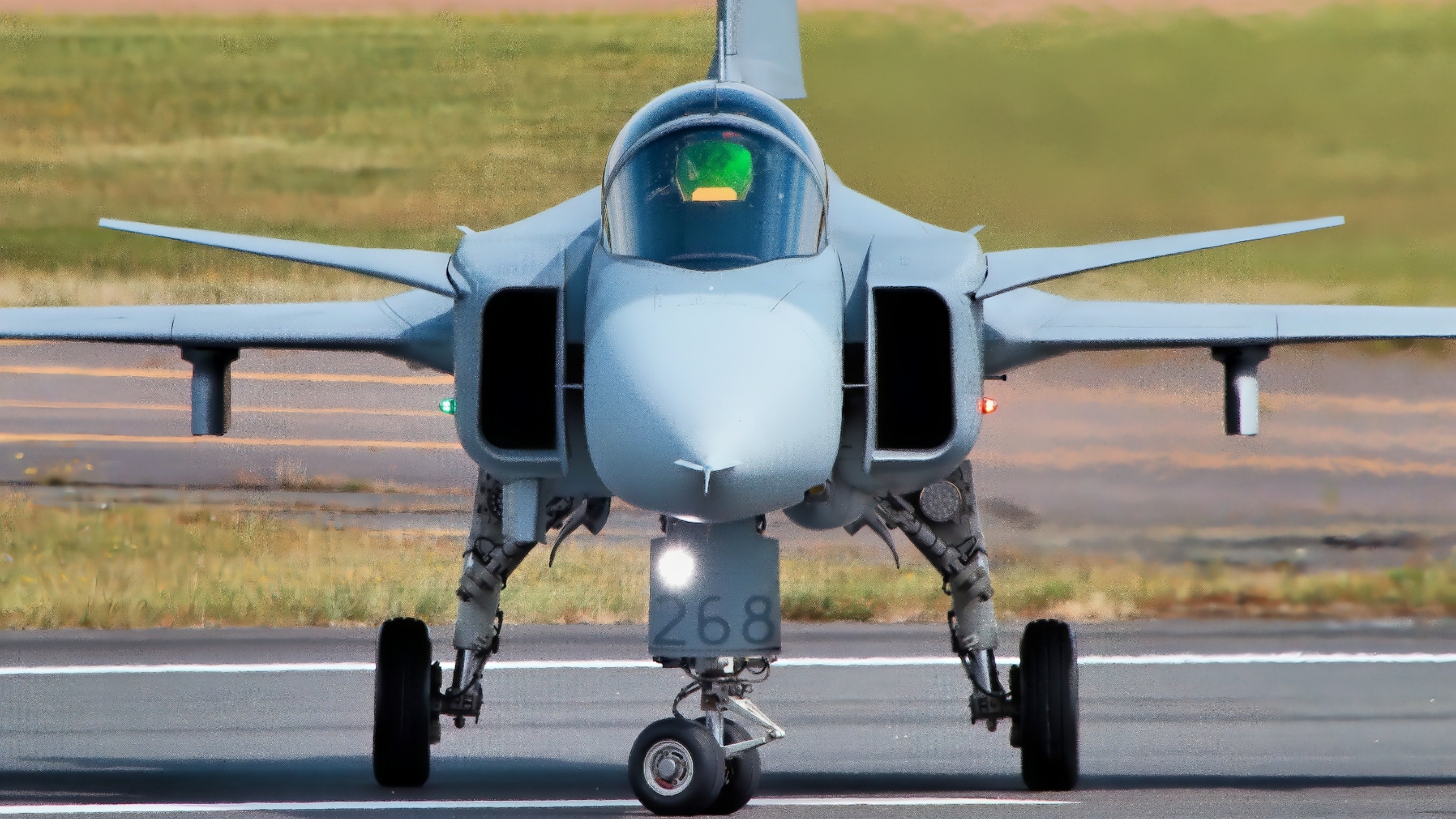
Summary and Key Points: Ukraine has announced it will acquire 20 new-build Saab JAS-39 Gripen E/F fighters from Sweden, financed by a €2.5 billion EU loan, with deliveries possible by 2030. Sweden will also transfer 16 used Gripen C/D jets starting in early 2027, and Ukrainian pilots have already begun training.
-Pilots prize the Gripen for its ability to operate from highway airstrips — defeating Russian airfield strikes — and its MBDA Meteor missile, which can finally outrange Russia’s best fighters.
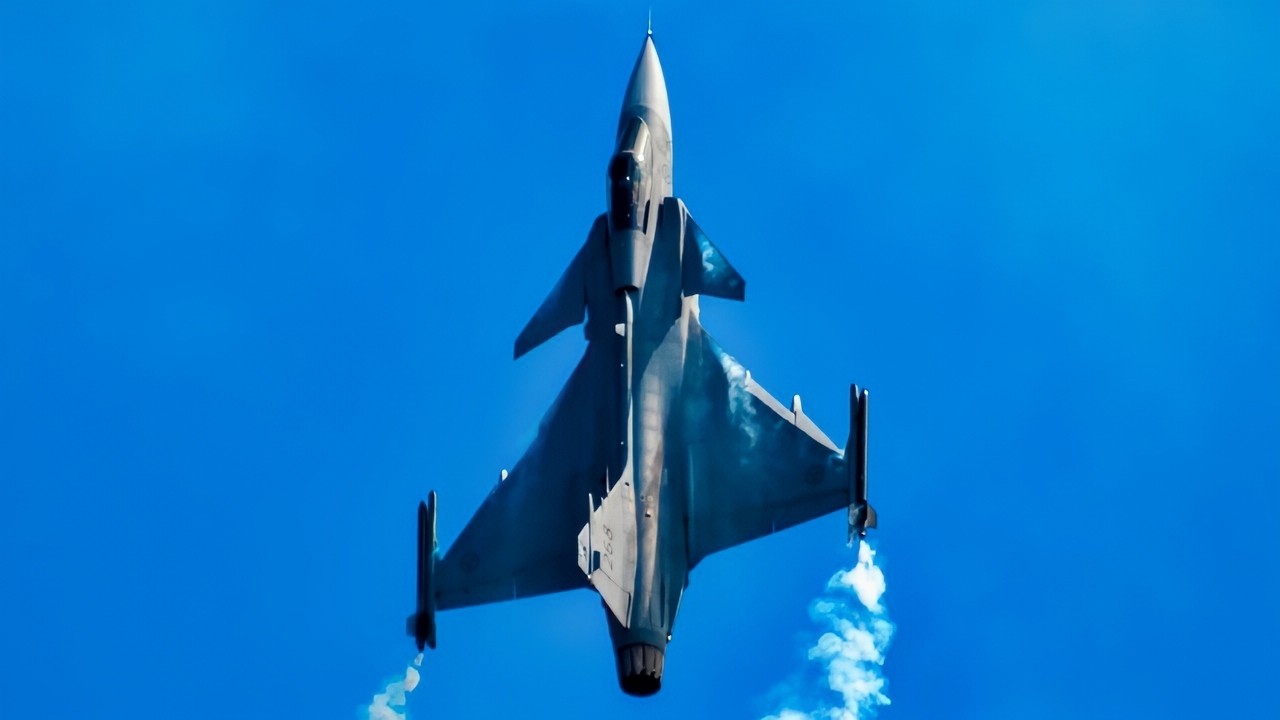
A Swedish Air Force Saab JAS 39 Gripen climbs during the 2019 Royal International Air Tattoo at RAF Fairford, England, July 20, 2019. This year, RIAT commemorated the 70th anniversary of NATO and highlighted the United States’ enduring commitment to its European allies. (U.S. Air Force photo by Tech Sgt. Aaron Thomasson)
JAS-39 Gripen Fighters Are Coming to Ukraine
“This is truly a historic event, an historic day for our cooperation and for our countries,” said Ukrainian President Volodymyr Zelensky during a 28 May press conference in Uppsala, Sweden. The occasion was the Ukrainian leader’s press conference with Swedish Prime Minister Ulf Kristersson, announcing Ukraine’s procurement of 20 new-build JAS-39E/F Next-Generation Gripen fighter aircraft.
“Ukraine has clearly identified Gripen as the priority choice for its air force in the long term and intends to acquire the newest version, Gripen E,” Kristersson said at a joint news conference in Uppsala.
The Swedish Government announcement states that Ukraine will finance the future purchase of the Gripen E/F aircraft by using €2.5 billion ($2.8 billion) provided by the European Union’s Ukraine Support Loan mechanism. Kristersson stated negotiations over the Gripen E procurement are ongoing, and deliveries of the new-build aircraft could begin by 2030.
While awaiting delivery of the E/F models of the aircraft, Sweden will transfer 16 used, previous-generation Saab JAS 39 Gripen C/D fighter jets to Ukraine. These aircraft will be deployed in combat operations and employed to train Ukrainian pilots to operate the Swedish-designed and manufactured jet.
“We’re talking specifically about a squadron of Gripens for Ukraine, and this is tremendously important support for us,” said Zelensky. Ukraine expects to achieve the “first capabilities” within the next 10 months, and he also confirmed that Ukrainian pilots have already begun flight training on the Gripen.
“Our pilots began training missions quite some time ago,” Zelensky said, adding that Ukraine is now working to expand PSU training infrastructure and send more pilots abroad for training.
Zelenskiy had originally met with Kristersson in Linköping, Sweden, in October 2025 to sign an initial agreement to purchase 120-150 Gripen E/F aircraft. The small Swedish city is home to Saab’s main Aeronautics division facility and the Gripen test, design, and production operations.
Expanding Numbers of Western Aircraft
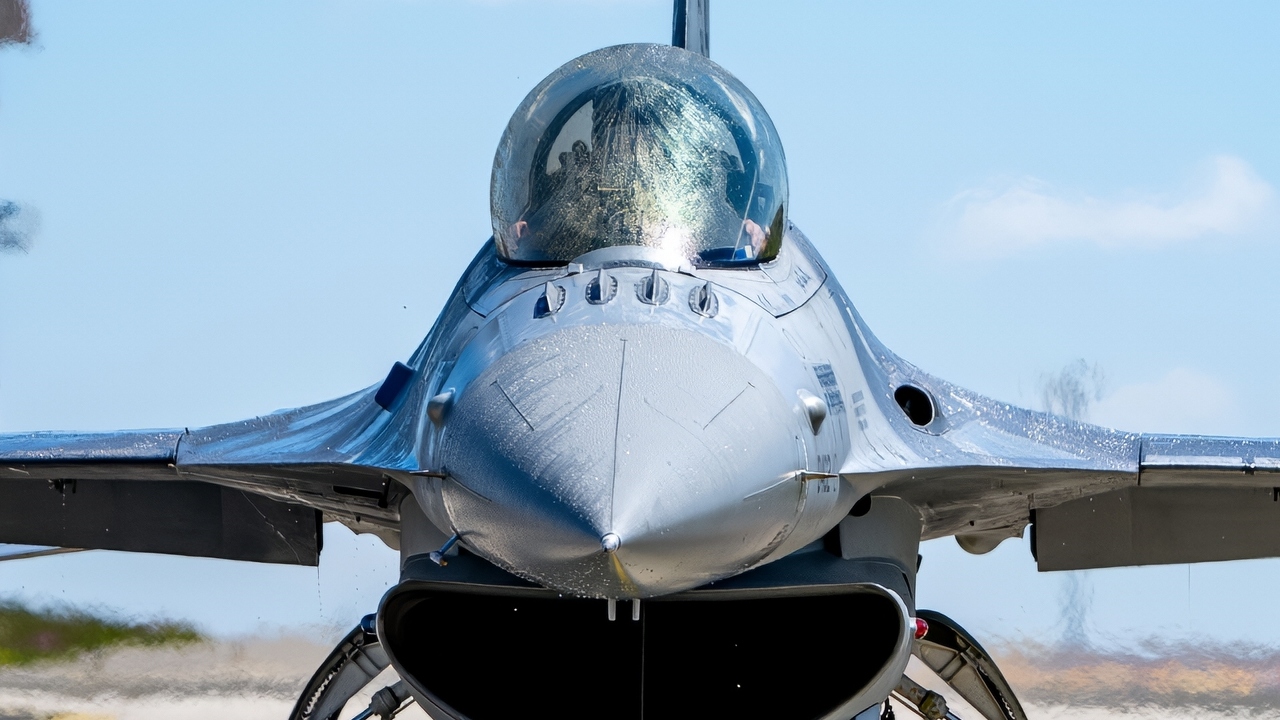
U.S. Air Force Col. Kevin Crofton, 52nd Fighter Wing commander, taxis in an F-16 Fighting Falcon during his fini flight at Spangdahlem Air Base, Germany, May 19, 2025. The fini flight is a long-standing U.S. Air Force tradition that marks the final flight of an aircrew member’s current assignment. (U.S. Air Force photo by Senior Airman Albert Morel)
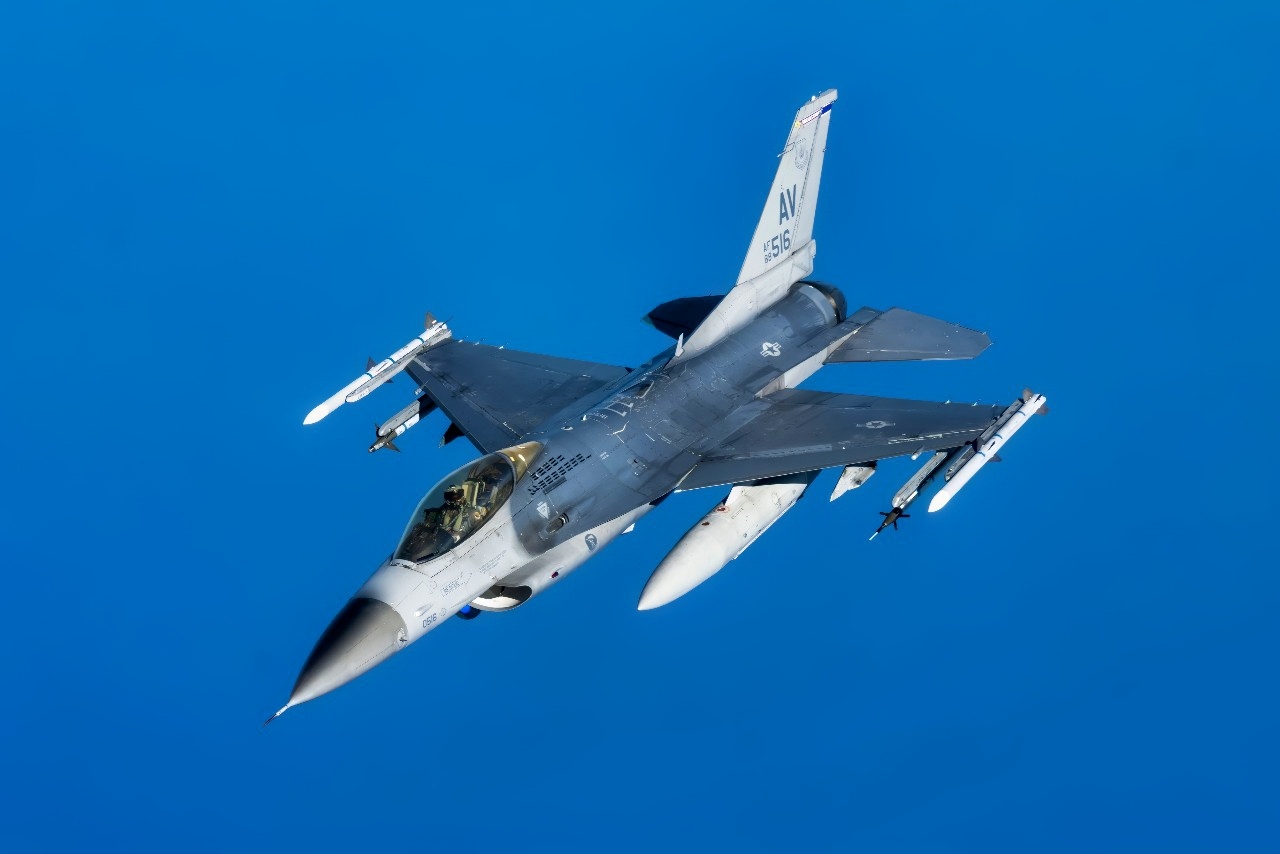
A U.S. Air Force F-16 Fighting Falcon from the 31st Fighter Wing, Aviano Air Base, Italy, descends after receiving fuel from a KC-135 Stratotanker from the 100th Air Refueling Wing, RAF Mildenhall, England, over the Adriatic Sea, Aug 7, 2025. The F-16 is a compact, highly maneuverable multi-role fighter aircraft with robust air-to-air combat and air-to-surface attack capabilities. (U.S. Air Force photo by Senior Airman Christopher Campbell)
The 16 JAS-39 C/Ds will be the first to arrive in Ukraine, anticipated to begin in early 2027. In the intervening months, Ukraine will finalize the purchase agreement for the new-build Gripen E/F models, and Sweden will also be securing export approvals.
Acquisition of the JAS-39 will increase the number of Western-designed fighter aircraft. The Ukrainian Air Force (PSU) already operates “several dozen” F-16s, but it will not specify exactly how many are currently operational.
The other non-Russian-designed platform flown by the PSU is the Dassault Mirage 2000 from France. Ukraine was originally given only six of these aircraft – one of which crashed while on a mission. Between 3 and 5 of these fighters are reported to be available to fly missions on any given day.
In January 2026, it was reported that Ukraine could receive up to 26 more of the Mirages that the French were operating in 2024. The numbers have not been made known officially, but more than one press report repeats the conventional wisdom is that Ukraine will eventually receive all 26 airframes.
The next-generation Dassault Rafale is gradually replacing the Mirage 2000 in French service, and Kyiv has also signed to purchase up to 100 Rafales. But with French domestic military spending increasing and with Dassault straining to also complete export deliveries, it would be several years before the Rafale would be in service in Ukraine in any meaningful numbers.
“I’d Sell My Soul For the JAS-39”

A Swedish Air Force JAS 39 Gripen participating in NATO exercise Ramstein Flag 24 flies over the west coast of Greece, Oct. 4, 2024. Over 130 fighter and enabler aircraft from Greece, Canada, France, Hungary, Italy, Poland, Portugal, Romania, Spain, Sweden, United Kingdom and United States are training side by side to improve tactics and foster more robust integration, demonstrating NATO’s resolve, commitment and ability to deter potential adversaries and defend the Alliance. (U.S. Air Force photo by Tech. Sgt. Emili Koonce)

JAS 39 Gripen Fighter From Sweden. Image Credit: Creative Commons.
Swedish officials have repeatedly emphasized that deliveries of newer Gripen E fighters would likely take years. Nonetheless, both confidence and morale are high with Ukraine’s fighter pilots.
“For me, the JAS-39 is the only fighter jet in the world I’d be willing to sell my soul for,” wrote Ukrainian pilot Vadym Voroshylov, call sign Karaya, on Instagram last year. As with many other pilots familiar with the aircraft, he describes it as the “ideal option” for Ukraine.
There are three reasons why the Gripen – even the older C/D models – will eventually be a major plus for the PSU. One is that the aircraft was designed for dispersed basing operations in wartime – the only non-Russian aircraft ever designed to operate in this manner. The JAS-39 operates from shorter runways and even highway airstrips, making Russian missile attacks on an operational aerodrome ineffective at degrading combat availability.
Voroshylov also made the point that the aircraft’s side-mounted air intakes reduce the risk of debris being sucked into the engine. This contrasts with the F-16, which has an under-fuselage “chin” inlet that would leave it vulnerable to any items left on a runway after an attack.
The Gripen can also employ the widest variety of weapons – US, European, Brazilian, Israeli, and South African.
Foremost among these is the MBDA Meteor ramjet-powered air-to-air missile.
“So far, our fighters have been outranged by the weaponry of the latest Russian aircraft,” said a Ukrainian defense enterprise director who spoke to National Security Journal. “Meteor turns the tables in that regard and will allow us to take the fight to the enemy.”
About the Author and Expertise: Reuben F. Johnson
Reuben F. Johnson has thirty-six years of experience analyzing and reporting on foreign weapons systems, defense technologies, and international arms export policy. Johnson is the Director of Research at the Casimir Pulaski Foundation. He is also a survivor of the Russian invasion of Ukraine in February 2022. He worked for years in the American defense industry as a foreign technology analyst and later as a consultant for the U.S. Department of Defense, the Departments of the Navy and Air Force, and the governments of the United Kingdom and Australia. In 2022-2023, he won two awards in a row for his defense reporting. He holds a bachelor’s degree from DePauw University and a master’s degree from Miami University in Ohio, specializing in Soviet and Russian studies. He lives in Warsaw.


