


Summary and Key Points: Battered by a country smaller in every metric — GDP, population, land, and army — Russia is in no shape to take on NATO, even as Europe worries Putin might test the alliance.
-Ukraine inflicted more than 35,000 casualties in April alone, roughly erasing Russia’s fresh recruits for the month, and Putin can’t order a broader mobilization without risking dangerous unrest at home.

MiG-29 Fighter U.S. Air Force Museum July 2025. Image Credit: National Security Journal.
-As one Baltic spy chief put it, problems inside Russia “are starting to pile up.”
Putin’s Ukraine War Is Trouble for Russia
Stymied on the battlefield by Ukraine’s increasingly effective deep-strike drone campaign against Russian personnel and logistics nodes, Russia has turned up its rhetorical pressure on the Baltic countries, accusing them of serving as launching pads for Ukrainian strikes on Russia and hosting Ukrainian forces, accusations that the Baltic countries have hotly denied.
But with progress on the battlefield visibly fading — Ukraine has slowly gained momentum and secured modest but steady territorial gains — the worry in Europe is that Russian President Vladimir Putin could test the integrity of the NATO alliance.
American President Donald Trump’s skepticism of the NATO alliance may have contributed to what Russia sees as a potential opening in the historically tight alliance. Often skeptical about the American contribution to NATO, President Trump recently shook up the deployment of American troops in Europe, sending around 5,000 soldiers from Germany and relocating them to Poland.
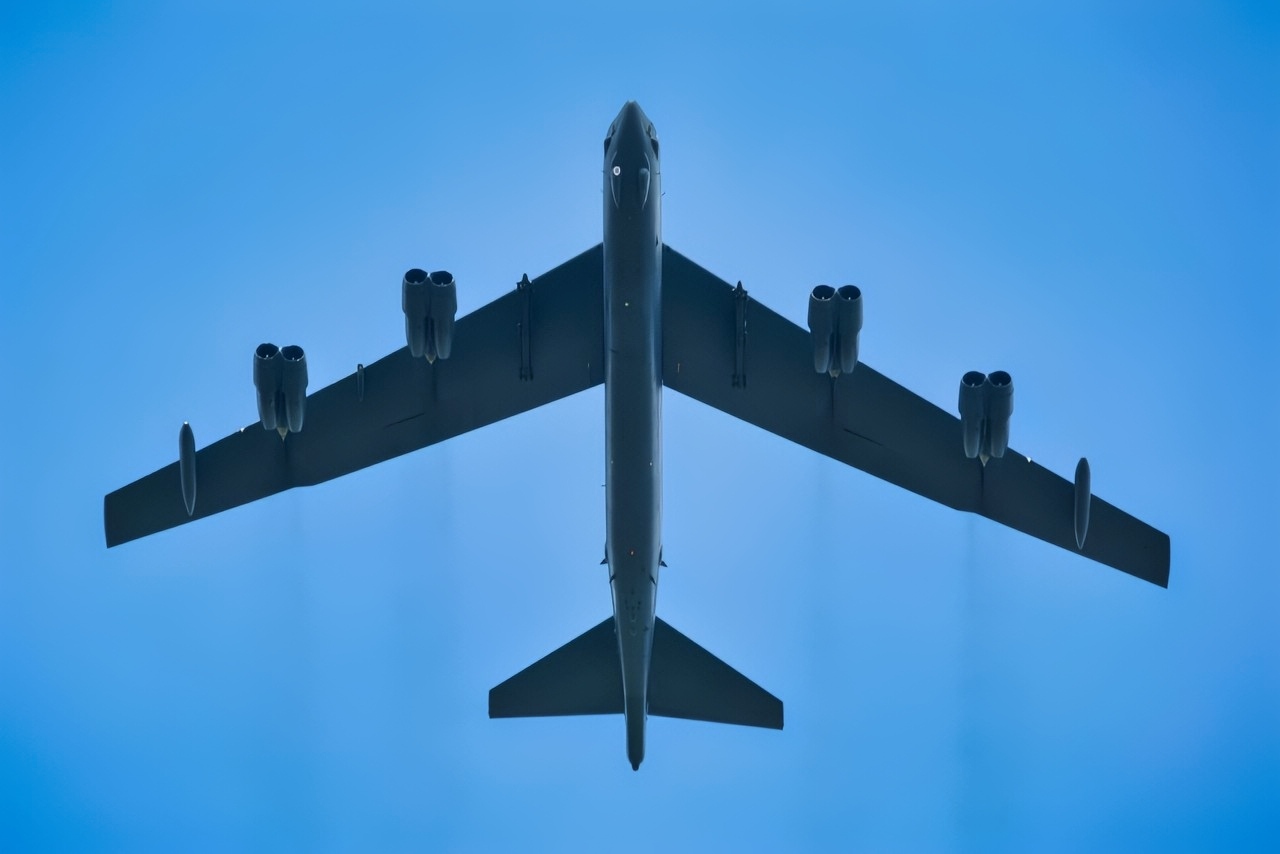
Military service members, veterans, and citizens of Guam gathered for the Memorial Day Commemoration at the Guam Veterans Cemetery. The Ceremony consisted of a fly over from a B-52H Stratofortress, a musical performance from the Guam Territorial Band & Cantate, guest speaking from the honorable Eddie Baza Calvo, a Fallen Soldier Gravesite Tribute, and the playing of Taps. (U.S. Marine Corps photo by Lance Cpl. Jacob Snouffer/Released)
American and European security officials maintain that Russia is currently not preparing for an open conflict with NATO. But Russia has some of the most up-to-date drones and drone tactics. It is also feeling squeezed on the battlefield in Ukraine, and may feel that it is running out of time and options.
Wargames Offer Stark Lessons
In a series of wargames recently played out between Ukraine and NATO forces, Ukrainian drone units quickly bested their simulated opponent. Though a win for Ukraine, the exercise laid bare chinks in NATO’s armor — and offered a preview of how the alliance might fare against a Russia that has been honing the same kind of drone warfare for over four years.
Springing an attack on the NATO alliance, however, would be a tall order for Russia. Battered by a country smaller in all metrics — by GDP, population, land area, and military strength — Russia would be extremely hard-pressed to launch a campaign against even part of NATO and expect to perform better than it has thus far in Ukraine.
Ukraine’s Increasing Prowess in the Sky
By Ukrainian estimates, Russia can train a maximum number of 50,000 new recruits for the war in Ukraine.
Training more than this number would require big structural changes to Russian military training pipelines and would be slow and costly to institute.
In parallel to this figure are the losses that Ukraine has inflicted on Russian forces on a monthly basis. According to Ukrainian President Volodymyr Zelensky, Ukrainian forces inflicted more than 35,000 casualties on Russian forces in April, roughly canceling out the number of fresh troops recruited during that time period.
Buoyed by sky-high sign-up bonuses, preferential treatment for jobs and education, including for family members, and, most recently, sweeping debt forgiveness for soldiers and their wives, Russia is seemingly loath to mobilize the population further.

Tu-160 bomber. Image Credit: Creative Commons.
Though the move would swell the Russian ranks considerably, it would likely be a contentious domestic political issue.
Russia’s Problem: Mobilization
Though Russia could indeed mobilize its population to quickly swell ranks, such a move would carry steep domestic political costs.
With the population seemingly starting to sour on this war, which has dragged on significantly longer than originally anticipated, and upset with tightening restrictions on personal freedom and internet usage at home, Russia’s domestic situation is somewhat precarious.
While the kind of regime change revolution needed to bring about a change of power in the Kremlin is almost certainly an unrealistic hypothetical, mobilizing hundreds of thousands of men would carry risks for Putin.
“Mobilization, technically, is absolutely doable; their mobilization system has been fixed. But this would also create serious internal problems and pressure, which then could lead in different interesting directions. It would be a risky decision for Putin,” explained the director of the Estonian Foreign Intelligence Service, Kaupo Rosin, in an interview with The Wall Street Journal.
“Problems inside of Russia are starting to pile up,” Rosin added, and “not succeeding on the battlefield, the finance situation, and the Ukrainian deep strikes that are affecting the economy but also the people.”
Expanding to Deescalate?
Russia has, at multiple times during the ongoing war in Ukraine, rattled its nuclear saber in an attempt to divide Ukraine’s allies as well as the NATO alliance.
Though not insignificant consternation was expressed in a number of European capitals, the Russian threats ultimately came to naught, perhaps thanks to a stern phone call between former Secretary of Defense Lloyd Austin and his counterpart, Sergei Shoigu.
According to reports, Austin warned Shoigu that the use of a nuclear weapon in Ukraine would draw Washington into the conflict. It was, apparently, a credible threat from the Kremlin’s perspective.
Still, Putin has been known to take high-risk gambles before, Norbert Röttgen, a German politician, explained.
Attacking NATO “would be such a huge and additional big risk for Putin to, after having not been sufficiently successful against Ukraine, to simply add another very strong adversary in a military conflict,” Röttgen explained. “Despite my doubts,” he added, “we also have to calculate that Putin behaves irrationally and in an escalatory way.”
About the Author: Caleb Larson
Caleb Larson is an American multiformat journalist based in Berlin, Germany. His work covers the intersection of conflict and society, focusing on American foreign policy and European security. He has reported from Germany, Russia, and the United States. Most recently, he covered the war in Ukraine, reporting extensively on the war’s shifting battle lines from Donbas and writing on the war’s civilian and humanitarian toll. Previously, he worked as a Defense Reporter for POLITICO Europe. You can follow his latest work on X.


