


Russia has been developing the PAK DA next-generation stealth bomber for approximately 17 years. The PAK DA does not yet appear to exist. The Russian PAK DA stealth bomber has reportedly been delayed by international sanctions. Russia has pivoted to the upgraded Tu-160M conventional bomber after PAK DA development delays. The PAK DA was designed to rival the U.S. B-21 Raider and the Chinese H-20 stealth bomber.
The PAK DA: The Russian Bomber Destined to Never Fly?

PAK DA bomber artist rendition.
Russia’s sleek-looking next-generation stealth bomber clearly appears stealthy, yet the emerging platform is also slated to receive paradigm-changing levels of lethality in the form of nuclear and hypersonic weapons.
However, despite the potential appeal of sleek-looking configurations shown in various renderings, Russia’s PAK DA suffers from a simple existence problem. Where is the bomber? When might it ultimately arrive?
Amid numerous reports of potential delays until 2030 and the successful performance of Russia’s upgraded Tu-160M conventional bomber in Ukraine, some might be inclined to question the future of the new stealth platform, a bomber apparently positioned to rival the US B-21 and Chinese H-20.
After 17 years of development, why doesn’t the PAK DA seem to exist? Numerous public reports say that leaked information indicates that sanctions may have delayed the development of the bomber.
Available reporting does indicate that Russia plans to arm its new PAK DA bomber with nuclear-capable cruise missiles, something which appears to be a potential effort to match the U.S. Long Range Stand-Off Weapon.
Is PAK DA Stealthy?
The extent of the aircraft’s stealth properties is, in many respects, likely extremely difficult if not impossible to discern.
Does it use any kind of radar-absorbent coating materials, thermal management technology, or other critical stealth properties?
This may indeed be quite stealthy, and available specs say it can take off with a maximum weight of 30 tons, considerably larger than both the B-2 and B-21.
Its larger size may account for its much higher max payload, as the B-2 reportedly only takes off at 20 tons, while the B-21 is even lighter at 15 tons.
However, while a larger, heavier bomber able to carry more munitions can extend mission dwell time, it can decrease stealth effectiveness and potentially be more vulnerable to air defenses and air threats.
The main question with the PAK DA, then, is just how stealthy the aircraft will be. The B-21 reportedly integrates a series of unknown yet paradigm-changing stealth properties.
A PAK DA aircraft is unlikely to copy these, given that the B-21 program is almost entirely secret.
This being said, available images of the PAK DA show a large, stealthy-looking fuselage with a blended wing-body; an internally mounted engine; and inlets built into the wings to avoid protruding structures or edges that could generate a radar return signal.
PAK DA vs. B-21
Both the B-21 and PAK DA are also slated to fire air-launched cruise missiles. According to Russian news reports, the PAK DA is expected to deploy Kh-102 nuclear-tipped stealthy cruise missiles, and a number of newer hypersonic designs, including derivatives of the Kh-47M2.
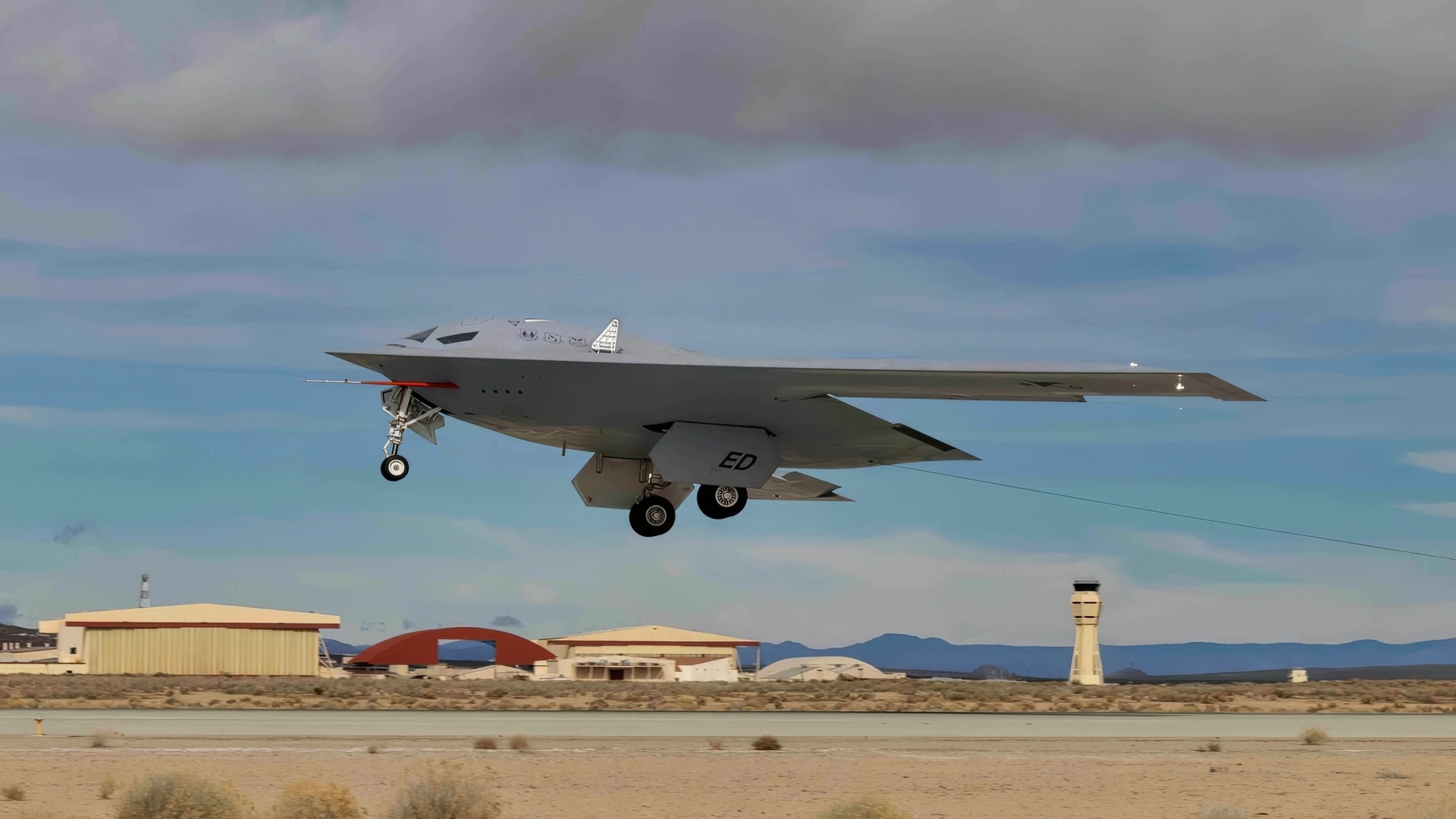
A B-21 Raider conducts flight tests, which includes ground testing, taxiing, and flying operations, at Edwards Air Force Base, California, where it continues to make progress toward becoming the backbone of the U.S. Air Force bomber fleet. The B-21 will possess the range, access, and payload to penetrate the most highly-contested threat environments and hold any target around the globe at risk. The B-21 program is on track to deliver aircraft in the mid-2020s to Ellsworth Air Force Base, South Dakota, which will be the first B-21 main operating base and location for the B-21 formal training unit. (Courtesy photo)
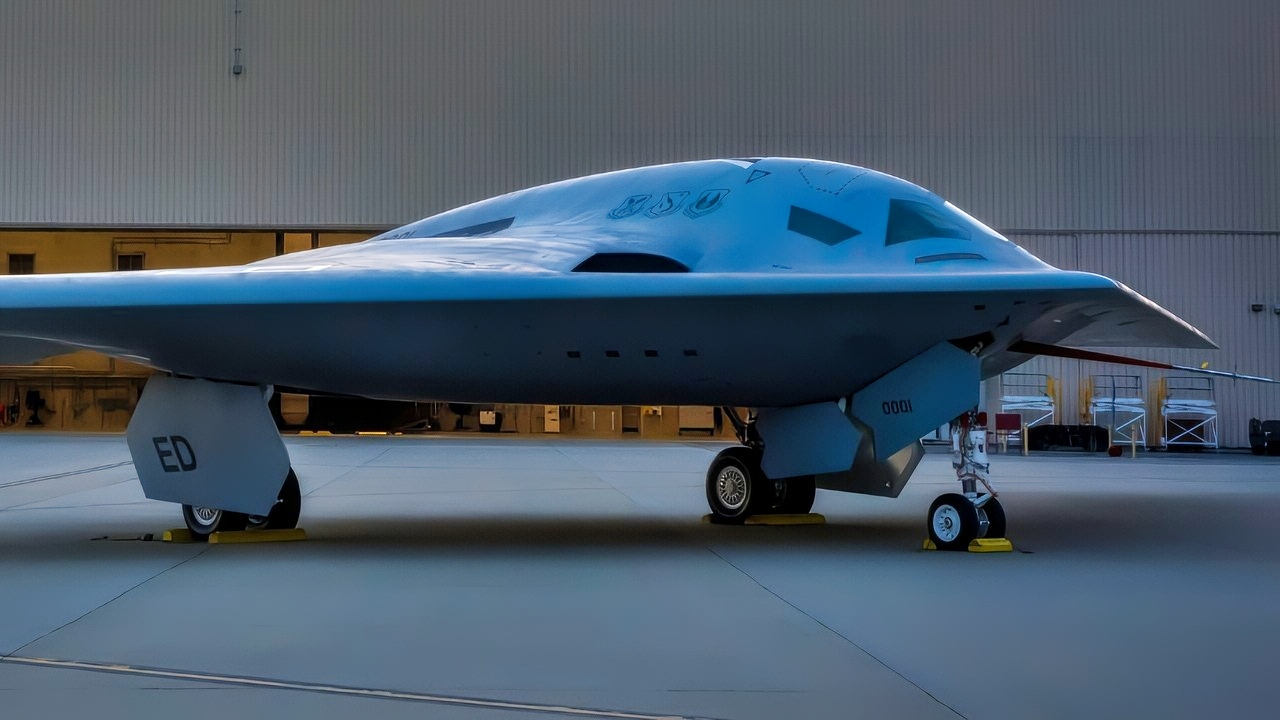
The B-21 Raider is designed with an open systems architecture, enabling rapid insertion of mature technologies and allowing the aircraft to be effective as threats evolve. The bomber was designed up front for supportability and maintainability-based upon decades of lessons learned and best practices from prior aircraft programs-to improve long-term affordability and outcomes in operations and sustainment. The B-21 first flight is anticipated to take place in calendar year 2023. (U.S. Air Force photo)
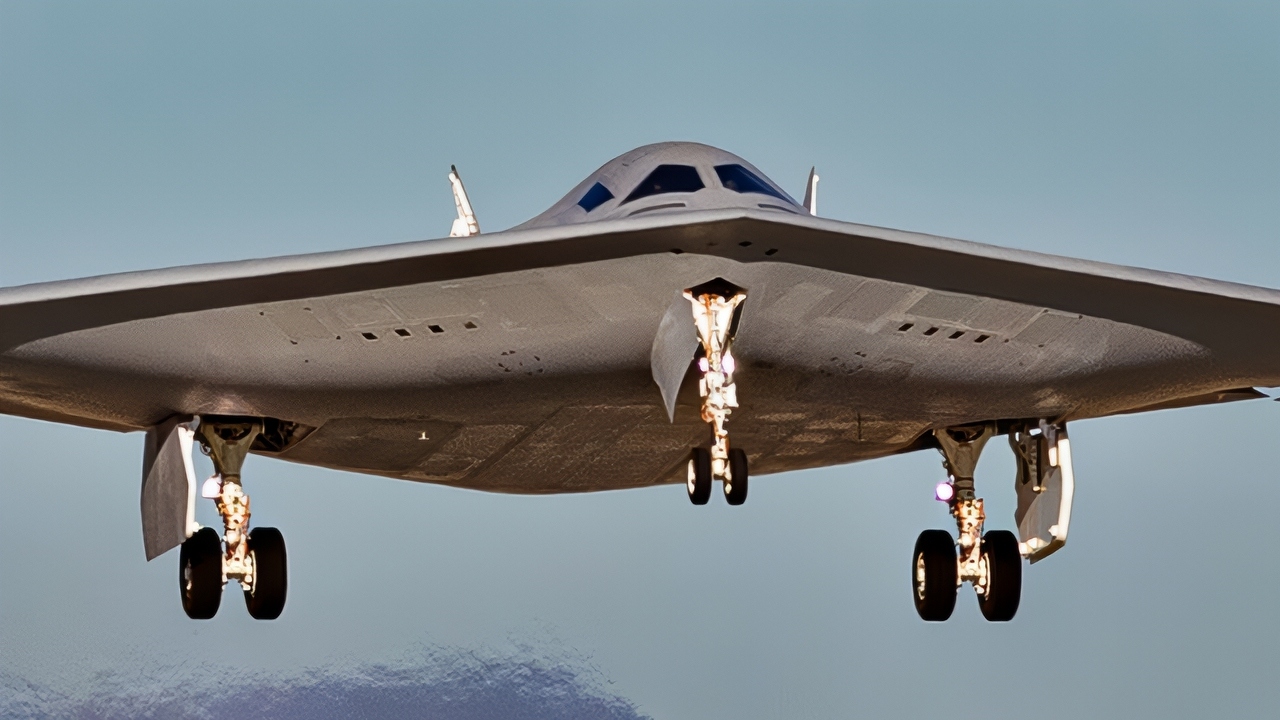
A second B-21 Raider test aircraft takes off, Sept. 11, from Palmdale, Calif., to join the Air Force’s flight test campaign at Edwards Air Force Base, Calif. The addition of the second test aircraft expands mission systems and weapons integration testing, advancing the program toward operational readiness. (Courtesy photo)
The U.S. B-21 will also likely incorporate hypersonic weapons and will be armed with the new Long Range Standoff Weapon (LRSO), a nuclear-capable, air-launched cruise missile intended to hold targets at risk at greater standoff ranges to reduce the risk of destruction by enemy air defenses.
Loyal Wingman?
For many years now, senior U.S. Air Force weapons developers have maintained that the B-21 will not only operate as a high-altitude, stealthy bomber but also serve as a flying aerial command-and-control “node” capable of sensing, networking, and transmitting critical combat data across domains.
As part of this, the B-21 will control drones from the cockpit in a loyal wingman configuration, something that may even evolve to the point where the B-21 coordinates Collaborative Combat Aircraft flight with the F-47 or F/A-XX.

PAK DA Stealth Bomber. Image Credit: Creative Commons.
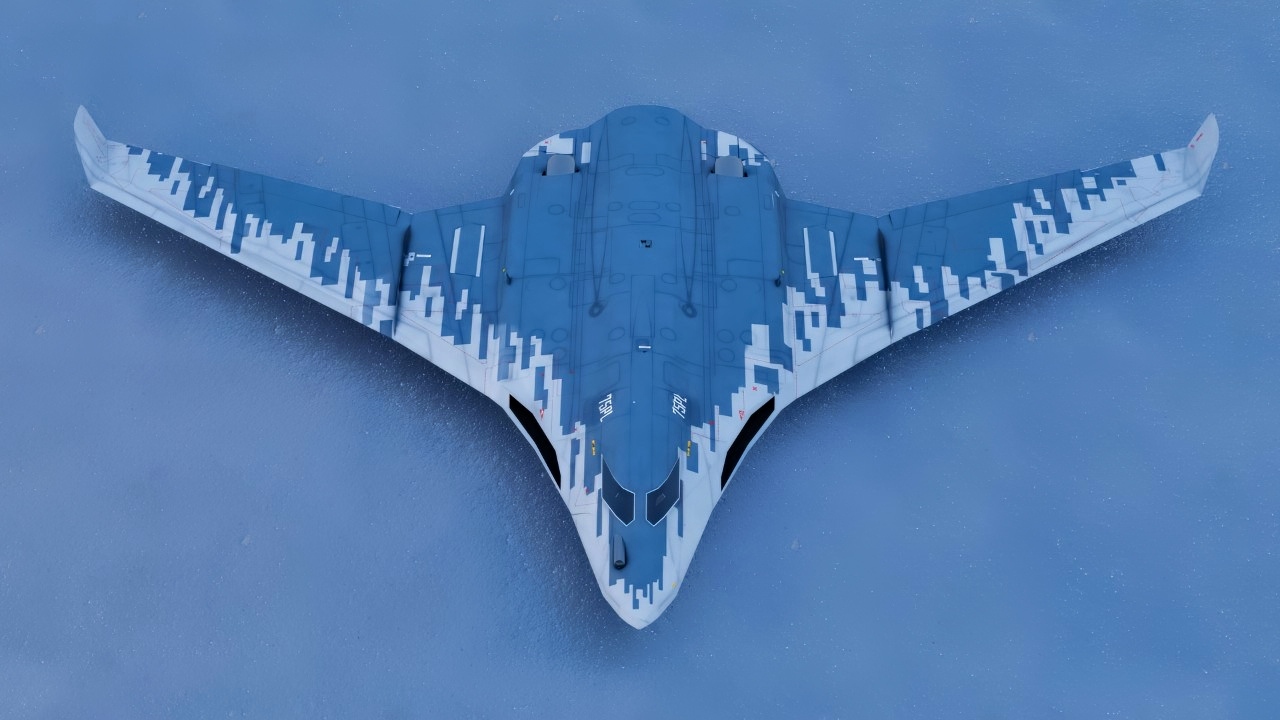
PAK DA Stealth Fighter Screenshot from X Artist Image.
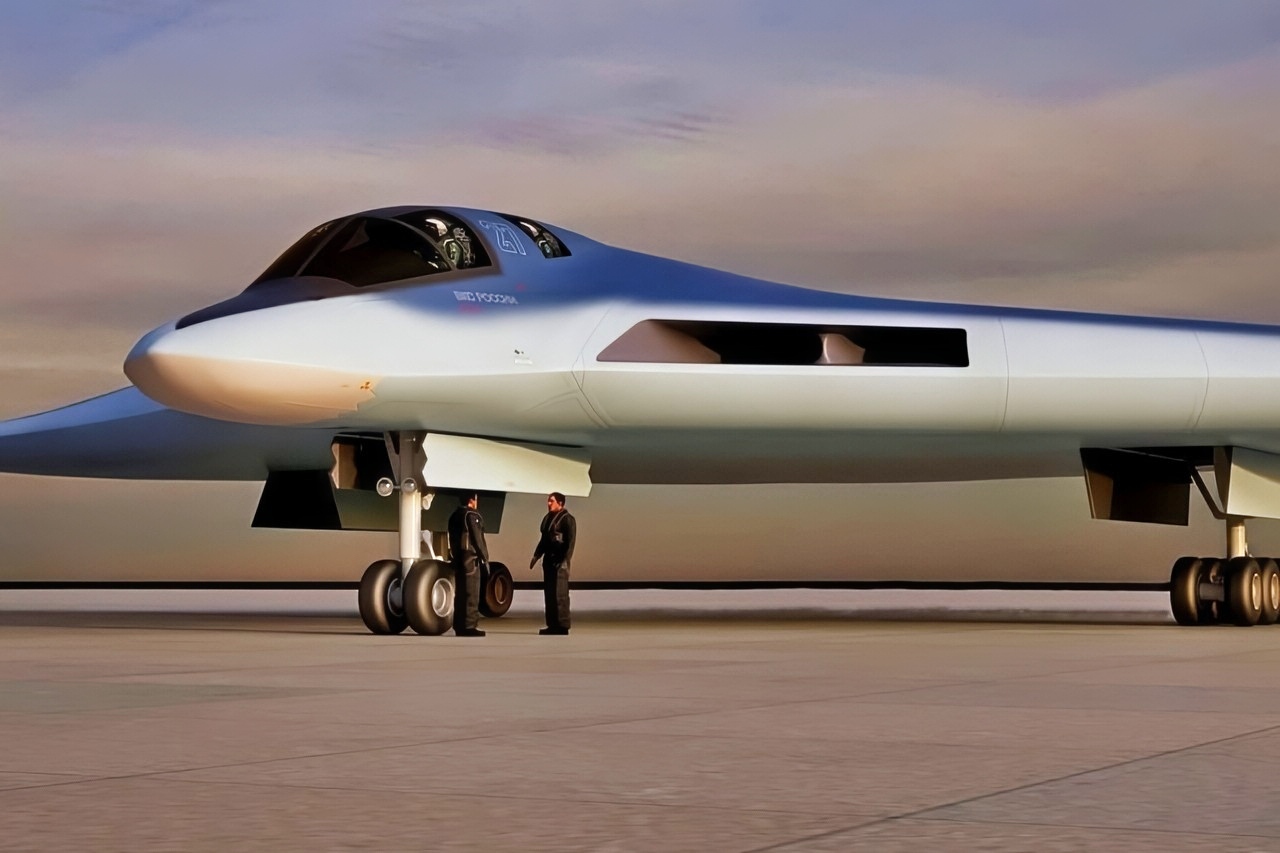
PAK DA Stealth Bomber Artist Rendering. Image Credit: Creative Commons.
These are critical questions of great relevance to the PAK DA, including whether the new Russian bomber will be able to conduct unmanned missions or control nearby unmanned systems, as discussed for the U.S. Air Force B-21.
A significant difference between the PAK DA and the B-2 and B-21, if Russian media claims are correct, is the large discrepancy in max take-off weight. The PAK DA’s reported take-off weight of 30 tons is twice the 15-ton max weight of the B-21.
What might this mean?
Not a whole lot, except that a PAK DA might be able to drop more ordnance on a single mission than the B-21.
While a larger, heavier bomber able to carry more munitions can extend mission dwell time, the weight can also burden its stealth effectiveness, and the plane might be more vulnerable to air defenses and air threats.
About the Author: Kris Osborn
Kris Osborn is a Military Technology Editor. Osborn is also President of Warrior Maven – Center for Military Modernization. Osborn previously served at the Pentagon as a highly qualified expert in the Office of the Assistant Secretary of the Army—Acquisition, Logistics & Technology. Osborn has also worked as an anchor and on-air military specialist at national TV networks. He has appeared as a guest military expert on Fox News, MSNBC, The Military Channel, and The History Channel. He also has a Master’s Degree in Comparative Literature from Columbia University.


