

Summary and Key Points: The invasion of Ukraine is uniquely Putin’s project — conceived, ordered, and justified by one man — raising a serious question: does the war end when he does?
-The 73-year-old has named no heir, and Russia has no reliable succession plan.

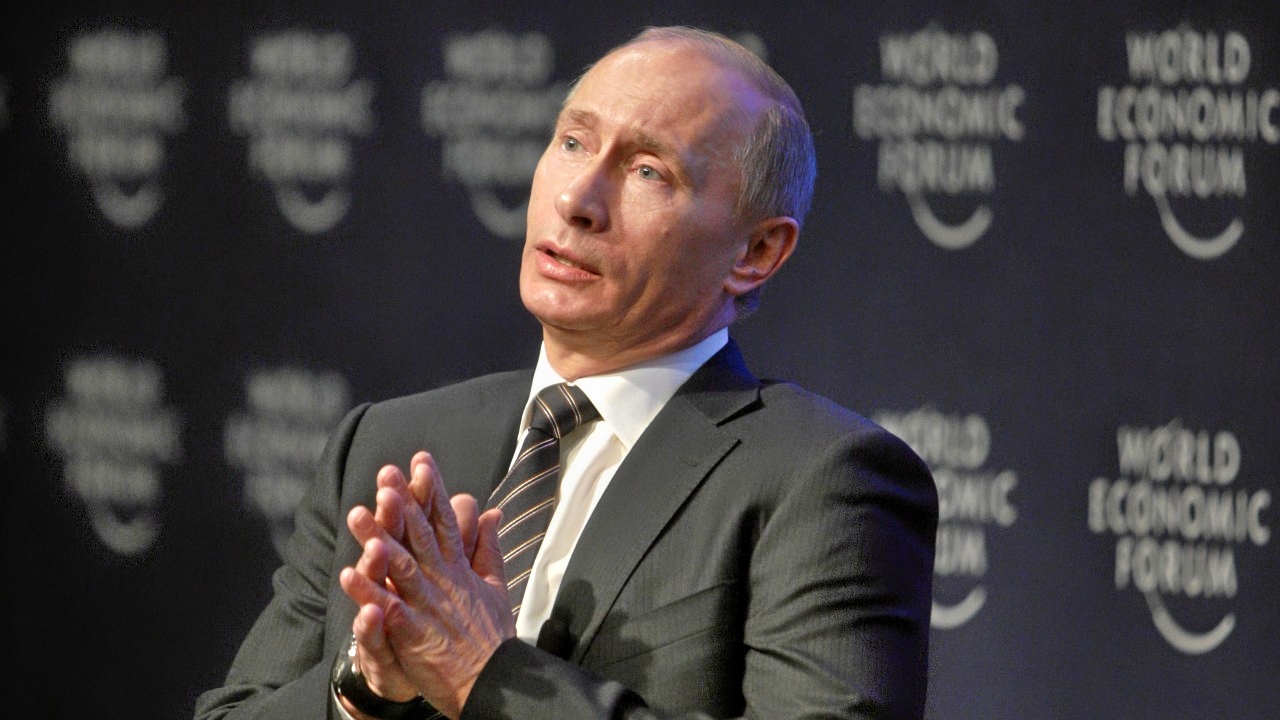
Putin in 2022. Image Credit: Creative Commons.
-The likeliest contenders, like hawkish ex-FSB chief Nikolai Patrushev, share Putin’s worldview and might continue the war.
-Yet a successor free of Putin’s personal stake could instead end it and blame the costs on him — making his exit the war’s biggest wildcard.
When Putin Goes, Does The Ukraine War Go With Him? The Question Hanging Over Ukraine’s Future
The invasion of Ukraine is, in a way that few modern conflicts can claim, the personal project of a single human being. Vladimir Putin conceived it, ordered it against the advice of much of his own government, justified it with a sprawling personal essay about Russian and Ukrainian history, and has staked his place in the long line of Russian rulers on its outcome.
Putin has long viewed the war and the reassertion of Russian control over Ukraine as central to his place in Russia’s continuum of rulers, nursing the hope of being remembered one day as Vlad the Great, with only Joseph Stalin and the Empress Catherine having ruled Russia longer than he has.
That degree of personal ownership raises a question that Western analysts are now examining with real seriousness: if the war is so completely Putin’s, does it end when Putin does?
The 73-year-old president has dominated Russian politics since 2000, and the entire architecture of the war effort runs through him. A leadership transition in Moscow, whenever and however it comes, is the single variable with the most potential to change the trajectory of the conflict.
It is also one of the most poorly understood, because Russia has built no reliable mechanism for what happens when the man at the center is gone.
The System Has No Map For Succession
The structural problem is that Putin has spent more than two decades concentrating decision-making around himself to such a degree that the institutions that would normally manage a transition have been hollowed out.
Russia’s parliament, courts, and political parties now function with little real independence, which means that the end of one ruler would not automatically produce an orderly handoff to the next. The concern among analysts is not only who would replace Putin but whether the transfer of power would be stable, secretive, or openly contested.

Putin on Direct Line Back in 2019. Image Credit: Creative Commons.
On paper, the rules are clear. The Russian constitution provides that if the president dies or becomes unable to perform his duties, the prime minister becomes acting president, and the Federation Council must call an election to be held within three months.
The current prime minister, the technocratic former tax-service chief Mikhail Mishustin, would therefore step into the presidency on an interim basis the moment Putin left the scene. In practice, almost no analyst believes the paper process tells the real story, because Putin has not hand-picked a successor, and the absence of a named heir is a deliberate feature of the system rather than an oversight. Naming a successor would create a rival center of power, and in Putin’s Russia, being seen as too ambitious has proven dangerous.
The likeliest orderly path, when the moment arrives on Putin’s own terms, is that he names a successor and hands over power quickly, the way Boris Yeltsin handed power to Putin himself at the end of 1999. The far more dangerous scenario is a sudden death with no successor in place and no authoritative collective body like the old Soviet Politburo to choose the next leader, which would leave rival elites to contest the vacancy and risk a chaotic interregnum.
The Men Who Would Inherit The War
The field of potential successors tells you a great deal about whether the war would continue, because almost every serious contender is a product of the same security apparatus that produced Putin and shares his worldview.
The war has increased the likelihood that any successor will come from the ranks of the siloviki, the security and intelligence bosses, much as Putin himself was elevated during the second Chechen war.
The name that recurs most often is Nikolai Patrushev, the former FSB chief and longtime Security Council figure, whom the former British intelligence chief Richard Dearlove has identified as the most likely person to replace Putin. Patrushev is, if anything, more hawkish than Putin. He has described the war in Ukraine as a direct military confrontation between Russia and NATO and accused the West of trying to erase Russia from the map.
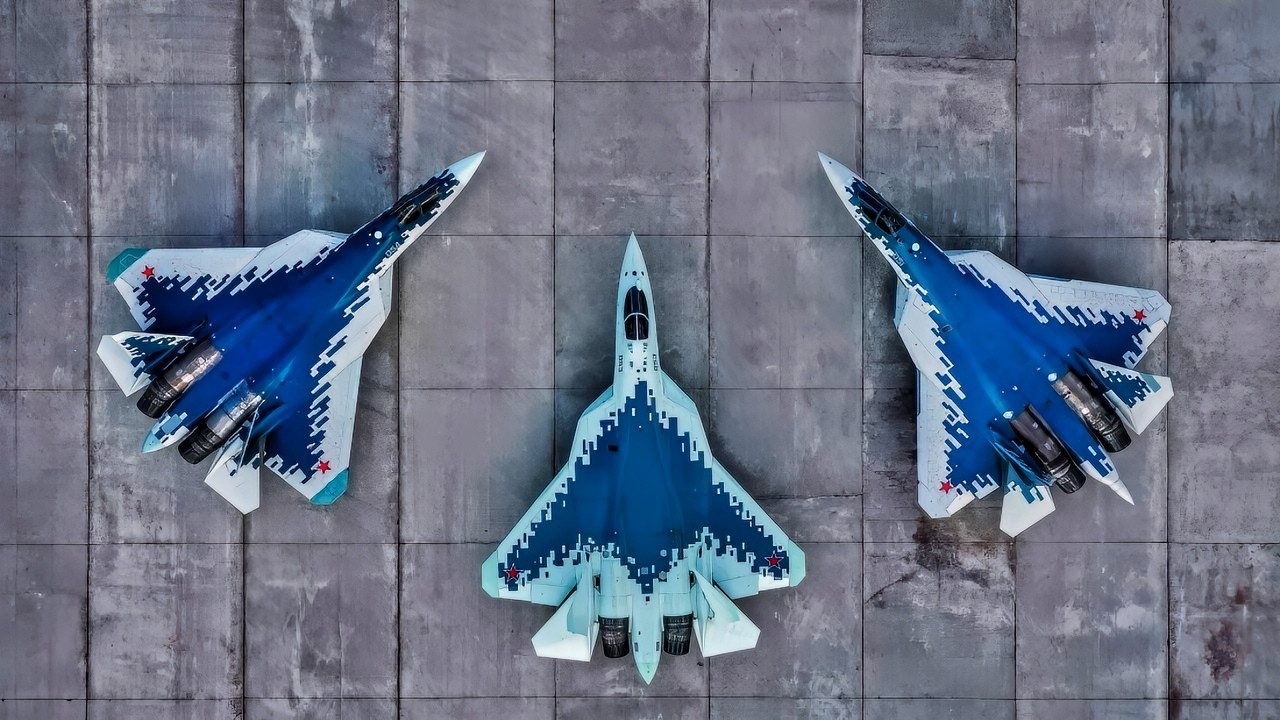
Su-57 Felon Screengrab from Russia. Image Credit: X Screengrab.
A Patrushev succession would almost certainly mean continuity of the war, not its end. His advanced age, a year older than Putin’s, may count against him, but his son Dmitry, a deputy prime minister who has built a rapid career and regularly attends Kremlin meetings, has increasingly been floated as a generational alternative who carries the family’s hardline lineage forward.
Other names span the Russian power structure. Newsweek’s roster of possible successors has included Aleksey Dyumin, Sergey Kiriyenko, Dmitry Patrushev, the elder Patrushev, and Alexander Bortnikov, each representing a different faction from the Kremlin administration to the security services. Dyumin, a former Putin bodyguard who helped seize Crimea in 2014, has risen quickly.
Mishustin, the man the constitution would actually elevate first, is the rare contender who was reportedly skeptical of the invasion, but he is not close enough to Putin to be an obvious long-term choice and has built no independent power base, which would leave him dependent on the presidential administration and vulnerable to challenge the moment he tried to act on his own. The strongest contender, analysts caution, may not be the one with the broadest appeal but the one most capable of intimidating rivals and securing elite loyalty in the scramble that a sudden vacancy would create.
Why A New Leader Might Not Mean A New Policy
The uncomfortable conclusion running through nearly all of this analysis is that Putin’s departure would not guarantee an end to the war. The system he built does not depend on him alone for its commitment to the conflict. A future leadership change in Moscow would not automatically dismantle the political structure Putin created, and the end of one ruler would not necessarily mean the end of the confrontation with the West, the war in Ukraine, or the security-centered model that now dominates Russian politics.
The war has also begun to embed itself into the next generation of the Russian elite in ways that outlast any single leader. The Kremlin is deliberately bringing veterans of the Ukraine invasion into the political system ahead of the 2026 State Duma elections, with a state fund headed by Putin’s own niece channeling resources to those veterans and a new party machine recruiting them into the structures of power.
A political class being built partly out of the men who fought the war is unlikely to be eager to disown it. Russian public opinion compounds the problem: polling indicates that while most Russians would like the war to end, they are not willing to compromise to achieve it, which gives any successor little popular incentive to be the leader who concedes.
The Case That The Ukraine War Really Could End With Him
There is a genuine counterargument, and it rests on the lessons of history rather than on the current cast of Kremlin figures. Starting and then losing an unprovoked war has been one of the most reliable ways for a dictator to lose power throughout history, whether at the hands of the country he attacked, through a palace coup by disgruntled elites, or through an uprising by citizens weary of sacrificing for a tyrant’s delusions.
A successor who inherits a war that is bleeding the economy, draining the manpower pool, and offering no clear path to victory would have something Putin lacks: the ability to end the war and blame its costs on his predecessor.
A new leader would not carry Putin’s personal investment in the outcome, his need to be vindicated by it, or his fear that ending it short of victory would expose the whole enterprise as a catastrophic mistake.
For a successor, a negotiated settlement could be repackaged as a way to clean up the previous era’s problem rather than as a personal humiliation. That is precisely how leadership transitions have historically functioned as off-ramps from wars that the original architect could never bring himself to end.
The economic pressures make this more plausible over time, because whoever follows Putin will have to choose between guns and butter in a way the budget can no longer avoid, since the economy cannot provide both indefinitely.
About the Author: Harry J. Kazianis
Harry J. Kazianis (@Grecianformula) was the former Senior Director of National Security Affairs at the Center for the National Interest (CFTNI), a foreign policy think tank founded by Richard Nixon based in Washington, DC. Harry has over a decade of experience in think tanks and national security publishing. His ideas have been published in the NY Times, The Washington Post, The Wall Street Journal, CNN, and many other outlets worldwide. He has held positions at CSIS, the Heritage Foundation, the University of Nottingham, and several other institutions focused on national security research and analysis. He is the former Executive Editor of the National Interest and the Diplomat. He holds a Master’s degree focusing on international affairs from Harvard University.


