


Summary and Key Points: From space, the project seems to have no end: more than 80 new nuclear launch pads spread across thousands of square kilometers of Chinese desert, ringed by bunkers and command nodes.
-A Reuters investigation pulled it into the open, and the analysts who studied the satellite images came away unsettled — one said he’d never seen anything like it.
-The scale points to a shift in China’s entire nuclear posture, and a single, sobering goal aimed at Washington.
China’s Growing Nuclear Arsenal Looks Like a Threat
On 29 May, the Reuters news agency published an extensive investigative report documenting the construction of a new ICBM launch site in the People’s Republic of China (PRC).
The size of the entire complex and the number of installations is a dramatic expansion of the People’s Liberation Army’s (PLA) capacity to wage full-scale nuclear war and is being interpreted as Beijing building a massive second-strike capacity.
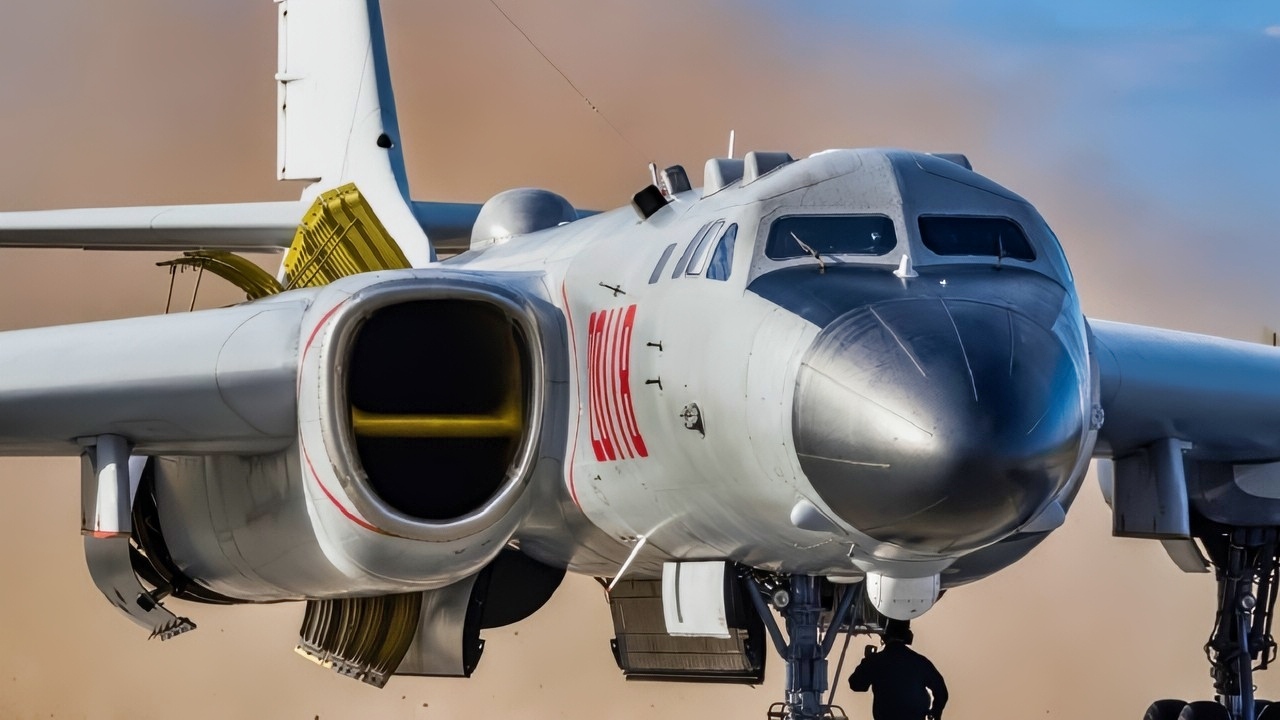
H-6 Bomber from China. Image Credit: Creative Commons.
Much of the report is based on commercial satellite imagery that, in addition to the nuclear weapons sites, shows facilities that could be utilized for electronic warfare, satellite communications, and command and control operations. Reuters then presented the imagery for interpretation to three independent security analysts.
The satellite photos show more than 80 new concrete launch pads that are spread out across thousands of square kilometers in the Xinjiang desert’s Lop Nur region. This is in an area near China’s existing ICBM silo fields at Hami.
The complex of structures includes at least two large octagonal installations, armored bunkers, and fiber-optic-linked command nodes.
“I’ve never seen anything quite like it,” said Hans Kristensen, who is the director of the Nuclear Information Project at the Federation of American Scientists and was also one of the analysts who reviewed the imagery. The complete configuration of the site and the scale of construction had not been previously revealed in this detail. He and other security specialists assess the effort as a “qualitative shift in how China is protecting — not merely expanding — its nuclear deterrent.”
Rising Asia-Pacific Tensions
The Reuters investigation broke on the opening day of the annual Shangri-La Dialogue Asia-Pacific Security Forum.
One day earlier, the International Institute for Strategic Studies (IISS), which organizes the event and secures sponsors to pay for it, also published its own strategic assessment.
The think-tank warns that any US-PRC conflict over the Republic of China (ROC) on Taiwan would risk nuclear escalation, a dilemma which this new, vast complex of nuclear infrastructure underscores.
The Institute’s assessment states that the world is on the cusp of a new nuclear arms race “with the Asia-Pacific at its core.”

PLAAF Xian H-6M makes a turn over central Changzhou.
Beijing, despite engaging in runaway defense spending, did not take the opportunity to send any officials of senior rank comparable to the representation of other nations – a detail brought to everyone’s attention by the German Chief of Defense Staff General Carsten Breuer.
The PRC Defense Minister, Dong Jun, declined to attend the conference for a second straight year, and the PLA delegation consisted of lower-level military “academics.” Purposely not taking advantage of the opportunity to engage with their senior-level counterparts was “dangerous” in today’s world, Breuer warned. “In my 42 years as a soldier, I’ve never experienced such dangerous times as we are living in the world today,” he continued.
Dialogue is still taking place with the members of the PRC delegation here, he said. “But of course, it would be better to have it [taking place] on a higher level.”
What Weapons Will Be Deployed
The security scholars interviewed by Reuters were in overall agreement that the infrastructure supports the PRC’s nuclear program.
But there are differences of opinion over what specific weapons will be deployed at this site and whether the octagonal compounds seen in the imagery collected are shelters for truck-mounted ballistic missiles or nuclear warhead assembly facilities. Military exercises reported to have involved heavy vehicles of this type were seen in the area of the northern octagon as recently as 11 May 2026.
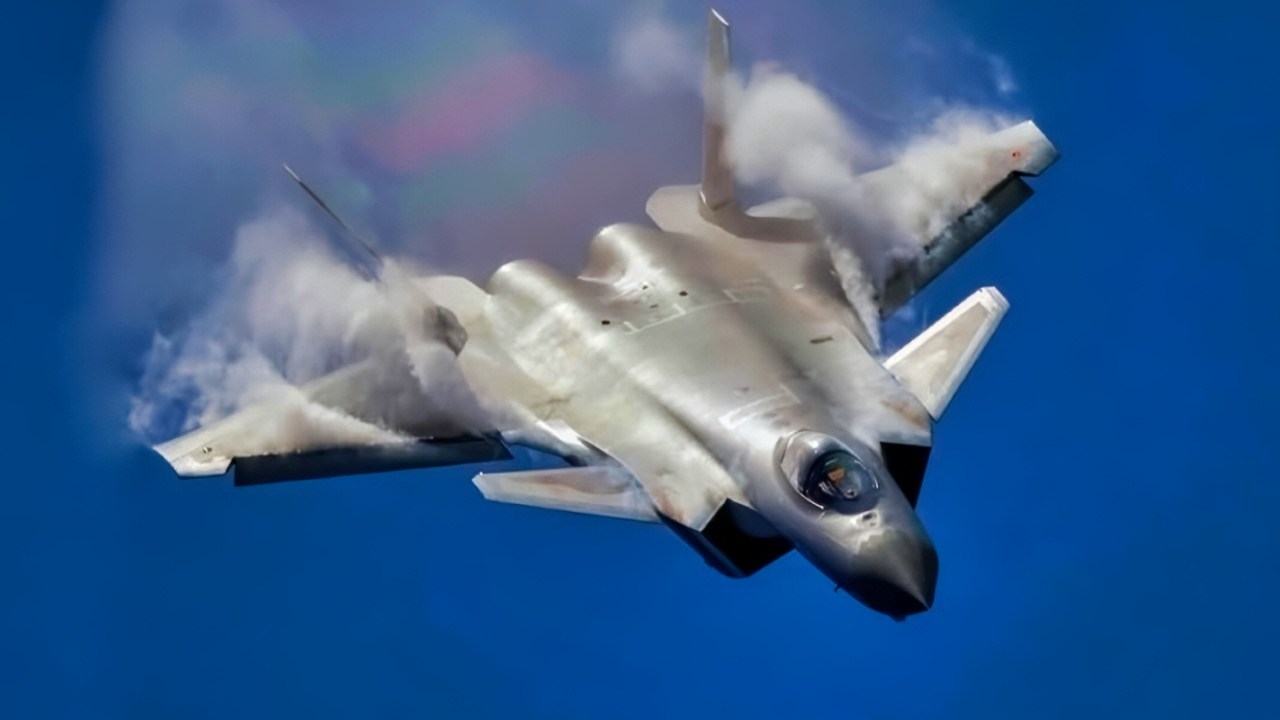
J-20S Fighter Chinese Internet Image.
The scale and design configuration of the new infrastructure seem to indicate a second-strike hardening program. The PRC has for decades claimed to be committed to a minimum deterrence posture.
But this combination of new ICBM silo fields, mobile missile-launching pads, and the construction of numerous additional, data-linked command nodes suggests a full-scale endeavor to ensure the survivability of the land-based portion of the PLA’s nuclear forces in the event of a US or allied first strike. The 2025 edition of the Pentagon’s annual report on the PRC’s military capabilities cites a US estimate that the PRC has more than 600 operational nuclear warheads – a figure that may be revised upward following these revelations.
An assessment also published on 29 May by Modern Diplomacy reads, “the design of this Chinese nuclear military complex shifts China from a state of minimum deterrence to a strategy of certain deterrence, making Washington think twice before engaging in any direct confrontation in defense of its allies.”
Nuclear arms and policy specialists are concerned that while nations are building up nuclear forces, there are no discussions today that could lead to treaties to limit these nuclear arsenals.
The last bilateral strategic arms limitation treaty between the United States and Russia, New START, expired in February 2026 with no replacement in place. There has never been an agreement of any kind covering or placing any limitations on the PRC’s nuclear arsenal.
About the Author: Reuben F. Johnson
Reuben F. Johnson has thirty-six years of experience analyzing and reporting on foreign weapons systems, defense technologies, and international arms export policy. Johnson is the Director of Research at the Casimir Pulaski Foundation. He is also a survivor of the Russian invasion of Ukraine in February 2022. He worked for years in the American defense industry as a foreign technology analyst and later as a consultant for the U.S. Department of Defense, the Departments of the Navy and Air Force, and the governments of the United Kingdom and Australia. In 2022-2023, he won two awards in a row for his defense reporting. He holds a bachelor’s degree from DePauw University and a master’s degree from Miami University in Ohio, with a specialization in Soviet and Russian studies. He lives in Warsaw.


