

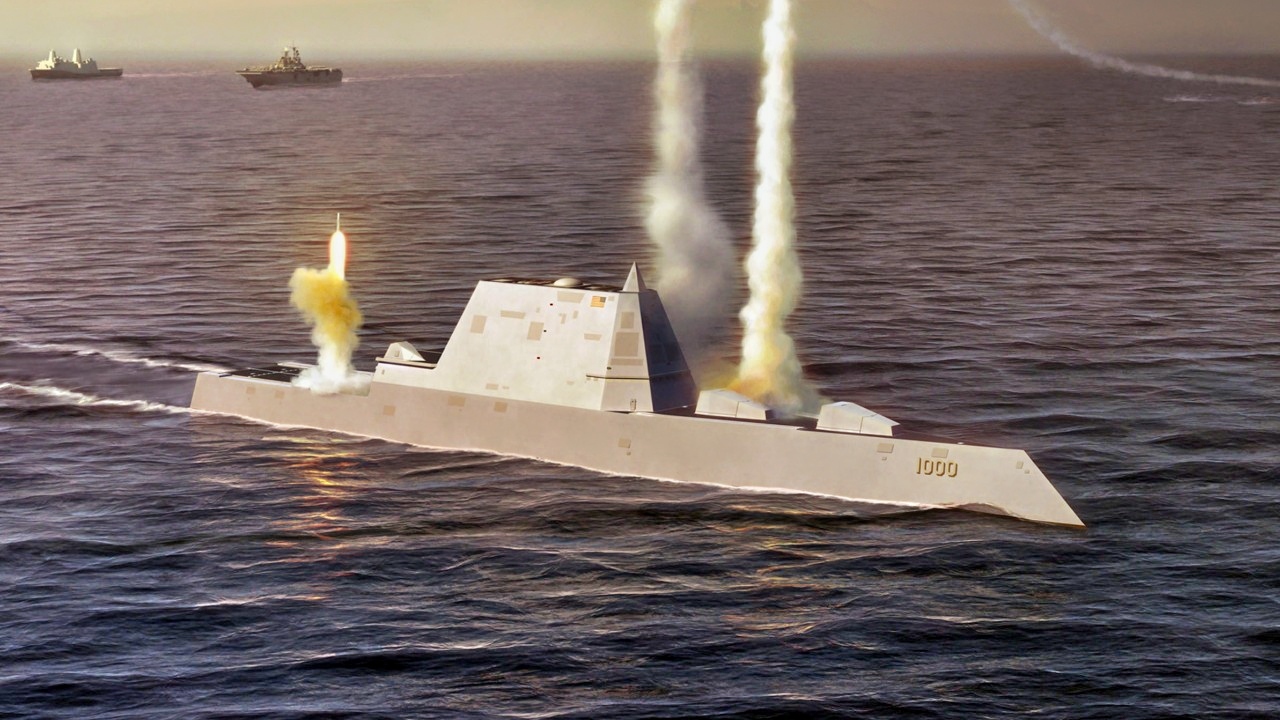
The most powerful navy in history should be able to pry open the world’s most important shipping lane. In practice, it’s far harder than it looks. The Strait of Hormuz is shallow, noisy, and cramped — exactly where America’s warships and sonar lose their edge — and Iran needs only to make passage dangerous, not win. The U.S. could force a corridor open, but keeping it safe would be risky and ruinously expensive. The likeliest ending isn’t a victory for either side — it’s something messier.
The Strait of Hormuz Crisis and Iran War Have No Simple Off-Ramps
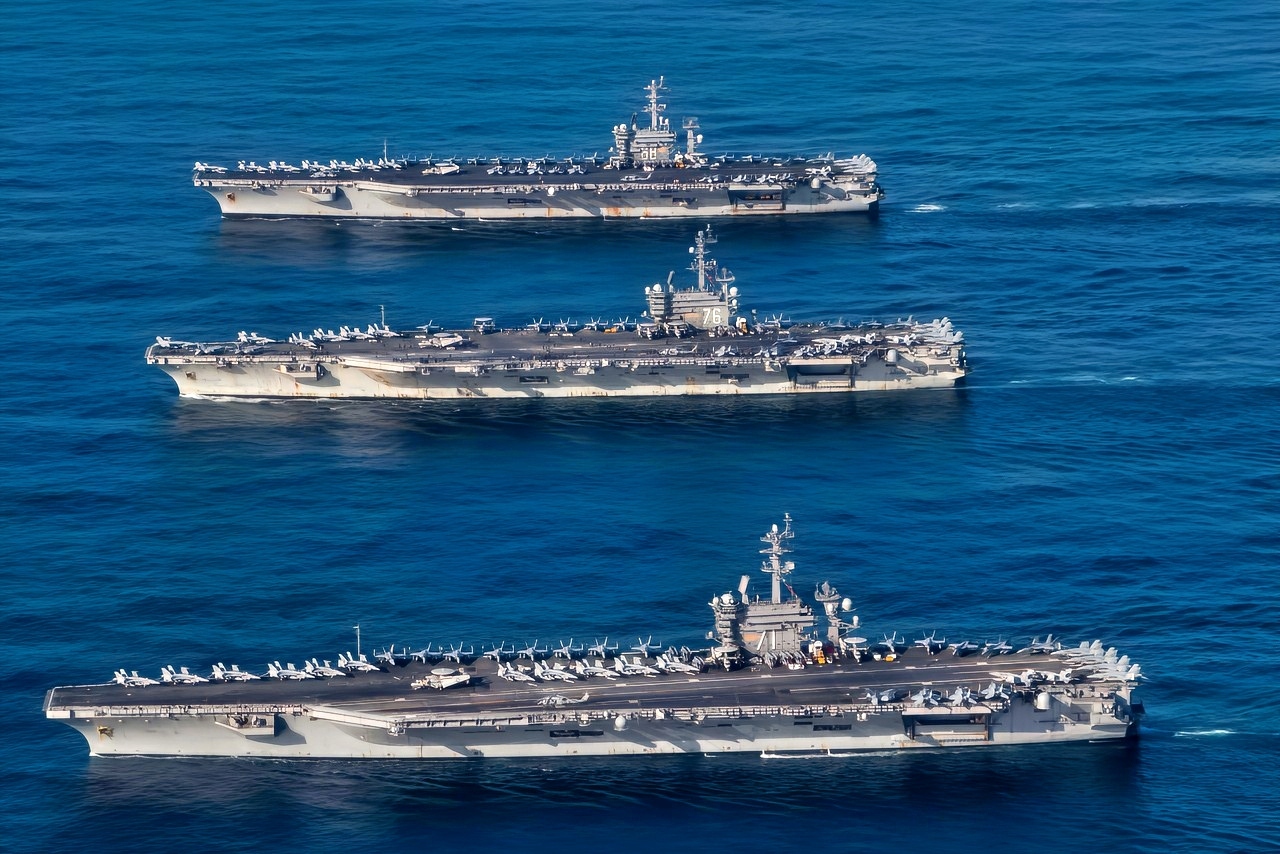
The U.S. Navy aircraft carriers USS Nimitz (CVN-68), USS Theodore Roosevelt (CVN-71) and USS Ronald Reagan (CVN-76) underway in the Western Pacific on 12 November 2017. The strike groups were underway and conducting operations in international waters as part of a three-carrier strike force exercise. This was the first time since August 2007 that three U.S. Navy carriers operated together. In 2007, USS Kitty Hawk (CV-63), USS Nimitz (CVN-68) and USS John C. Stennis (CVN-74) participated in exercise “Valiant Shield”.
Perhaps the most likely future scenario for the ongoing hostilities with Iran is not so much a clean end to the conflict, but rather a mix of limited strikes, continued pressure on shipping, cyber activities, and protracted talks on the future of the Strait of Hormuz, as well as Iran’s nuclear program.
Though a shaky cease-fire may hold for a time, it is not the only plausible scenario.
One Path: Escalation
One route forward could be a contained escalation in which the two sides continue to trade limited attacks, but where both avoid igniting a larger regional war because of the costs to each.
This seems to fit the more recent pattern of scattered, intermittent clashes around Hormuz, disrupted maritime traffic, and pauses in fighting, rather than an all-out invasion or occupation of Iran.
Another path is a much longer standoff where Iran continues to use its arsenal of drones, cruise missiles, fast attack boats, and potentially sea mines to make transiting the Strait of Hormuz high risk, while the United States simultaneously attempts to keep traffic moving through the Strait with naval escort and air cover.
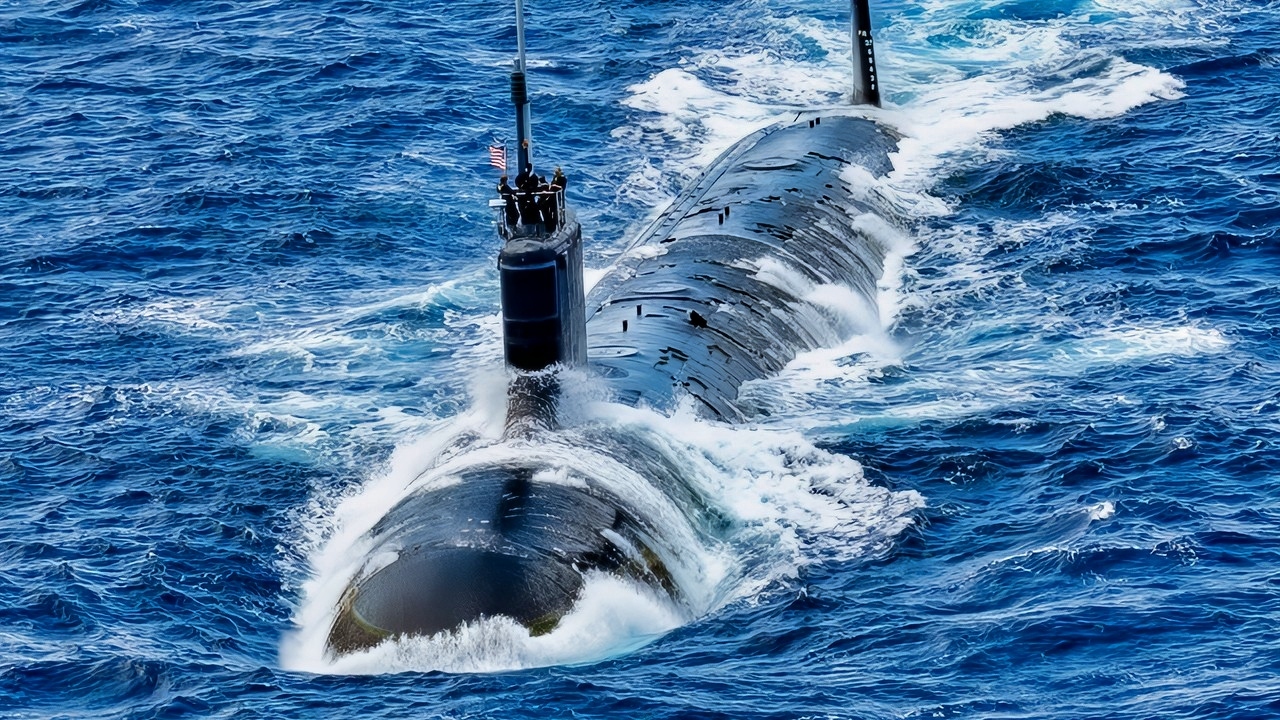
Virginia-class attack submarine USS North Carolina (SSN 777) sails in formation, off the coast of Hawaii during Exercise Rim of the Pacific (RIMPAC) 2024, July 22. Twenty-nine nations, 40 surface ships, three submarines, 14 national land forces, more than 150 aircraft and 25,000 personnel are participating in RIMPAC in and around the Hawaiian Islands, June 27 to Aug. 1. The world’s largest international maritime exercise, RIMPAC provides a unique training opportunity while fostering and sustaining cooperative relationships among participants critical to ensuring the safety of sea lanes and security on the world’s oceans. RIMPAC 2024 is the 29th exercise in the series that began in 1971. (U.S. Navy photo by Mass Communication Specialist 1st Class John Bellino)
Reuters reports that Iran could sustain disruption of the Strait for a long time to come, making the thorny issue difficult to resolve quickly by force alone.
A potential third option — by no means guaranteed — is a negotiated pause to the conflict or potentially a broader deal. But this will be difficult to achieve given the seemingly irreconcilable differences between the two sides.
Some reports have indicated that a draft deal or nearly finalized arrangements could reopen shipping, ease the blockade of Iran, and tie the Strait of Hormuz directly to negotiations on sanctions and nuclear issues.
Could the United States Reopen the Strait of Hormuz?
While the United States could theoretically open the Strait, primarily through the United States Navy, a full and lasting — and secure — opening would be hugely difficult to achieve should Iran continue to choose to fight.
While Iran doesn’t have the strongest hand here, it does have a few cards, and making the Strait as dangerous as possible is one of them. The United States Navy could escort tankers, clear naval mines, suppress Iranian launch sites, and place an air-defense umbrella over the maritime route in a modernized version of the escort operation during the 1987-1988 Tanker War.
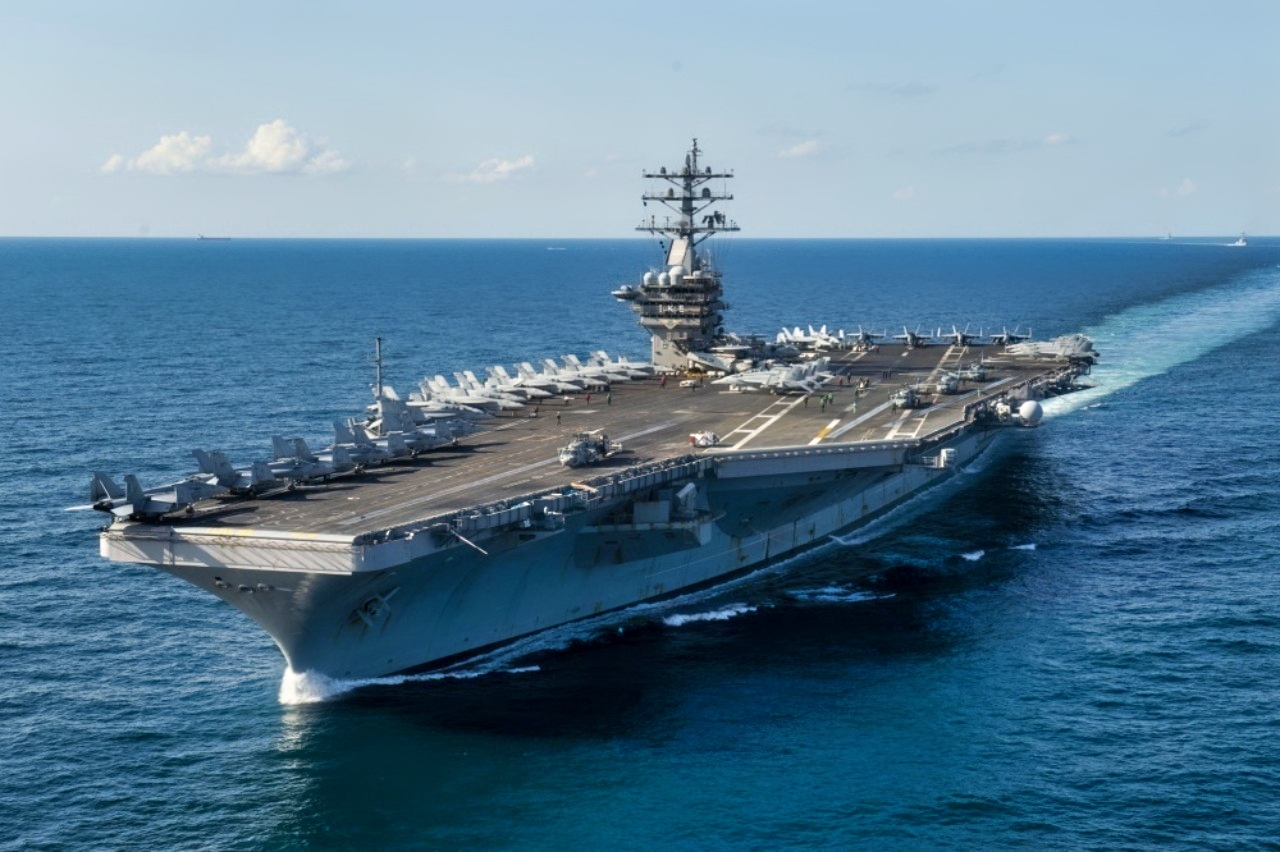
ATLANTIC OCEAN (Sept. 28, 2019) The aircraft carrier USS Dwight D. Eisenhower (CVN 69) transits the Atlantic Ocean with ships assigned to Carrier Strike Group (CSG) 10 and aircraft assigned to Carrier Air Wing (CVW) 3 during a photo exercise to conclude Tailored Ship’s Training Availability (TSTA) and Final Evaluation Problem (FEP) as part of the basic phase of the Optimized Fleet Response Plan. (U.S. Navy photo by Mass Communication Specialist 1st Class Tony D. Curtis/Released)
A Layered Approach
Forcing open the Strait of Hormuz permanently would require a multi-pronged approach that includes both military and diplomatic elements.
Naval escorts to protect commercial traffic, robust mine-clearing operations, and strong anti-missile defenses would be absolutely necessary. Intelligence and surveillance, particularly of Iran’s coast along the Strait of Hormuz, would help pressure Iran’s launch platforms and mobile launchers and squeeze Iranian logistics.
But maintaining a diplomatic channel with Iran — despite the uncertainty regarding the degree of control held by Iran’s new supreme leader — could, in theory, afford Tehran a face-saving avenue for backing down from hostilities.
Forcing Open the Strait of Hormuz
The United States could, in short, force open a corridor through the Strait of Hormuz for a time, but ensuring its safety would be both risky and expensive.
The opening salvos of Operation Epic Fury, the joint Israeli-American operation against Iran, saw a massive expenditure of precision munitions.
And while that opening push against Iran was an operational success, American lawmakers and analysts have expressed concern that rebuilding the United States’ stocks of such munitions will be both costly and slow, potentially crimping the United States’ ability to respond to other crises around the globe in the future.
One important caveat is that the United States is less comfortable in the shallow coastal waters of Hormuz than in the open ocean. Large warships need depth and space to maneuver and react.
Sonar and torpedoes that work well in deep waters can be less effective in shallow, noisy seas, where water conditions and the seafloor disrupt normal operations.
A Final Potential Scenario
One plausible scenario is not necessarily one side winning, but rather a settlement-type deal in which shipping through the Strait resumes, thanks to a mix of guarantees, some concessions, and monitoring of Iran’s missile-launch capabilities.
But if talks collapse, the fallback scenario could be a modern echo of the Tanker War, with a series of strikes on convoys, reprisals, and a hugely expensive effort to keep one of the world’s most important maritime trade corridors open.

Iran’s missile capabilities. Image Credit: Creative Commons.
Both sides, in essence, hold strong deterrents.
The United States can make the Strait of Hormuz passable, and Iran can make passage dangerous. But both sides would be hard-pressed to find a lasting victory — or perhaps even a post-conflict scenario entirely to their liking.
About the Author: Caleb Larson
Caleb Larson is an American multiformat journalist based in Berlin, Germany. His work covers the intersection of conflict and society, focusing on American foreign policy and European security. He has reported from Germany, Russia, and the United States. Most recently, he covered the war in Ukraine, reporting extensively on the war’s shifting battle lines from Donbas and writing on the war’s civilian and humanitarian toll. Previously, he worked as a Defense Reporter for POLITICO Europe. You can follow his latest work on X.


