
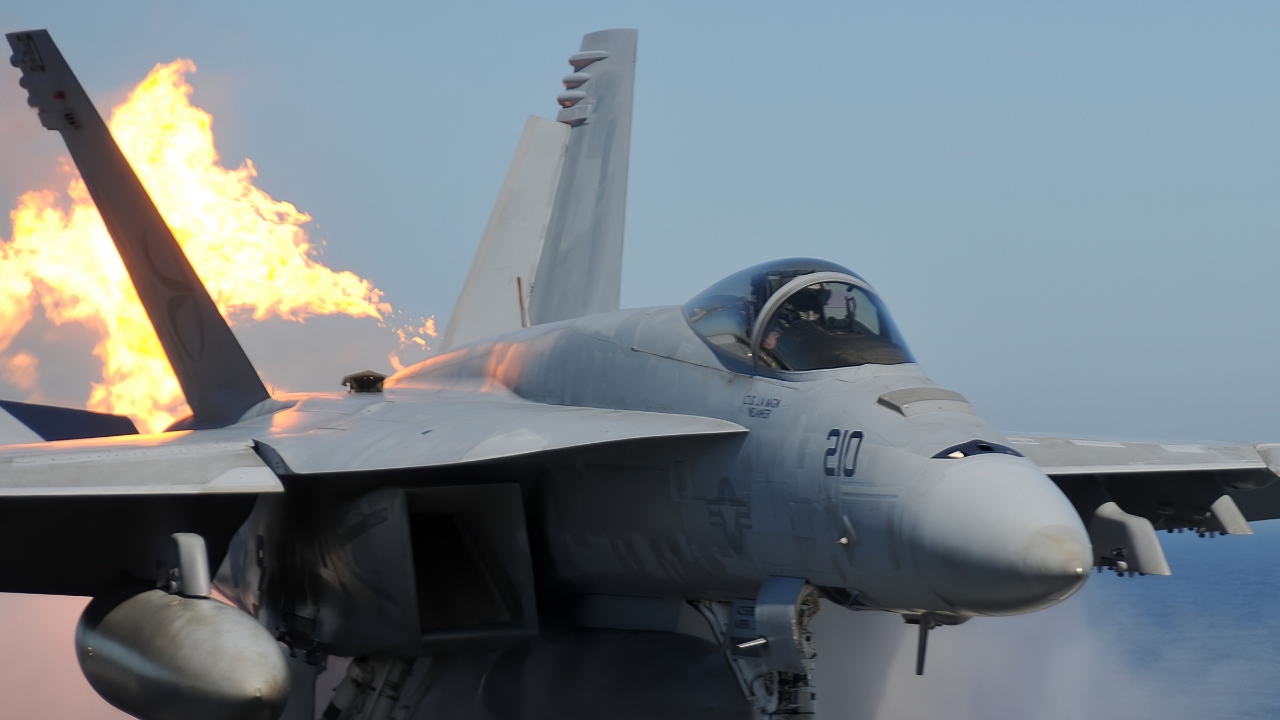
Summary and Key Points: On paper, the Iran war is winding down: Trump says a deal could come within days, and his secretary of state says Tehran is suddenly willing to discuss things it called off-limits weeks ago. On the ground, it looks like the opposite. This week a drone-and-missile strike tore into Kuwait’s international airport — dragging a country that had stayed out of the war directly into it — while the Strait of Hormuz remains choked shut months after a ceasefire was meant to reopen it. So which is it: a deal on the verge of collapse, or one about to close? There’s a counterintuitive case for the latter — that Iran, sensing the endgame, is inflicting all the pain it can to walk in with maximum leverage.
Iran Deal Close?
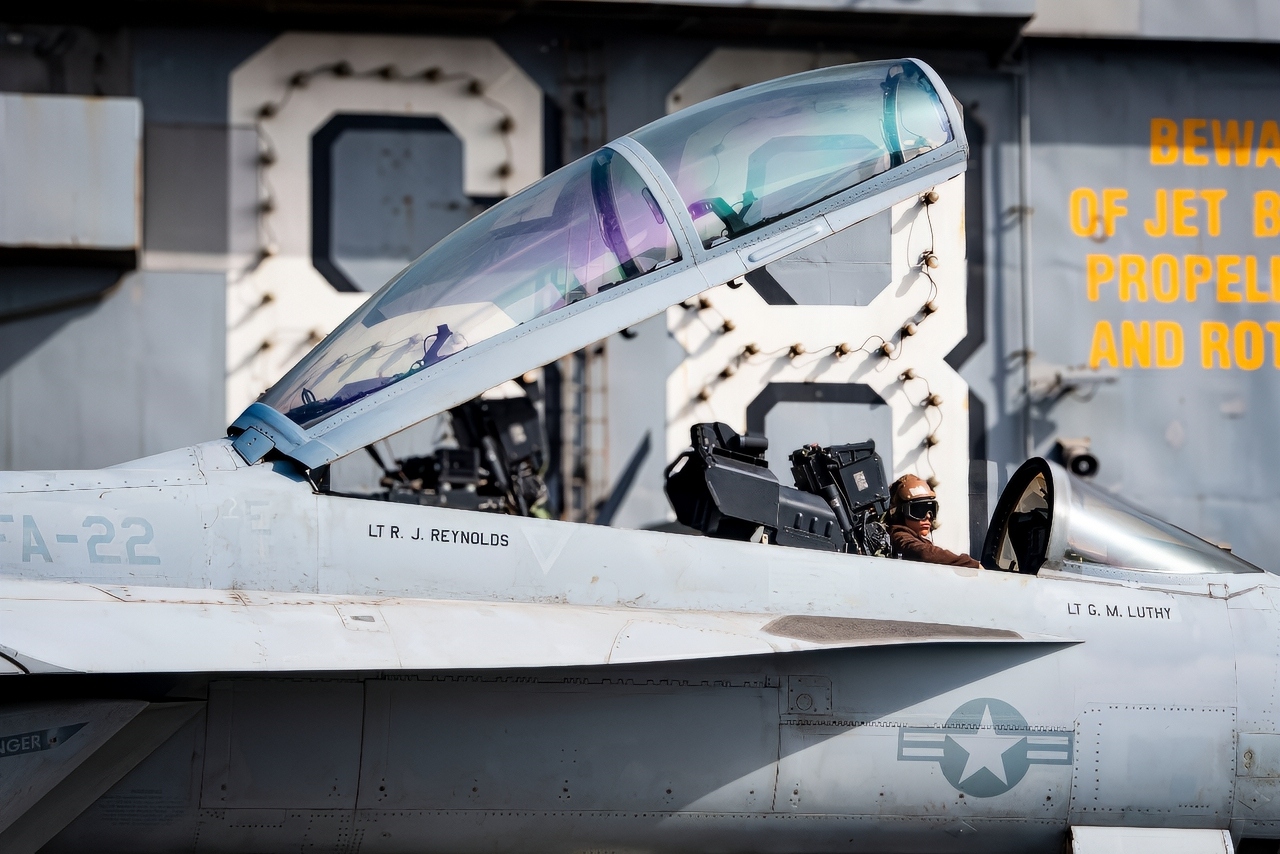
U.S. CENTRAL COMMAND AREA OF RESPONSIBILITY (July 22, 2025) An F/A-18F Super Hornet, attached to Strike Fighter Squadron (VFA) 22, taxis across the flight deck of the Nimitz-class aircraft carrier USS Nimitz (CVN 68) in the U.S. Central Command area of responsibility. (Official U.S. Navy photo)
While U.S. President Donald Trump continues to insist that negotiations with Iran are progressing and Secretary of State Marco Rubio says a deal may arrive in a matter of days, events across the Gulf this week suggest that the conflict remains far from resolved. They may even indicate that new hostilities are on the way.
Strikes Escalate Outside Iran
On June 3, drone and missile strikes unexpectedly hit Kuwait International Airport, killing at least one person and injuring dozens. Iran took credit for the attack, citing a U.S. strike on an Iranian oil tanker in the Strait of Hormuz and other attacks on Qeshm Island.
“These aggressive actions not only violate the ceasefire understanding of April 9 but also constitute a flagrant violation of the fundamental principle prohibiting the use of force under Article 2, Paragraph 4 of the United Nations Charter and international law,” a statement from the Iranian Foreign Ministry reads.
The attack temporarily disrupted operations at one of the most important transportation hubs in the Gulf and was one of the most serious incidents involving civilian infrastructure outside of Iran since the war began. The strikes also came as Washington and Tehran were engaged in high-stakes negotiations, which analysts believed could mark the final stage of the deal-making process.
While Kuwait has long served as a major logistics hub for the U.S. military, it has generally sought to avoid direct involvement in the war – but that has now changed. Not only has the ceasefire, which was agreed in April, failed to deliver a lasting deal, but the conflict is also now expanding outside of Iran, Lebanon, and the Strait of Hormuz.

A U.S. Navy F/A-18E Super Hornet aircraft assigned to Strike Fighter Squadron (VFA) 14 participates in an air power demonstration near the aircraft carrier USS John C. Stennis (CVN 74) April 24, 2013, in the Pacific Ocean. The John C. Stennis Carrier Strike Group was returning from an eight-month deployment to the U.S. 5th Fleet and U.S. 7th Fleet areas of responsibility. (U.S. Navy photo by Mass Communication Specialist Seaman Apprentice Ignacio D. Perez/Released)
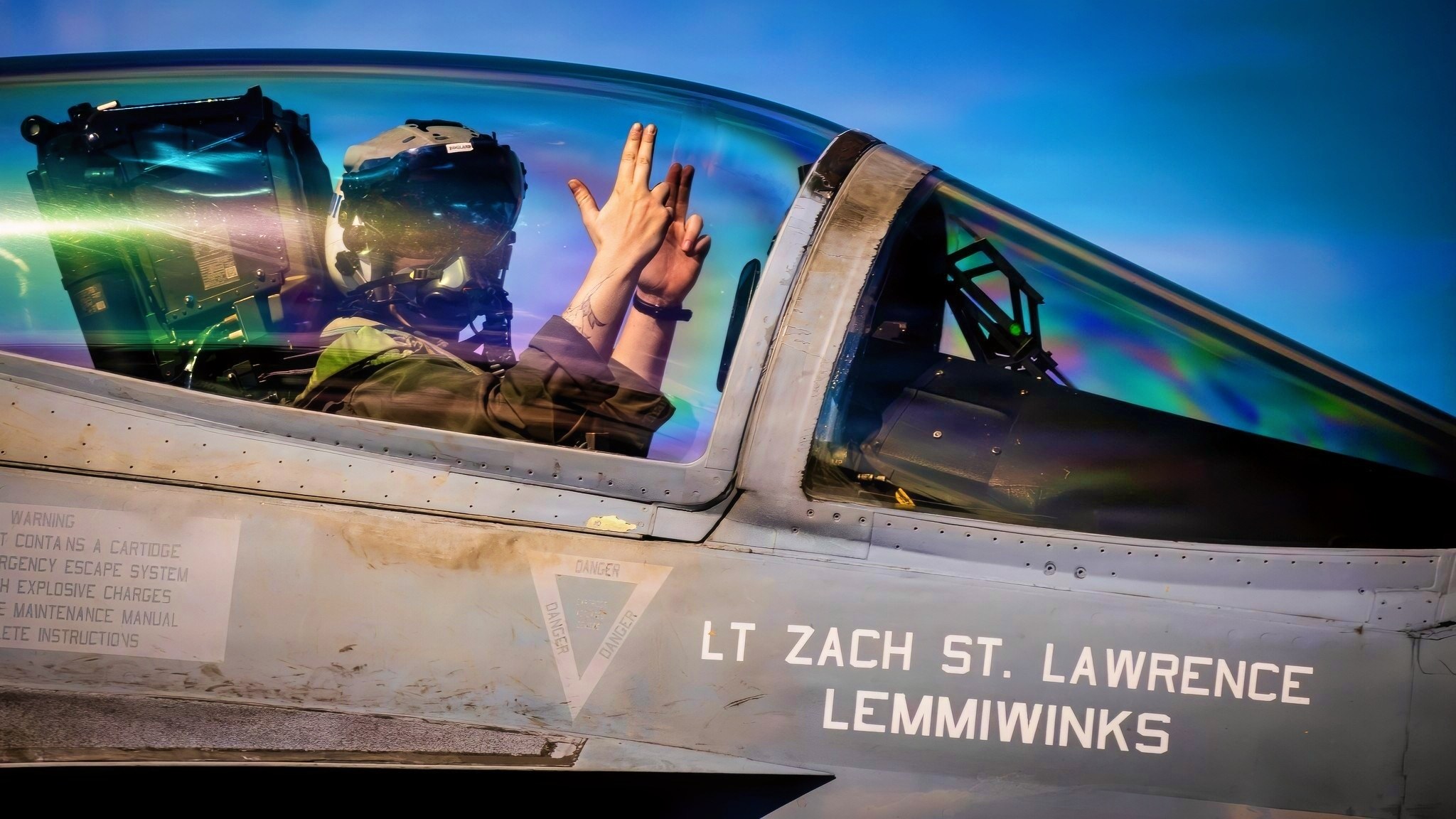
A U.S. Sailor assigned to Strike Fighter Squadron 37 signals to arm ordnance in an F/A-18E Super Hornet aircraft on the flight deck of the world’s largest aircraft carrier, Ford-class aircraft carrier USS Gerald R. Ford (CVN 78), while underway in the Caribbean Sea, Nov. 30, 2025. U.S. military forces are deployed to the U.S. Southern Command area of responsibility in support of Operation SOUTHERN SPEAR, Department of War-directed operations, and the president’s priorities to disrupt illicit drug trafficking and protect the homeland. (U.S. Navy photo)
Hormuz Still Hasn’t Reopened
One of the central goals of the April ceasefire was to create conditions that would allow commercial shipping to return to the Strait of Hormuz – but that hasn’t happened, either. Months later, the Strait of Hormuz is largely closed, and mining efforts continue.
Before the war, roughly 20 million barrels of oil and petroleum products passed through the waterway every day, accounting for roughly one-fifth of global petroleum consumption and about a quarter of all seaborne oil trade. The ceasefire was expected to reduce tensions enough for insurers to continue supporting the passage of ships through the Strait, and for energy traders to resume normal operations. And while some vessel traffic has resumed, commercial shipping through the Strait remains significantly below pre-war levels. Many shipping companies are still avoiding the route entirely due to uncertainty, while others face substantially higher insurance costs and major security concerns.
That’s a blow to the Trump administration, but it’s also hurting the global economy. China’s crude imports have fallen significantly since the conflict began, forcing the country to draw from its enormous strategic reserves. The U.S. is also drawing from its reserves, but it is acting as a global back-up system for European and Asian economies struggling to import the crude they need. Millions of barrels of oil are being drawn from emergency stockpiles to stabilize markets and offset supply disruptions.
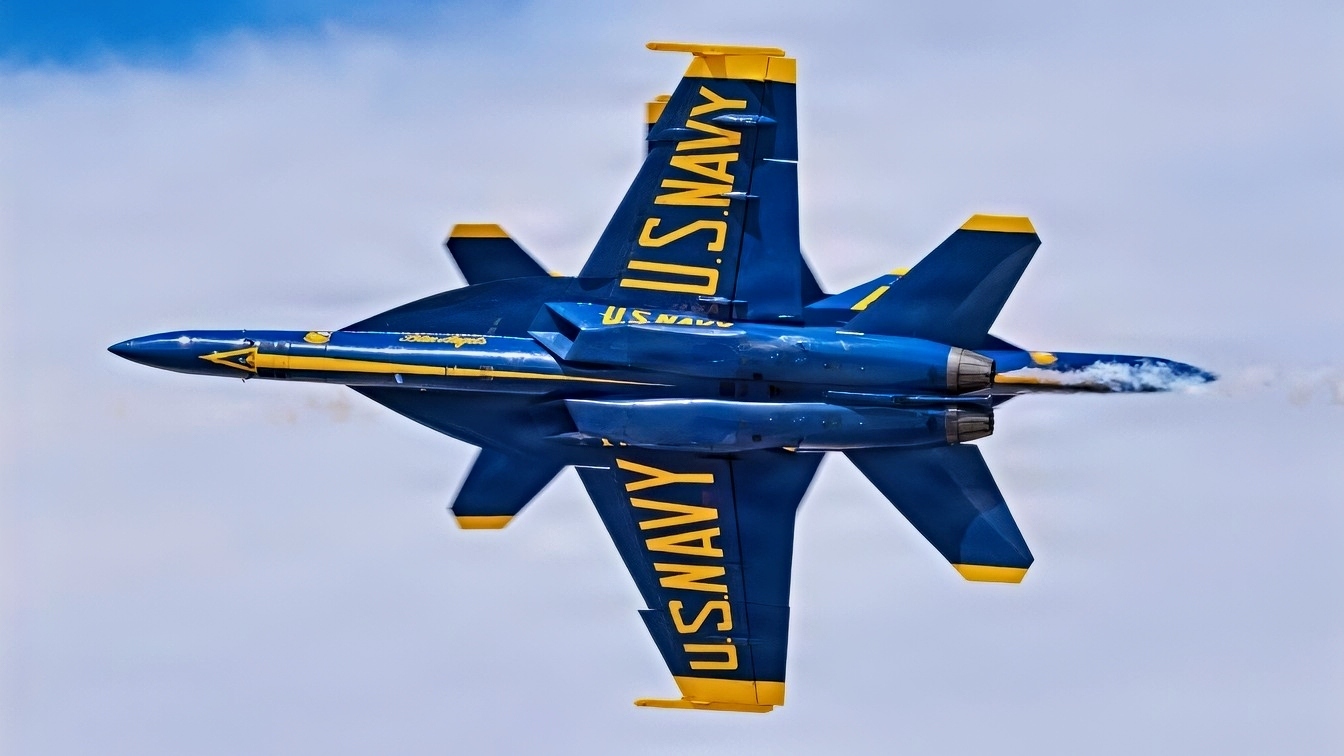
U.S. Navy Blue Angels 5 and 6 fly past each other in an opposing knife edge pass during the Luke Days 2026 airshow, March 22, 2026, at Luke Air Force Base, Arizona. Events like Luke Days 2026 provide insight into the training, preparation and teamwork that enable the joint force to respond quickly and effectively when needed. anytime and anywhere. The U.S. Navy Blue Angels demonstrate the precision, speed and discipline required to operate the F/A-18 Super Hornet, one of the Navy’s frontline carrier-based fighter aircraft. (U.S. Air National Guard photo by Tech. Sgt. Hampton Stramler)
If the purpose of the ceasefire is to restore stability, then the continued disruption in the Strait of Hormuz suggests it is not, in fact, working.
Can It Be Saved?
Despite the hostilities, there are still signs that negotiations are moving forward. Speaking to reporters this week, Secretary Rubio said that Iran is now discussing issues that it refused to discuss only weeks ago.
It means a deal could be on the way, given that the Trump administration has spent months insisting it will only be possible if Iran gives up its nuclear ambitions. Rubio said that Iranian officials are now engaging on aspects of their nuclear program that had previously been considered off-limits.
President Donald Trump also continues to express optimism, himself stating that a deal may come by this weekend, and insisting that communication between Washington and Tehran remains active despite reports in Iranian media that indirect negotiations had been cut off.

An F-35B Lightening II with Marine Fighter Attack Squadron 121, 3rd Marine Aircraft Wing out of Marine Corps Air Station Yuma, Ariz., stopped at Joint Base Elmendorf-Richardson, Alaska en route to Marine Corps Air Station Iwakuni, Japan, Jan. 12, 2017. Joint Base Elmendorf-Richardson, AK, UNITED STATES
Is This Iran’s Strategy?
That leaves open the possibility that the recent escalation was not evidence that the ceasefire had failed, but rather that the deal was in the final phase of negotiations and the Iranian side was seeking as much leverage as possible.
Historically, it is not unusual for countries to increase military or political pressure as major agreements approach completion, and from Tehran’s perspective, demonstrating that it can still threaten regional infrastructure and impose economic costs could strengthen its bargaining position as negotiators attempt to finalize the terms.
The administration’s argument that the short-term disruption could ultimately be justified if it produces a lasting settlement could well prove sound. A successful agreement could open the Strait of Hormuz, prevent future conflicts, and stabilize global energy markets. If a deal is made, the ceasefire – despite recent hostilities and escalation – will have been worth it.
About the Author: Jack Buckby
Jack Buckby is a British researcher and analyst specializing in defense and national security, based in New York. His work focuses on military capability, procurement, and strategic competition, producing and editing analysis for policy and defense audiences. He brings extensive editorial experience, with a career output spanning over 1,000 articles at 19FortyFive and National Security Journal, and has previously authored books and papers on extremism and deradicalization.


