


The Cold War could not have ended, and the Soviet Union could not have collapsed, without literary dissidents. Nobel laureates such as Andrei Sakharov, Aleksandr Solzhenitsyn, and Boris Pasternak demonstrated that their literature could raise worldwide awareness of Soviet totalitarianism and help bring about change.
Why are literary dissidents so vital for political change? They first offer hope amid a bleak, dystopian political environment. They put pressure on corrupt governments. Dissidents create heroes and role models. Literary dissidents encourage the enjoyment of literature and influence revolutionary ideas.
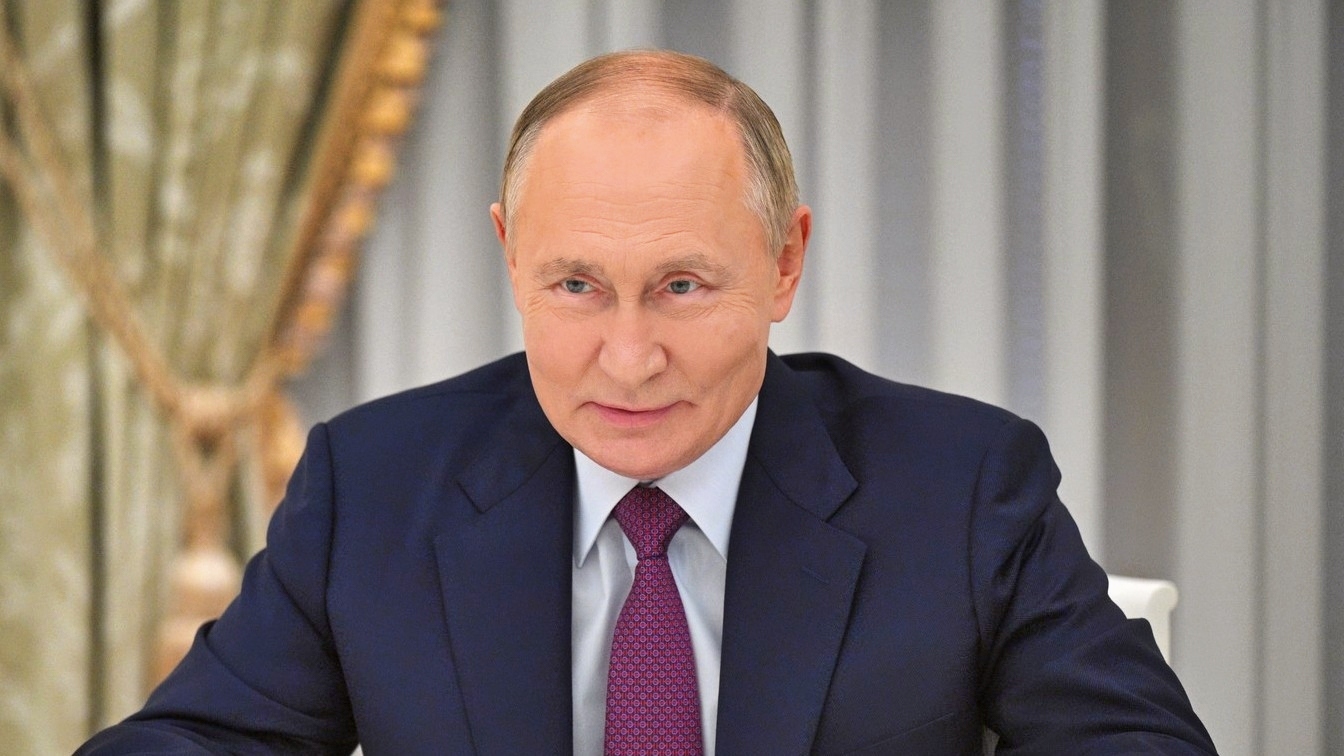
Putin 2024. Image Credit: Russian Federation.
Sakharov was a renowned nuclear physicist before he wrote about individual liberty and freedom. More of an essayist than a full-fledged novelist, he called for a ban on nuclear testing and closer ties with the West. Sakharov moved away from science and delved into challenging the authorities with his article, “Reflections on Progress, Peaceful Coexistence, Intellectual Freedom.” The article advocated greater freedom to receive and share information and to discuss and express ideas without prejudice or government crackdowns. He was awarded the Nobel Peace Prize in 1975 for promoting human rights.
Solzhenitsyn became a full-time writer after studying math and physics, but he later ran into trouble with the Stalin regime for criticizing the dictator in a letter he wrote as a soldier in World War II. He was sent to the notorious prison camps for eight years and was diagnosed with cancer. His first major work, One Day in the Life of Ivan Denisovich, exposed life in the gulag. His masterpiece, The Gulag Archipelago, depicted the horror of the camps. He won the Nobel Prize in Literature in 1970.
Pasternak was not a dissenter like the other two, but his 1957 novel Doctor Zhivago shocked the Soviet regime because of its global popularity. The book made a big impact. The Soviet Union refused to publish it, but the manuscript still made its way to Italy, and the book was eventually published. It was later smuggled back into the USSR. The author and poet won the Nobel Prize in Literature in 1958. He had to refuse the award because of Soviet pressure and criticism.
The Current Literary Dissidents
Who are today’s Russian dissidents? They are, unfortunately, not as well-known. Alexei Navalny comes to mind, but he has passed away. His memoir Patriot is electrifying, as are his other books, although we can no longer expect new writings from the activist. Current literary dissidents are under intense scrutiny, facing threats, and being exiled. They continue to strive to make a difference and improve Russia through their poetry and prose. The following is a short list of writers who could be considered dissidents. I will not include their locations to better protect them from the Russian government.
Boris Akunin is the pen name for Grigory Chkhartishvili. He enjoys writing detective novels that have been popular in Russia for years. Akunin has been a critic of the war in Ukraine. Because of these views, Akunin has been added to a list of “extremists and terrorists” by the government. He has also criticized Vladimir Putin. In 2023, the authorities launched an investigation into him for “publicly spreading fake information” about the Russian army. His publisher dropped him. He then created a web tool called “True Russia” to support Ukrainian and Russian expatriates.
Svetlana Alexievich was born in Ukraine and raised in Belarus, but she grew up under Soviet repression. She won the Nobel Prize in Literature in 2015. Alexievich developed her own style of journalism that focuses on the memories of real people who witnessed historical events such as the Chornobyl disaster and the fall of the Soviet Union. She has a talent for helping ordinary people open up and share such powerful emotions that it can bring a tear to your eye.
“This is how I hear and see the world – as a chorus of individual voices and a collage of everyday details. This is how my eye and ear function. In this way, all my mental and emotional potential is realized to the fullest. In this way, I can be simultaneously a writer, reporter, sociologist, psychologist, and preacher,” according to an interview recounted in her Nobel biography.
Her books have been banned and removed from libraries and stores in Russia and Belarus. She has also faced prosecution and exile.
Masha Gessen or M. Gessen (they/them) is a journalist and author born in Moscow in 1967. They have written passionate books about contemporary Russia that resonate with the LGBTQ community’s experience of oppression. They were once fired for refusing to cover a Putin event while editing Vokrug sveta. Russian politicians began criticizing them as “perverted.” Gessen was also accused of spreading false information about the Russian army.
Elena Kostyuchenko is a fearless Russian reporter and a gay rights activist in exile. She has faced harsh treatment from Putin because of her reporting on the war in Ukraine. She believes the Russian leader had her poisoned. Her book, I Love Russia: Reporting from a Lost Country, offers brave coverage of political events in Russia from voices not usually featured by the Russian state media. Her strained relationship with her conservative mother, who supports some of Putin’s policies, is heart-wrenching.
Vladimir Sorokin is a Russian author of novels and a playwright. He tends to parody the socialist realism of the Soviet Union. His experimental style can be compared to James Joyce’s. “One of his best-known novels in the United States, Day of the Oprichnik, describes a Russian near future in which the tsardom has been restored, and state thugs rain violence on the streets of Moscow,” according to the New Republic. He is known as a critic of Putin’s Russia and portrays it in a blistering and often grotesque style that depicts a defunct and illegitimate new empire.
Maria Stepanova is a Russian poet, novelist, and journalist. She serves as an essayist and the editor-in-chief of Colta.ru, which is financed through crowdfunding. Her work has received many awards. Stepanova is described as “wildly experimental, and yet movingly traditional.” She is regarded as a cultural activist and views her poetry as acts of resistance.
Mikhail Zygar is a journalist, author, and filmmaker. He is best known for founding the television network Dozhd. The outlet was banned in Russia in 2022 because Russian authorities considered it “undesirable.” Dozhd was also accused of being a foreign agent. Zygar’s current book, The Dark Side of the Earth, highlights the work of dissidents in the Soviet Union. He covers the war in Ukraine and has received a press freedom award.
Why are Dissidents Important?
-Hope. Hope is a dissident strategy. It is the antidote to miserable lives and oppression. All people need something to look forward to. The Russian people require an alternative to the current situation. They lust for inspiration to engage in creative thought. Hope fosters happiness through altruism and diversity, and it fuels the joy of rebellion.
-Political pressure on the regime is crucial. Truth serves as a strong defense against totalitarianism by exposing corruption and countering propaganda. This represents the fight for individuality. Pressure is essential to hold the regime accountable, making protests inspiring and widespread.
-Creating heroes. Everyone needs a role model and someone to look up to. This is the blessing of resistance: it creates new acolytes of freedom who enable popular uprisings and the ability to oppose oppressive governments.
-The enjoyment of literature and art. This highlights the beauty of creativity and the creation of meaningful, enduring works that are intricate and rooted in history. It continues to preserve Russian-ness and realism, while inspiring the nation to strive for improvement.
-Revolutionary thought. This fosters a mood among the people for change toward a more just and lasting peace, as well as a government that can uphold freedom, independence, and civil rights for everyone.
Russian and post-Soviet literary dissidents need greater exposure for their works. More media attention in the Western world is essential. There is a need to ensure that not all Russians are depicted as villains and that some are freedom-loving people who desire a country that treats everyone with respect. There should still be reverence for a Russian literary tradition that includes Pushkin, Chekhov, Dostoevsky, and Tolstoy.
These current literary dissidents still have an important mission. They believe they can change the world for the better. Putin and his goons will not keep them down, and it is crucial for the West to ignite their passion and promote greater creativity wherever they produce their valuable work.
About the Author: Brent M. Eastwood, PhD
Author of now over 3,500 articles on defense issues, Brent M. Eastwood, PhD, is the author of Don’t Turn Your Back On the World: A Conservative Foreign Policy and Humans, Machines, and Data: Future Trends in Warfare, plus two other books. He is Senior Defense Editor and Columnist for 19FortyFive and National Security Journal. Brent was the founder and CEO of a tech firm that used artificial intelligence to predict world events. He served as a legislative fellow for US Senator Tim Scott and advised the senator on defense and foreign policy issues. He has taught at American University, George Washington University, and George Mason University. Brent is a former US Army Infantry officer. He can be followed on X @BMEastwood.


