

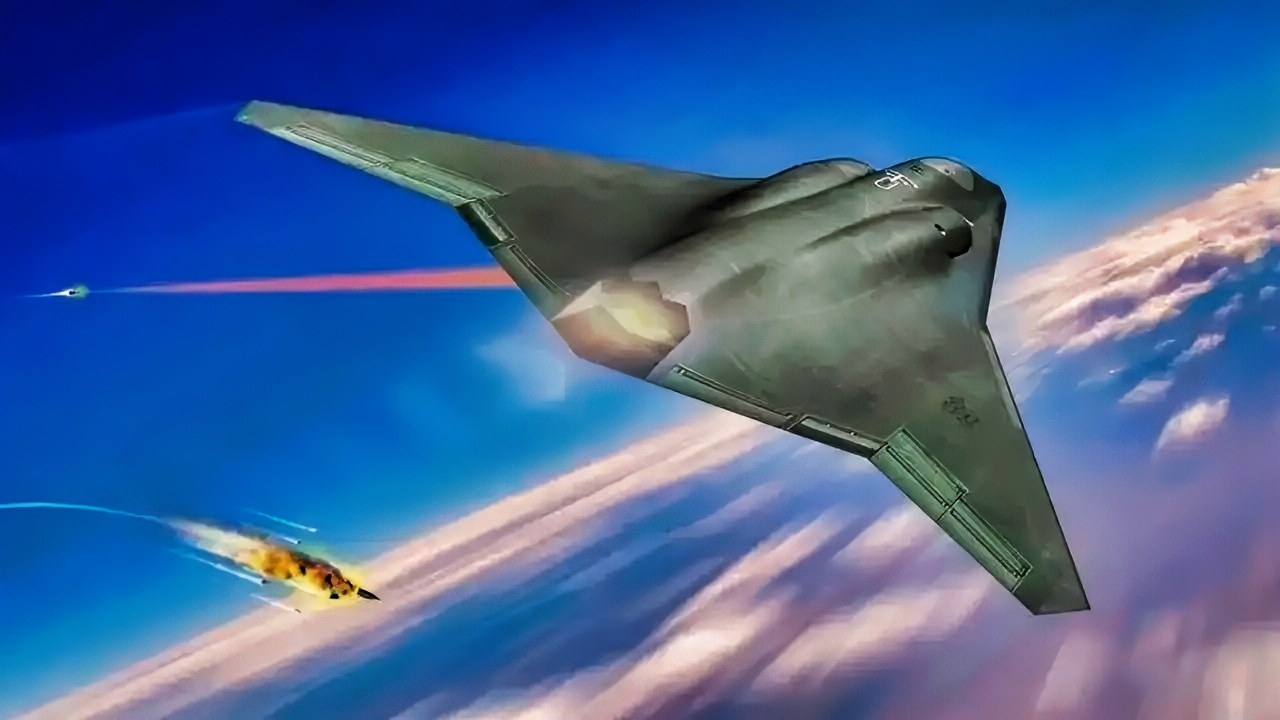
As the United States Air Force prepares to accept its newest jet, the F-47, into service, the reaction from America’s principal geopolitical adversary toward the sixth-generation fighter has been somewhat negative, with detractors in Beijing pointing out that the fighter will be one of, if not the most expensive, defense programs in history. A summary of China’s reaction has been compiled and analyzed by the U.S. Air Force and provides an interesting window into how China perceives what could well be the world’s leading fighter jet as it enters service.
Gauging the Reaction from China on F-47
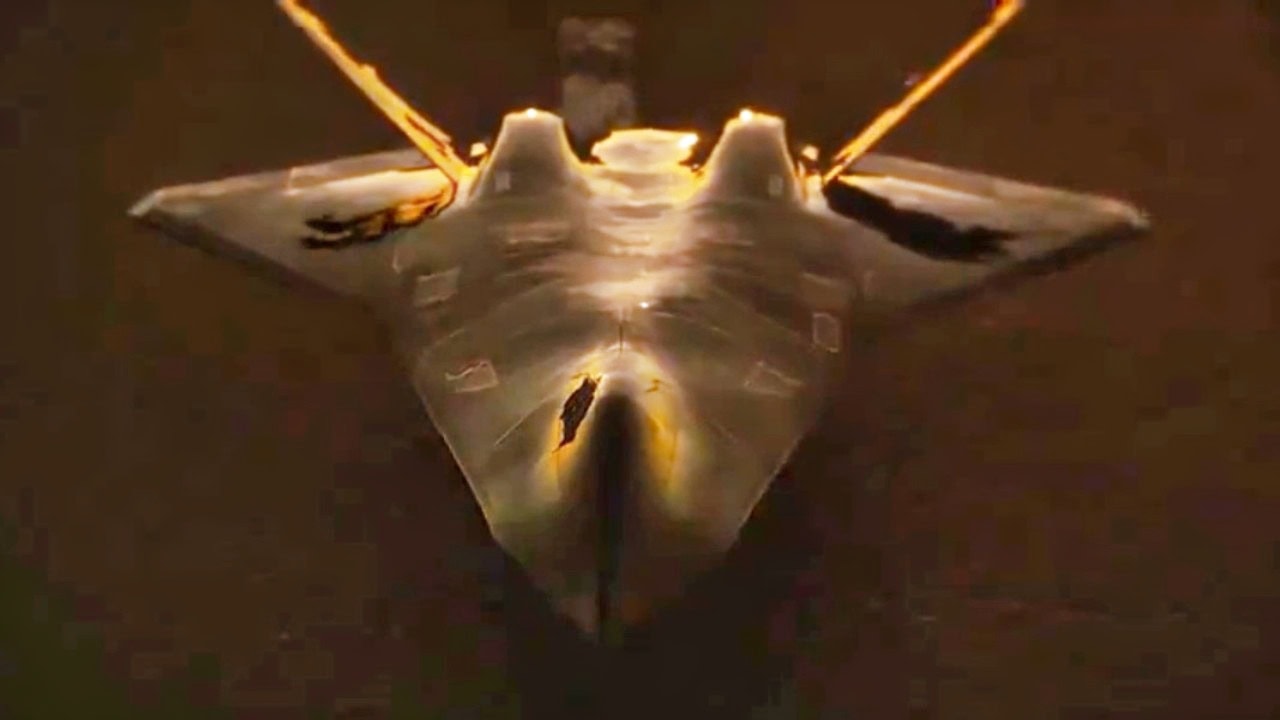
F-47. X Screenshot.
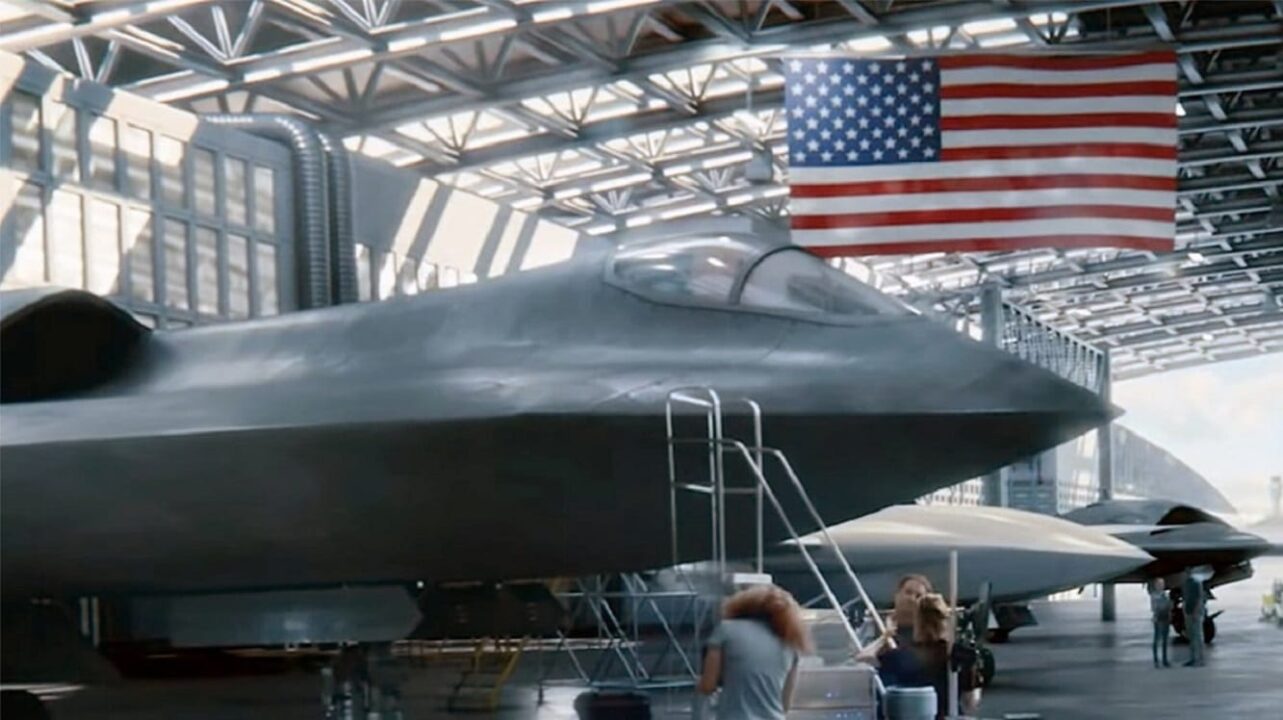
NGAD F-47. Image Credit: Creative Commons.
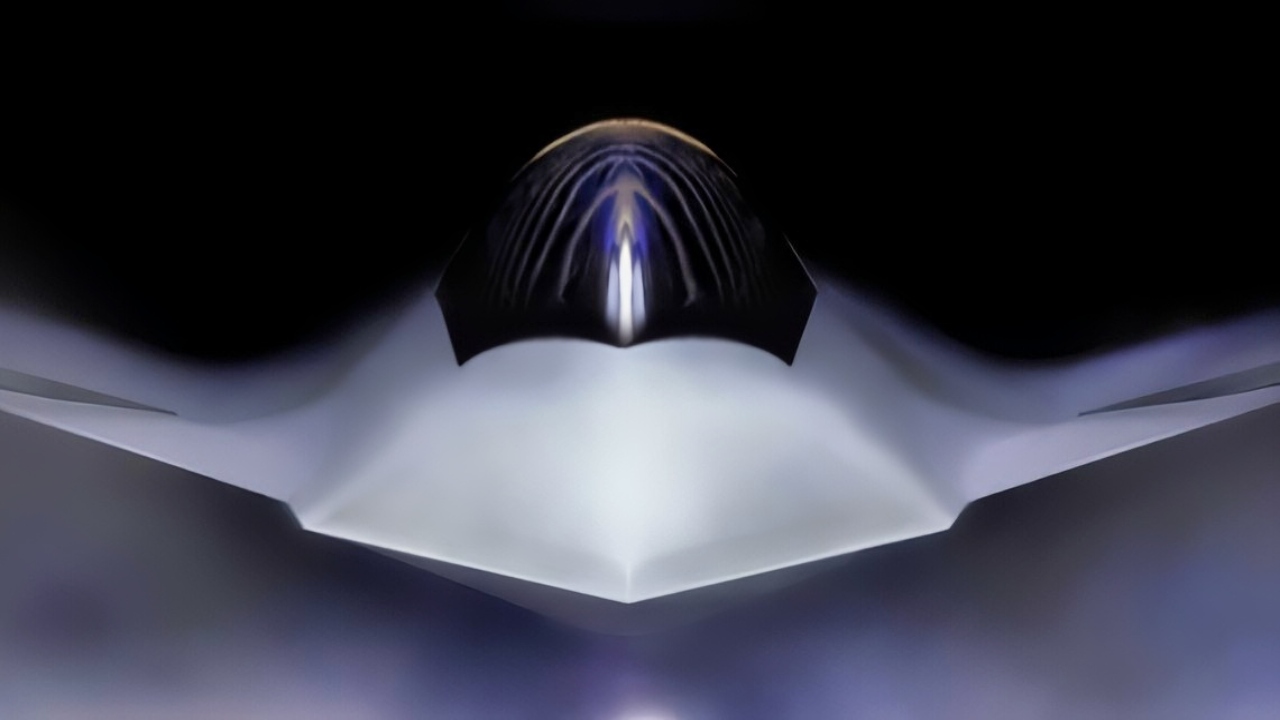
Shown is a graphical artist rendering of the Next Generation Air Dominance (NGAD) Platform. The rendering highlights the Air Force’s sixth generation fighter, the F-47. The NGAD Platform will bring lethal, next-generation technologies to ensure air superiority for the Joint Force in any conflict. (U.S. Air Force graphic)
The United States Air Force’s China Aerospace Studies Institute compiled a range of Chinese reactions to the F-47 fighter.
Perhaps the most notable conclusion of their paper noted that “PRC media has primarily responded to the news of the F-47 by attempting to downplay its significance and project an air of calm confidence for its domestic audience. This is a common strategy for state media outlets, which are quick to play up perceived domestic successes… while hand-waving perceived setbacks.”
Furthermore, “most official commentary has sought to describe the F-47 as not being a significant threat to PLA ambitions. Criticisms of the F-47 are varied and somewhat scattershot, but include its high cost, questions around when it will achieve full operational capability, and its reliance on rare earth metals.”
And lastly, though “some media outlets did acknowledge the F-47’s impressive reported capabilities, other commenters attempted to downplay both the F-47’s known capabilities and likelihood of being deployed.”
The F-47, a Sixth-generation Fighter
The F-47 is the crown jewel of the Next Generation Air Dominance program, an Air Force initiative that sought a successor to the F-22 Raptor air superiority fighter. Early last year, U.S. President Donald Trump announced that Boeing, a defense prime, had won the NGAD program contract. It was a significant coup for the company — the NGAD contract is worth about $20 billion. There have, however, been scanty few details provided about the fighter, and imagery is limited to a few photographs and computer-generated imagery that reveal little about the aircraft.

NGAD F-47 Fighter. Image Credit: Creative Commons.
Some details about the upcoming F-47 can be inferred from the limited information available about the fighter. Last year, then-Air Force Chief of Staff General David Allvin posted a graphic on X, formerly Twitter, that included a few tidbits about the F-47.
185 fighters are anticipated to be a baseline buy for the U.S. Air Force, and that figure could well expand dramatically.
Capable of Mach-plus speeds, or more than double the speed of sound, the F-47 is anticipated to boast a combat radius in excess of 1,000 nautical miles while also being significantly stealthier than previous generations of aircraft.
But the F-47 will be more than just another, albeit significantly more capable, stealth fighter. A new engine will power the F-47 and is anticipated to eke out range and thrust advantages. Dubbed Next-Generation Adaptive Propulsion, the engine can, as the name implies, adapt to different requirements in real-time. Information provided by RTX, another defense prime, explains that the NGAP engine “will be able to reconfigure itself in flight depending on the needs of the moment – switching, for example, from high thrust to high efficiency.”
If realized, the engines powering the F-47 could offer significant advantages in range and thrust — as well as stealth — over previous fighter-jet power plants.
Potential Supply-chain Choke Points
But the way forward for the F-47 and the NGAP engine will not be easy.
Though the current status of those related programs is not definitively known, what is certain is that they may be forced to contend with supply chain issues in manufacturing the high-tech components that go into each system.
Chinese state television pointed out that the F-47 may have a significant weakness: a reliance on rare earth elements sourced from China, a potentially risky choke point that could prove detrimental to the F-47’s production.
Access to rare earth elements (somewhat of a misnomer, rare earth elements are not as rare as their name implies) was caught up in the tit-for-tat trade war between Washington and Beijing.
Though American defense firms have made some progress in weaning themselves off Chinese-supplied rare earth elements, China retains a significant share of the elements used in specialized components, as well as in their refining and processing.
About the Author: Caleb Larson
Caleb Larson is an American multiformat journalist based in Berlin, Germany. His work covers the intersection of conflict and society, focusing on American foreign policy and European security. He has reported from Germany, Russia, and the United States. Most recently, he covered the war in Ukraine, reporting extensively on the war’s shifting battle lines in the Donbas and writing about its civilian and humanitarian toll. Previously, he worked as a Defense Reporter for POLITICO Europe. You can follow his latest work on X.


