

Summary and Key Points: For three years, the West has waited for Russia to crack — and it hasn’t. Moscow absorbed the sanctions, replaced its losses, and kept its war machine running, defying nearly every prediction of collapse. But Dr. Andrew Latham argues the real danger to Russia was never losing the war. It’s winning it.
Russia Could Win in Ukraine and Still Have a Problem
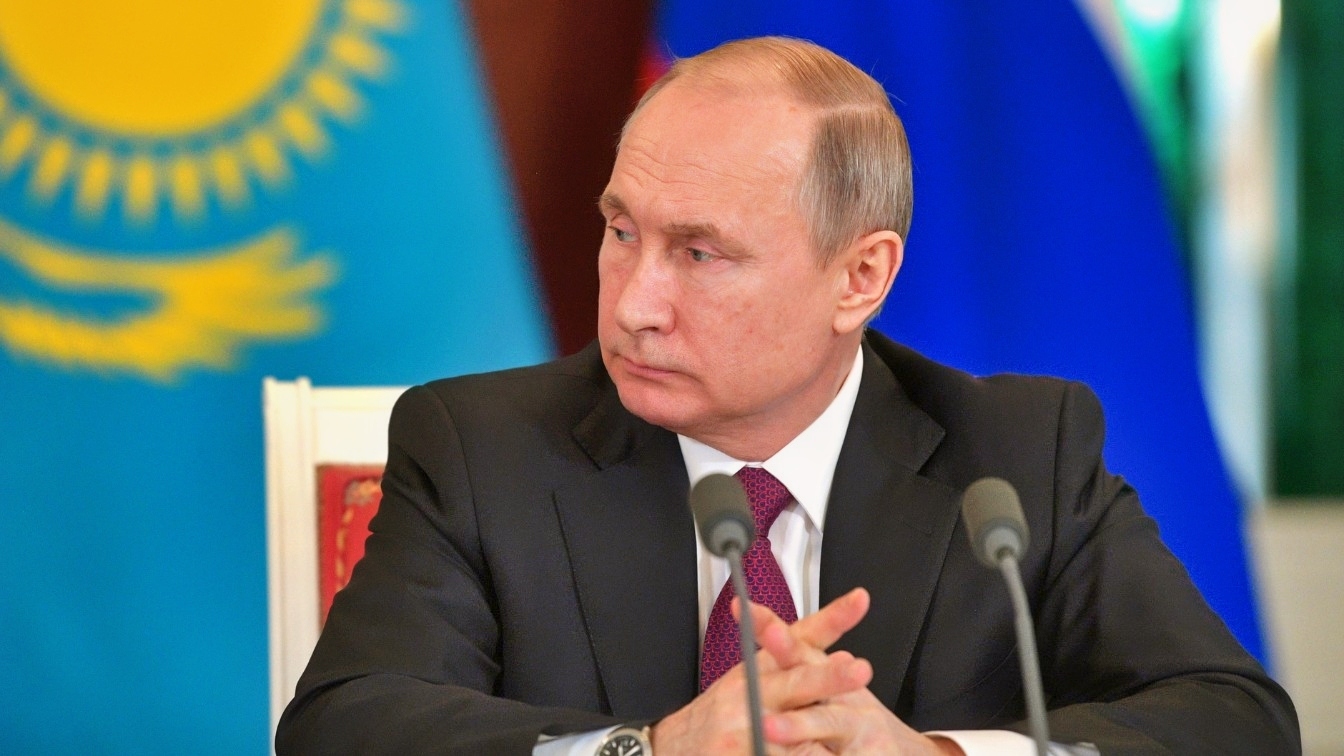
Putin in 2019 Russian Federation Photo
Russia’s greatest challenge may not be winning the war. It may be living with the consequences of winning it.
That is not a prediction of Russian collapse. We have heard variations of that prediction for years. They have not aged well. Russia has
That is not a prediction of Russian collapse. We have heard variations of that prediction for years. They have not aged well. Russia has absorbed sanctions that many thought would cripple its economy. It has replaced battlefield losses on a scale that surprised Western governments. It has kept its defense industry running and, in some sectors, expanded production.
The Kremlin has shown a capacity for adaptation that many observers underestimated.
Yet adaptation is not the same thing as emerging unscathed.
The latest reporting on wounded Russian veterans points toward a question that receives far less attention than the daily movement of the front lines. What happens when a country spends years converting a substantial share of its working-age male population into casualties, disabled veterans, long-term military personnel, or emigrants?
That question is not unique to Russia. It is one of the oldest questions in international politics.
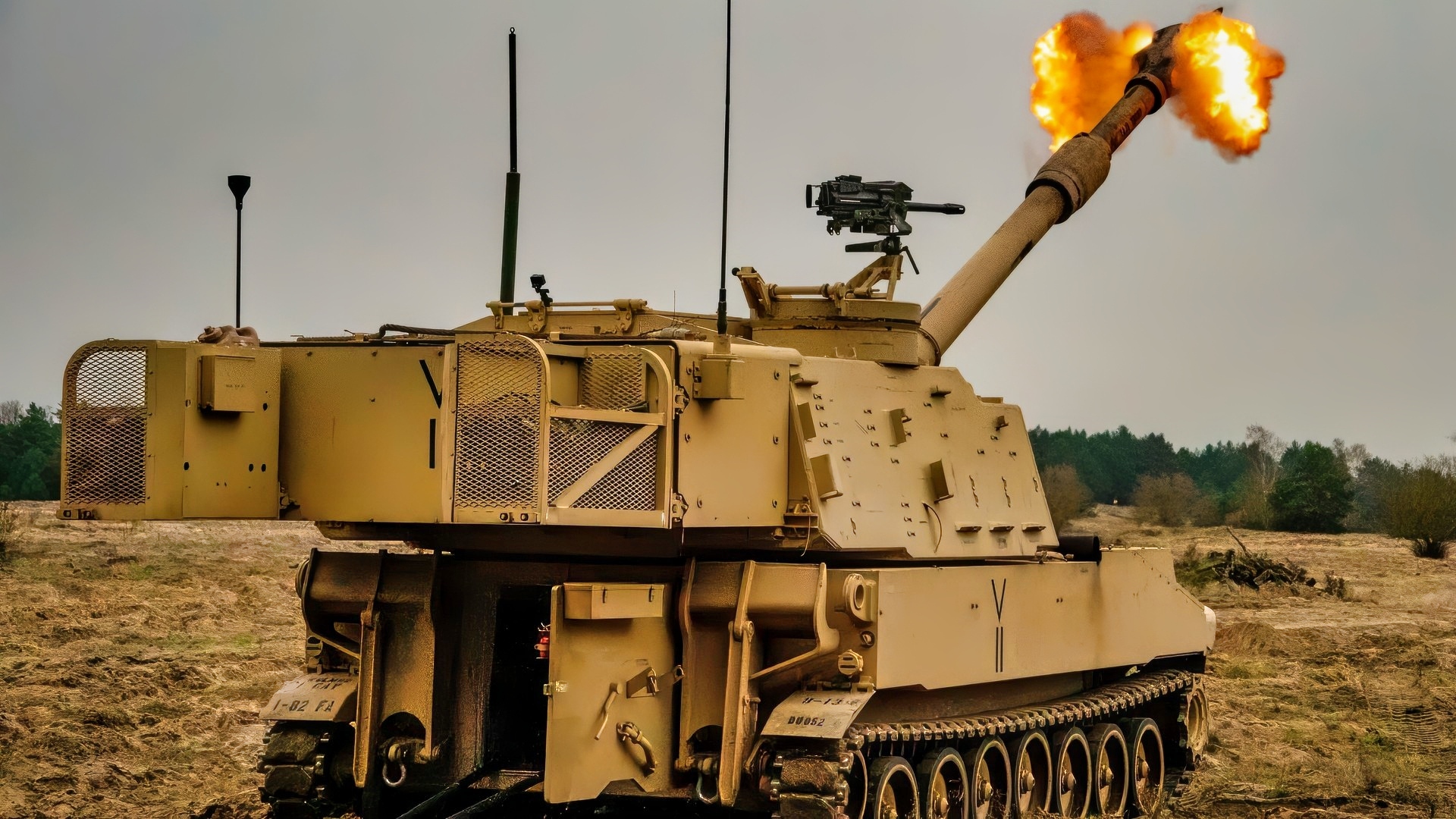
An M109 Paladin, assigned to 1st Battalion, 82nd Field Artillery Regiment, fires a round of high-explosive artillery during Dynamic Front on Forward Operating Site Torun, Poland, Nov. 19, 2024. Dynamic Front takes place from Nov. 4-24 in Finland, Estonia, Germany, Poland, and Romania, and demonstrates NATO’s ability to share fire missions, target information, and operational graphics from the Arctic to the Black Sea. It increases the lethality of the Alliance through long-range fires, builds unit readiness in a complex joint, multi-national environment, and leverages host nation capabilities to increase USAREUR-AF’s operational reach. Dynamic Front includes more than 1,800 U.S. and 3,700 multi-national service members from 28 Allied and partner nations. (U.S. Army photo by Spc. Julian Winston)
Victory Has Never Been Free: Ukraine as a Case Study
Military history is filled with states that won wars and then spent decades paying for them.
Britain defeated Nazi Germany and found itself presiding over the rapid erosion of its empire. The Soviet Union raised its flag over Berlin and carried demographic scars from the war for generations. France emerged from the First World War on the winning side, yet the losses of 1914–1918 continued to shape French strategic thinking in ways that led to its defeat in 1940.
Those examples are not directly comparable to Russia’s current situation. History rarely offers such neat parallels.
They do suggest that battlefield success and long-term national power do not always move in lockstep.
That point often gets lost in discussions of Ukraine. Every debate seems to revolve around territory, attrition rates, weapons deliveries, sanctions, or negotiations. All of those matter. They are also the most visible parts of the story.

Putin in 2023. Image Credit: Creative Commons.
The less visible parts tend to emerge later.
Russia entered the war with demographic problems already taking shape. Birth rates had been falling for years. Many regions struggled to attract or retain younger workers. Population aging was hardly a secret.
The war did not create those conditions.
It arrived in the middle of them.
The Numbers That Matter Later in the Ukraine War
There is a tendency in wartime to focus on whether losses can be replaced. That is understandable. Armies fight with the forces available to them.
By that measure, Russia has performed better than many expected. Recruitment has continued. New soldiers continue to appear at the front. The state has demonstrated a willingness to spend heavily to attract volunteers.
The question becomes different once you stop looking at the next offensive and start looking at the next decade.
Russia is a large country. It is not about running out of people.
But demographic effects do not need to be catastrophic to matter strategically.
A factory can add workers. Production lines can be expanded. Equipment can be replaced. Human capital works on a slower timeline.
A twenty-five-year-old mechanic killed in combat is not simply a military loss. He is also a worker who never returns to the civilian economy. A wounded soldier requiring lifelong care creates obligations that persist long after the war itself fades from the headlines.
Multiply that across years of conflict, and the effects begin to accumulate.
Not dramatically.
Quietly.
The War After the Shooting Stops Is Just Beginning for Russia
One of the more striking aspects of recent reporting from Russia involves the growing number of severely wounded veterans returning home.
Wars generate veterans. That observation sounds obvious because it is obvious.
What is less obvious is how large veteran populations shape societies after wars end.
The United States spent decades dealing with the consequences of Vietnam. The Soviet Union faced similar challenges after Afghanistan. Russia itself grappled with the Chechen wars’ legacy.
None of those experiences mirrors the current conflict. The scale of the war in Ukraine is larger.
That is precisely the point.
Veterans require care. They require rehabilitation. Some need housing assistance. Others need employment support. Many require medical treatment for years.
The issue is not whether Russia can provide those services.
The issue is whether it can do so while pursuing every other objective it has set for itself.
Military modernization will remain expensive. Economic development will remain important. Competition with NATO is not disappearing. Neither is Russia’s increasingly consequential relationship with China.
Resources directed toward one priority are resources unavailable for another.
States make those choices all the time.
Wars make them harder.
The Decline Issue
None of this means Russia is destined for decline. A country that survived the upheavals of the twentieth century should not be written off lightly. Russia has absorbed shocks that would have broken many states. The more relevant question is not whether Russia can bear these costs. It is whether bearing them leaves Russia stronger relative to the other major powers with which it must compete.
A state does not have to collapse to lose ground. It merely has to advance more slowly than its rivals. That is one reason China matters in this discussion. Beijing is watching a partner that may emerge from Ukraine with more territory and greater combat experience, but also with new demographic burdens and long-term economic obligations.
Those developments do not weaken Russia overnight. They may, over time, alter the balance within a relationship that Moscow has long preferred to view as a partnership of equals.
A Different Measure of Power
Russia may emerge from this war having achieved objectives that once seemed unlikely. It may retain territory. It may secure a settlement broadly favorable to its interests. It may convince itself that the costs were worth paying.
Perhaps they will be.
The more interesting question is whether those gains will outweigh the burdens left behind.
The history of great powers suggests that wartime victories can produce peacetime complications that are not immediately visible. Some appear years later. Others emerge gradually and become apparent only when governments discover that old problems have become harder to solve.
Moscow has shown that it can endure sanctions, absorb losses, and continue fighting.
What remains unanswered is a different question altogether.
Can a country wage a war of this scale for years and then return to something resembling normality?
Russia will eventually provide the answer. History offers reasons to think it will not be a simple one.
About the Author: Dr. Andrew Latham
Andrew Latham is a professor of international relations and political theory at Macalester College in Saint Paul, MN. You can follow him on X: @aakatham.


David L Faught
June 5, 2026 at 3:58 pm
WHY ARE YOU WORRIED ABOUT RUSSIA WINNING??? YOU AFRAID THAT HE’LL GO AFTER THAT CESS POOL YOU GUYS CALL THE EU. RUSSIA WANTS NOTHING TO DO WITH THEEU OR THE REST OF UKRAINE.
Swamplaw Yankee
June 7, 2026 at 2:55 am
LOL, the op ed authors drive about the USA without paying for car insurance.
So hitting another vehicle + causing annual medical bills is cost free?
The whole op-ed just is so inner beltway. The Kremlin Muscovy Ethnics who invaded Ukraine must hand over compensation and reparation to injured Ukrainians. It is recommended that Putin start the process with a monthly shipment of one ton of Gold Bullion to Ukraine.
What about the rest of the Kremlin ‘Federation’? When the captive nations depart the Federation, who will be making the compensation and reparations payments to Ukraine. Just the Muscovy? Those grand Moscow choirs singing in Russian will have to full fill many fund raising concerts.
Oh, the victorious allies demanded 10 years of free labour from the 1939-40-41 marriage partner of the Kremlin Muscovy in 1945.
The assumption must be that the marriage partner of NAZI Hitler will also serve 10 years of free labour in Ukraine right after the return to the 2013 border of all Ukrainian lands.