

The U.S. Air Force is buying 267 F-15EX Eagle II fighters — up from 129. The Mitchell Institute’s research director, Heather Penney, and retired Colonel Mark Gunzinger called the U.S. Air Force’s 185 F-47 fleet “a raid force, not a campaign force.” Penney and Gunzinger want 300 F-47s. The Mitchell Institute also said the U.S. Air Force’s 100 B-21 Raider fleet will fall short for a Taiwan contingency.
The F-47: Not Enough Stealth Fighters
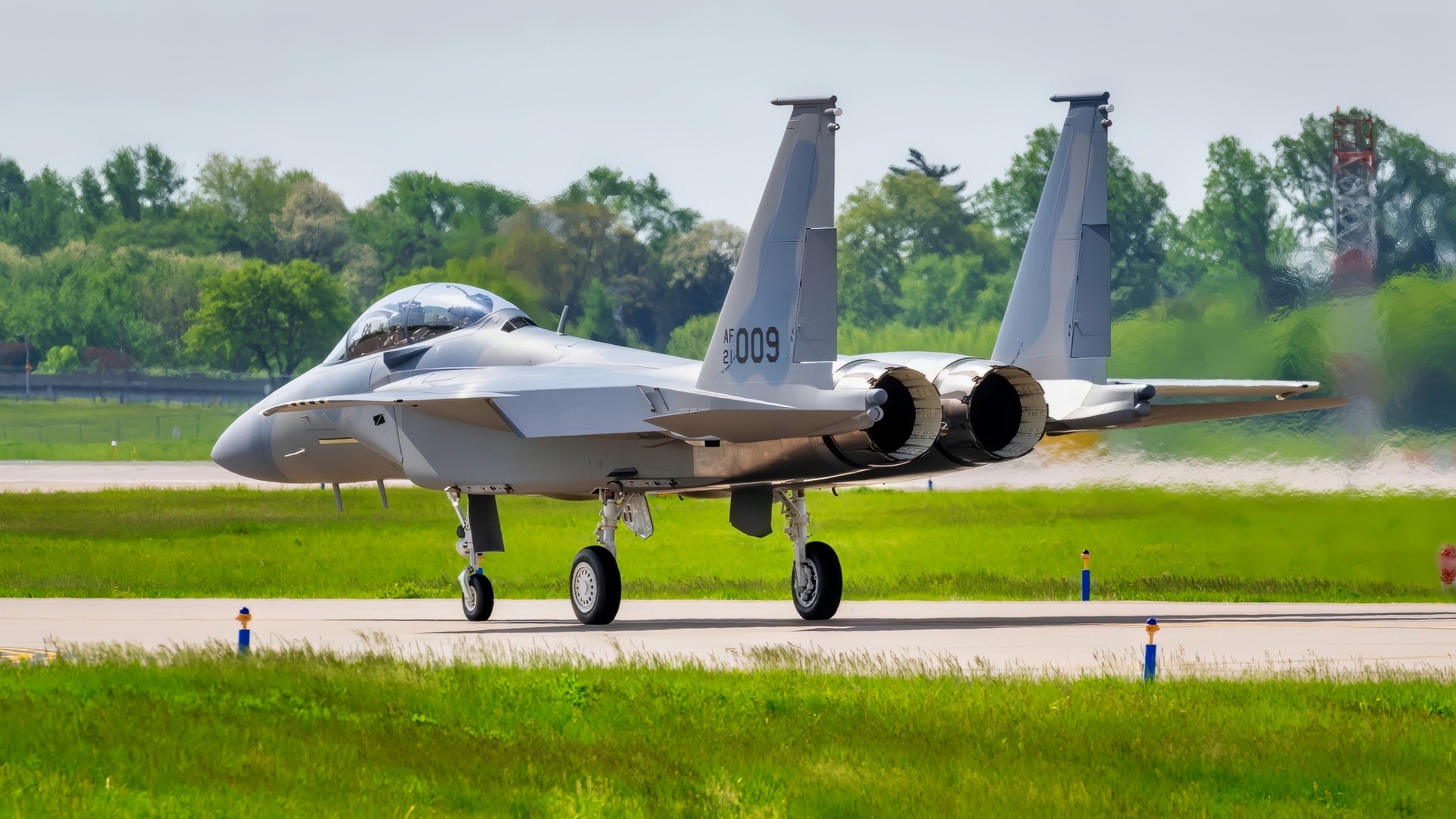
F-15EX-9 in St. Louis Missouri, shortly before delivery to Portland Air National Guard Base, Ore. (Boeing/Eric Shindelbower)

Two U.S. Air Force F-15EX Eagle IIs assigned to the 85th Test and Evaluation Squadron, Eglin Air Force Base, Florida, taxi after landing at Kadena Air Base, Japan, July 16, 2025. Local units conducted integration and familiarization training with the F-15EX. (U.S. Air Force photo by Airman 1st Class Arnet Shayne Tamayo)
267 F-15EX Eagle IIs. That’s the Air Force’s current buy — up from 129, the single biggest aircraft purchase in a modernization program that also includes the B-21 Raider, the F-47, a Super F-22 upgrade, and the Ferrari F-35. The service calls it a high-low mix. That rationale is accurate as far as it goes. The problem is where it stops.
The Penetrating Fleet Is Already Too Small
Here’s where it stops. Heather Penney — the Mitchell Institute’s research director, a former F-16 pilot, and one of the two aviators who flew unarmed toward hijacked airliners on September 11 prepared to ram them — co-authored a February report with retired Col. Mark Gunzinger arguing the B-21 program of record, officially “at least 100” aircraft, falls short for a Taiwan contingency before any other simultaneous demand hits the force.
She and Gunzinger called for doubling it to 200.
On the fighter side, the Air Force has committed to 185 F-47s; Penney and Gunzinger want 300, calling the current number “a raid force, not a campaign force.” Sustaining the penetrating sortie rate a real Pacific air campaign demands isn’t possible at 185 airframes.
The critique isn’t coming from outside — it’s the Air Force’s own research community saying the penetrating half of this mix is too thin for the job.
Against all of that: 267 F-15EXs.
What the Numbers Actually Say
The Eagle II can’t penetrate Chinese integrated air defenses.
The B-21 and F-47 were built specifically because nothing in the current inventory can. Operation Midnight Hammer made the math concrete last summer — every operational B-2 the Air Force had, committed to a single night of strikes against Iran, a second-tier adversary, with nothing in reserve.

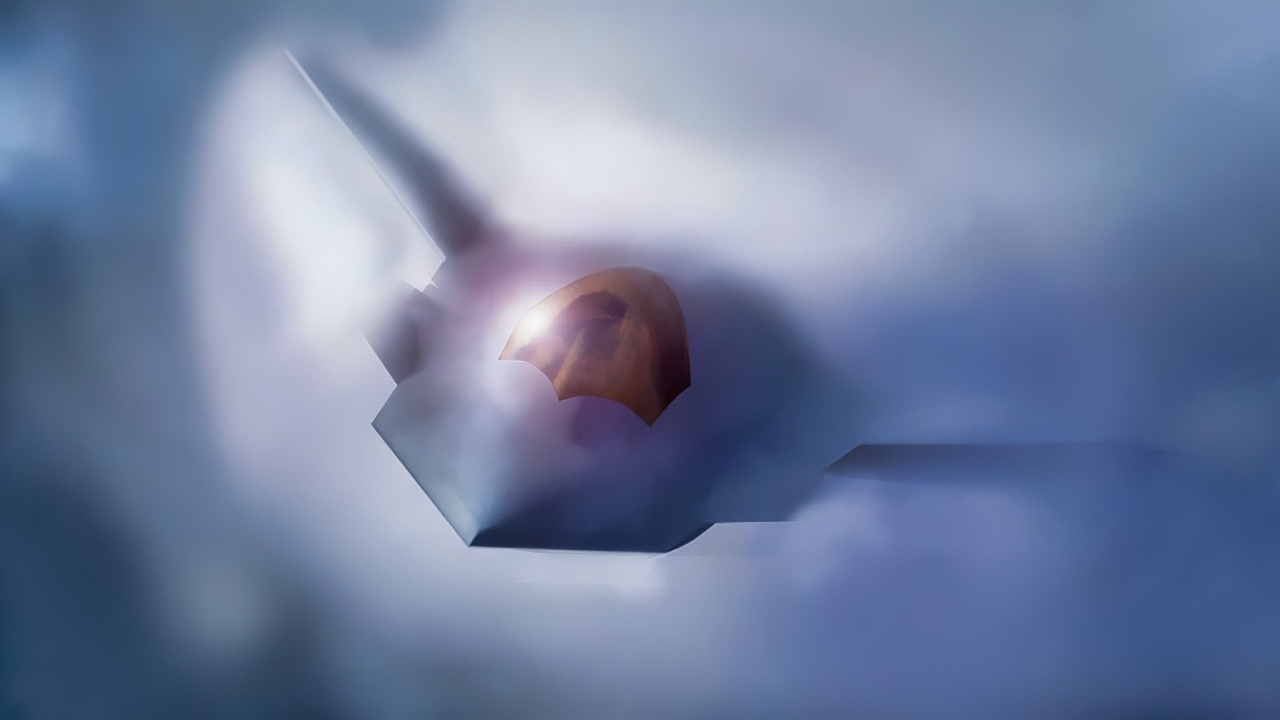
NGAD F-47 Fighter. Image Credit: Creative Commons.
Had Tehran downed one of those aircraft, there was no follow-up the next morning. China’s air defense network isn’t Iran’s.
It’s considerably harder, and the service considers 100 B-21s an adequate response.
Both the 2018 and 2022 National Defense Strategies identified China as the pacing threat and built acquisition programs around it.
The B-21 solves a problem that Iranian and North Korean air defenses don’t present — existing platforms handle them, as Midnight Hammer showed.
The F-47’s range and AI integration address the Pacific specifically, where Chinese missiles can reach Andersen Air Force Base on Guam before the first air battle, and tanker access can’t be assumed.
The F-35 is the networked kill-chain node that the whole architecture needs.
The F-15EX fails to meet any of those requirements.
It handles the scenarios where stealth platforms are too few or too expensive — permissive environments, secondary theaters, missions where low observability matters but isn’t the price of entry. That covers most of the world, but not the war this fleet was built to fight.
A buy of 267 Eagles against a penetrating fleet, Penney and Gunzinger call already undersized, isn’t a high-low mix. It’s a Chinese fleet with legacy iron covering the planet.
The Korea Problem
CSIS has looked carefully at what happens if the Taiwan contingency doesn’t arrive alone — it turns up consistently in Atlantic Council and Small Wars Journal wargame work — and the dynamic is the same each time: China moves on Taiwan, North Korea moves simultaneously.
Pyongyang watched Russia run four years of compounding simultaneous pressure on the West using Ukraine as cover, and Kim Jong Un didn’t miss it. The dual contingency shows up by name in public NDS documents and vanishes when those documents become procurement budgets.
When it arrives, the B-21 fleet won’t be complete.
The F-47 will be in early production. The Super F-22 program adds sensors and software to existing airframes — it’s a modification effort, not a production run, and no new jets come off the line.
The platform available at real operational scale for a Korean air campaign is the F-15EX, facing North Korean defenses built substantially on Chinese-origin systems, crewed by people who’ve spent years studying how the United States fights when it’s committed elsewhere.
That isn’t the threat environment the Eagle II was designed for.
The ROKAF wouldn’t sit it out — F-35As, capable pilots, no appetite for bystander status.
But allied capability doesn’t stretch to cover a simultaneous two-theater high-end commitment at the scale this scenario demands, least of all when alliance cohesion is under the pressure a simultaneous Chinese and North Korean attack would create.
Seoul-handles-Korea while Washington-handles-Taiwan is an assumption about allied behavior under maximum stress, and it’s embedded in the procurement plan without being labeled as one.
What the Buy Is Saying
The B-21 and F-47 are the right investments. The penetrating force this fleet needs for its primary scenario is being built — just not in the numbers the Air Force’s own analysts say the mission requires.
Two hundred and sixty-seven F-15EXs against a penetrating fleet the service’s own people call too small for the job, tells you something the briefings don’t. Congress funds this force and deserves a plain answer on which wars it’s built to lose.
About the Author: Dr. Andrew Latham
Andrew Latham is a professor of international relations and political theory at Macalester College in Saint Paul, MN. You can follow him on X: @aakatham.


