

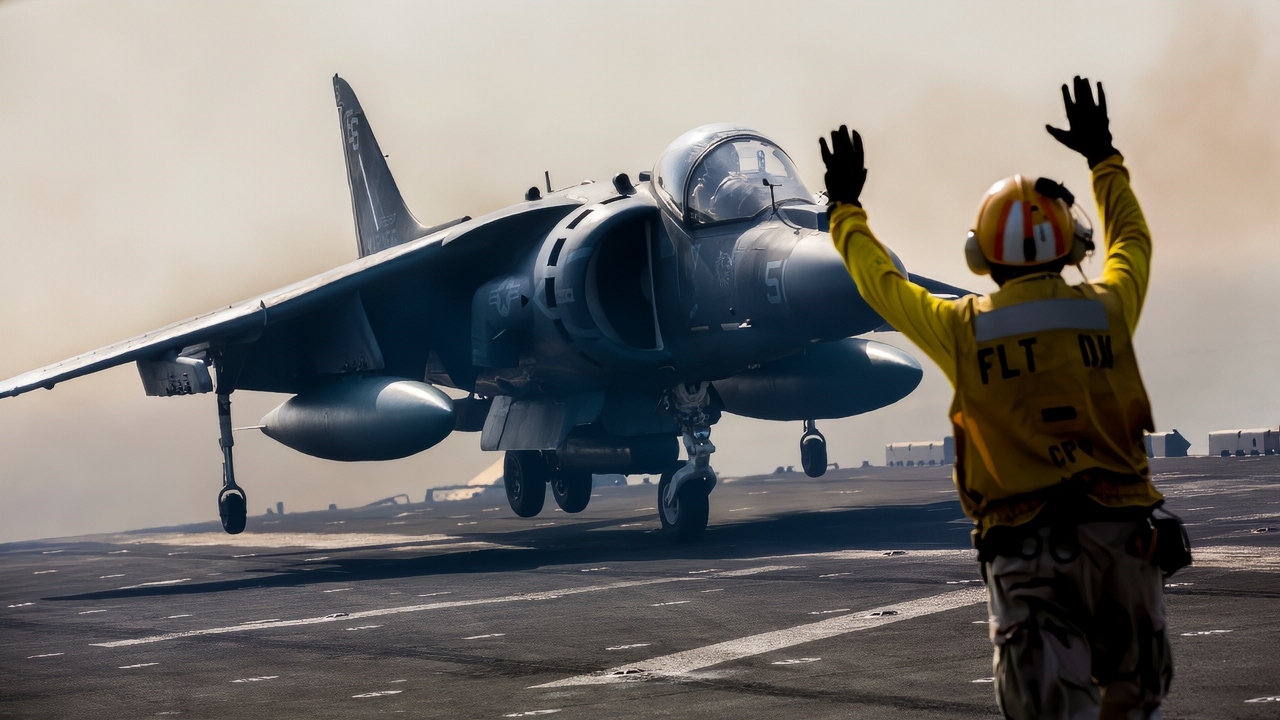
On Wednesday, five Marine Harriers rose over North Carolina, hovered in midair like helicopters, and touched down together one final time — closing the book on one of the most remarkable warplanes America ever flew. After 55 years, the Marine Corps has retired the AV-8B Harrier II, the legendary “jump jet” that could take off straight up, land vertically, and operate from places no conventional fighter could reach. Its record is staggering.
The Harrier’s Time Is Over
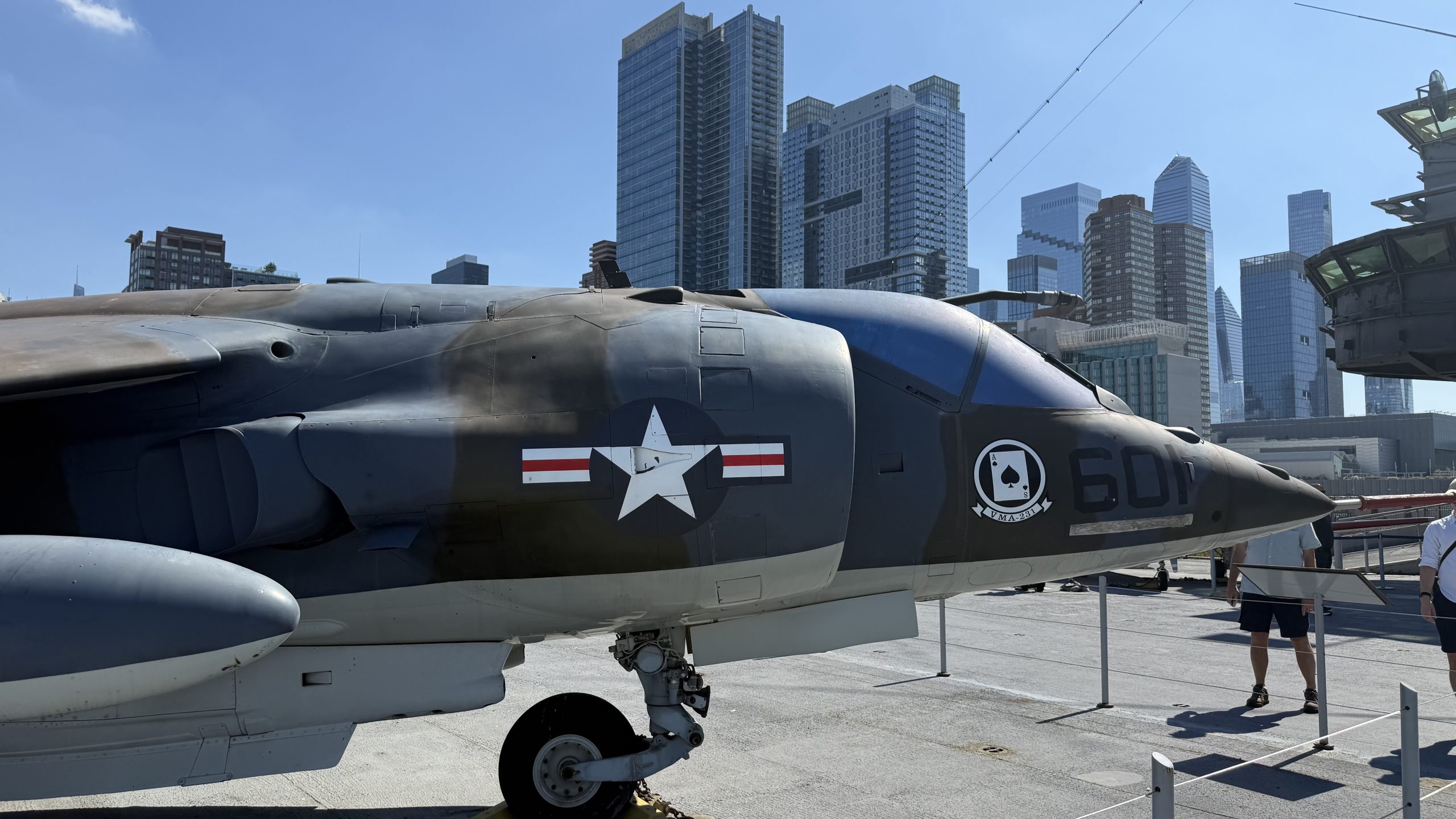
British Sea Harrier aboard USS Intrepid back in 2025. National Security Journal Original Photo.
The Marine Corps’ Attack Squadron (VMA) 223, known as “the Bulldogs”, celebrated the retirement of nearly 40 years of service with the AV-8B Harrier II during a public “sundown ceremony” at Marine Corps Air Station Cherry Point, NC, on Wednesday.
“The Bulldogs are extremely proud to conduct the final Harrier operations for the U.S. Marine Corps”, said Lt. Col. John B. Cumbie, commanding officer of VMA-223.
“As a platform that has continuously forward-deployed across the globe, the Harrier will be remembered for its distinguished combat legacy, legendary Vertical/Short Take Off and Landing (V/STOL) capability, and the Marines and Sailors that made the community special.”
VMA 223 will now transition to the F-35B Lightning II, the short takeoff and vertical landing (STOVL) variant of the Lockheed Martin F-35. Flown by other Marine Corps squadrons, the U.K. Royal Air Force/Navy, and the Italian Air Force, it is designed to operate from smaller amphibious assault ships, austere forward bases, and carriers without catapults.
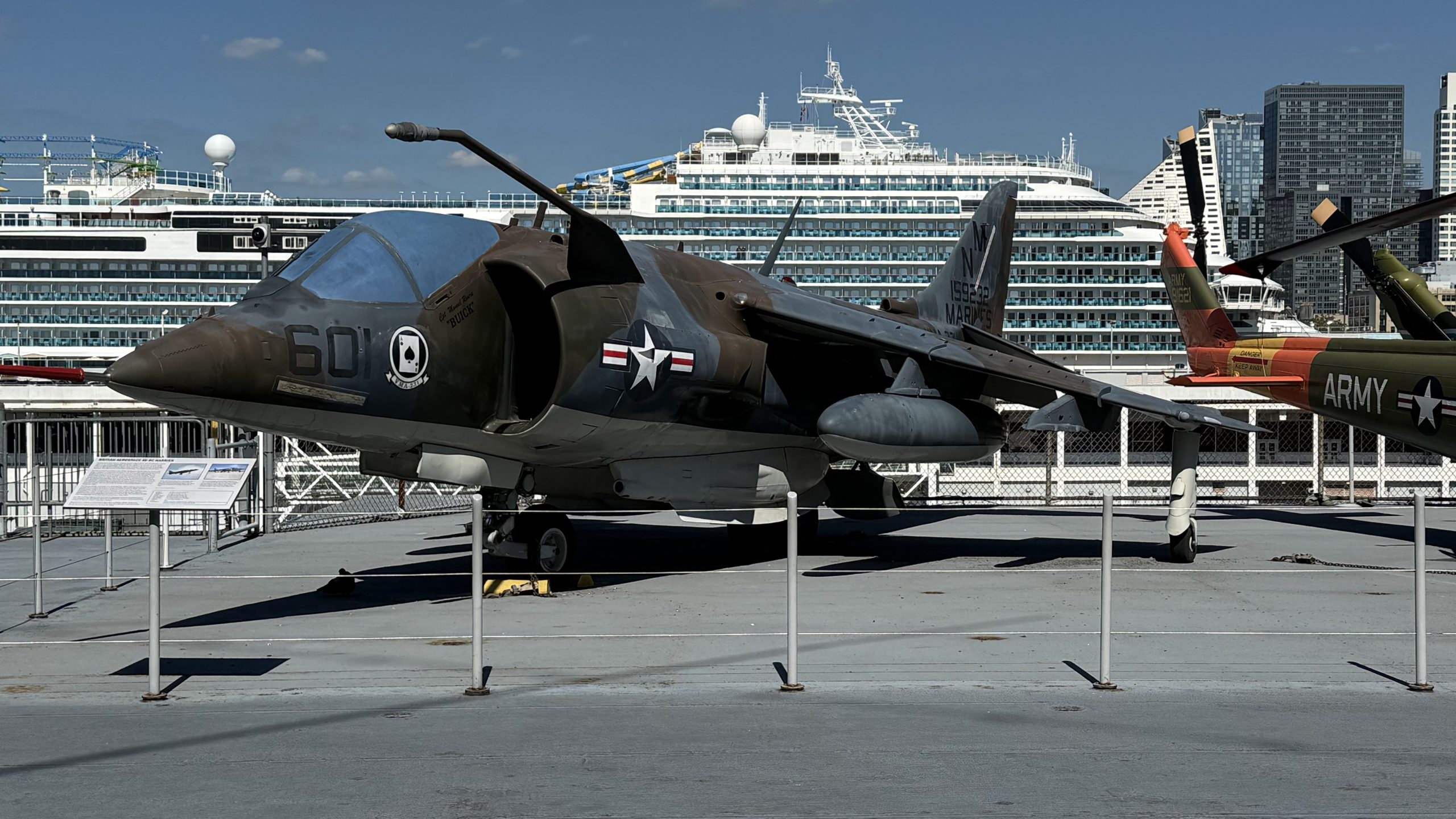
British Sea Harrier aboard USS Intrepid back in 2025. National Security Journal Original Photo.
The AV-8 Harrier, The Original “Jump Jet”
The Harrier was developed in the 1960s for the British Royal Air Force by Hawker Siddeley. First-generation Harriers had limited range and payload, but could operate from short fields or take off and land vertically.
This versatility led the US Marine Corps to acquire Harriers in 1971 under the designation AV-8A. The Harrier II was developed by McDonnell Douglas and featured a larger composite wing, a raised cockpit with advanced targeting radar, aerodynamic improvements, and a powerful Rolls-Royce Pegasus vectored-thrust engine that propelled the aircraft to Mach 0.9 (673 mph).
With four exhaust nozzles that can rotate from horizontal to vertical, the Harrier can “jump” off the ground in a short take-off run or can even take off and land vertically.
The Harrier carried more ordnance than a WWII B-17 bomber. It was armed with a General Dynamics GAU-12 Equalizer 25 mm, 5-barreled rotary cannon mounted under-fuselage in the left pod, with 300 rounds of ammunition in the right pod
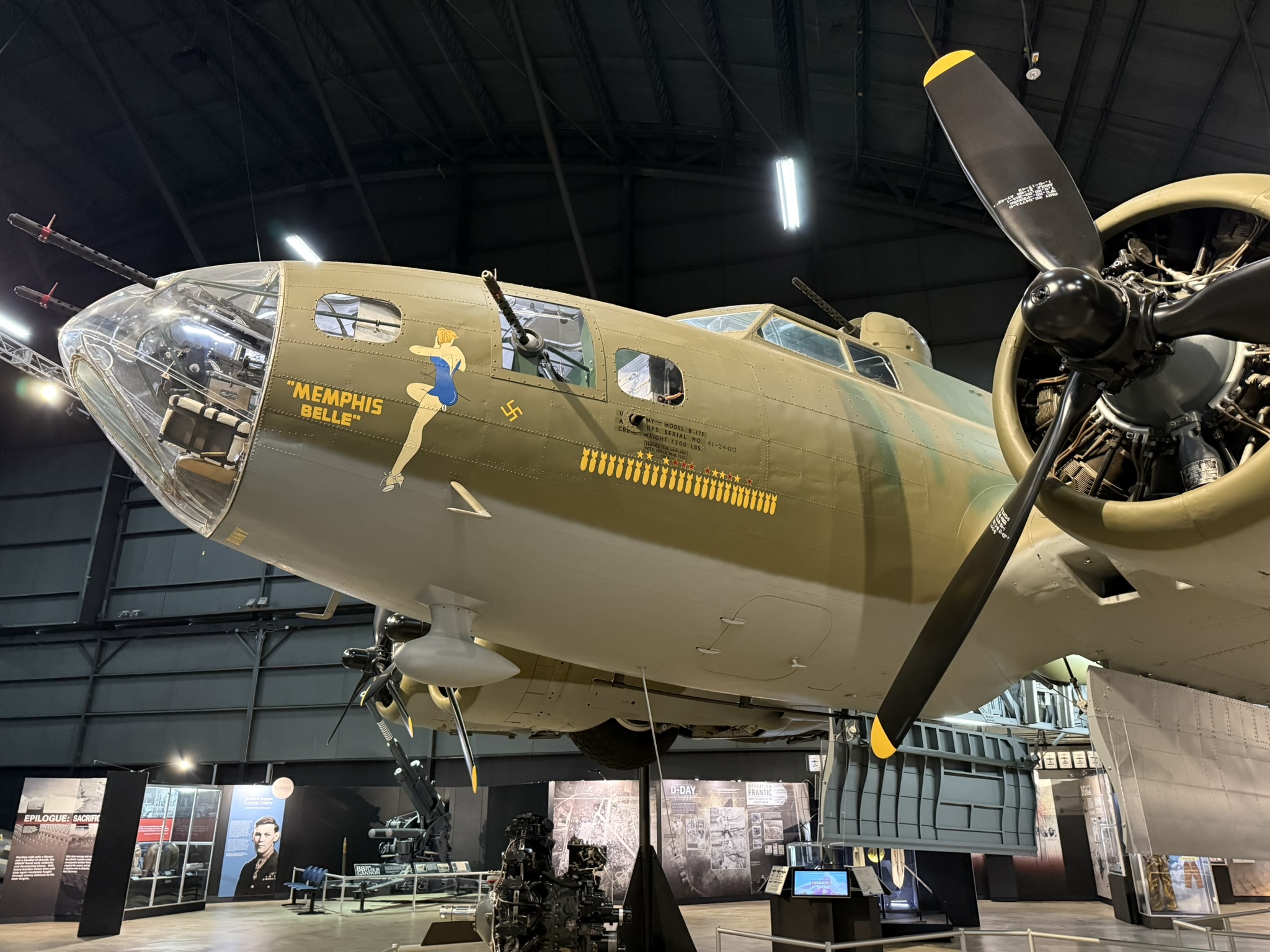
B-17. Image from National Museum of the U.S. Air Force. Image Credit: National Security Journal/Original Image.
The aircraft had 6× under-wing pylons and 1× under-fuselage hardpoints, supporting up to 9,200 lb (4,200 kg) of payload, carrying a variety of rockets, bombs, missiles, or extra fuel tanks.
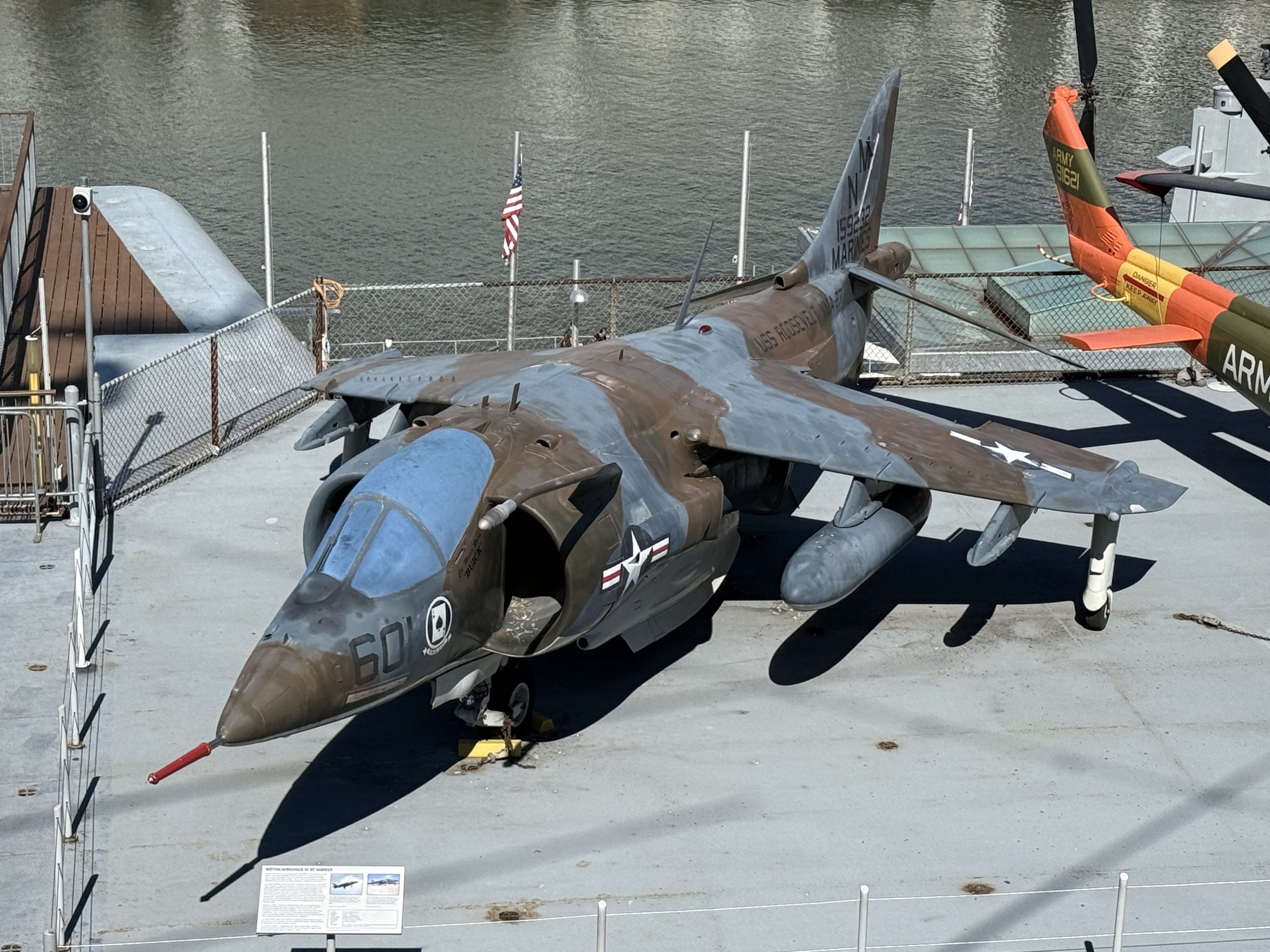
British Sea Harrier aboard USS Intrepid back in 2025. National Security Journal Original Photo.
Combat History Of the Harrier
The AV-8 Harrier II earned an outstanding reputation in combat defined primarily by close air support, interdiction, and battlefield flexibility across multiple global conflicts.
However, during the Falklands War, the Harrier had a 23-0 record in shooting down Argentinian aircraft. But soon afterward, its role changed to strictly close air support.
During the first Gulf War in 1991 (Desert Storm), U.S. Marines operated 86 AV-8B Harriers and flew 3,380 combat sorties. They logged over 4,100 flight hours and delivered more than 6 million pounds of ordnance in direct support of ground troops, maintaining an impressive 90 percent readiness rate.
General Norman Schwarzkopf famously praised the Harrier II as one of the seven most critical weapons of the 1991 Gulf War. He highlighted its expeditionary capabilities and its unique ability to operate from austere, forward locations, providing rapid and devastating close air support to ground troops.
During the Bosnian War, AV-8B Harriers and British Sea Harriers supported NATO’s Operation Deny Flight and Operation Deliberate Force. Their combat record featured successful reconnaissance, Close Air Support (CAS), and precision strikes on Serbian ground targets, with no aircraft lost in air-to-air combat.
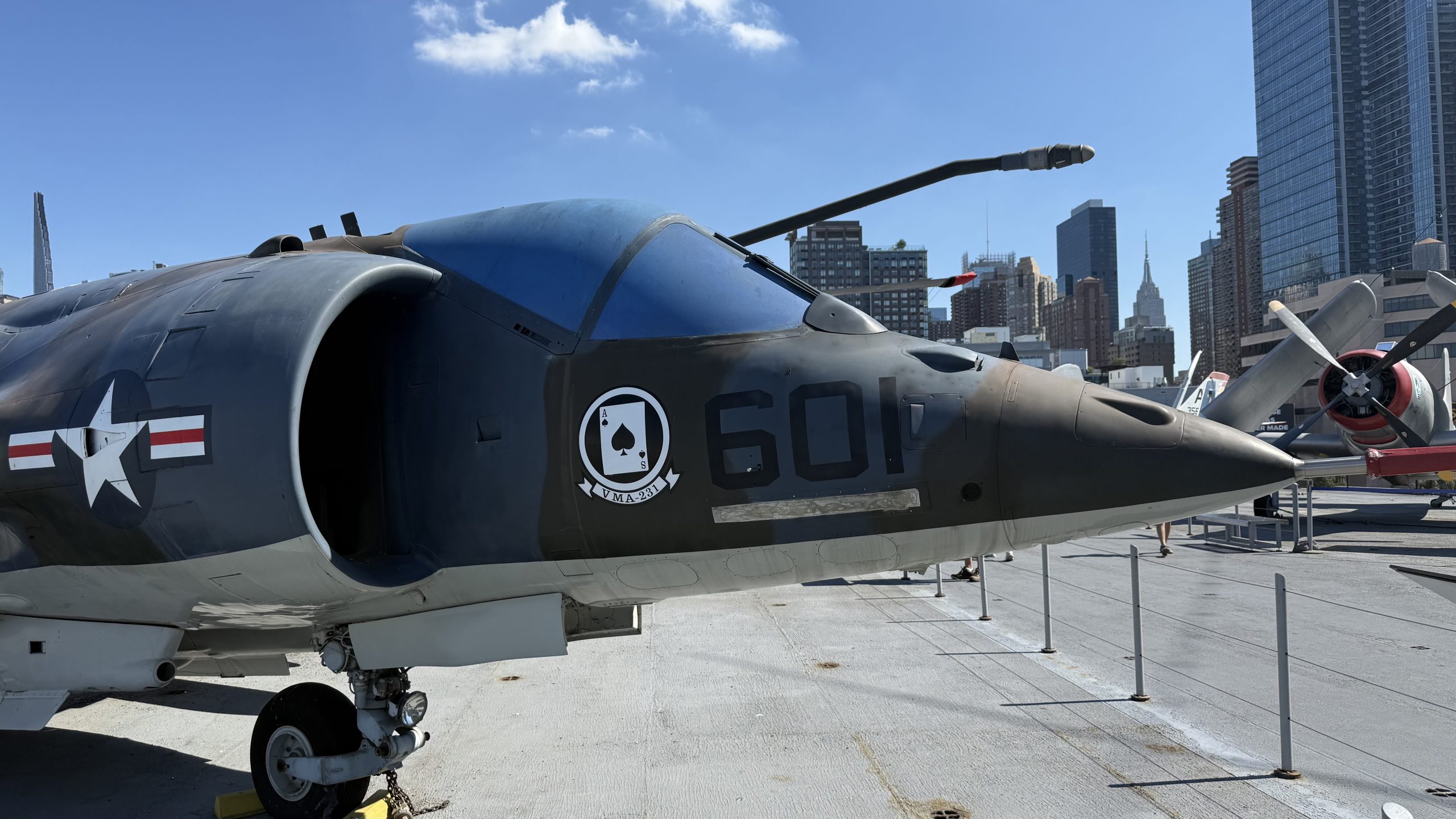
British Sea Harrier aboard USS Intrepid back in 2025. National Security Journal Original Photo.
Marine Corps’ Harrier IIs played a vital role in Operation Enduring Freedom (OEF) in Afghanistan, flying thousands of combat flight hours and executing close air support (CAS), armed reconnaissance, and force protection missions against Taliban and al-Qaeda forces.
The Harriers operated from forward and remote locations, which allowed them to reach ground troops in need of CAS much faster than other conventional aircraft.
Harrier IIs also took part in the 2011 intervention in Libya; the U.S.-led fight against the Islamic State in Iraq and Syria; in the 2023 Red Sea crisis involving the Iranian-backed Houthis in Yemen; and in the Caribbean Sea, prior to the capture of Venezuelan President Nicolás Maduro in January.
The End Of A 55-Year Era
The retirement ended a long history between the aircraft and the Marine Corps, which dated back to 1971.
The Wednesday sundown ceremony involved the presentation of colors before a flypast by five AV-8Bs, which then broke into the circuit and decelerated to a hover before undertaking coordinated landings to show the aircraft’s vertical short take-off and landing (V/STOL) capability.
The Harriers then taxied under a water cannon salute provided by MCAS Cherry Point’s fire department before parking on the ramp in front of over 5,000 spectators and shutting down for the final time.
The Italian Navy is also planning to retire the AV-8 Harrier IIs from its service in 2028, as it transitions to the F-35B. The Spanish Navy will then be the only country to operate the Harrier.
About the Author: Steve Balestrieri
Steve Balestrieri is a National Security Columnist. He served as a US Army Special Forces NCO and Warrant Officer. In addition to writing on defense, he covers the NFL for PatsFans.com and is a member of the Pro Football Writers of America (PFWA). His work was regularly featured in many military publications.


