

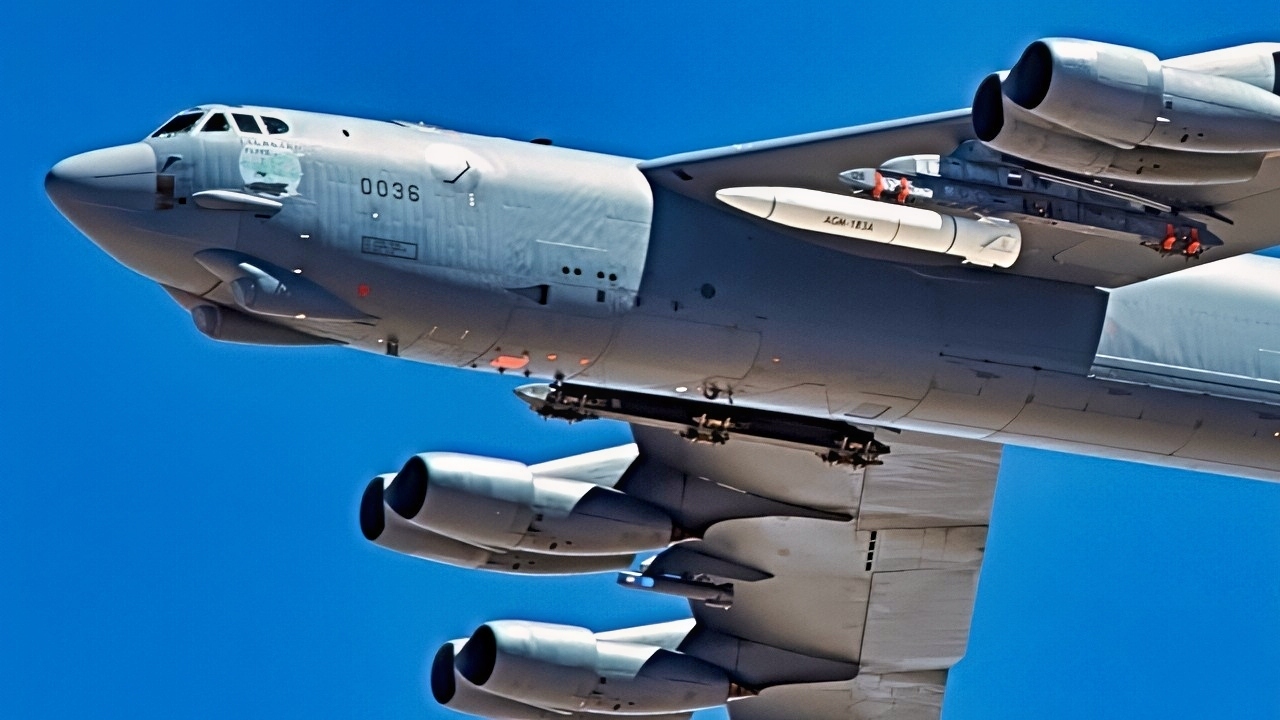
Summary and Key Points: It first took off when Harry Truman was in the White House. It will still be flying combat missions in the 2050s — nearly a century in the air. The U.S. Air Force just cleared a key design review for the B-52J Stratofortress, the most powerful version of its legendary bomber ever built, and the full rebuild begins this year. This is no nostalgia project. Out go the 1960s engines and the analog Cold War cockpit; in come fuel-efficient Rolls-Royce powerplants, digital displays, a modern radar, and the ability to carry hypersonic weapons — essentially a new aircraft hiding inside a familiar silhouette.
The B-52J Bomber Is Coming Soon:
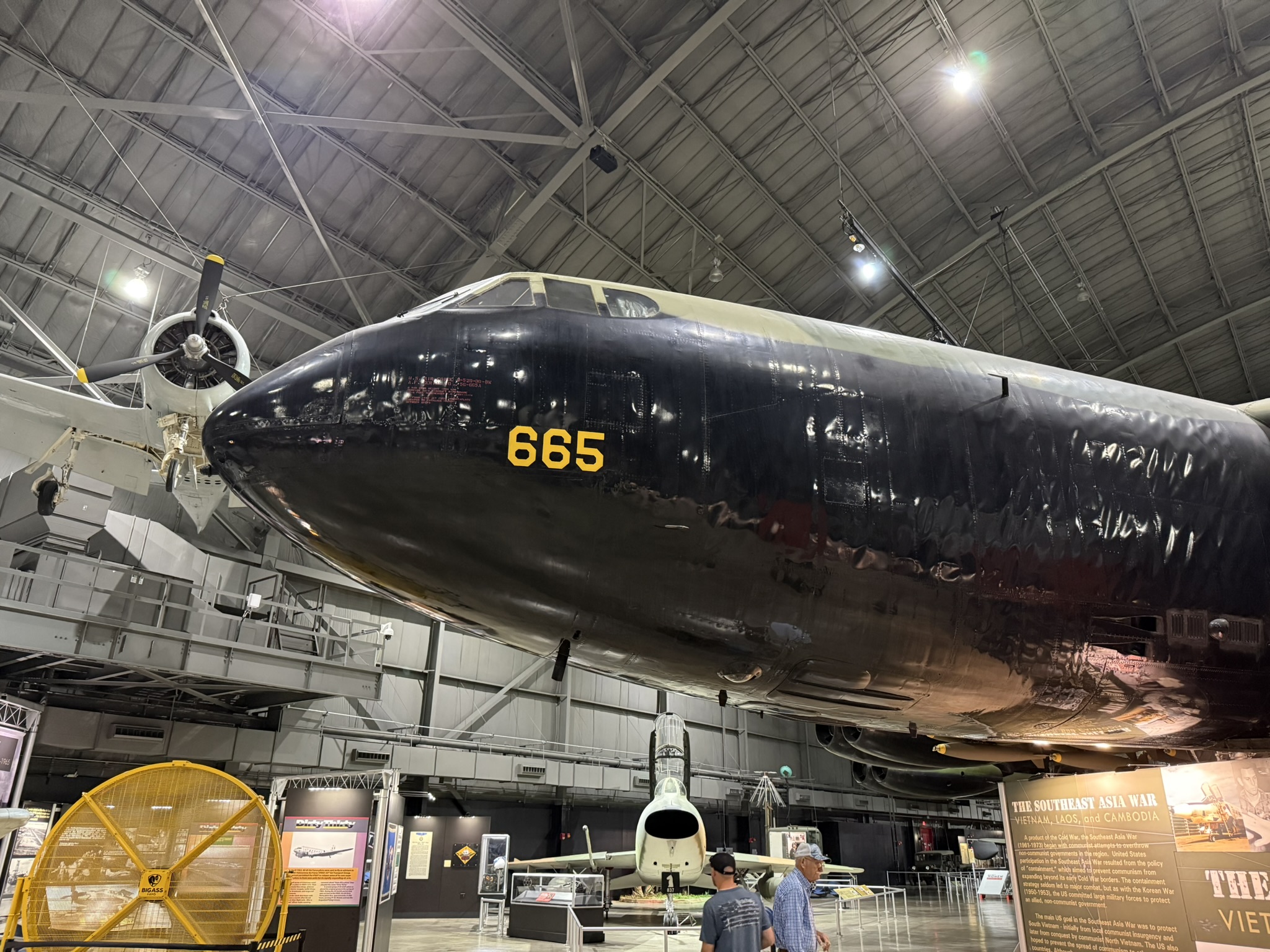
B-52 at the National Museum of the U.S. Air Force. Image Credit: National Security Journal.
The U.S. Air Force recently cleared a Critical Design Review for the new B-52J Stratofortress—the most powerful version of America’s iconic bomber ever built. With brand-new Rolls-Royce F130 engines replacing the 1960s-era TF33s, digital cockpits, modern radar, and the ability to fire hypersonic weapons, the B-52J will keep flying missions into the 2050s—nearly a century after the original B-52 first took wing.
America’s B-52H Stratofortress will become the longest-serving long-range bomber in American history. The original variant of the B-52 first flew when Harry S. Truman was president. Today, the United States Air Force is feverishly working on yet another variant of the plane, the B-52J, which many believe will be the most powerful B-52 to date.
In fact, the Air Force just cleared a Critical Design Review (CDR) for the Commercial Engine Replacement Program (CERP), meaning that this new B-52 variant is closer to hitting the unfriendly skies, and it will change the B-52’s ongoing service in unique and interesting ways once it takes wing.
Clearing the CDR means that the Air Force has approved the B-52J’s final design. The program can now move into physical modification, meaning the full rebuild begins in earnest this year.
The Air Force is modifying two B-52s at Boeing’s facility in San Antonio, Tex. After the modification process concludes, the two birds will move from San Antonio to Edwards Air Force Base in California for testing.
The Heart of the Upgrade: New Engines
The centerpiece of the B-52 modification program is the replacement of the reliable (but aging) 1960s-era TF33 engines with modern Rolls-Royce F-130 engines. While those older TF33 engines have more than proven themselves, they are aging. The aging process has created several reliability issues that are complicating the serviceability and readiness of the current B-52 fleet.
What’s more, the 1960s-era tech is far less fuel-efficient than the new Rolls-Royce F130 engines. Currently, the B-52H variant with the older TF33 engines must refuel regularly during long-duration missions.
As the current Iran War has shown, America’s fuel tankers are easy targets in modern warfare settings. The B-52s remain one of America’s primary long-range strategic bombers, meaning they are in great use today. Therefore, the more they must refuel while in combat, the more vulnerable both they and the all-important midair refuelers are to enemy detection and attack.
Newer engines on the proposed B-52Js mean that B-52s will have longer range and will, naturally, be less dependent on tankers than the B-52Hs. These new F130 engines will further help the Air Force make its systems more combat-ready.
As it stands, the B-52Hs, partly because of their older TF33 engines, have a mission-capable rating of less than 54 percent. Given the demand that US bombers and warplanes are in today, as well as the amount of money the American taxpayer forks over to the Pentagon every year, that’s an unacceptable mission readiness rating.
The new engines on the B-52Js will extend the aircraft’s viability for decades.
More Than Just New Engines
More importantly, though, the B-52J is not just about new engines on an old platform. The B-52J is essentially a new plane that looks similar to earlier iterations of the B-52 Stratofortress. In the new plane, pilots will use digital cockpits–no more analog Cold War-era instrumentation. They will come equipped with an entirely new radar system critical to modern targeting.
The Pentagon is upgrading the B-52J’s avionics and power generation systems. Furthermore, the Air Force wants new weapons integrated into the B-52J. So, the B-52J can launch standoff missiles and even hypersonic weapons.
Essential upgrades, like improvements to the plane’s structural and landing gear, are being made to ensure that the B-52J is a dominant platform for the next several decades. Sure, it’s an old airframe. But when the Air Force finishes their upgrades, the B-52J will be a modern war machine.
Why the US is Betting on a 65-Year-Old Bomber
The Air Force is currently building a two-bomber force. The B-21 Raider will be employed for stealthy penetration, while the B-52J will conduct mass-firepower attacks on enemy targets. Essentially, the B-21 will kick down the door while the B-52J empties the arsenals from standoff range.
Unlike America’s vaunted stealth bombers, the B-52s don’t need to penetrate advanced enemy defenses. These birds can launch cruise missiles, long-range standoff weapons, and eventually hypersonic weapons. That’s why these planes lacking stealth can still be relevant today.
The Cost–and the Risk
While important, the B-52J project is anything but cheap. It cost the taxpayer around $15 billion for re-engining alone. Then, it cost the Air Force an additional $48.6 billion across broader modernization efforts.
There remain integration complexities, too. After all, installing modern engines on a 1950s airframe brings with it a range of potential engineering complications.
Sadly, there’s the running issue afflicting all defense projects: chronic schedule slippage resulting from industrial base strain. Nevertheless, the B-52J remains preferable under these strained industrial conditions because it is merely a remodeled plane rather than an entirely new platform. In effect, the B-52J is a cost-effective force multiplier.
Not Nostalgia
The B-52 isn’t a relic. It’s becoming the backbone of America’s long-range strike capacity. By the 2030s (and beyond), the US bomber force will rely on a unique pairing of stealth for access and volume firepower for victory.
The aircraft designed when Cold War tensions were just heating up will still be flying missions well into the 1950s, around a century after the original B-52 took to the skies.
All because the B-52 remains a strategically viable–necessary, even–platform on the modern battlefield. Talk about bang for your buck.
About the Author: Brandon J. Weichert
Brandon J. Weichert is the Senior National Security Editor. Recently, Weichert became the editor of the “NatSec Guy” section at Emerald. TV. He was previously the senior national security editor at The National Interest. Weichert hosts The National Security Hour on iHeartRadio, where he discusses national security policy every Wednesday at 8 p.m. Eastern. He hosts a companion show on Rumble entitled “National Security Talk.” Weichert consults regularly with various government institutions and private organizations on geopolitical issues. His writings have appeared in numerous publications, among them Popular Mechanics, National Review, MSN, and The American Spectator. And his books include Winning Space: How America Remains a Superpower, Biohacked: China’s Race to Control Life, and The Shadow War: Iran’s Quest for Supremacy. Weichert’s newest book, A Disaster of Our Own Making: How the West Lost Ukraine, is available for purchase at any bookstore. Follow him via Twitter/X @WeTheBrandon.


Drew B. Williams
June 6, 2026 at 9:35 pm
…great news for the B-52 and the future security of America.