


If Trump Can’t Restrain Israel: Netanyahu’s Options To Strike Iran After Tonight’s Missile Barrage: Iran fired missiles at Israel on Sunday evening, the first such bombardment since the fragile April ceasefire, and the opening question is what Benjamin Netanyahu does next. Four waves of Iranian missiles came down, all intercepted, with no damage reported, according to The Wall Street Journal. The salvo was Tehran’s answer to an Israeli airstrike hours earlier on Hezbollah targets in Beirut’s southern Dahiyeh suburbs, carried out without warning and in defiance of a Washington request to stand down. Iran’s state broadcaster confirmed the launches, sirens sounded across northern Israel, and the Israeli military warned that its defense is “not hermetic” even as it intercepted the incoming fire.
President Donald Trump moved immediately to contain it, saying he would call Netanyahu to press him not to retaliate.
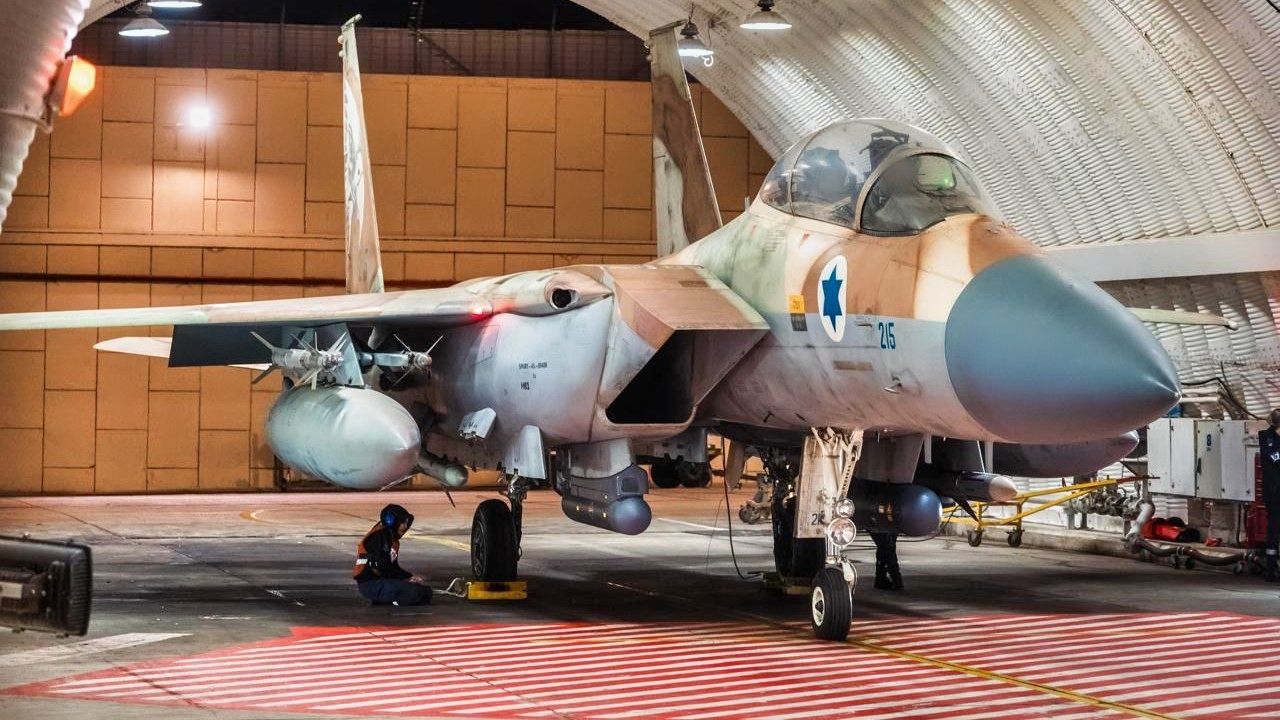
F-15I Fighter Israeli Air Force. Image Credit: Creative Commons.

F-15I Ra’am from Israel. Image Credit: Creative Commons.

F-15I Fighter from Israel. Image Credit: Creative Commons.
The harder truth is that Trump may not succeed.
Israel has a long record of acting on its own reading of its security interests regardless of American preference, and Netanyahu has domestic reasons to answer force with force.
If the American brake fails, the Israeli military has a deep and well-rehearsed menu of options against Iran, each of which carries a different escalation risk and a different chance of killing the negotiations Trump is trying to salvage.
Why Trump May Not Be Able To Hold Netanyahu Back
The leverage Washington has over Jerusalem is real but not unlimited.
Trump has already had to lean on Netanyahu once this month, calling him during the run-up to the Beirut operation and, by multiple accounts, erupting at the Israeli leader for jeopardizing the administration’s push for a preliminary deal with Iran.
In that same call, Trump reportedly reminded Netanyahu of the political cover he has given him, including help amid an ongoing corruption trial. Yet even after Trump announced a reciprocal halt to attacks, Netanyahu signaled the Israeli military would keep striking southern Lebanon as planned, and the Beirut strike went ahead anyway.

F-35I Adir Fighter. Image Credit: Israeli Air Force.

F-35I Adir High in the Sky. Image Credit: IDF/Creative Commons.
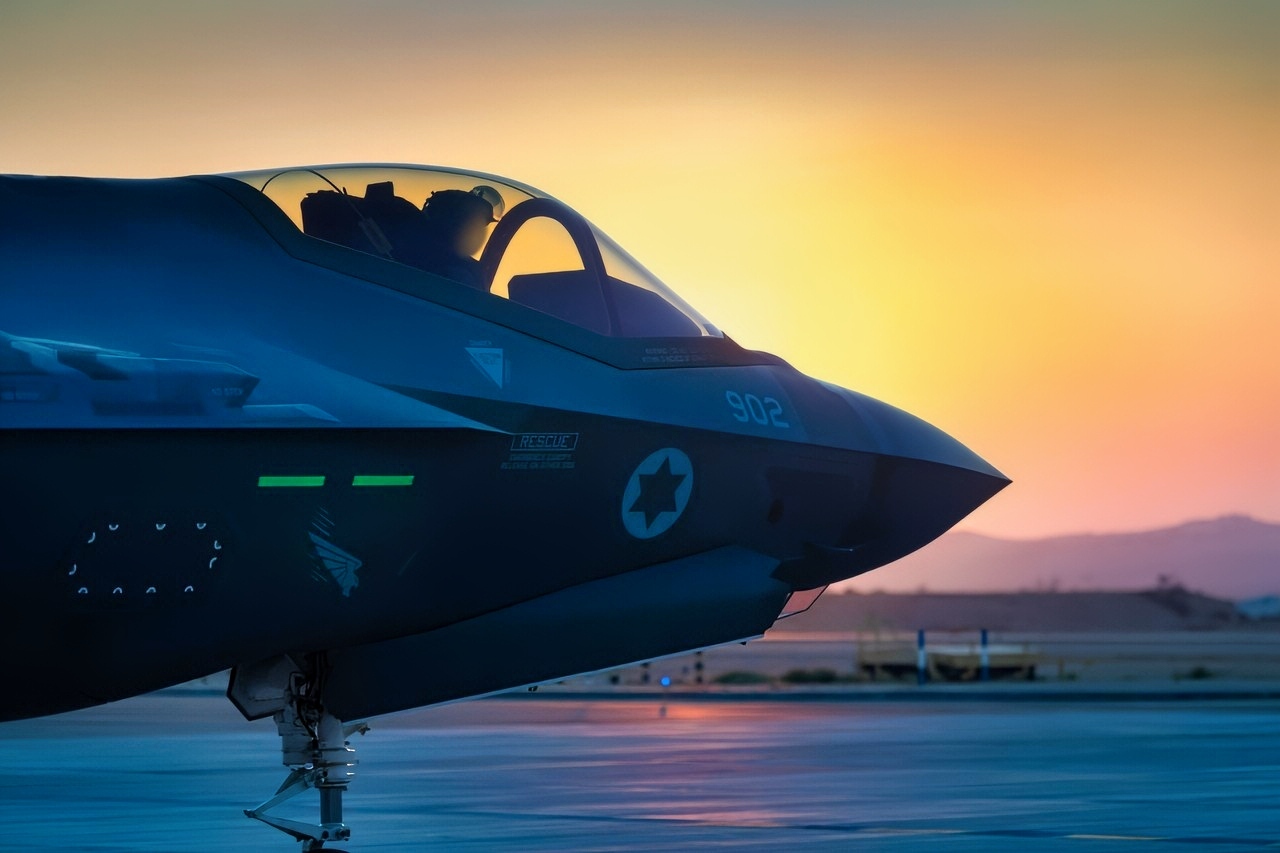
F-35I Adir Israel Stealth Fighter. Image Credit: IDF
The domestic pressures pushing Netanyahu toward a hard line are intense. His governing coalition is fragile, strained by a bitter fight over a bill to exempt ultra-Orthodox men from military service, and his far-right partners reward toughness and punish anything that looks like capitulation.
With a corruption trial grinding on and his political survival perpetually in question, Netanyahu cannot afford to absorb an Iranian missile barrage and appear to do nothing.
The calculation in Jerusalem may well be that Trump, for all his anger, will not actually break with Israel, and that the political cost of looking weak at home outweighs the risk of defying Washington.
That is the gamble that makes a retaliatory strike on Iran plausible despite every American effort to prevent it.
The Nuclear Program: Natanz, Fordow, And The Unfinished Job
If Israel strikes, the most strategically obvious target is the one that justified the whole campaign in the first place: Iran’s nuclear program.
The earlier war already hit Iran’s nuclear facilities, and the nuclear watchdog called for maximum military restraint after one such incident, but Israeli leaders have consistently framed the destruction of Iran’s path to a weapon as the central war aim. The problem is that bomb damage assessment on deeply buried sites is notoriously uncertain, and Israel has long argued that the job is never truly finished as long as Iranian scientists, centrifuge stockpiles, and hardened underground halls survive.
A renewed nuclear strike would be the option most likely to draw possible American participation, since the hardest targets require the kind of heavy bunker-penetrating ordnance only the United States fields in quantity. But it would also be the option most certain to detonate the negotiations, because Iran’s entire incentive to talk rests on preserving what remains of its program as leverage.
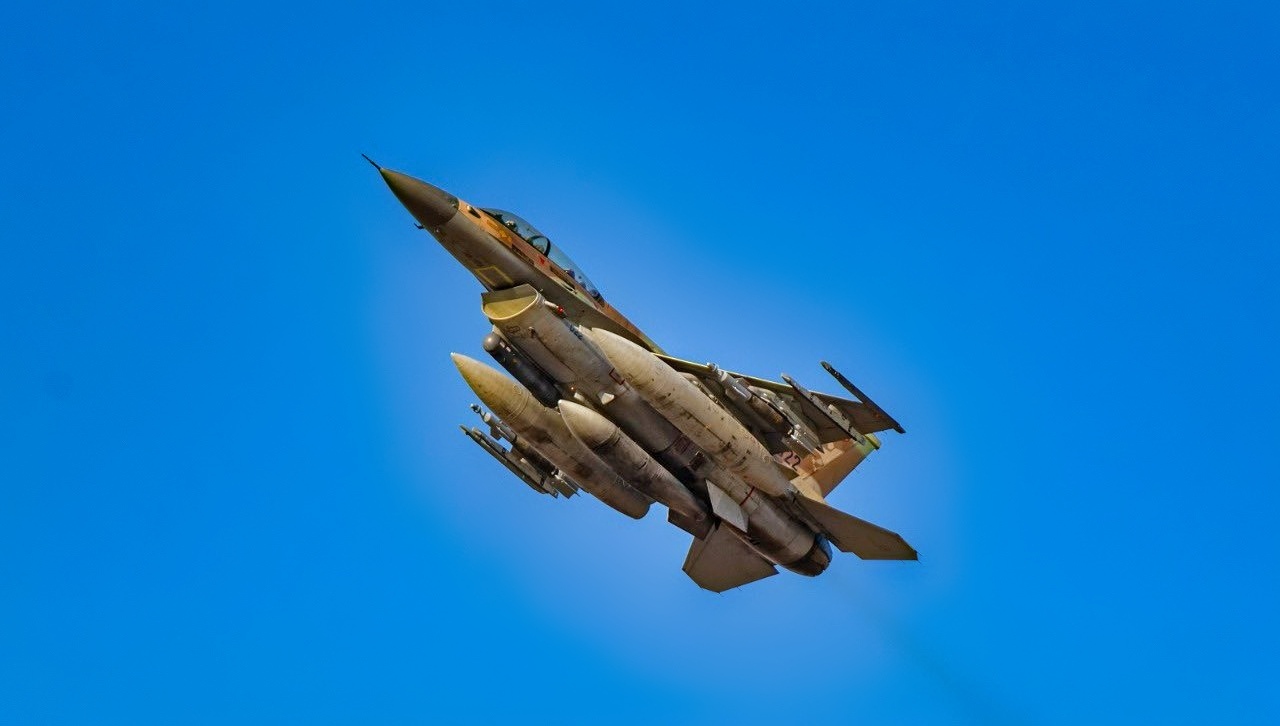
F-16I from Israeli Air Force. Image Credit: Creative Commons.

F-16I Sufa Fighter. Image Credit: Creative Commons.
Hitting the nuclear sites again tells Tehran that diplomacy buys it nothing, which removes any reason to stay at the table. Plus, we must factor in the fact that President Trump might be enraged about Israel’s counterattack and want no part of such strikes.
Missile And Drone Production: Khojir, Parchin, And The Factories
A more calibrated path focuses on Iran’s ability to keep shooting. The 2026 campaign already struck missile production infrastructure, including a production center in the Khojir area near Tehran, along with mobile launchers, enrichment-linked sites at Natanz, and the drone and UAV factories that feed both Iran’s arsenal and its exports.
Tonight’s four-wave barrage, modest by the standards of the opening days of the war, underscores how far that capability has already been degraded, but degraded is not destroyed, and Iran has shown it can rebuild launchers and replenish stocks given time.
Striking the production base rather than the warheads themselves is the move that most directly answers a missile attack with proportional logic: you fired missiles at us, so we will destroy your ability to build more. It is less likely than a nuclear facility strike to pull in the United States, and it lets Israel claim it is degrading a military threat rather than torpedoing diplomacy.
But Iran would not see the distinction as cleanly. Its missile force is the core of its deterrent and its prestige, and hitting the factories that sustain it would still register in Tehran as an act that makes continued talks pointless.
Oil And Gas: South Pars, Asaluyeh, And The Economic Jugular
Then there are the targets that bleed the regime financially. Israel has already demonstrated a willingness to go after Iran’s energy backbone, striking gas and oil sites and fuel storage complexes.
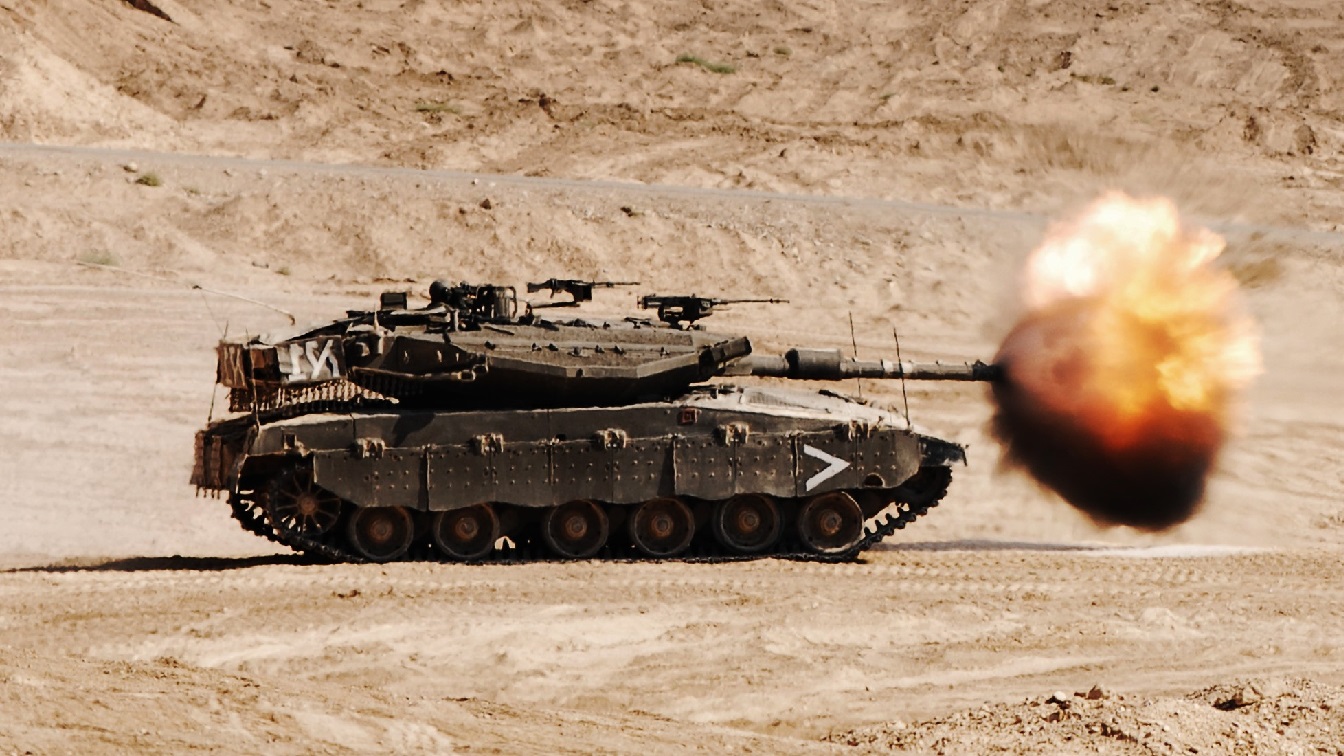
Merkava Tank Firing. Image Credit: IDF.

Merkava Tank Israel. Image Credit: Creative Commons.

Israel Merkava Tank. Image Credit: Creative Commons.

An Israeli Defense Forces Merkava Mark 4 tank fire 120mm canon shell
amazing action military photography 2022 2008(c)-Nehemia Gershuni Photograpy
Iran retaliated for those strikes by intensifying attacks on Gulf energy sites, sending fuel prices soaring and threatening to pull Arab neighbors directly into the war, even as its leadership was being killed and its military capabilities severely degraded. That cycle is the warning label on this option.
Hitting Iran’s oil and gas infrastructure, its refineries, export terminals, and the fields that fund the state, would inflict deep economic pain on a regime already reeling. It would also slam global energy markets at a moment when Iran’s grip on the Strait of Hormuz, through which roughly a fifth of the world’s oil moves, has already kept prices elevated.
An Israeli strike on Iranian energy would almost certainly trigger Iranian strikes on Gulf energy in return, drawing in Saudi Arabia, the UAE, Qatar, and Kuwait, and turning a bilateral exchange into a regional economic crisis.
For an American president who has staked his Middle East strategy on reopening the Strait of Hormuz and stabilizing oil prices, this is the option most likely to enrage Washington precisely because it works.
The Power Grid: Orot Rabin, Rutenberg, And Mutual Vulnerability
The most punishing civilian-infrastructure option is the electrical grid. Iran spent the last war threatening exactly this against Israel, publishing target lists that included major Israeli power plants such as Orot Rabin and the Rutenberg station, and at one point forcing the closure of the Bazan refinery in Haifa. Iranian missiles did damage an Israeli power grid and the Haifa refinery complex during the fighting, and both sides struck each other’s essential services, from desalination plants to electricity.
For Israel, attacking Iran’s grid would be a way to inflict broad societal pain and pressure the population against the regime, a goal Israeli officials have openly embraced in talking about creating conditions for Iranians to topple their government. But going after the grid is the clearest step across the line from military to civilian targeting, inviting condemnation and an in-kind Iranian response against Israel’s own vulnerable infrastructure.
It is escalation for its own sake, more punitive than strategic, and it would hand Iran both a propaganda victory and a justification to abandon any restraint.
How Iran Would Answer, And Whether It Could
Iran’s capacity to respond is real but diminished. American and Israeli efforts during the war eliminated a large share of Iran’s missile launchers, and by the latter stages, Iranian missile and drone attacks had fallen dramatically from their opening tempo. Tonight’s four-wave salvo, fully intercepted and causing no damage, fits that pattern of a weakened arsenal, and the Israeli military’s ability to knock it down without loss tells the same story.
But residual menace is still menace. Iran retains the ability to fire missile barrages at Israel, to threaten the Strait of Hormuz with mines and anti-ship missiles, to push its remaining proxies, above all the Houthis, into renewed attacks on shipping, and to strike Gulf energy targets that drag in Arab states. A significant Israeli escalation would invite Iran to use these tools, and a cornered regime that believes its survival is at stake may calculate risk very differently than one that still hopes a deal can preserve it.
The danger is not that Iran can win an exchange with Israel. It is possible that Iran could make the exchange wide, ugly, and economically catastrophic as it goes down.
The Negotiations Trump Is Trying To Save
Each of these options conflicts with ongoing diplomacy. Iran has already shown how tightly it links the two tracks, suspending negotiations with the United States unless Israel agreed to a ceasefire in Lebanon, and insisting that any final deal include an end to the fighting there. Tehran wants a settlement that covers Hormuz, the broader war, and Lebanon together, and Trump has said he believes an agreement to reopen the strait and extend the ceasefire is within reach.
A major Israeli strike on Iran would blow that apart. It would vindicate the hardliners in Tehran who argue that talking to Washington while Israel bombs is humiliating and pointless, and it would make it politically impossible for any Iranian leader to keep negotiating. It would also expose the limit of Trump’s influence over an ally he has shielded and supported, revealing that the United States cannot deliver Israeli restraint even when an American president demands it.

Prime Minister Netanyahu. Image Credit: Creative Commons.
That is the box Netanyahu’s decision puts Washington in. If he answers tonight’s barrage with a strike on Iran’s nuclear sites, missile plants, oil fields, or power grid, he gets to look strong at home and finish what he sees as unfinished business, while handing Trump a collapsed negotiation and a region tilting back toward open war. The missiles that fell harmlessly over Israel (at least as of publication time) on Sunday may turn out to be the easy part.
What Netanyahu decides to do about them is the hinge on which the next phase of this war turns.
About the Author: Harry J. Kazianis
Harry J. Kazianis (@Grecianformula) was the former Senior Director of National Security Affairs at the Center for the National Interest (CFTNI), a foreign policy think tank founded by Richard Nixon based in Washington, DC. Harry has over a decade of experience in think tanks and national security publishing. His ideas have been published in the NY Times, The Washington Post, The Wall Street Journal, CNN, and many other outlets worldwide. He has held positions at CSIS, the Heritage Foundation, the University of Nottingham, and several other institutions related to national security research and studies. He is the former Executive Editor of the National Interest and the Diplomat. He holds a Master’s degree focusing on international affairs from Harvard University.


