


Manila, Philippines – On the occasion of his visit to Pyongyang, Chinese Communist Party (CCP) General Secretary Xi Jinping has received one of the most effusive and colorful welcomes the city has ever seen. This is also the penultimate Chinese leader’s first visit to the Democratic People’s Republic of Korea (DPRK) in seven years.
After touching down in an Air China Boeing 747-8 (registration number B-2479) at Pyongyang/Sunan International Airport (FNJ), Xi was feted to a red carpet welcome by DPRK leader Kim Jong Un and his wife Ri Sol Ju. The DPRK leader and First Lady welcomed Xi and his spouse, Peng Liyuan, along with an honor guard, brass band, and all of the other accouterments that come with an official state visit.
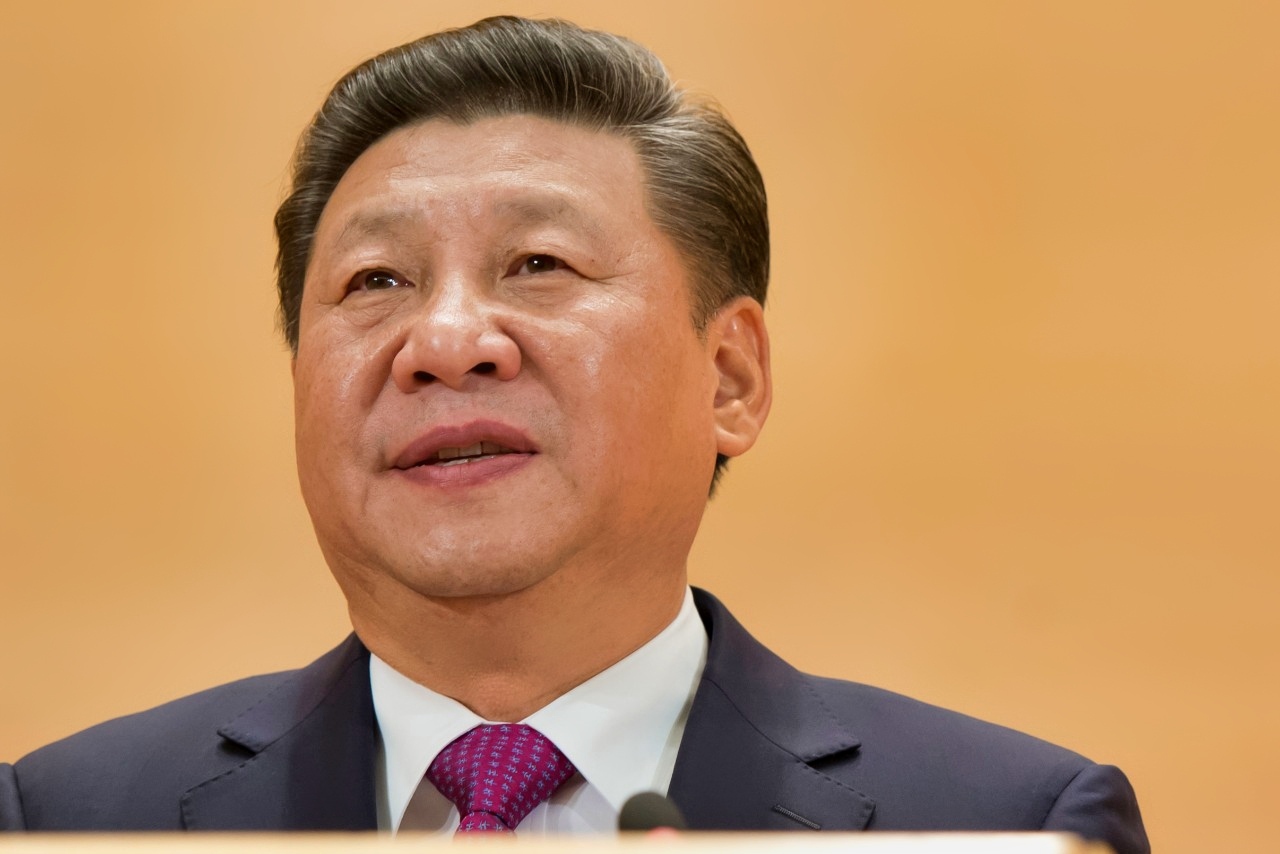
Xi Jinping, President of the People’s Republic of China, speaks at the United Nations Office at Geneva. 18 January 2017. UN Photo / Jean-Marc Ferré
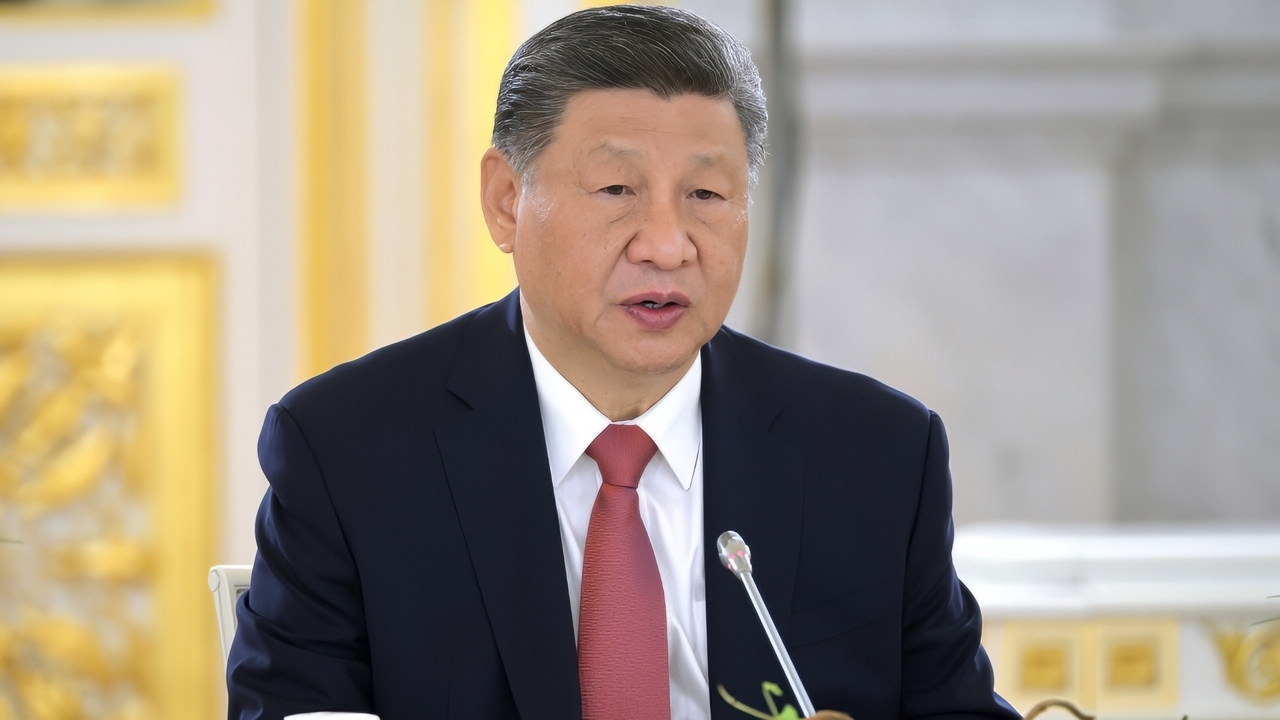
China’s Xi Jinping. Image Credit: Creative Commons.
The two couples were then greeted by large crowds waving Chinese and North Korean flags. The symbolism of a totalitarian ideology that has bound both nations together was on full display.
But while the two nations have been allies for decades, during Xi’s visit, his comments suggested that those ties were being elevated to a higher, closer level. Xi praised relations between the People’s Republic of China (PRC) and the DPRK, stating the two nations now stand at a “new historical starting point” and that the pair are “shouldering new missions of the times”, to quote a PRC state media report.
Areas For Expansion
Specifically, the CCP leader proposed what he called a deepening of “strategic coordination and cooperation” with the DPRK.
Xi’s journey to his neighbor is his first overseas trip in all of 2026 and occurs only weeks after separate visits to Beijing by US President Donald Trump, with a visit by Russian leader and former KGB Lt. Col. Vladimir Putin trailing close behind.
The two communist Asian nations should inject “powerful momentum” into their ties, Xi stated during a meeting with Kim on Monday, 8 June, according to a readout released by Chinese state-controlled media agency Xinhua.

Russian President Vladimir Putin (R) meets with North Korea’s leader Kim Jong Un in Vladivostok, Russia April 25, 2019.
During his two-day state visit to the DPRK, Xi declared that Beijing was prepared to expand cooperation with the PRC in economics and trade, agriculture, health, construction, science, and technology.
Xi normally travels outside of the PRC only three – maximum four – times per year. Moreover, whichever country he visits first in any given year is usually an indication of what nations have become the highest priorities for Beijing – at least for the immediate future.
Therefore, two aspects of his visit to Pyongyang are curious at this point.
One is that, for decades, the PRC-DPRK relationship has been asymmetrical, with Pyongyang highly dependent on Beijing for economic support, food aid, and diplomatic backing in its relations with the US and other allied nations. Under the rule of the current DPRK leader’s father, Kim Jong Il, colleagues in Beijing used to describe the frustration some CCP officials felt with the elder Kim.
“Beijing looked at Kim Jong Il as some kind of crazy nephew,” said one colleague who was based in the Chinese capital for many years, with whom I spoke years back. “He was in that category of you keep hoping that he will somehow turn into something productive and you can stop supporting him – but that day never seems to come.”
Competing For Influence
The second element is what has now changed the dynamic between the PRC and the DPRK as a result of the war in Ukraine.
Pyongyang has now become inordinately dependent on Russia for an influx of cash, energy supplies, and defense industrial technology – all in exchange for the support that Kim Jong Un has provided to Moscow for its war against Ukraine.
While in the DPRK capital today, Xi stated that “No matter how the international situation changes, the firm position of the Chinese Party and government highly valuing the traditional friendship between China and North Korea will not change.”
But recently, it has changed, and one of the objectives of Xi’s visit is to find mechanisms to counter growing Russian influence in the country.
Moscow has become more important to the DPRK ever since Kim started providing Putin with an endless supply of ammunition, ballistic missiles, and, in 2024, thousands of troops sent to fight against Ukraine.
Xi is now trying to recapture the position as the DPRK’s chief economic partner. However, he not only wants to put Russia in second place in this regard but also wants to inoculate himself against any better deal that US President Donald Trump might propose to Kim in the meantime.
What Xi may have problems with is that the list of inducements he is offering to Kim seems to eclipse anything in the realm of economic cooperation and partnerships that he has proposed to Putin to date.
Moscow may very well end up asking the embarrassing question of why Beijing is prepared to be so generous with the North Koreans in areas where they have not yet offered the Russians anything at all.
About the Author: Reuben F. Johnson
Reuben F. Johnson has thirty-six years of experience analyzing and reporting on foreign weapons systems, defense technologies, and international arms export policy. Johnson is the Director of Research at the Casimir Pulaski Foundation. He is also a survivor of the Russian invasion of Ukraine in February 2022. He worked for years in the American defense industry as a foreign technology analyst and later as a consultant for the U.S. Department of Defense, the Departments of the Navy and Air Force, and the governments of the United Kingdom and Australia. In 2022-2023, he won two awards in a row for his defense reporting. He holds a bachelor’s degree from DePauw University and a master’s degree from Miami University in Ohio, specializing in Soviet and Russian studies. He lives in Warsaw.


