

Manila, Philippines – There are phrases associated with the Ukraine war that those of us covering it, now in its 5th year, have grown more than weary of.
Rather tellingly, these phrases are discontinued once proven to be completely erroneous in their assumptions.
One of the more famous of these dates back to the beginning of the war: “the Ukrainians cannot win.”

CINCU, Romania – U.S. Army Soldiers of 1st Battalion, 66th Armored Regiment, 3rd Armored Brigade Combat Team, 4th Infantry Division, setup their M1 Abram Tanks during Getica Saber 17, July 10, 2017. Getica Saber 17 is a U.S.-led fire support coordination exercise and combined arms live fire exercise that incorporates six allied and partner nations with more than 4,000 Soldiers. Getica Saber 17 runs concurrent with Saber Guardian 17, a U.S. Army Europe-led, multinational exercise that spans across Bulgaria, Hungary and Romania with more than 25,000 service members from 22 allied and partner nations. Image Credit: US Military.
This is accompanied by the assumption that the Ukrainians will eventually have to give up and turn over half of their country to Moscow because “the Russians have too many more people, too many more tanks, airplanes and artillery pieces, etc.”
Somewhat surprisingly, that view was still being expressed as recently as last year.
But in 2026, when Ukraine is continuing a relentless campaign of drone strikes with devastating results, it seems out of synch with the current state of affairs.
The drone campaign is simultaneously degrading Russia’s oil industry and taking out the logistical chains that support Moscow’s front-line units.
In the intelligence world, those experiencing and observing a given situation firsthand almost always speak of what they call “ground truth.”
What they conclude from that vantage point often differs from what the “experts” on the ground in Ukraine full-time will report as the current state of affairs.
The standard expert opinion is that “the Russians are learning more rapidly than before.”
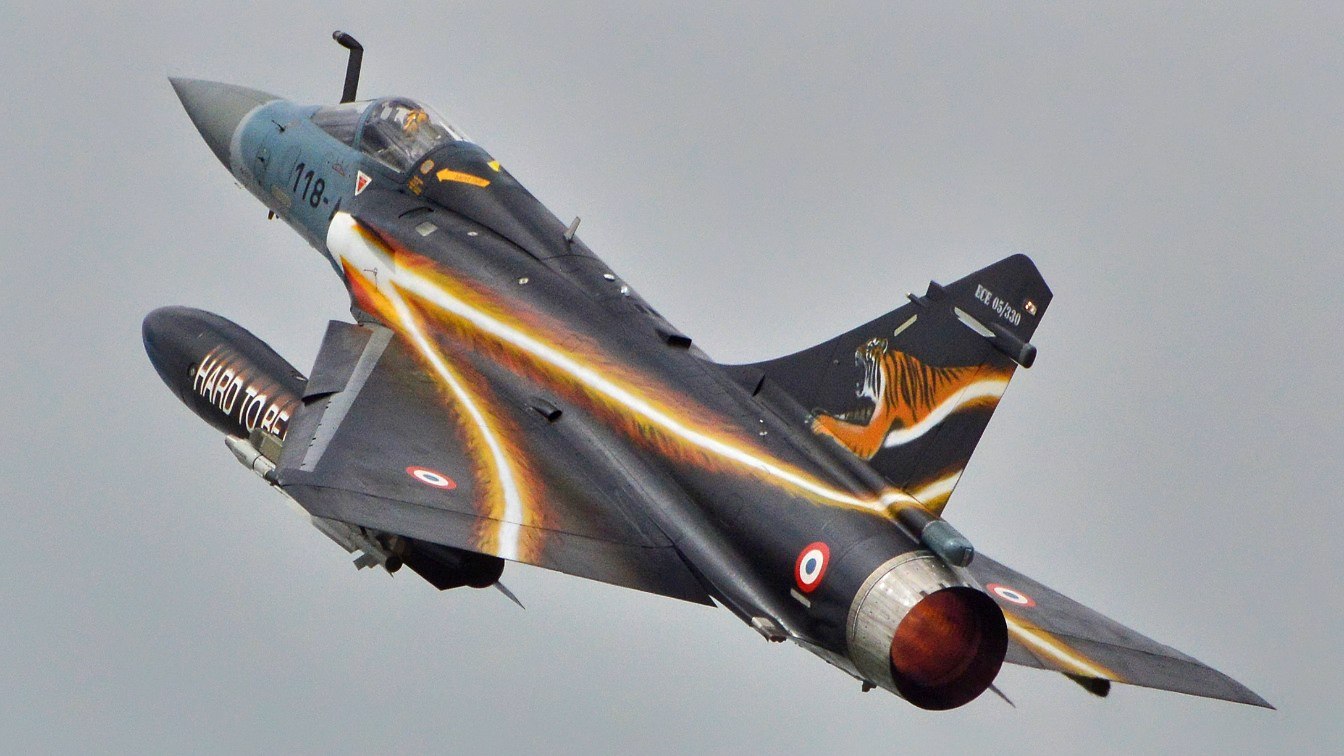
Mirage 2000. Image Credit: Creative Commons.

Mirage 2000 Fighter. Image Credit: Creative Commons.
Ukraine War: View From The Front
The overall conventional wisdom now no longer says that Russia is winning, but instead makes a mild concession that states “both sides are losing. However, the Ukrainians are losing slower than the Russians.”
A recent conversation with a third-country volunteer demonstrates just how much ground truth differs from the chattering classes’ assessment.
Not surprisingly, one of the volunteers who provided an eyewitness report to National Secuirty Journal literally used the shorthand for being on site and reporting first-hand accounts, saying that “the ground truth, as I see it, is while Russian forces maintain a significant, albeit highly gapped, presence along the FLOT [Forward Line of Own Troops] in strategic corridors, their desire to avoid direct action is repeatedly refreshed by near total losses when pushed to engage.”
“A textbook example of this was demonstrated when a team of DIU [Defense Intelligence of Ukraine] Legionnaires was ex-filled from a two-month rotation to [city name redacted]. This was followed swiftly by the Russians launching an assault on the building that was still occupied by restless Ukrainian forces,” he continued.
“The squad of Russians was wiped out, except for one, who is now a POW. Any counters to this outcome are few and far between, and the word seems to be spreading through the Russian lines and providing Ukrainian commanders with multiple accounts of Russian forces maintaining their distance and opting to avoid direct action.”

A 35th Fighter Squadron F-16 Fighting Falcon flies near the Korean peninsula during a dogfighting training scenario during exercise Ulchi Freedom Shield 25 at Kunsan Air Base, Republic of Korea, Aug. 20, 2025. UFS25 is a combined, joint, all-domain military training exercise that integrates ground, air, naval, space, cyber and information elements, enhancing readiness through realistic combat simulations. (U.S. Air Force photo by Senior Airman Landon Gunsauls)
“When it comes to Ukrainian-occupied strongholds, the Russians would rather spend millions [in munitions] in the deconstruction of such positions, rather than push in ground troops they can’t afford to reconstitute.”
In the circumstance of a particular Ukrainian city that he described as the “gateway to taking the rest of that region,” the Russians have discarded the options of either a “full-on assault and [then followed by] pacification. Russian units instead have been striking the city at a distance, he says, but their inability to dislodge the opposing forces has been a testament to the unwavering endurance of Ukrainian troops and Soviet era buildings.”
In short, this and other descriptions from the front do not necessarily sound like an army that is “losing slower” than the Russians.
Signs From The Beginning
There were signs at the beginning of the war that Russia was neither prepared militarily nor industrially to engage in a major conflict.
Moscow had famously bragged that it would “take Kyiv in three days.”
Meaning that, aside from their logistical and operational preparedness, Russia was not psychologically prepared for a protracted ground war.
Then there was the famous story of the complete failure of the Russian columns that launched from Belarus on the road to Kyiv. They were attacked by Ukrainian territorial militias and had suffered so many mechanical breakdowns that they eventually were halted and had to turn back.
The operational plan for these units was pure folly. As one military expert told the BBC as the debacle unfolded. “You don’t ever travel into hostile territory in a long convoy. Ever.”
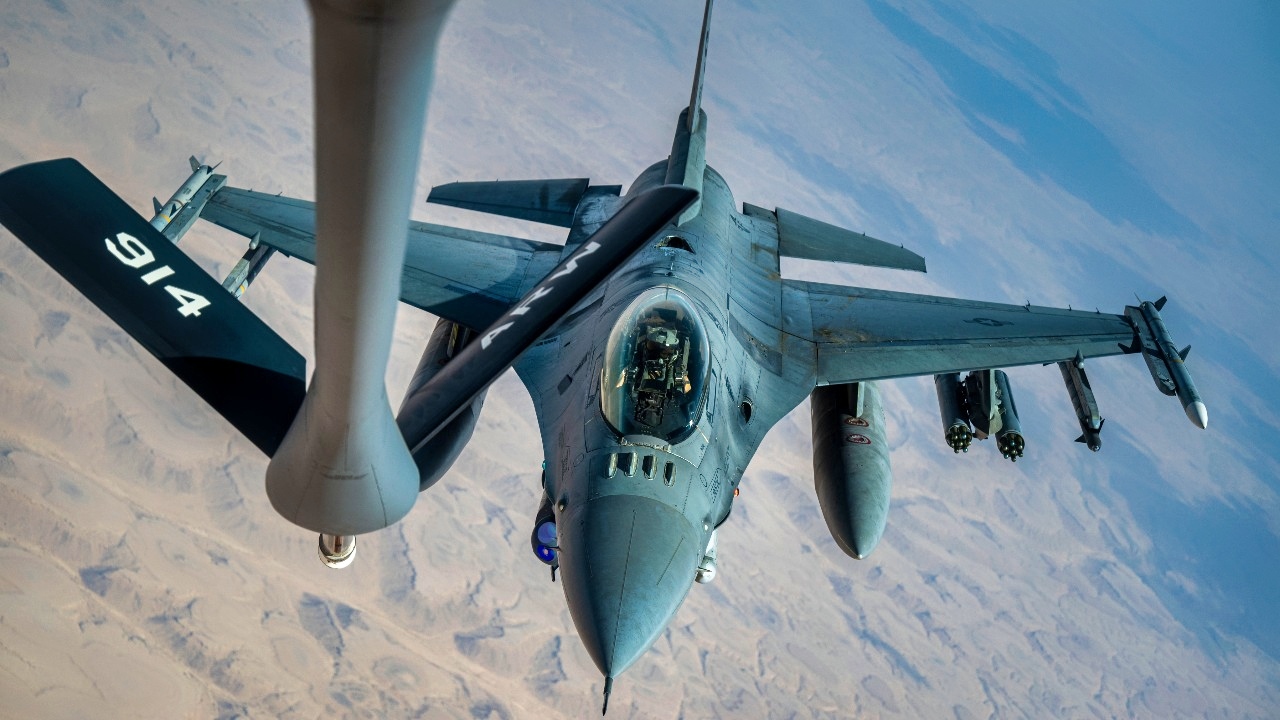
A U.S. Air Force F-16 Fighting Falcon prepares to receive fuel from a KC-135 Stratotanker over the U.S. Central Command area of responsibility, May 28, 2025. F-16s conduct combat air patrols within the USCENTCOM AOR to deter regional aggression and protect coalition partners. (U.S. Air Force photo by Airman 1st Class Christopher Lyons)
But the level of Russian unpreparedness did not end there. In the first few months of 2022, numerous videos of Ukrainian soldiers inspecting captured Russian tanks began to be posted on the internet.
In one of the Ukrainians’ remarks in one of those videos, it was said, “[T]his is supposed to be a T-80 tank, but the turret is for a T-64B,” showing that Russian industry was already unable to adequately support offensive operations.
In more than one video, Ukrainian soldiers looking at other captured Russian tanks showed that the external reactive armor (ERA) compartments that covered the exterior of the vehicle had no explosive charges installed in them, but instead were loaded with harmless sheet rubber.
Flying out of Warsaw at one point, I encountered a retired US soldier in camouflage fatigues wearing a patch from one of the volunteer units fighting in Ukraine. I asked him about the sheet rubber in the reactive armor boxes, and he said that his unit had found “all kinds of materials in those ERA compartments – not just rubber, but plywood, newspaper, sand.
The corruption is so bad in the Russian army that everything that has not been nailed down has been stolen,” he said.
One can only imagine how much worse the situation is today, four years and billions of dollars in Russian state funding on the war later.
About the Author: Reuben F. Johnson
Reuben F. Johnson has thirty-six years of experience analyzing and reporting on foreign weapons systems, defense technologies, and international arms export policy. Johnson is the Director of Research at the Casimir Pulaski Foundation. He is also a survivor of the Russian invasion of Ukraine in February 2022. He worked for years in the American defense industry as a foreign technology analyst and later as a consultant for the U.S. Department of Defense, the Departments of the Navy and Air Force, and the governments of the United Kingdom and Australia. In 2022-2023, he won two awards in a row for his defense reporting. He holds a bachelor’s degree from DePauw University and a master’s degree from Miami University in Ohio, specializing in Soviet and Russian studies. He lives in Warsaw.


yeye
June 8, 2026 at 9:36 am
Russian forces are gaining the upper hand in many locations in donbass today.
One reason for that is their ability to successfully target foreign mercenaries fighting with the ukro forces.
Those mercenaries come highly motivated and experienced. Once they get eliminated,the ukros become easy meat.
This month, june, is the 82nd anniversary of the famous summer offensives of 1944.
Operation bagration, the offensive that destroyed german army group center in belarus, was launched in june 1944.
Ten days later, another offensive, the lvov-sandomierz offensive destroyed the german army group south in ukraine.
After those two offensives, the surviving german nazis fled westward, toward the baltic region and to the german border.
Another offensive, launched in early 1945, the vistula-oder offensive, brought soviet units right to the oder river, only 70 km away from berlin.
The nazis were on their last legs.