

America And Iran Just Traded Strikes Over The Apache Helicopter. What Happens Now Decides The War: The retaliation everyone saw coming arrived on schedule, and so did the counter-retaliation. Tuesday evening, US Central Command launched what it called self-defense strikes against Iran for the downing of an Army Apache helicopter near the Strait of Hormuz, and by early Wednesday, Iran had answered with missiles and drones against American bases across the Gulf, a sequence that has jolted the fragile truce and put the entire diplomatic endgame of this war in the balance.
The question, as the sun comes up on Wednesday, is brutally simple. Is this round over, or is the next one already loading?
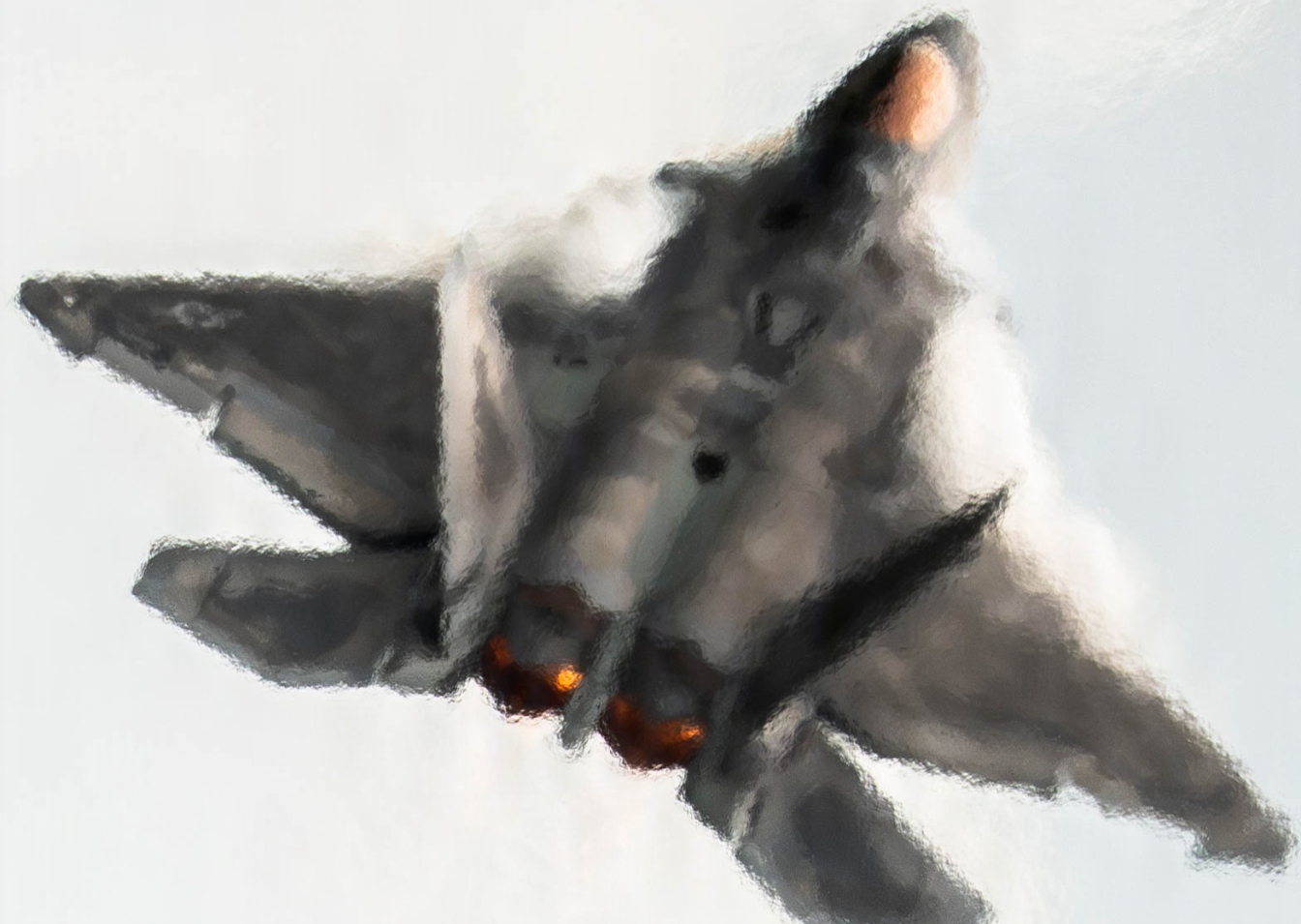
U.S. Air Force Capt. Nick “Laz” Le Tourneau, pilot and commander of the F-22 Raptor Aerial Demonstration Team, performs an aerial demonstration during the Spirit of St. Louis Air Show and STEM Expo in Chesterfield, Missouri, June 7, 2026. Aerial demonstrations are conducted to showcase the capabilities of the F-22 and provide the public an opportunity to observe Air Force operations, gaining a better understanding of its mission. (U.S. Air Force photo by Staff Sgt. Mary Bowers)
The Overnight Scorecard: Roughly 20 Targets, Three Countries
The American blow came first. CENTCOM announced its forces began striking Iran at 5 p.m. Eastern on Tuesday at the commander in chief’s direction, calling the operation a proportional response to unjustified Iranian aggression.
The military hit roughly 20 targets inside Iran across multiple rounds, concentrating on air-defense and radar sites along with Iranian ports and islands near the strait, and then declared the mission complete. The choice of targets was itself a message: the systems plausibly tied to the drone that downed the Apache, not the oil terminals, not the leadership, not the nuclear complex.
There was collateral pain all the same. Iran’s judiciary-run Mizan news agency reported that two water reservoirs in Sirik County were hit, cutting drinking water to some 20,000 people in the heat above 104 degrees, exactly the kind of detail that hardens a population against the country dropping the bombs. Of course, Iran isn’t exactly known for being honest, so watch this space.

A U.S. Air Force B-52 Stratofortress departs after being refueled by KC-135 Stratotanker over the Pacific Northwest July 18, 2024. The 92nd Air Refueling Wing and 141st ARW’s ability to rapidly generate airpower at a moment’s notice was put to the test when Air Mobility Command’s Inspector General team conducted a no-notice Nuclear Operational Readiness Inspection, July 16–18, 2024. During the NORI, Airmen demonstrated how various capabilities at Fairchild AFB enable units to generate and provide, when directed, specially trained and equipped KC-135 Stratotanker aircrews to conduct critical air refueling of U.S. Strategic Command-assigned strategic bomber and command and control aircraft. (U.S. Air Force photo by Staff Sgt. Lawrence Sena)
Iran Fires Back
Tehran’s answer followed within hours. The Islamic Revolutionary Guard Corps claimed drone attacks on the US Fifth Fleet headquarters in Bahrain and the Ali Al Salem airbase in Kuwait, plus a long-range missile strike on the Azraq airbase in Jordan, asserting it had attacked 21 American targets and destroyed four, including an F-35 hangar. Those numbers are Iranian claims, not verified damage, and at least one missile reportedly fell short into the Syrian countryside. And again, Iran isn’t exactly truthful in many of the claims it made in the past. So, more to come.
But the attacks themselves are confirmed: Iran struck at Bahrain, Kuwait, and Jordan within hours of the American strikes. Trump, for his part, told ABC News he believed the response to Iran should be very strong, very powerful — this from the same president who days earlier had the peace deal in its final throes, signable within two or three days.
The Calibration Hiding Inside The Violence
Read the targeting on both sides, and a pattern emerges that should temper the panic.
Washington hit radar and air defenses, the proportional answer to a downed helicopter, and pointedly announced when it was finished. Iran hit military bases, not Gulf oil infrastructure, not cities, not tankers, and dressed the operation in the symbolic arithmetic of 21 targets for its own grievances.
Each side struck hard enough to claim deterrence was restored and carefully enough to leave the other a way out. Al Jazeera’s correspondent in Tehran, Mohamed Vall, captured the prevailing read: neither side wants a return to full-scale war, and the next few hours will reveal whether the Americans absorb this Iranian reply and end the operation or hit again.
That is the tightrope. This is the war settling into its most dangerous rhythm, the retaliatory loop, where each capital strikes “proportionally,” banks the political credit, and hands the other side a fresh grievance to answer. The loop is survivable as long as everyone’s aim stays true and everyone’s missiles land where intended. It stops being survivable the day a drone finds a barracks instead of a runway, the day Americans come home in flag-draped coffins instead of being plucked from the sea by a drone boat.

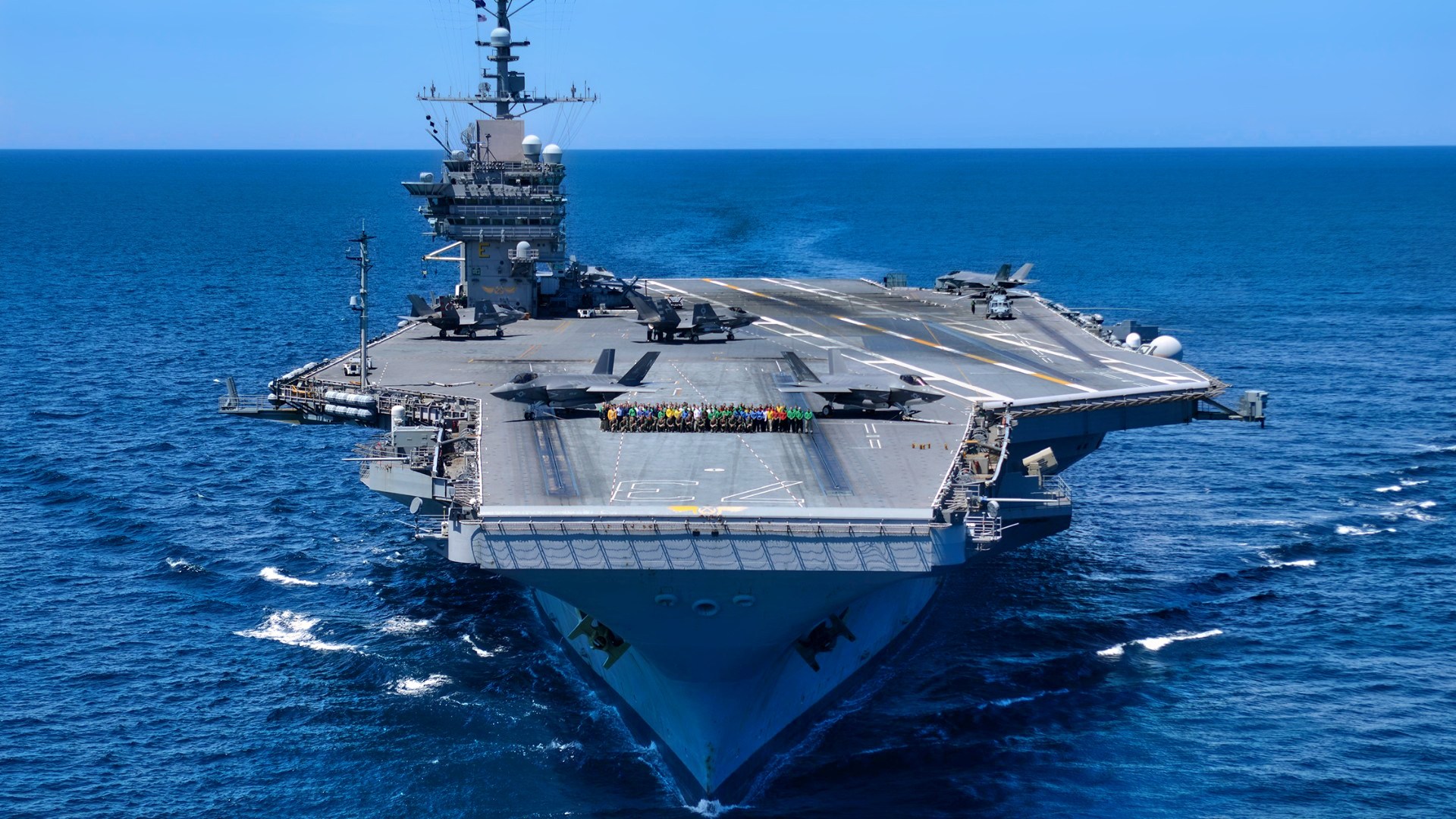
USS George Washington. Image Credit: Creative Commons.
The Apache crew lived, which is the quiet reason this exchange stayed calibrated. The next crew might not, and nobody in Washington or Tehran fully controls that variable.
The Talks Are Wounded, Not Dead
The diplomatic track took shrapnel overnight, but look closely at the language. Iran’s foreign ministry spokesman said Tehran is reviewing the negotiations with the United States in light of the strikes.
Reviewing. Not ending, not suspending, reviewing — the word a government uses when it needs to register fury while keeping the door cracked open.
Iran’s economy is being strangled by its own closure of the strait, its currency is in collapse, and a deal that reopens commerce remains the only path out of the box it built for itself. Trump, meanwhile, wants the war over, the strait open, and the agreement signed badly enough that he ordered a deliberately limited strike when his political instincts were screaming for something bigger.
Both sides, in other words, still need the off-ramp they were on before the Apache went into the water. The overnight exchange was each of them proving to domestic audiences that they could not be hit for free. The danger is that proving it once per crisis is sustainable; proving it in an escalating chain is not.
The Clock That Keeps Running on the Iran War
Hanging over every calculation is the economic timer that does not pause for missile exchanges. The Strait of Hormuz, the artery for roughly a fifth of the world’s oil, remains shut, and the emergency reserves cushioning the world from that fact keep draining; the releases can calm markets but cannot replace the corridor itself. The World Food Program is warning that war-driven food prices are pushing tens of millions toward acute hunger. American gasoline forecasts keep climbing. Iran’s own people are losing drinking water in the summer heat. Every week the loop continues, the eventual deal gets harder to sign, and the damage gets harder to reverse.
So what happens now? Three paths, at least to me, make the most sense. The likeliest is that both sides bank their strikes, call honor satisfied, and crawl back toward the table, because the fundamentals pushing them there — Iran’s economic collapse, America’s drained arsenal, and oil anxiety, Trump’s hunger for the deal — did not change overnight. The second is another round or two of tit-for-tat, painful but contained, if either capital decides the ledger isn’t balanced yet. The third is the tail risk that grows with every cycle: the strike that kills the wrong people in the wrong place and makes calibration impossible. The first path remains the smart money.
But this war has now shown, twice in a week, that the men steering it are one bad night from losing the wheel, and the margin between a managed crisis and a catastrophe is exactly as wide as the next missile’s miss.
About the Author: Harry J. Kazianis
Harry J. Kazianis (@Grecianformula) was the former Senior Director of National Security Affairs at the Center for the National Interest (CFTNI), a foreign policy think tank founded by Richard Nixon based in Washington, DC. Harry has over a decade of experience in think tanks and national security publishing. His ideas have been published in the NY Times, The Washington Post, The Wall Street Journal, CNN, and many other outlets worldwide. He has held positions at CSIS, the Heritage Foundation, the University of Nottingham, and several other institutions related to national security research and studies. He is the former Executive Editor of the National Interest and the Diplomat. He holds a Master’s degree focusing on international affairs from Harvard University.


Hujjathullah Sahib
June 10, 2026 at 10:27 am
The avoided targets definitely tell the story but the claim of proportionality in response don’t hold water especially when main civilian water tanks are hit !
Fred Adams
June 10, 2026 at 12:08 pm
Behind the scenes, Iran is likely threatening to destroy it’s oil production and shipping facilities if the US does not settle on terms favorable to Iran. This is the only strategic leverage available to them and it must be supposed that they will use it in the last ditch.
Iran’s claim to control Hormuz is not sustainable. There is too much military and economic power opposing their control, and as time goes on evidence of their physical control will fade. As long as Mr. Trump and like thinkers remain in office.
Oil prices will come down as the world supply adjusts to the new Iran-less picture. The iranian economy will increasingly erode. These decrease Iran’s leverage and improve the world’s. The bargaining table is a false front for both sides: Iran will never be serious in negotiation and Mr. Trump, having time on his side, hasn’t the need.
The present path, if continued, leads to the downfall of the IRGC and the mullahs. There is much vested interest in the West in avoiding this, as the status quo ante maximizes profit for the powerful, who may or may not see the advantage in a revision.