


The Iran War has become an economic game of chicken. On one side, the US naval blockade has crushed Iran’s seaborne oil exports by 93 percent, with shipments reportedly falling to just 64,000 barrels per day in May. On the other side, Iran’s closure of the Strait of Hormuz is choking off roughly 20 percent of the global seaborne petroleum trade. So while Iran is running out of money, the world is running out of spare oil; neither side wants to blink first because both believe they are close to extracting their desired concessions. But how long can this brinksmanship hold?
Iran’s Position
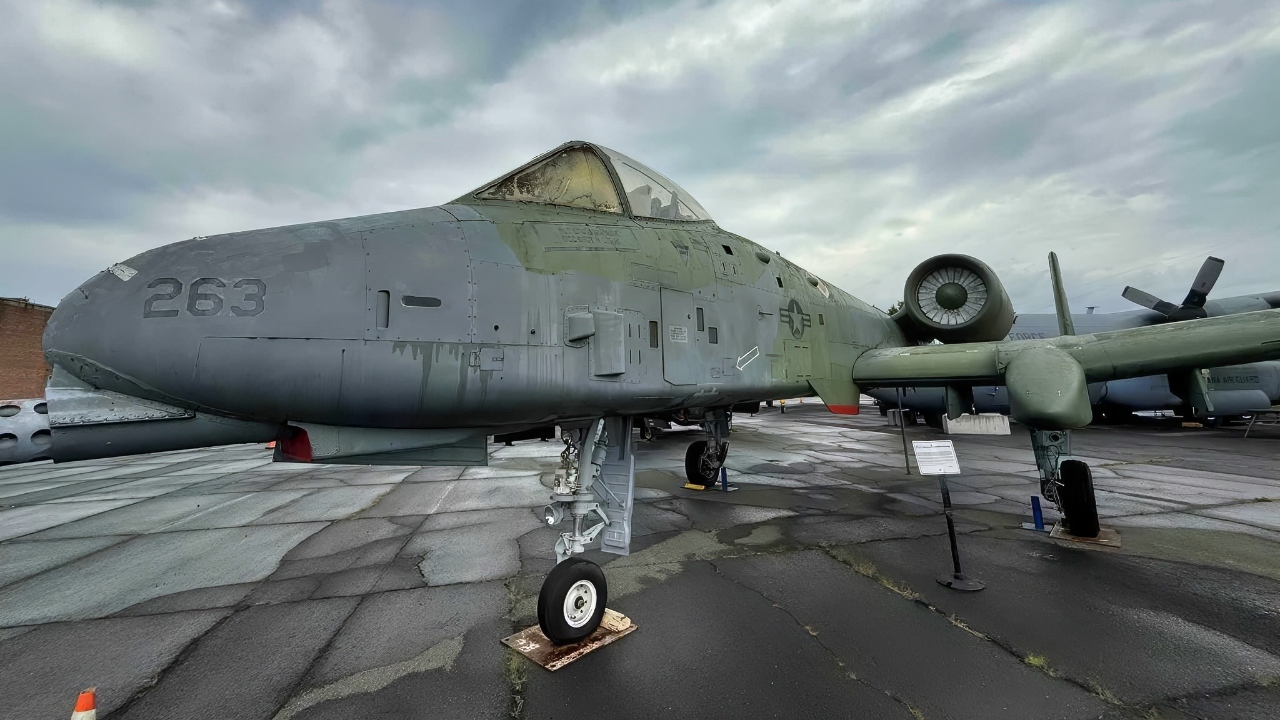
A-10 Warthog National Security Journal Photo. Taken by Jack Buckby on August 23, 2025.
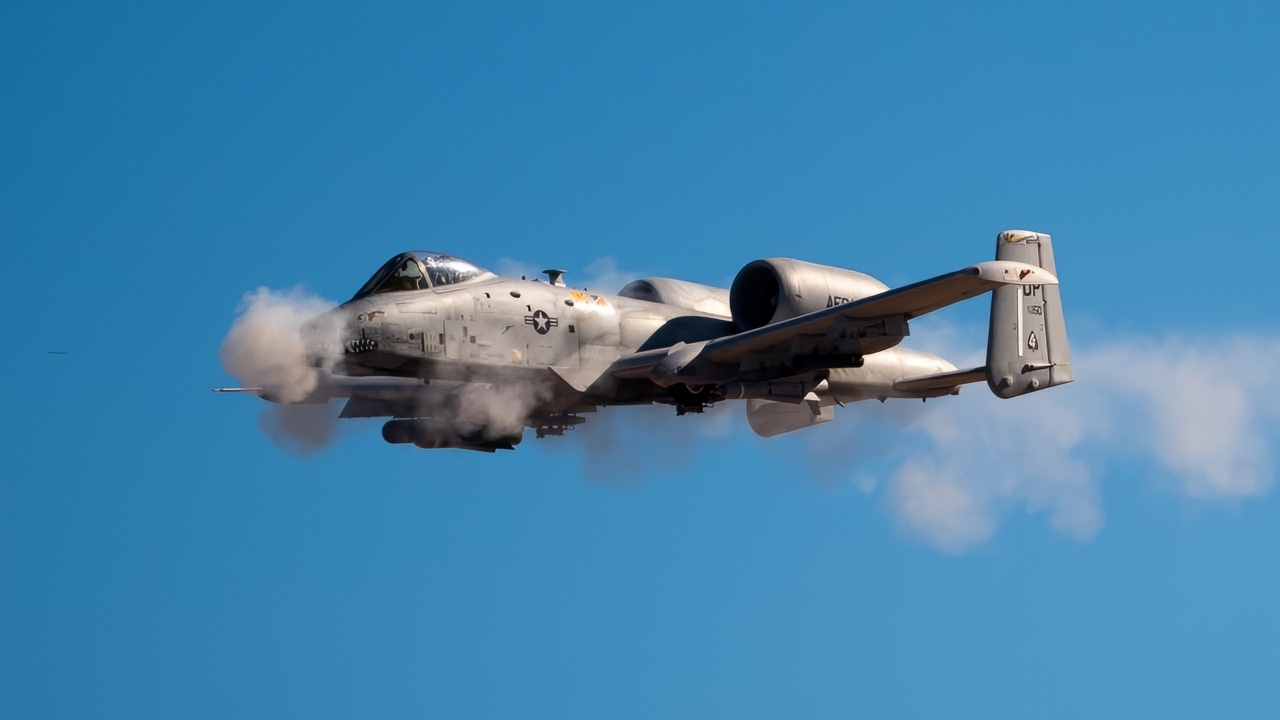
An A-10 Thunderbolt II from the 924th Fighter Group of the 944th Fighter Wing fires its 30mm GAU-8/A Avenger Gatling gun during Exercise Desert Hammer 25-1 at Barry M. Goldwater Range East near Gila Bend, Ariz., Nov. 14, 2024. Through joint and multinational collaboration, Desert Hammer tests the ability of over 700 participants and 131 aircraft to operate, defend, and sustain airbases under austere conditions. (U.S. Air Force photo by Senior Airman Jacob Dastas)
Iran’s economy is being strangled, with nearly $500 million per day lost in oil income. That’s roughly $6 billion lost in under two months. But Tehran believes that if it reopens the Strait of Hormuz too soon, it will appear to have been defeated.
Whereas, if Tehran endures until global inventories tighten, the pressure should shift onto Washington. So Iran’s bet is to weather the domestic pain long enough for global oil prices to spike, because the regime does not want to appear to accept US terms or capitulate, which would be interpreted domestically as an indication of weakness.
America’s Position
Washington believes their blockade has been successful, as Iranian exports have been nearly zeroed out. The White House calculates that by keeping pressure on Tehran, Iran will eventually be forced into a deal. The US has a cushion to facilitate this form of brinksmanship; the Strategic Petroleum Reserve has around 357 million barrels.
Of course, the SPR is not infinite, and is currently approaching its lowest levels since the early 1980s. Still, the US is betting that Iran’s economy will break before Western consumers revolt.

A-10 Warthog National Security Journal Photo Essay Picture.
No Blinking
Economic games of chicken typically end when one side begins to believe that continuing would be more harmful than just compromising. But in the present situation, neither Tehran nor Washington appears to have reached that point. Iranian leaders look at the battlefield and see evidence that their strategy is working. Hormuz remains disrupted while oil prices remain elevated.
Western governments, meanwhile, are increasingly discussing inventory depletion and energy security. Tehran knows it doesn’t need to win—it just needs to convince the West that maintaining the blockade is too expensive.
Washington sees the inverse. Iranian exports are down 93 percent, billions have been lost in revenue, and Tehran’s finances are currently under extreme pressure. The White House likely believes it should continue holding out, as its strategy appears to be producing exactly the intended result.
Oddly enough, both sides may be interpreting the same data as proof positive that they are winning. One of them is wrong, though. And the danger lies in the ongoing, shared belief that victory is just weeks away.
The Danger For Everyone
While Washington and Tehran may be comfortable with the arrangement, the average global citizen is put in a precarious position as a result. Global inventories are reportedly heading towards a five-year low by July. Brent crude is currently around $95 per barrel, with a projected risk range of $120–135 per barrel if the Strait of Hormuz remains closed.
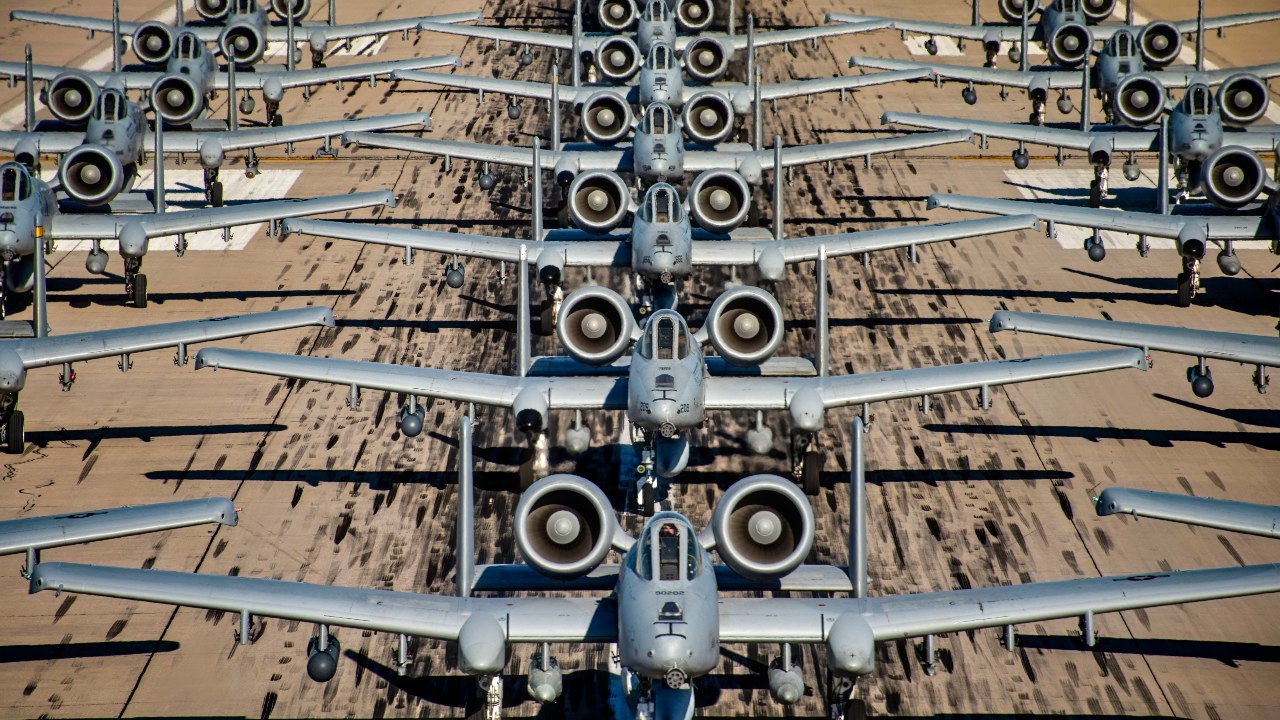
U.S. Air Force A-10 Thunderbolt IIs and an HC-130J Combat King II assigned to the 355th Wing taxi in formation on the runway at Davis-Monthan Air Force Base, Arizona, Feb. 9, 2022. The 355th Wing maintains and operates A-10 Thunderbolt IIs, HH-60G Pave Hawks and HC-130J Combat King IIs ensuring its Airmen and aircraft are ready to fly, fight and win. (U.S. Air Force photo by Senior Airman Alex Miller)
That would mean higher gas prices, higher shipping costs, higher food prices, renewed inflation—in sum, more economic pain. Asia is the most exposed—nations like Japan, South Korea, India, and China. And developing countries will be hit the hardest by rising fuel and fertilizer costs and increased debt pressure.
How This Ends
The most likely outcome here is a diplomatic solution. The US pauses its blockade, Iran reopens the Strait of Hormuz, and both sides can claim victory. Alternatively, Iran could blink first, perhaps if domestic unrest becomes unbearable, or if inflation spikes or currency collapses. The military option is another plausible outcome. If talks fail and inventories crash, US forces could try to forcibly clear Hormuz. This is the highest-risk outcome, naturally, potentially leading to a wider regional war, an oil shock, and a global recession.
This is not simply an Iran-specific crisis; it is a global energy crisis. Iran is betting that oil scarcity will save it. But Washington believes economic strangulation will force Iran to concede. The longer each side waits, the more harm will be caused to the general global population.
About the Author: Harrison Kass
Harrison Kass is a writer and attorney focused on national security, technology, and political culture. His work has appeared in City Journal, The Hill, Quillette, The Spectator, and The Cipher Brief. He holds a JD from the University of Oregon and a master’s in Global & Joint Program Studies from NYU. More at harrisonkass.com.


