


The Missile Issue For The US If It Returns To A Full Bombing Campaign Against Iran: The US air campaign against Iran, Operation Epic Fury, was militarily very successful, severely degrading Iran’s ballistic missile stockpiles and missile launchers, while decapitating its senior leadership.
Decapitation strikes have eliminated over 40 senior military and political leaders, and US and Israeli air strikes have hit over 1,000 targets.

Tomahawk Launch. Image Credit: Creative Commons.
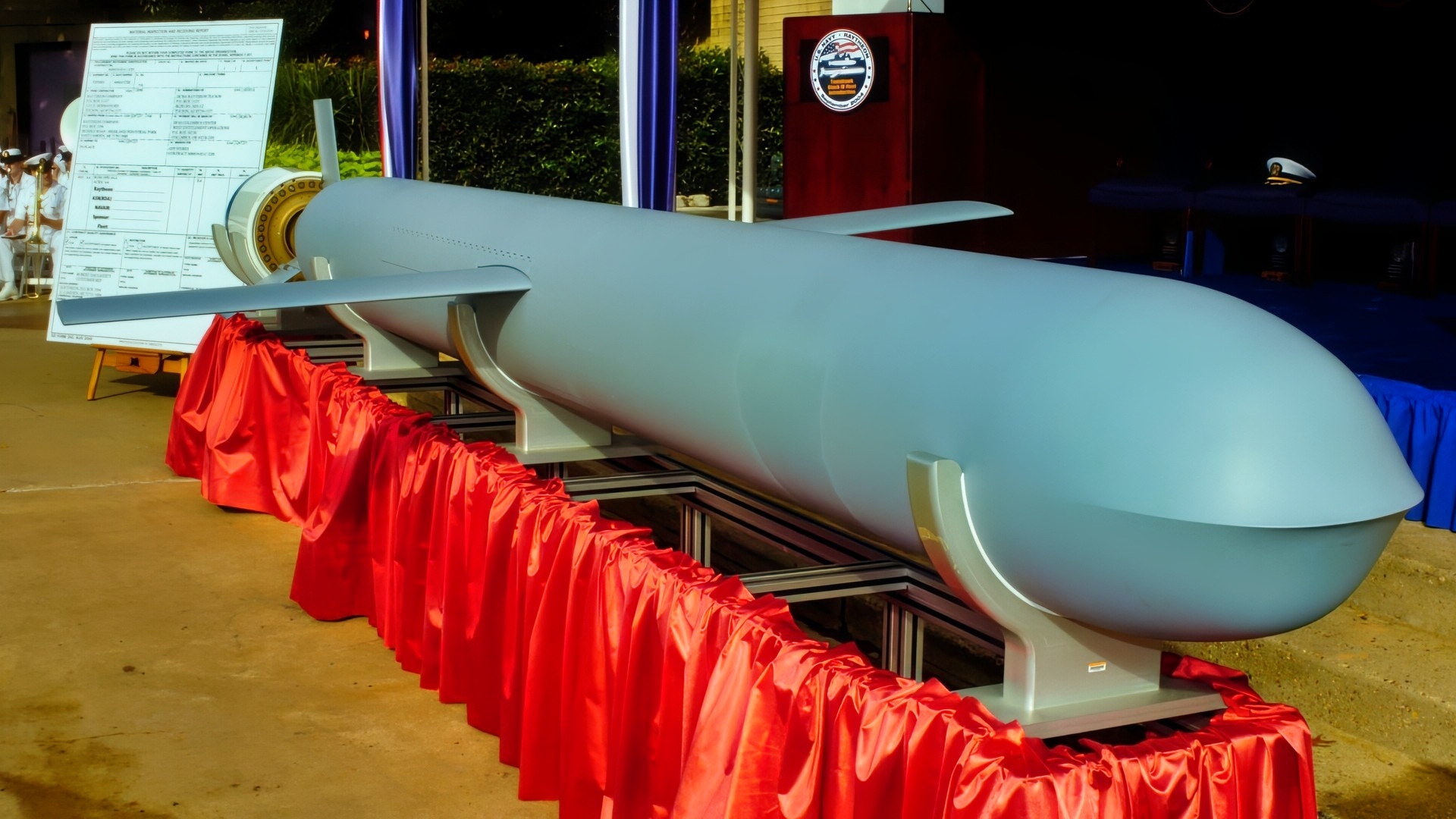
Tomahawk Block IV Missile. Image Credit: Creative Commons.
However, resuming a full-scale air war will rapidly drain U.S. missile and air-defense stockpiles. Following recent major air operations, military analysts confirm that the Pentagon is running dangerously low on precision-strike and long-range interceptor missiles, with industrial contractors needing years to replenish inventories to prewar levels.
During March and early April, and several weeks of unrelenting airstrikes, the US was facing a significant strain on its Tomahawk missile stockpile due to high usage in the recent operations against Iran, now and back last June, raising concerns about inventory levels for potential, larger-scale engagements.
President Trump insists that the “ceasefire” with Iran is still on, although the Iranians, as is the M.O., have ignored it repeatedly. After the shootdown of an Apache helicopter, the US responded with airstrikes on the Iranian coastline. Iran then sent missiles at US installations in the Middle East. Ceasefire?
What happens if (and it is a certainty if the US wants a deal worth anything) the air war is restarted? Can the US continue to conduct an air war with its missile inventory getting dangerously low?
Tomahawks, Patriots, THAADs In Short Supply
Also, the US used many of its Patriot and THAAD Interceptors, defending its bases in the Middle East and in Israel. Over $1.2 billion in air-defense assets were used at unprecedented rates, burning through up to 50 percent of the prewar inventory of critical systems.

A Terminal High Altitude Area Defense (THAAD) interceptor is launched from the Pacific Spaceport Complex Alaska in Kodiak, Alaska, during Flight Experiment THAAD (FET)-01 on July 30, 2017 (EDT). During the test, the THAAD weapon system successfully intercepted an air-launched, medium-range ballistic missile (MRBM) target.
The Washington Post claims that the US has fired 850 Tomahawks thus far during the airstrikes against Iranian targets. That is about a quarter of the entire missile supply, leaving the military with about 3,000 missiles to handle any further contingencies in Iran or, more importantly, against China should the need arise.
The US also used about 45 percent of its Precision Strike Missiles (PrSM) during the air campaign.
The Replenishment Rates For These Missiles Are Slow
While not completely exhausted, current replenishment rates are slow—often under 100-200 units annually—and struggling to keep pace with operational consumption, creating a long-term supply vulnerability.
“Manufacturers just can’t make them fast enough,” said Vertical Research Partners analyst Rob Stallard. “There was already way more [missile] demand than supply, and [Iran] exacerbates the issue.” How bad the acute pressure gets depends on how long the conflict lasts.
The US War Department has been talking with defense contractors about boosting production rates not just for Tomahawks but also for Patriot missiles, THAADs, and other weapons to ensure our warfighters stay equipped.
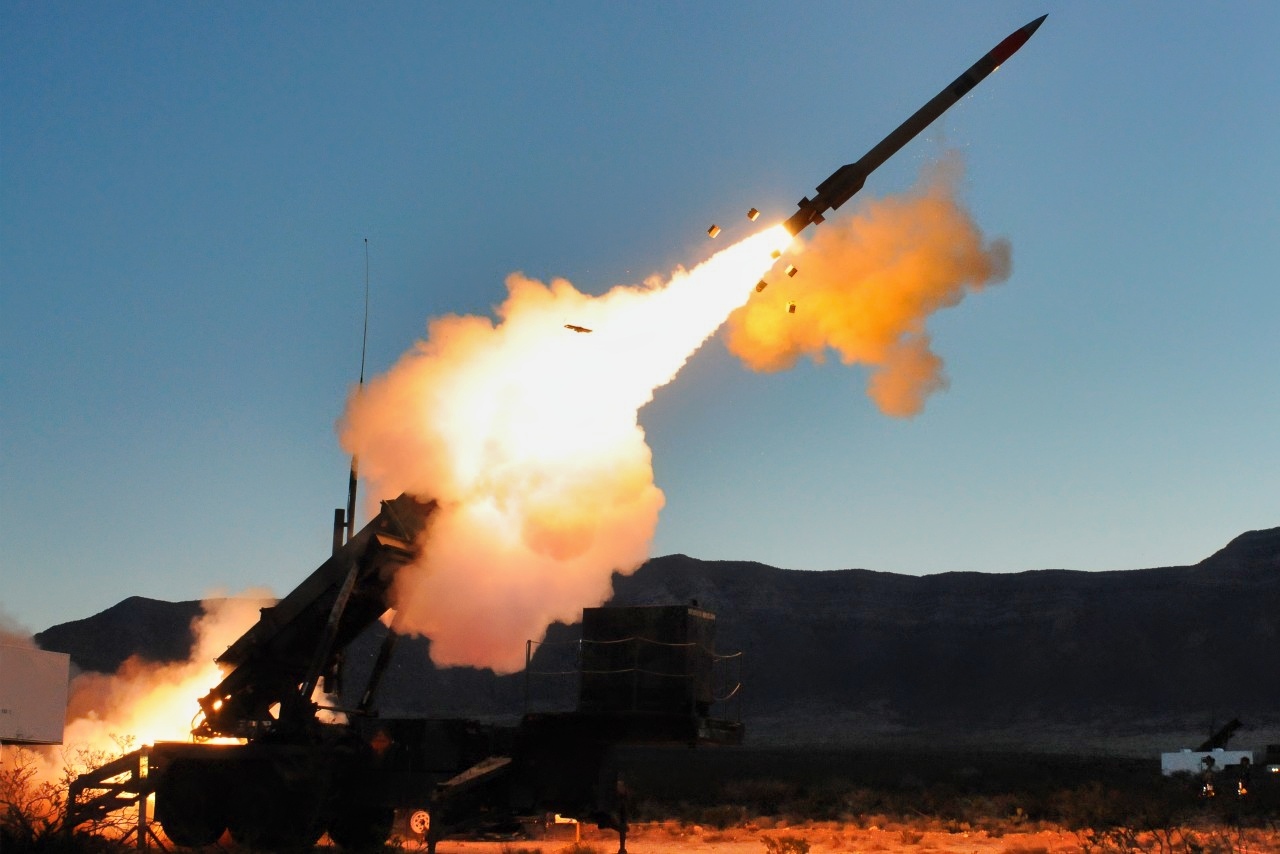
The PAC-3 MSE is a highly sought-after air defense munition due to its advanced capabilities and versatility. As a next-generation interceptor, it offers improved range, speed, and maneuverability, making it an effective counter to a wide range of threats, including tactical ballistic missiles, cruise missiles, and aircraft. (Official U.S. Army photo)
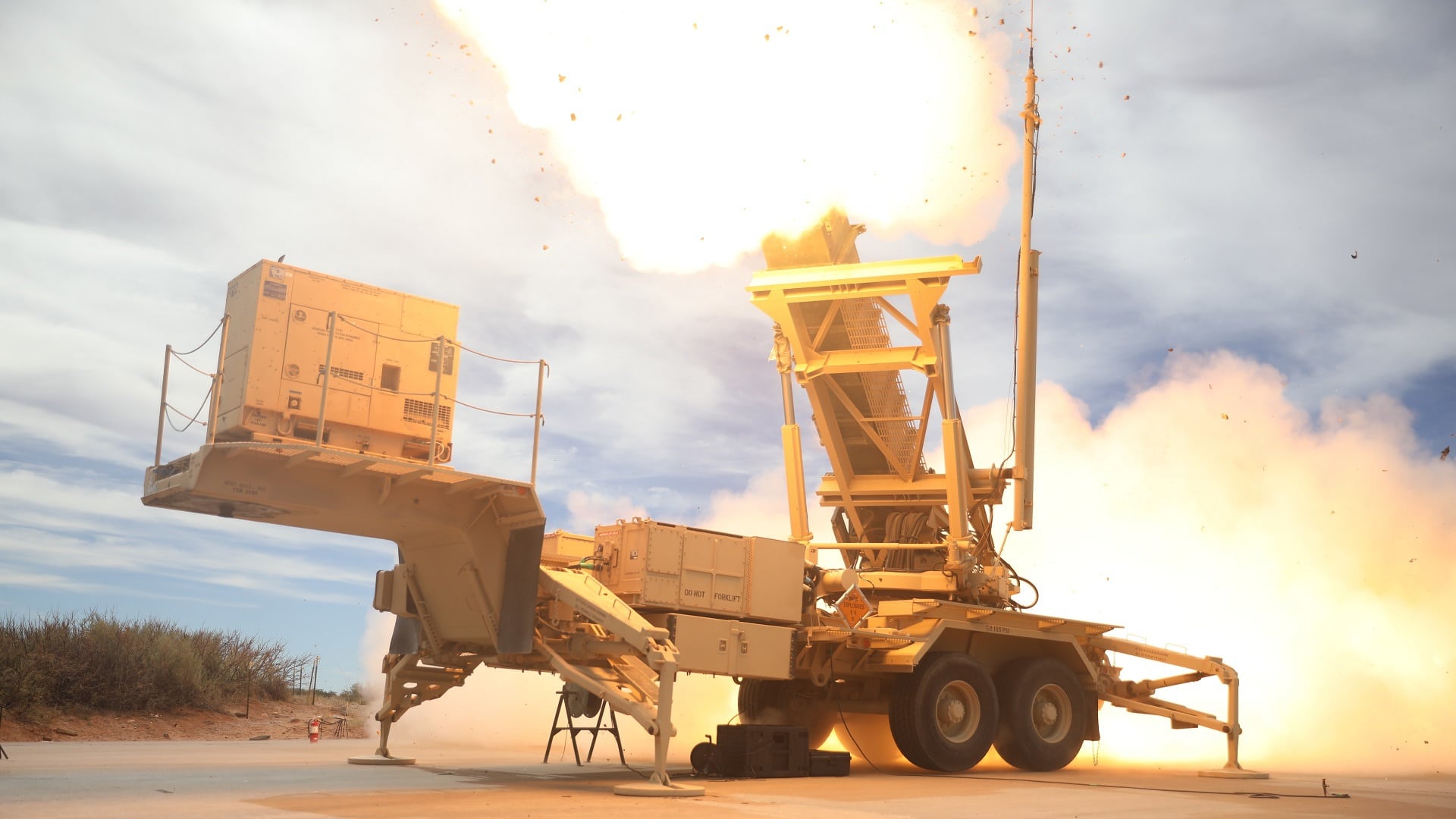
Patriot Missile. Image Credit: Creative Commons.

Exercise Artemis Strike is a German-led tactical live fire exercise with live Patriot and Stinger missiles at the NATO Missile Firing Installation in Chania, Greece from Oct. 31-Nov. 09. Over 200 U.S. soldiers and approximately 650 German airmen will be participating in the realistic training within a combined construct, exercise the rigors associated with force projection and educate operators on their air missile defense systems. The 10th Army Air Missile Defense Command will deploy, operate and fire live missiles within a tactical scenario, under Supreme Headquarters Allied Powers Europe operational readiness evaluation criteria.

German soldiers assigned to Surface Air and Missile Defense Wing 1 fire the Patriot weapons system at the NATO Missile Firing Installation (NAMFI) during Artemis Strike Nov. 7 in Chania, Greece. Artemis Strike is a German-led multinational air defense exercise. German soldiers Over 200 U.S. soldiers and approximately 650 German airmen will be participating in the realistic training within a combined construct, exercise the rigors associated with force projection and educate operators on their air missile defense systems. (Photo By Officer Candidate Sebastian Apel, Air Defence Missile Group 24)
Estimates Show It May Take Years For The US To Replenish
Late last month, the Center for Strategic and International Studies (CSIS) released an analysis on military contractors and stated that it may take up to three years for the United States to replenish its missile stockpiles, just to get them back to where they were when the current conflict began.
“The United States has enough munitions for any plausible scenario in the Iran war, but the depleted inventories have created a window of vulnerability for a potential Western Pacific conflict,” CSIS wrote. “The time needed to rebuild those inventories has thus become a major concern.”
But the Pentagon realizes that the inventory must be built well beyond pre-Operation Epic Fury levels to conduct future operations, especially in the Indo-Pacific region.
Large munitions procurement in the Trump administration’s $1.5 trillion FY 2027 defense budget reflects the concerns with missile inventories.
RTX Is Increasing The Production Of Tomahawk Cruise Missiles
The U.S. military has an estimated stockpile of roughly 4,000 to 4,150 Tomahawk cruise missiles. While thousands have been procured over the past three decades, significant numbers have been expended in combat, and production remains low, with only 87 new missiles requested in the 2026 budget.
The estimated 850 missiles already fired constitute 25 percent of the current US inventory in just five weeks of combat operations. That rate of usage is unsustainable and raises concerns about an “empty rack” scenario if a situation unfolded in the Indo-Pacific involving China, which is certainly monitoring this situation with interest.
Currently, the U.S. produces approximately 90 to 100 Tomahawk cruise missiles per year, with recent procurement planned for 2026 at around 57 to 60 units. Due to surging demand, RTX (Raytheon) is increasing production, with long-term plans to boost annual output to over 1,000.
In 2024, Japan ordered 400 Tomahawks to equip its destroyers with land attack capabilities.
Annual production of SM-6 – the Navy’s versatile missile that can down ballistic threats, conduct maritime strikes, and is now being fitted as an air-to-air capability on F/A-18 Super Hornets – will be bolstered to over 500 units.
Alex Hollings of Air Power posted on “X” the production surges expected by the United States over the next couple of years, not just the Tomahawk, but the JASSM/LRASM, AMRAAM, PAC-3 MSE, THAAD, and the SM-6.
Will Air Superiority Lessen The Need For Missiles?
While the establishment of air superiority over Iran in the air campaign allows US and Israeli forces to shift toward using manned aircraft and cheaper short-range precision munitions, the usage of missiles is not a strict necessity in order to continue to attack Iranian targets.
On March 2, three B-1B Lancer bombers flew combat missions over Iran. The “BONE” can carry a large number of long-range cruise missiles, including variants of the AGM-158 Joint Air-to-Surface Standoff Missile (JASSM), enabling it to strike from hundreds of kilometers away. That enables the bomber to contribute significant firepower without entering the highest-risk engagement areas.
The B-1B in a “bomb truck” mode can carry an incredible 75,000 lbs (34,019 kg) internal + 50,000 lbs (22,679 kg) external, totaling 125,000 lbs of ordnance.
Air superiority over Iran allows for greater flexibility, and the ongoing nature of the conflict suggests that the “heavy hammer” role of other ordnance will remain vital.
Alternative Weapons For Air Strikes
Mark Cancian from the Center for Strategic International Studies spoke with Military Times about the cost differential once air superiority was reached.
He said, “A Tomahawk costs something like $3.5 million apiece and has a range of 1,000 miles, depending on the version.”
“A JDAM, which is a guidance kit put on a dumb bomb, has a range of maybe 20 miles, but costs $80,000 and has the same explosive effect and the same accuracy. So if you can use a JDAM, much better, but that means you have to get close.”
A JDAM is accurate to within 5-30 meters and is produced on 500-lb, 1,000-lb, and 2,000-lb bombs.
Other weapons with more than enough inventories include the Joint Air-to-Ground Missile (JAGM): The JAGM is replacing the Hellfire as an air-launched munition for attack helicopters and Reaper-like drones to target ground targets.
Small Diameter Bomb (SDB) I and II: The SDB I and SDB II are air-launched, precision-guided glide bombs. SDB II allows attacks on moving targets.
US inventories are low for its attack missiles, but especially its air defense missiles. While it has the inventory to continue, missile production needs to increase exponentially. The job in Iran is far from finished.
About the Author: Steve Balestrieri
Steve Balestrieri is a National Security Columnist. He served as a US Army Special Forces NCO and Warrant Officer. In addition to writing on defense, he covers the NFL for PatsFans.com and is a member of the Pro Football Writers of America (PFWA). His work was regularly featured in many military publications.


telangpu chuanpu
June 10, 2026 at 11:18 am
So, What useful thing has china learned from the iran war.
Useful lesson is That the US is like the great white shark.
Once it starts biting, it won’t ever let go until the victim is dead and lifeless.
For china, the US would behave 1,000 times (10,000x ?) more ruthless or more deadly, compared to iran.
Against china, US would use B-1 or b-2 to launch long-range missiles like the LRSO, which has already undergone numerous highly secret testing.
A LRSO strike against the three gorges dam, would easily result in the deaths of several hundred million people within a 24-hour period.
That’s why china would surely face a fate 1,000 times worse compared to iran, in case of war.
But How, H-O-W, to prevent US, from attacking in the first place.
By deploying a nuke arsenal in space that can hold US cities at risk of suffering immense utter detruction should the US military initiate its attacks.
Fred Adams
June 10, 2026 at 12:30 pm
I’d think so important a question as missile inventory, depletion rates, production capacities would be a tightly guarded secret. Loosing that info cedes a powerful strategic lever. Does anybody really know what time it is?