

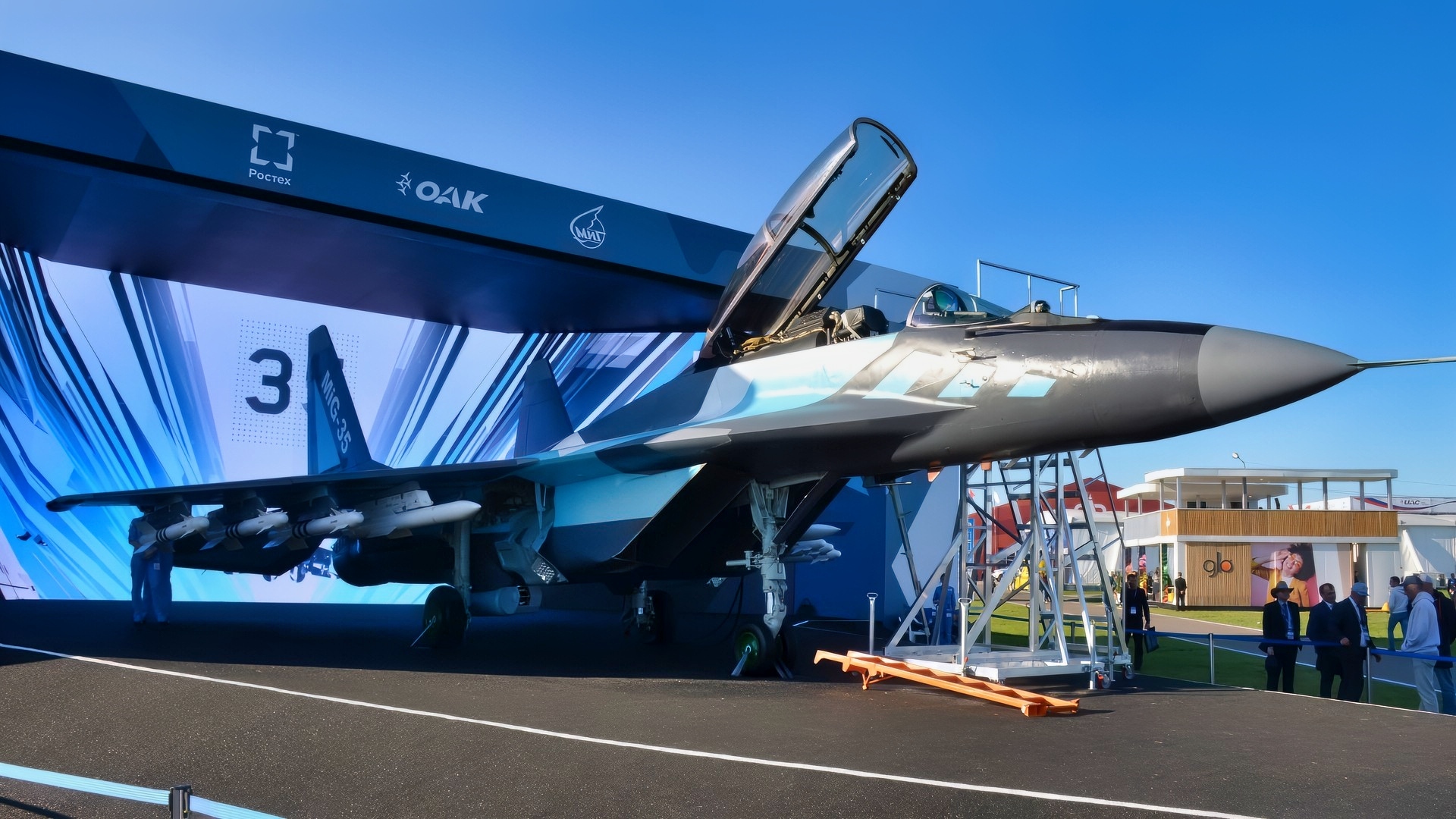
Last year, I got really close to a MiG-29 fighter at the National Museum of the U.S. Air Force. As a kid growing up in the 1980s and studying anything aviation at the time, I was pretty awestruck seeing this old-school Soviet fighter. I have included some pictures of the visit and a video. However, I kept thinking, where is the MiG-35? Well, it was built, but the numbers mean the supposed elite fighter might never get its due.
MiG-35 Fighter: The Numbers Problem Won’t Go Away
Roughly six. After two decades of air-show debuts, government showcases, export campaigns on three continents, and promises of orders in the dozens, that is the approximate number of serial MiG-35 fighters ever delivered to anyone.
The design bureau that armed half the world across the Cold War, whose name became the generic Western term for a Soviet fighter, spent twenty years selling its final jet and produced fewer airframes than a single American squadron operates on a slow Tuesday.
The MiG-35’s story is worth telling in full because almost every failure that has hollowed out Russia’s aerospace industry shows up in it somewhere.
From MiG-29M To MiG-35: A Rebranding Born At Aero India 2007
The MiG-35 began as a new name attached to familiar hardware. By the mid-2000s, Mikoyan had spent years refining the MiG-29 into the modernized MiG-29M and the carrier-borne MiG-29K, and when India announced a massive fighter competition, Russia applied the MiG-35 designation to the advanced MiG-29M lineage and aimed it squarely at the Indian tender.
After prototype showings in Russia and the UK, the jet made its first full international display at Aero India 2007 in Bengaluru, chosen deliberately because the customer Mikoyan wanted most was sitting in the audience.
The logic was sound as far as it went. India had already flown MiG-29s; its navy was buying MiG-29Ks for its carriers, and a familiar airframe with modern insides offered an easy transition. The flaw buried in the approach would take years to surface: the MiG-35 was conceived as an export product first, with no committed launch customer at home, which meant every foreign buyer evaluating it could see that the Russian Aerospace Forces had not put their own money behind the jet.
Zhuk AESA Radar, OLS, And The 4++ Generation Promise
On paper, the airplane deserved better than what happened to it. Mikoyan marketed the MiG-35 as a “4++ generation” fighter, and the specification sheet backed the label.
It offered the first active electronically scanned array radar pitched on a Russian fighter, paired with a distinctive optical locator system that let the jet find and engage targets while emitting nothing, reducing its dependence on the ground-controlled interception network that had constrained Soviet fighter operations for decades.
It carried a glass cockpit, fly-by-wire flight controls, and compatibility with both Russian and foreign weapons, with the spectacular thrust-vectoring engines of the MiG-29OVT demonstrator available as an option.
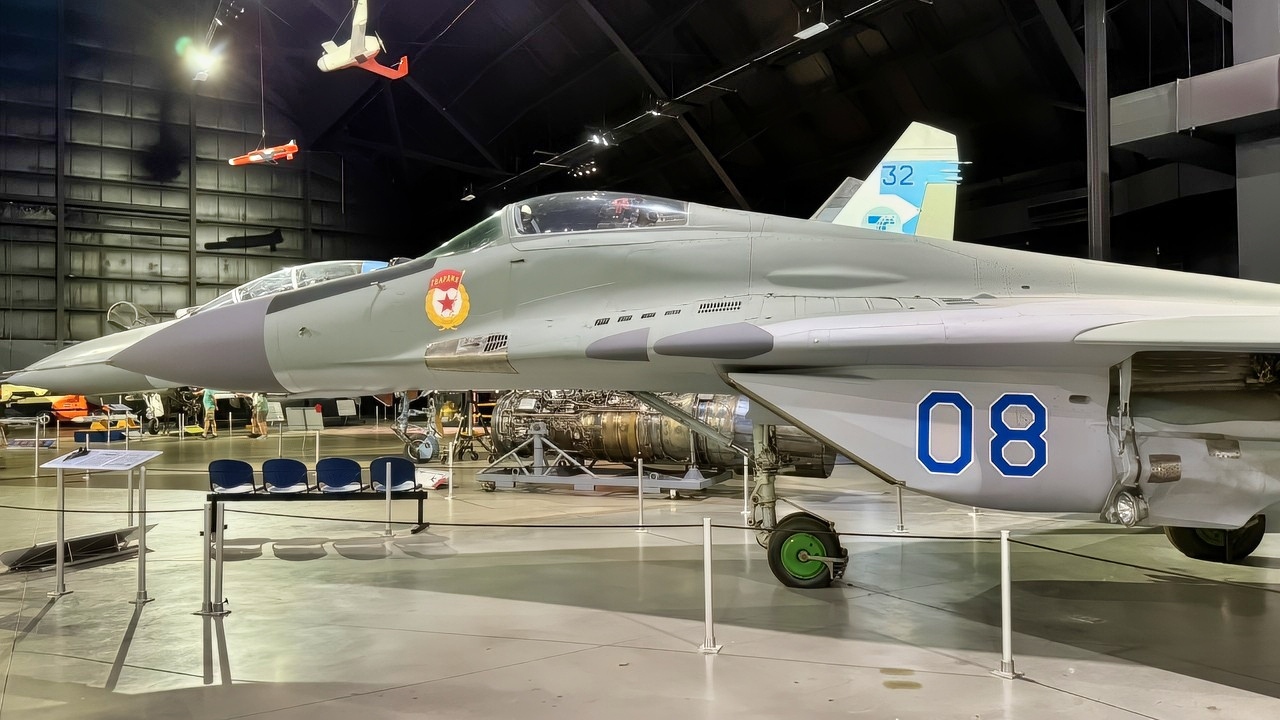
Real MiG-29 at USAF Museum in Dayton. Image Credit: National Security Journal.

MiG-29 Fighter U.S. Air Force Museum July 2025. Image Credit: National Security Journal.
The engines told the same story of real engineering progress. The uprated Klimov RD-33MK addressed the smoky, maintenance-hungry powerplants that had dogged the original MiG-29, drawing on modern industrial processes and newer materials for more thrust and cooler-running turbines. A planned thrust-vectoring production variant was eventually dropped over weight and cost, but the core package remained a genuinely capable multirole fighter, cheaper to buy and operate than the heavyweight Sukhois, pitched at air forces that wanted modern capability without a Flanker’s bills.
Losing India’s MMRCA: The $11 Billion Defeat
The competition the MiG-35 was invented for became the scene of its defining failure. India’s Medium Multi-Role Combat Aircraft program, formally launched in August 2007, put 126 fighters and roughly $11 billion on the table and drew six contenders: the F-16, the F/A-18E/F Super Hornet, the Gripen, the Eurofighter Typhoon, the Rafale, and the MiG-35. For Mikoyan, it was close to an ideal setup, with an existing MiG-29 operator, a historic defense relationship with Moscow, and a jet tailored to the requirement.
India flew the trials starting in 2009 and eliminated the MiG-35 in 2011, with the reported deficiencies landing on the radar and the engines, the two systems at the heart of the sales pitch. The AESA radar that headlined the brochure was immature in testing, and the demonstrators sent to India leaned heavily on hardware carried over from the naval MiG-29K program.
The Rafale ultimately took the prize. Losing a competition is survivable for a fighter program; losing on the performance of your signature technology, in front of every other potential customer on earth, proved far harder to recover from, and the MiG-35 never did.
Egypt, Bangladesh, And An Export Order Book Of Zero
What followed was a decade of near-misses that all broke in the same direction. Egypt emerged as the most serious prospect, discussed buying two dozen MiG-35s, and then in 2015 settled a roughly $2 billion contract for 46 MiG-29M-family fighters instead. Cairo examined Mikoyan’s newest offering and chose the older, proven configuration from the same factory, in what became the largest MiG-29 order since the Soviet collapse.
The episode left a lasting bit of confusion in its wake, since the Egyptian jets were sometimes described as MiG-35s in early reporting even though they were MiG-29M2s, a muddle that says something about how thin the line between the two products always was. Bangladesh reportedly showed interest but could not assemble the funding. Other prospects circled and drifted away. Over nearly 20 years of marketing, the MiG-35’s confirmed export orders totaled zero.
The pattern fed on itself. Foreign air forces watching Moscow decline to buy the jet in quantity drew the obvious conclusion, and the thin production run meant no economies of scale, no combat record, and no established user community to reassure the next buyer. Meanwhile, the same Russian export machine was successfully selling Su-30 variants by the dozen, which told customers exactly which product the home team believed in.
Moscow’s Vanishing Order: 37 Becomes 24 Becomes Six
The Russian government’s own commitment shrank in public, in stages. Early plans envisioned 37 aircraft, trimmed to 24, and ultimately to just six. The sequence ran as follows: Mikoyan staged a high-profile demonstration of the jet to the Russian government in January 2017, the defense ministry announced that year that it would buy 24 under the state armament program running to 2027, and the actual contract that followed in 2018 covered six airframes.
The first two serial jets reached the Russian Aerospace Forces in June 2019, the same year the aircraft was shown to Vladimir Putin at the MAKS air show in a revised export configuration. A planned follow-on contract for 14 more never arrived.
The VKS treated its six MiG-35s accordingly. The type never became a priority for crews, spares, or development funding, and production at the Sokol plant slowed to a crawl. Counting test airframes, the entire MiG-35 population has remained under ten aircraft, a figure that explains everything else about the program’s fate.
Sukhoi, UAC, And The End Of Mikoyan As A Fighter House
The deeper cause of the MiG-35’s failure lies in Russia’s industrial politics. The mid-2000s consolidation of the country’s aircraft makers into the United Aircraft Corporation put Mikoyan and Sukhoi under a single roof, and inside that structure, Sukhoi won every fight that mattered.
The defense ministry’s fighter budget flowed to the Su-30SM, Su-34, Su-35, and the fifth-generation Su-57, all of which received real orders, real production runs, and combat employment. Russian trade-press accounts describe what happened to Mikoyan in the same years: a thinning engineering bench, talent migrating to its in-house rival, and aging production facilities without investment. The order books tell the rest of the story plainly enough — Sukhoi built hundreds of fighters in the MiG-35’s lifetime, and Mikoyan built six.
That is the historical weight this airplane carries. The bureau behind it once measured production runs in the thousands, armed dozens of air forces across half a century, and gave its name to the entire category of Soviet fighters in Western usage. Its final original fighter product reached series production in single digits. Whatever the MiG-35’s technical merits, the organization needed to build, support, market, and improve it, but it had already been gutted by the time the jet was ready to sell.
The Ukraine War Coda And The Program’s Status In 2026
The full-scale war in Ukraine briefly looked like it might rescue the program, since Russia’s air force needed replacement aircraft and the MiG-35 line nominally existed. In late 2023, the general designer of United Aircraft Corporation, Sergei Korotkov, told RIA Novosti the MiG-35 was already participating in all the operations then underway.
A fleet smaller than a single squadron makes that statement difficult to square with reality — individual jets may have flown sorties, but analysts noted the type’s limited production numbers prevented any significant impact on the conflict, and the revival talk never translated into airframes.
The sanctions that followed the invasion then closed off whatever slim recovery path remained, constricting the supply chains a production restart would have required. As of mid-2026, the program persists on paper, the handful of jets remain in Russian service, and current reporting treats the MiG-35 as a footnote that has faded from serious consideration.
The MiG-35 failed because it was a sales brochure in search of a customer, launched by a dying bureau, inside a state that had already chosen Sukhoi, and every air force that examined it could see all three facts plainly. Twenty years after Bengaluru, the jet that was supposed to carry the most famous name in fighter aviation into a new century stands instead as the marker of where that name effectively ended.
The MiG-35: A Collection of Photos
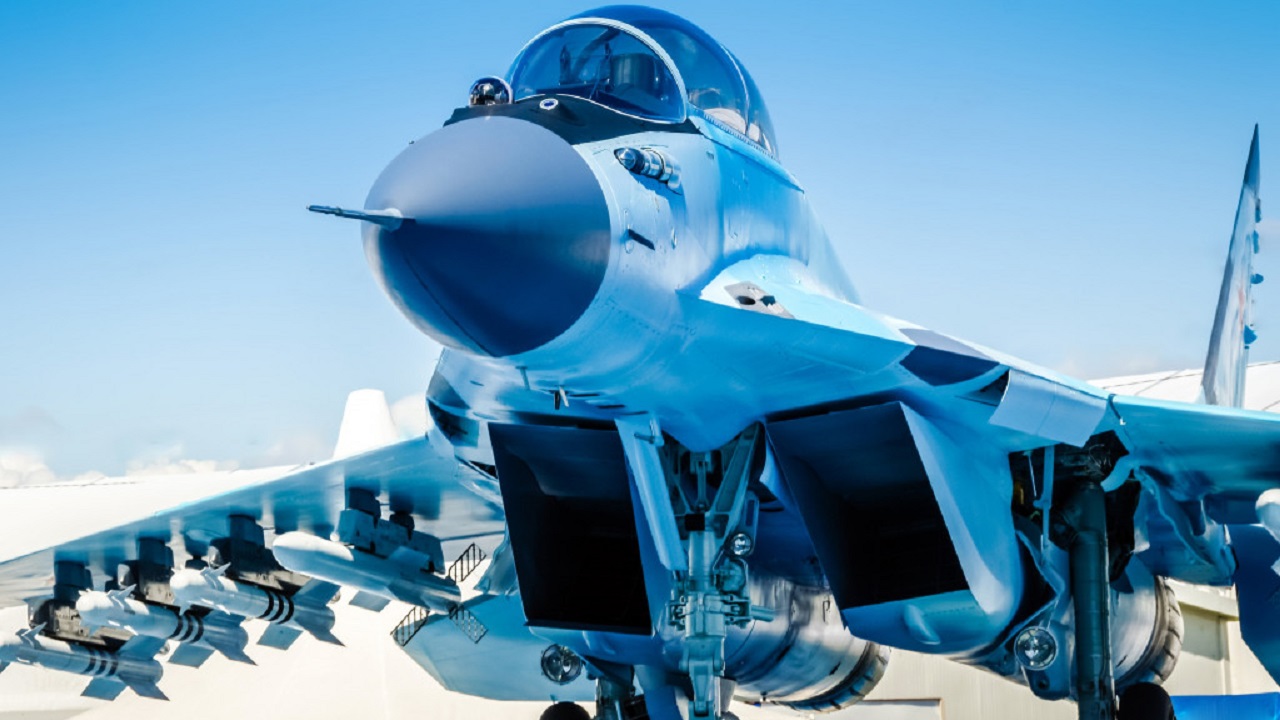
MiG-35 Fighter Creative Commons Image.

MiG-35 Creative Commons Image.
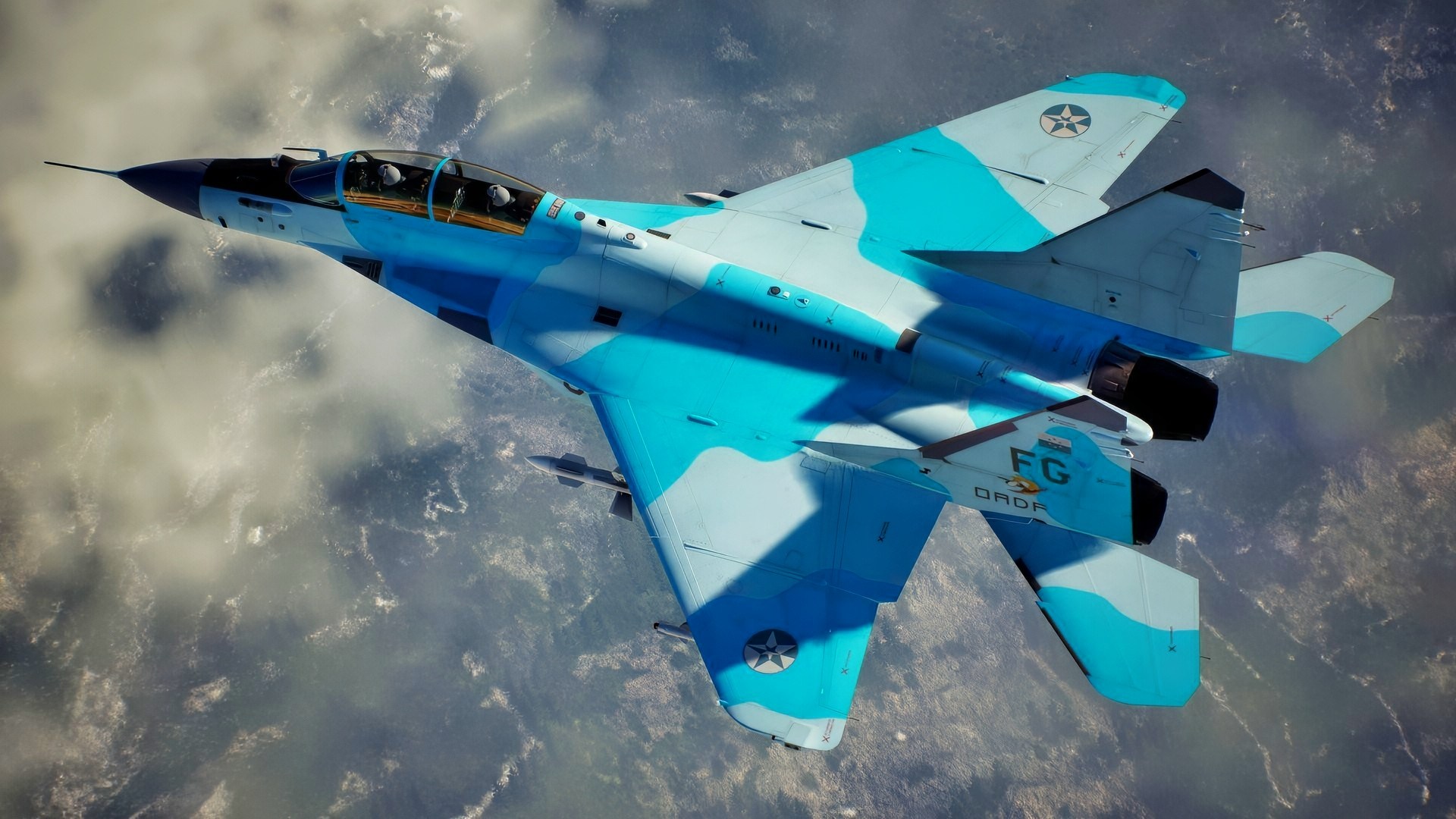
MiG-35 Fighter Creative Commons Image.
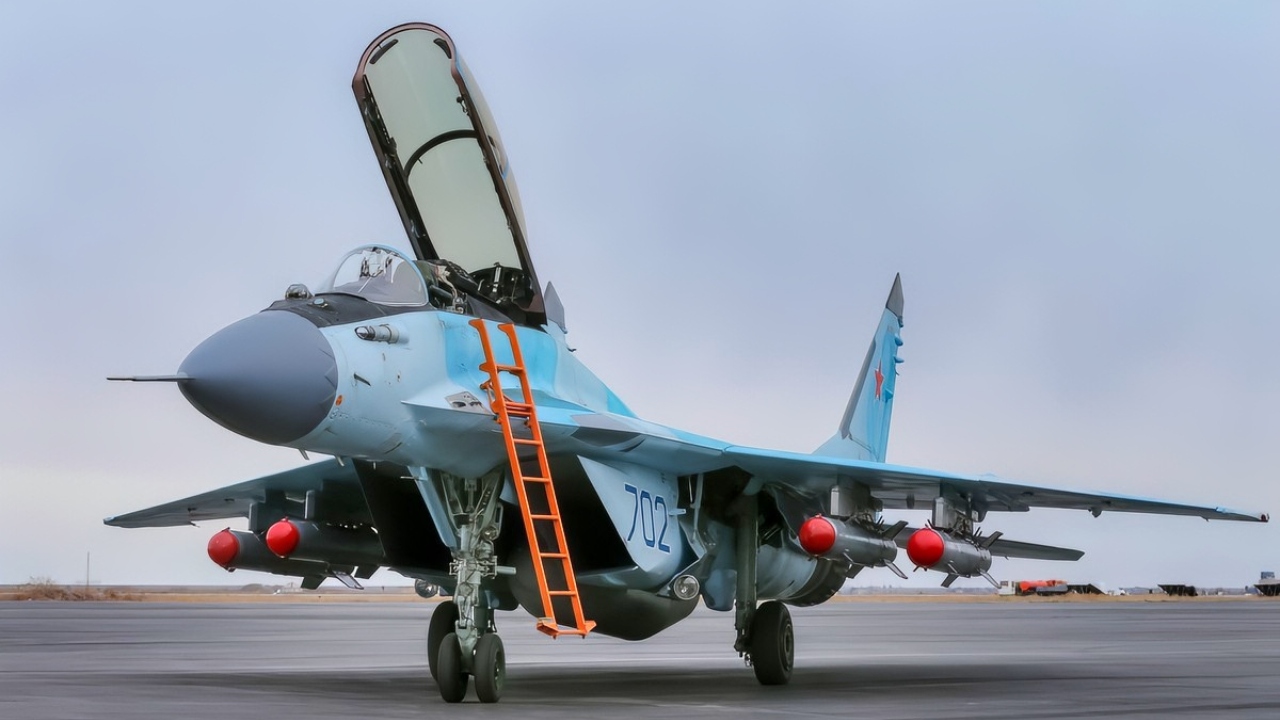
MiG-35 On the Runway. Image Credit: Creative Commons.
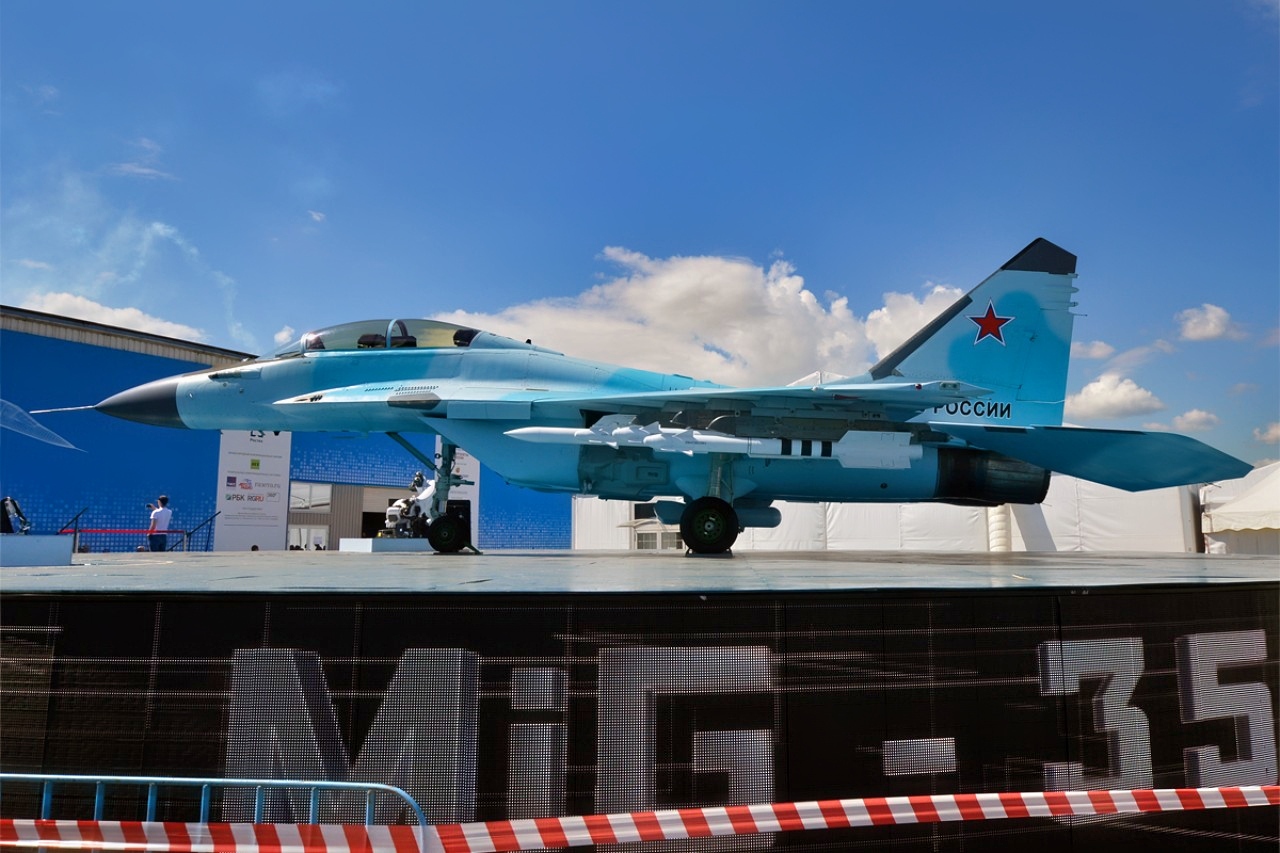
MiG-35. Image Credit: Creative Commons.
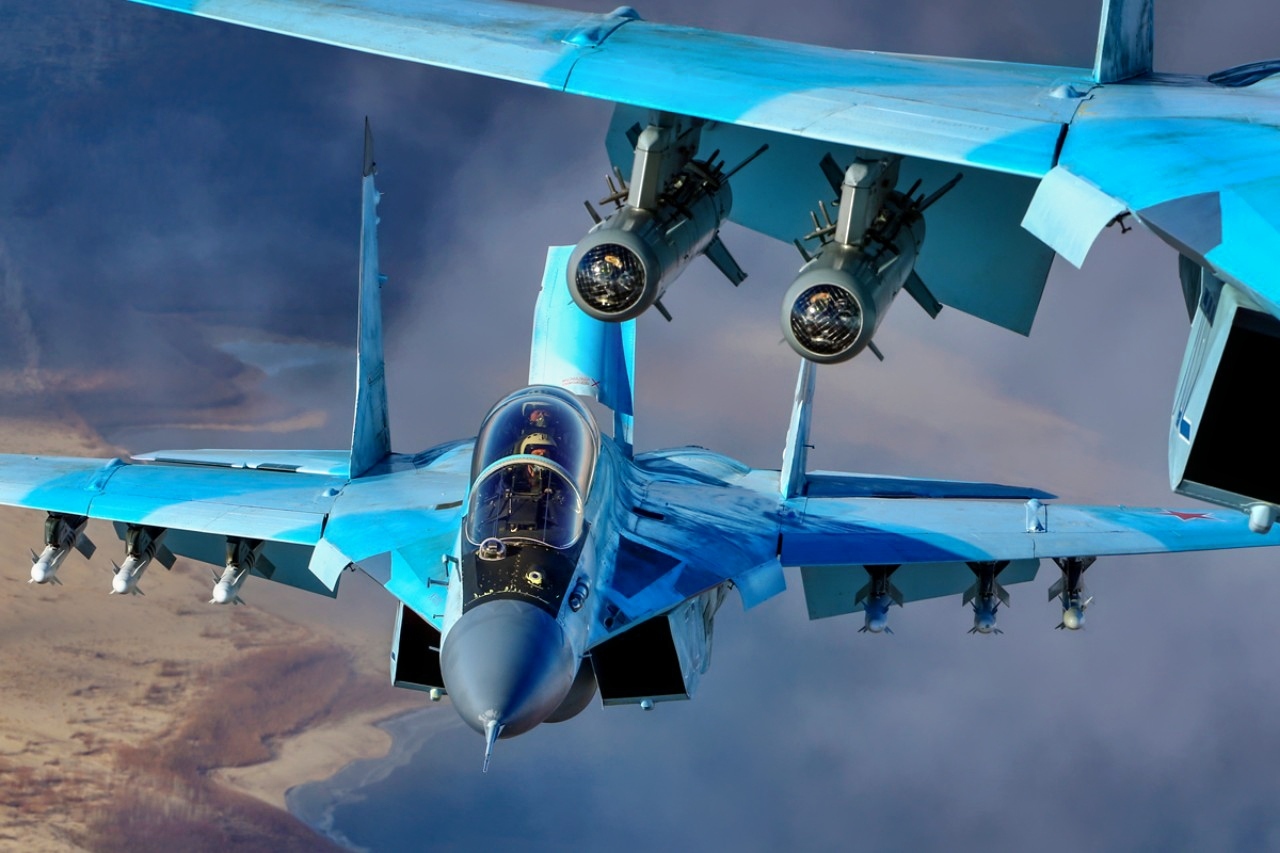
MiG-35 Fighters from Russia. Image Credit: Creative Commons.
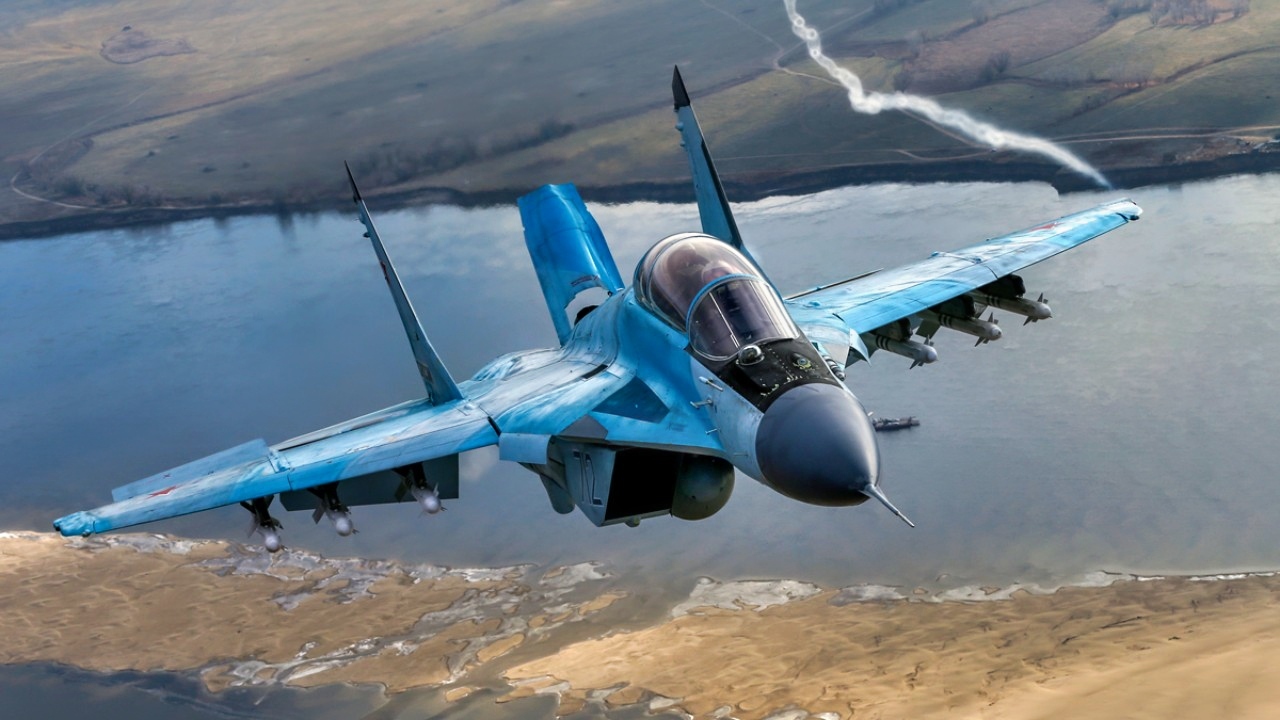
MiG-35 Russian Air Force Fighter. Image Credit: Creative Commons.
About the Author: Harry J. Kazianis
Harry J. Kazianis (@Grecianformula) was the former Senior Director of National Security Affairs at the Center for the National Interest (CFTNI), a foreign policy think tank founded by Richard Nixon based in Washington, DC. Harry has over a decade of experience in think tanks and national security publishing. His ideas have been published in the NY Times, The Washington Post, The Wall Street Journal, CNN, and many other outlets worldwide. He has held positions at CSIS, the Heritage Foundation, the University of Nottingham, and several other institutions related to national security research and studies. He is the former Executive Editor of the National Interest and the Diplomat. He holds a Master’s degree focusing on international affairs from Harvard University.


