


Area 51 has long captured the imaginations of Americans since the original claims that the US military allegedly captured a “flying saucer” from another world here. Since that time, the public has fixated on understanding what secrets are located beneath and around the sands of Groom Lake.
One of the most well-defended facilities in the world, Area 51’s most important function is not so much its place in Pop Culture as an alien crash-landing site. Instead, its importance lies in being a proving ground for some of the most advanced, exotic US military systems and weapons.
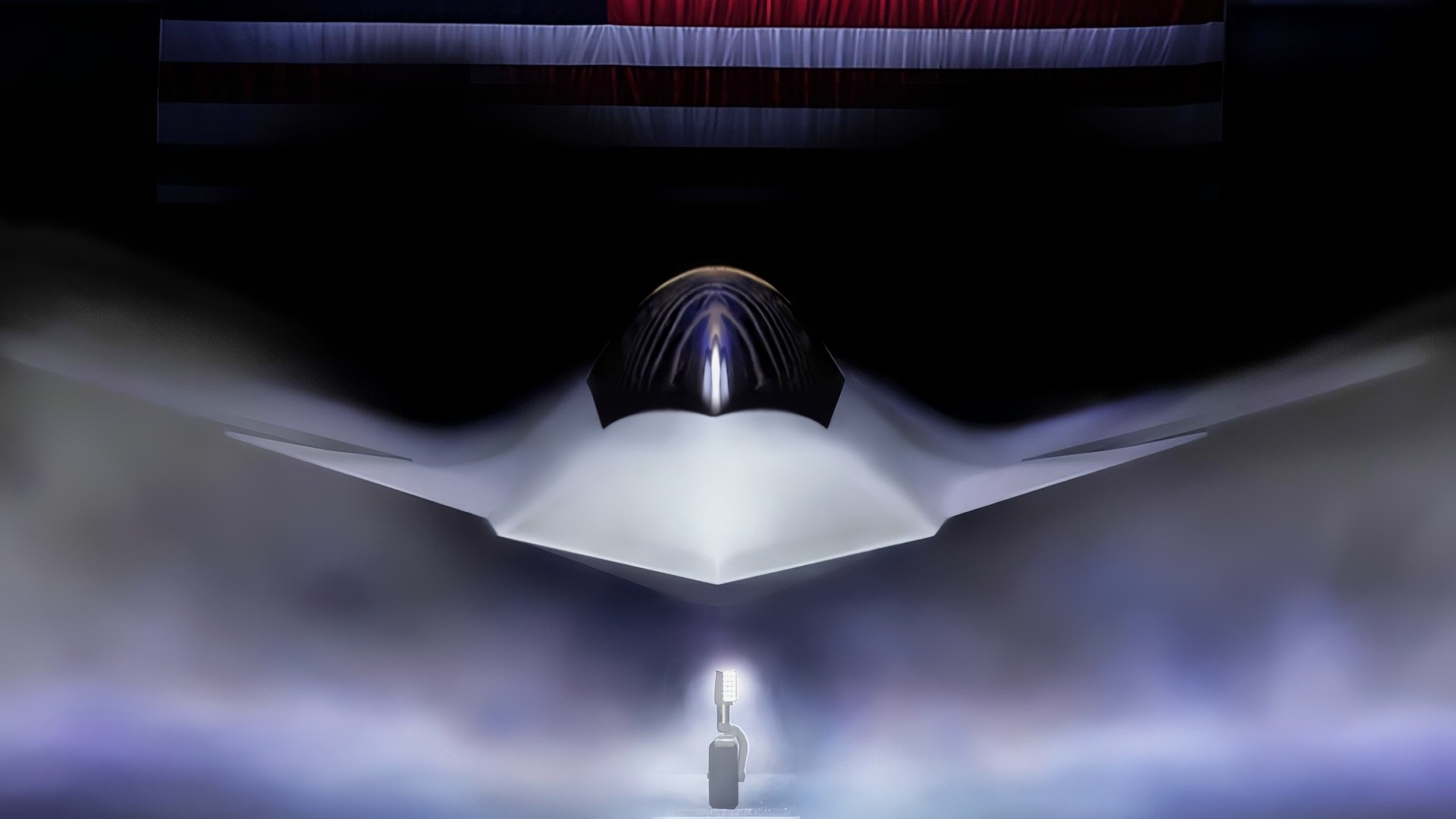
Shown is a graphical artist rendering of the Next Generation Air Dominance (NGAD) Platform. The rendering highlights the Air Force’s sixth generation fighter, the F-47. The NGAD Platform will bring lethal, next-generation technologies to ensure air superiority for the Joint Force in any conflict. (U.S. Air Force graphic)
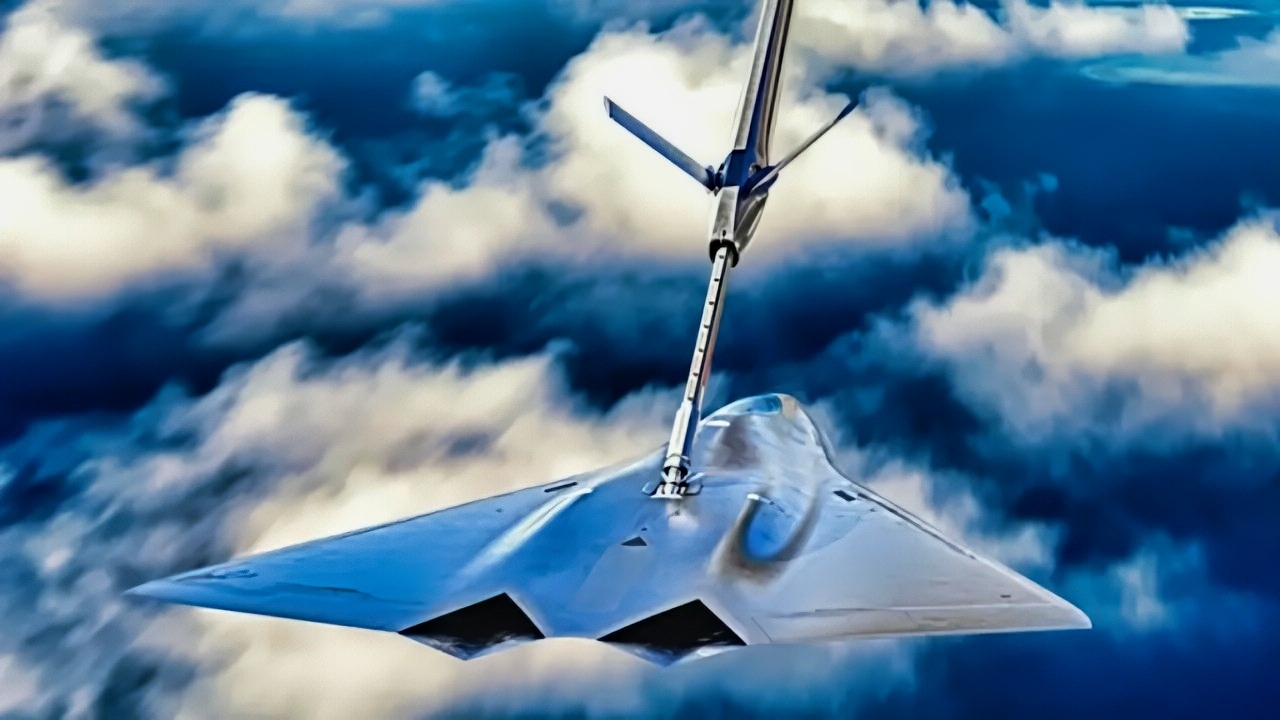
F-47 Lockheed Photo. Image Credit: Lockheed Handout.
Because of the facility’s dominance in the minds of UFO enthusiasts, there are periodically “watch parties” that form just outside of the base.
Late at night, when most people are supposed to be asleep and winding down at home, curious onlookers gather near the base to observe the darkened skies above and around the secretive military facilities. Some come armed with food. Others with walkie-talkies. Still more come with cameras. All just want to capture that one sight, however brief, of something extraordinary.
According to recent reports, those onlookers did, in fact, catch something incredible. It wasn’t aliens, though. It looked like the profile of the United States Air Force’s Next Generation Air Dominance (NGAD) plane.
Better known as the Boeing F-47, the plane is the Air Force’s sixth-generation stealth warplane. It possesses a tailless design with no visible vertical stabilizers. Concepts of the F-47 released to the public feature a “cranked-kite,” or bent-wing, planform.
The F-47 is supposed to have canards as possible forward control surfaces, too. There’s a sawtooth trailing edge similar to other stealth aircraft. Relatedly, the F-47 has an overall configuration optimized for low radar observability. Those characteristics align with years of speculation about what NGAD aircraft would look like.
And that is precisely what onlookers observed in the night skies above Area 51 recently.
The F-47
When President Donald J. Trump announced the selection of Boeing’s NGAD as the Air Force’s sixth-generation warplane last year, USAF leaders indicated that experimental aircraft related to this next-generation system had already secretly flown hundreds of flight hours. What we’re seeing in the skies above Area 51 today is likely the result of a design evolution that stretches back a decade (or longer).
There’s a chance, then, that whatever was imaged in the skies above Area 51 was not a brand-new aircraft on display. Instead, what was viewed was likely the culmination of years of secret testing in the desert. That’s significant because it suggests America’s sixth-generation fighter development program is much more mature than many outsiders assumed.
What’s most interesting about the plane itself, at least the vehicle that snapped above Area 51 on thermal imaging, is its shape. Virtually every modern US fighter uses vertical tails. Vertical tails provide stability and maneuverability. They also create radar reflections. If engineers can eliminate them while retaining control authority through software, thrust vectoring, and advanced flight controls, radar observability improves drastically.
Indeed, the elimination of vertical tails for greater stealth has long been one of the major design goals of the Air Force’s sixth-generation warplane program. The challenge that engineers have long faced is overcoming the inherent instability of tailless planes.
Thanks to advances in computer science since the 1980s, though, aerospace engineers working for the US military can now create a viable warplane without a vertical tail. That’s because engineers can install a series of advanced flight computers on the F-47 to make thousands of flight corrections per second.
Existing US stealth systems, such as the B-2 Spirit, have similar capabilities. But the newest flight-control computers that would find their way into the F-47 are light-years ahead of the existing systems installed on American stealth planes.
The Boeing Connection
Boeing has been experimenting with tailless designs for decades. For instance, the little-known Boeing Bird of Prey flew way back in the 1990s. The Bird of Prey was way ahead of its time. In fact, we saw the YF-118G up close last year. Below are photos to provide context.

YF-118G Bird of Prey at USAF Museum 2025. Image Credit: Harry J. Kazianis/National Security Journal.
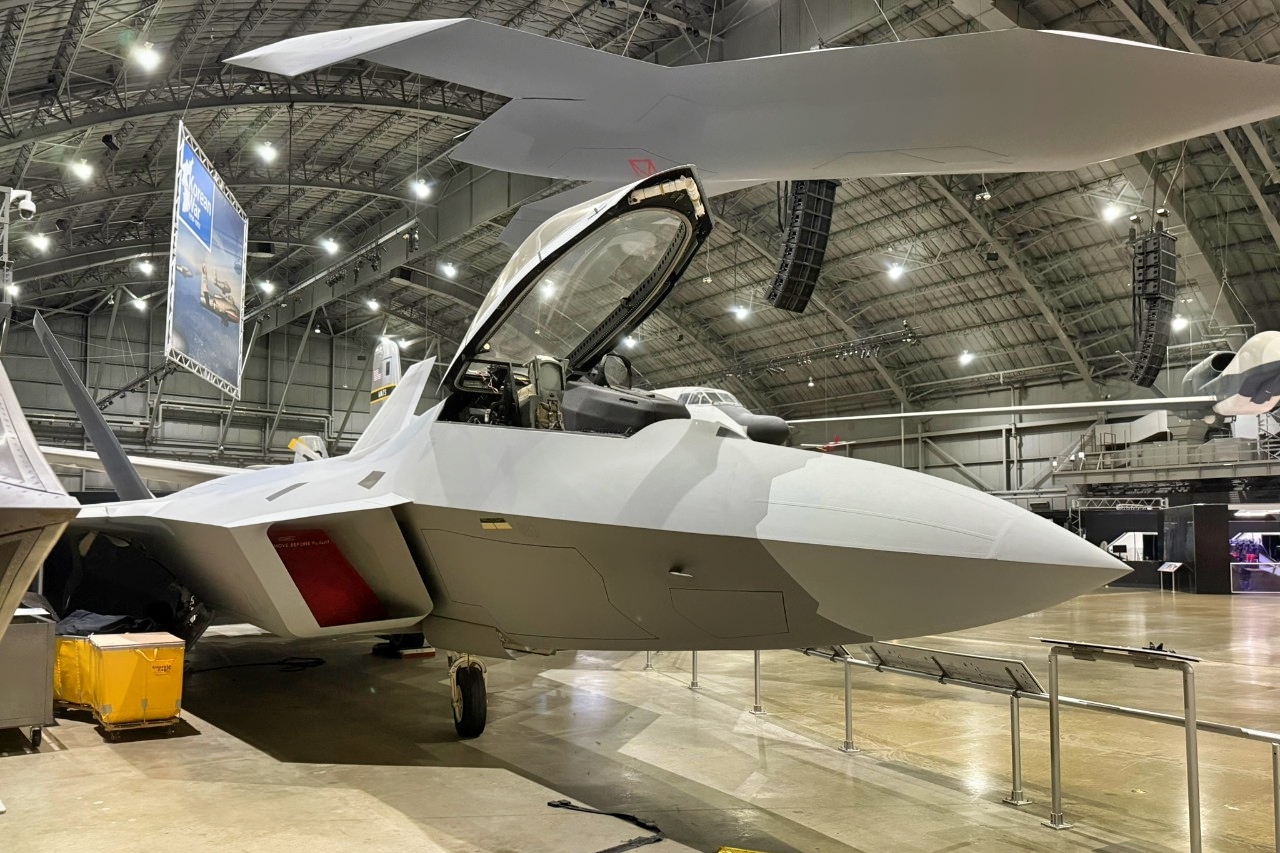
F-22A Raptor with YF-118G Overhead. Image Credit: National Security Journal.
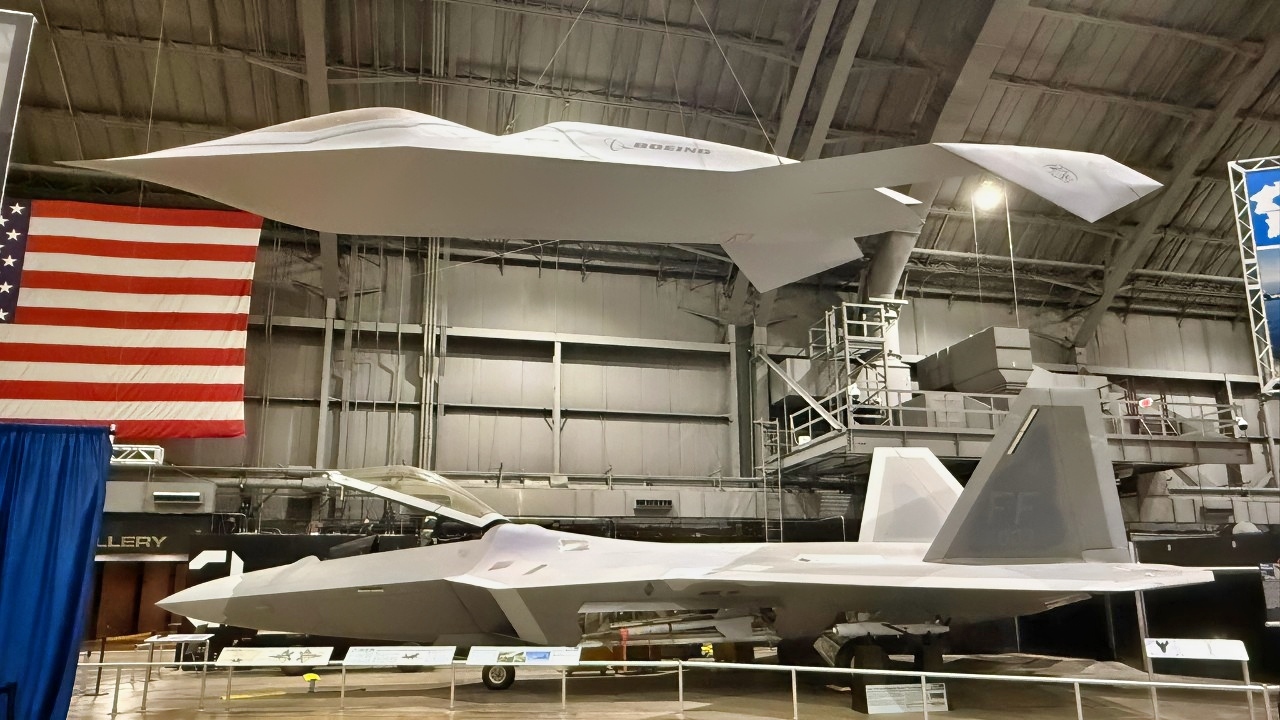
YF-118G above and F-22 Raptor Below. Image from National Security Journal.
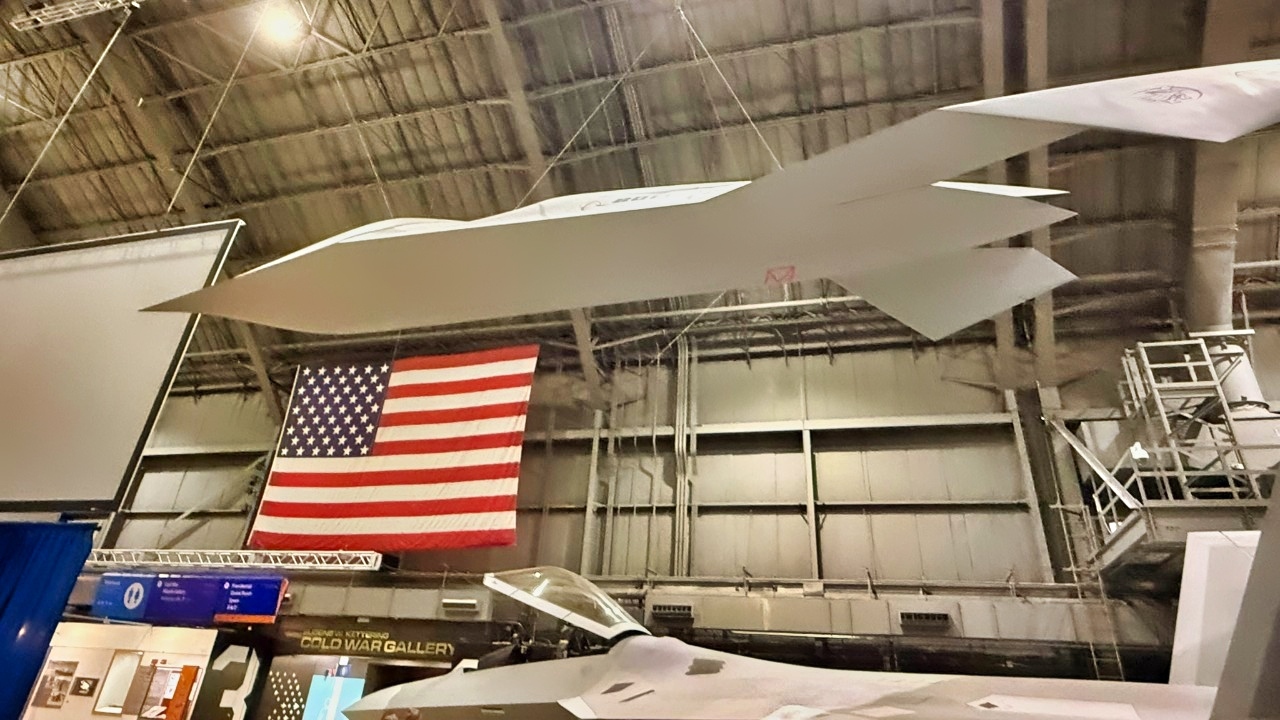
YF-118G Flying High July 2025. Image Credit: National Security Journal.
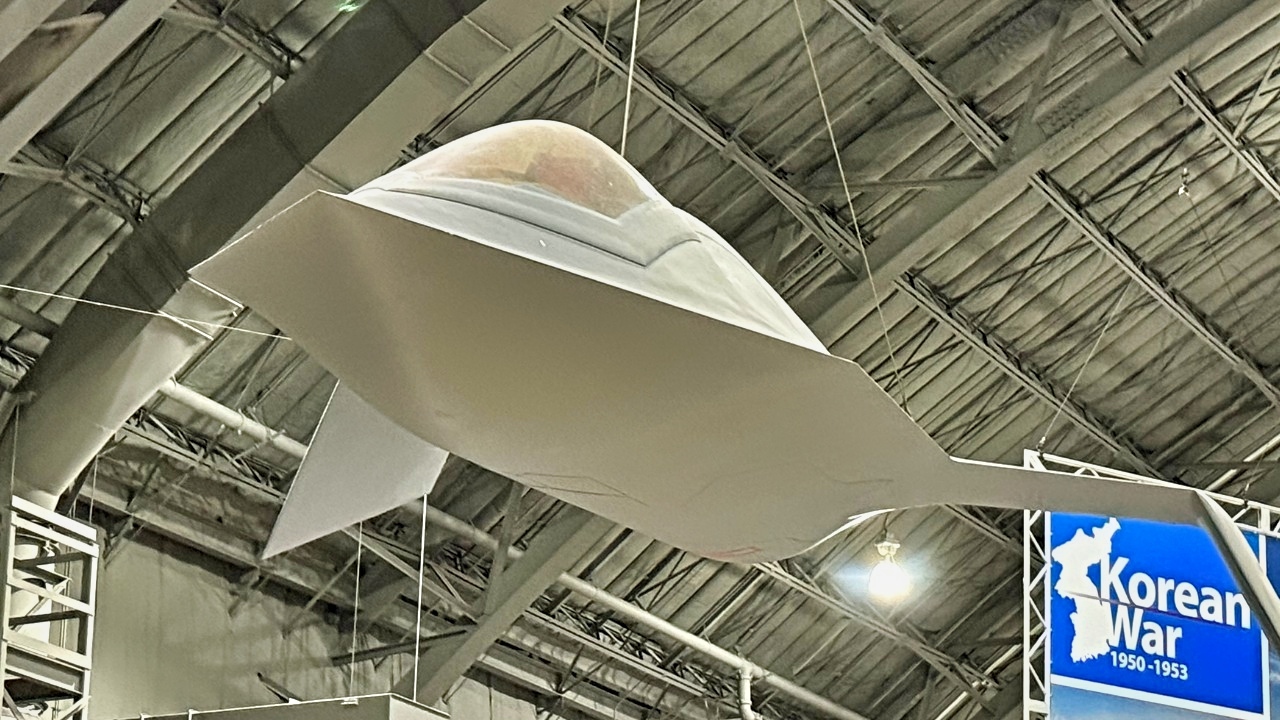
YF-118G Bird of Prey Hanging Above F-22. Image Credit: National Security Journal.
And there was no serious push to turn it into an operational aircraft. Instead, the unique Boeing Bird of Prey served as a technology demonstrator to explore low-observable shaping and advanced flight controls.
The lessons Boeing learned from that program were undoubtedly folded into future designs, likely even the newest design of the F-47 sixth-generation warplane.
Boeing’s X-36 took that concept even further, proving that a tailless aircraft could remain controllable through digital flight systems. When you combine that information with the fact that the F-47 is a Boeing product, the craft sighted recently above Area 51 is a unique departure from previous Boeing designs.
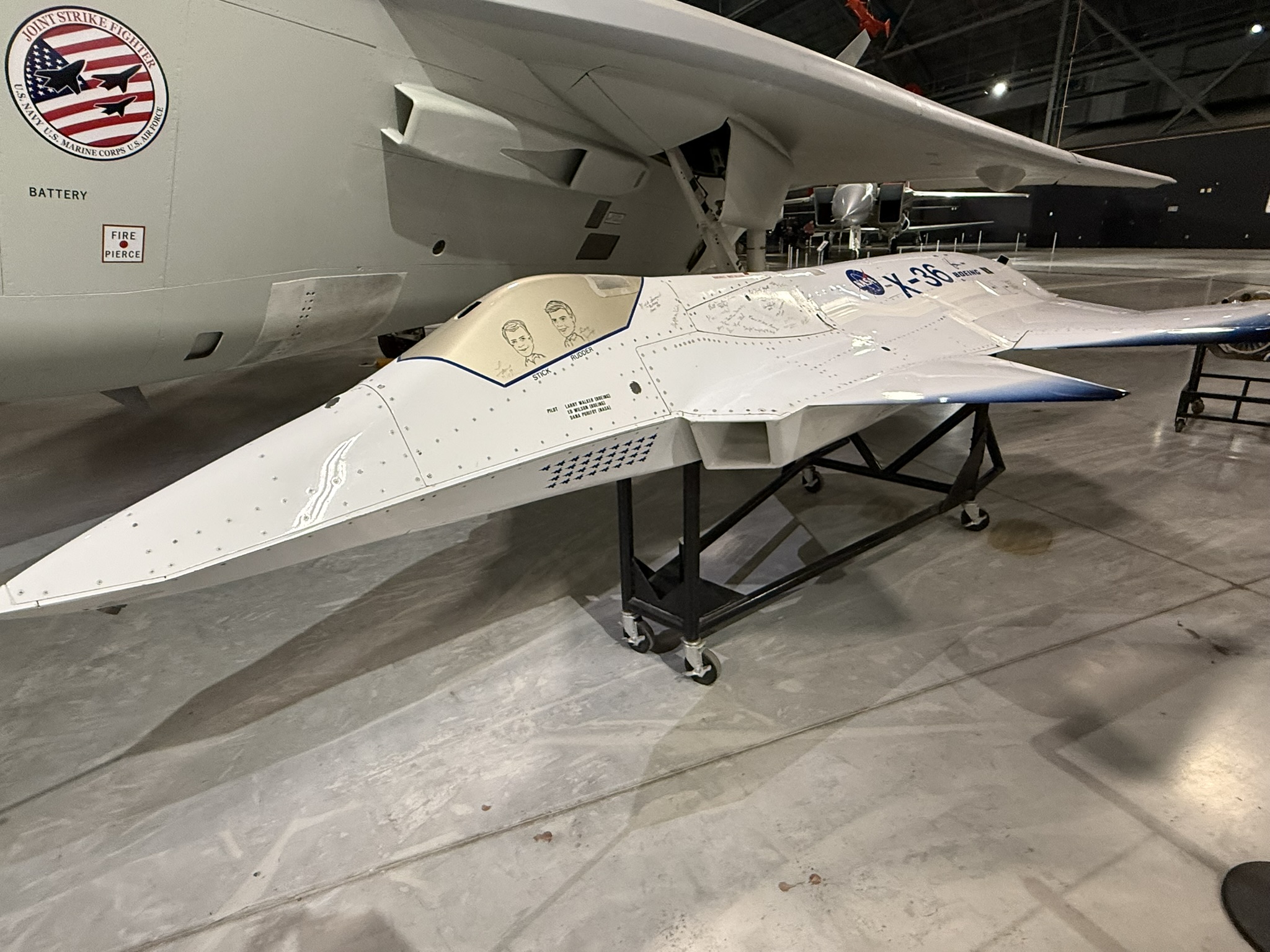
X-36. National Security Journal Image.
It is, in fact, the apotheosis of a long-running Boeing obsession with creating a viable tailless bird for the military.
Implications for the Future of Air Combat
The F-47 is not merely a dogfighter like the warplanes of old. It is a sensor node serving in an integrated manner with the wider US military in combat. Further, the F-47 is a command platform. It’s a long-range missile truck. The bird will serve as a “quarterback” for drone swarms, too. Oh, and it has the most advanced electronic warfare (EW) suite in America’s arsenal.
Boeing’s F-47 becomes the centerpiece of a combat system that includes up to eight autonomous wingmen, space-based targeting, artificial intelligence-assisted battle management, and long-range sensors to maximize survivability and enhance lethality.
That Boeing and the Air Force are demonstrating a reliable prototype–one that is likely not some new plane, but a system that Boeing has been tweaking for a while–shows you that the F-47 program is deeply integral to the way in which the Air Force intends to fight the wars of tomorrow.
The China Angle
Then there’s arguably the most important aspect of this entire story. The aspect that is glossed over by all the ra-ra of Area 51. It’s the China angle. America’s most important, long-term geostrategic challenger, the People’s Republic of China (PRC), has also demonstrated its own sixth-generation warplane capability over the last two years.
The J-36 and J-50 Chinese sixth-generation warplanes have been publicly viewed by Chinese aerospace enthusiasts. Grainy photos of these planes being tested have propagated across the internet, both inside China and globally, as curiosity (and consternation) have erupted over China’s apparent quantum leap in airpower capabilities.
Interestingly, the two suspected Chinese sixth-generation warplanes and the plane spotted by onlookers over Area 51 share similar designs. China’s planes, like Boeing’s, have tailless configurations and at least appear to be configured for advanced stealth. The Chinese birds are likely also meant for long-range operations, like Boeing’s F-47, which is designed to conduct such operations.
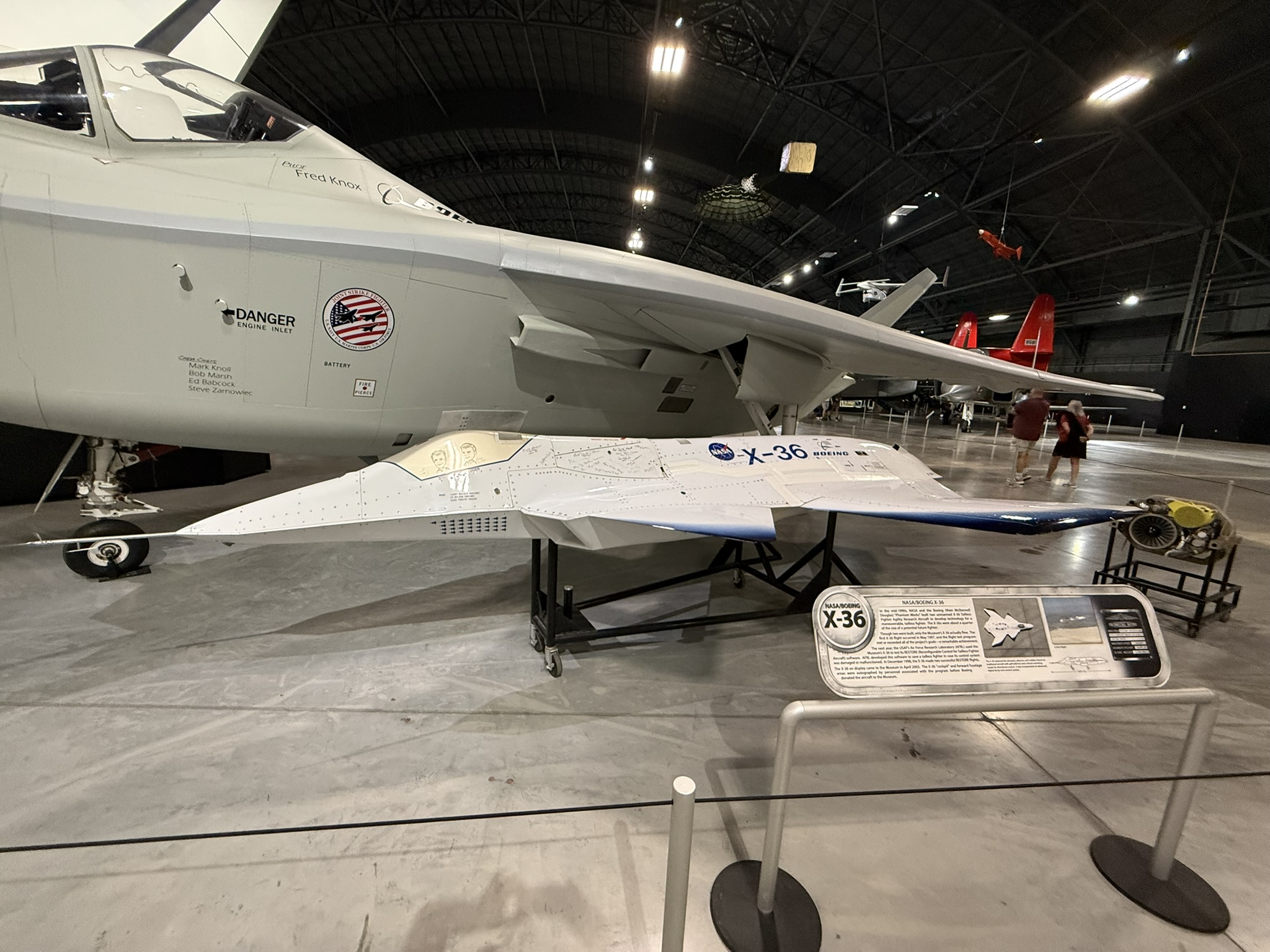
X-36. Image Credit: National Security Journal.
And, China has not shied away from the fact that its plane is involved with human-machine learning, as is the F-47.
No Longer a Real Secret
The interesting question is why this is appearing now. Historically, truly black programs remained invisible for decades. Today, commercial satellites watch test ranges. Amateur spotters, as Americans experienced at Area 51, are always around, equipped with increasingly sophisticated optics. In fact, the thermal cameras are cheaper than they’ve been in the past, meaning more people have access to them.
Oh, and the advent of AI has increased the public’s ability to spot and analyze these classified planes.
Clearly, though, the Area 51 photos demonstrate that the F-47 is part of Boeing’s broader design philosophy to create a truly unique stealth fighter with enhanced capabilities that could potentially outstrip whatever came before. And it’s mostly to better compete with China, which has been catching up significantly with American technological capabilities.
About the Author: Brandon J. Weichert
Brandon J. Weichert is Senior National Security Editor. He also manages The Weichert Brief on Substack. Weichert hosts “National Security Talk” on Rumble, too. He is the author of four bestselling national security books, the most recent of which is A Disaster of Our Own Making: How the West Lost Ukraine (Encounter Books). Follow him via Twitter/X @WeTheBrandon.


