

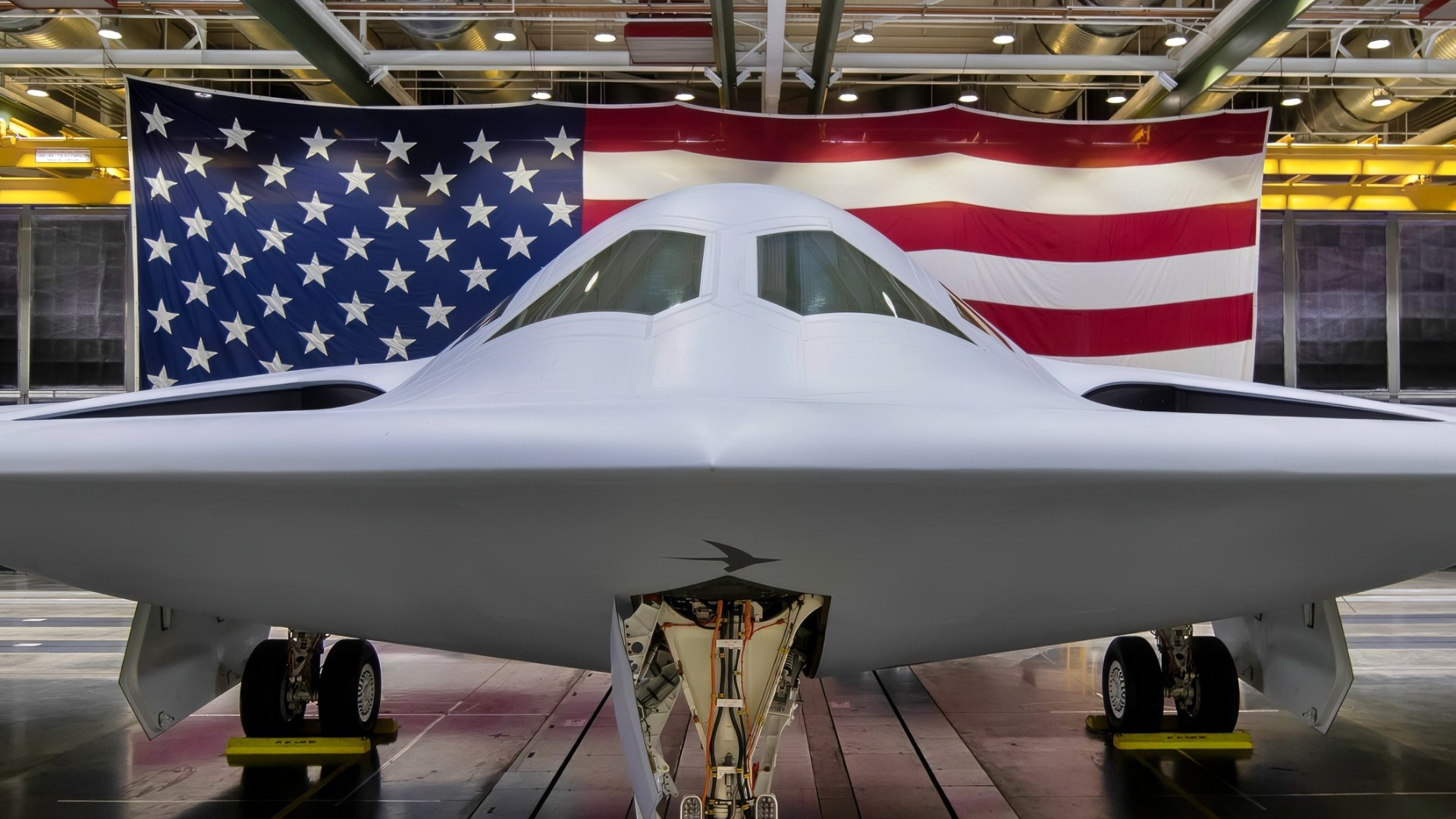
During a June 3 test flight at Edwards Air Force Base in California, photographers captured the first B-21 Raider long-range stealth bomber prototype (called “Cerberus”) as it landed. The images show the aircraft’s outer trailing-edge control surfaces moving in opposite directions. One surface deflected upward.
An adjacent surface pointed down. Since those images were released, many have speculated that the B-21 generates drag differently than the older B-2 Spirit long-range stealth bomber.

The B-21 Raider was unveiled to the public at a ceremony December 2, 2022.

B-21 Raider. Image Credit U.S. Air Force.
The B-2 uses split drag rudders near the wing tips. Because flying-wing aircraft lack traditional vertical tails, they need unusual control systems to turn left and right (yaw), to slow down, and to maintain stability during landing. B-2s achieve this by opening split rudders that create drag on one side of the plane.
Northrop Grumman’s new B-21 appears to utilize a more sophisticated arrangement in which multiple control surfaces operate in tandem to manage drag, control yaw, and improve flight efficiency–all while maintaining the plane’s stealthiness.
Rather than a simple “airbrake panel,” the aircraft appears to use differential control-surface movements, with advanced flight computers controlling all these systems.
Something More Than the B-2 Upgrade
In other words, the B-21 Raider is not merely a modernized B-2 Spirit stealth bomber. It’s an entirely new flying-wing design.
For years, analysts had assumed that the Raider was essentially a smaller version of the B-2 with better stealth. If the experts analyzing the recent photos of the Raider landing at Edwards AFB are any indication, then Northrop redesigned major elements of the flight-control architecture rather than merely shrinking the older bomber.
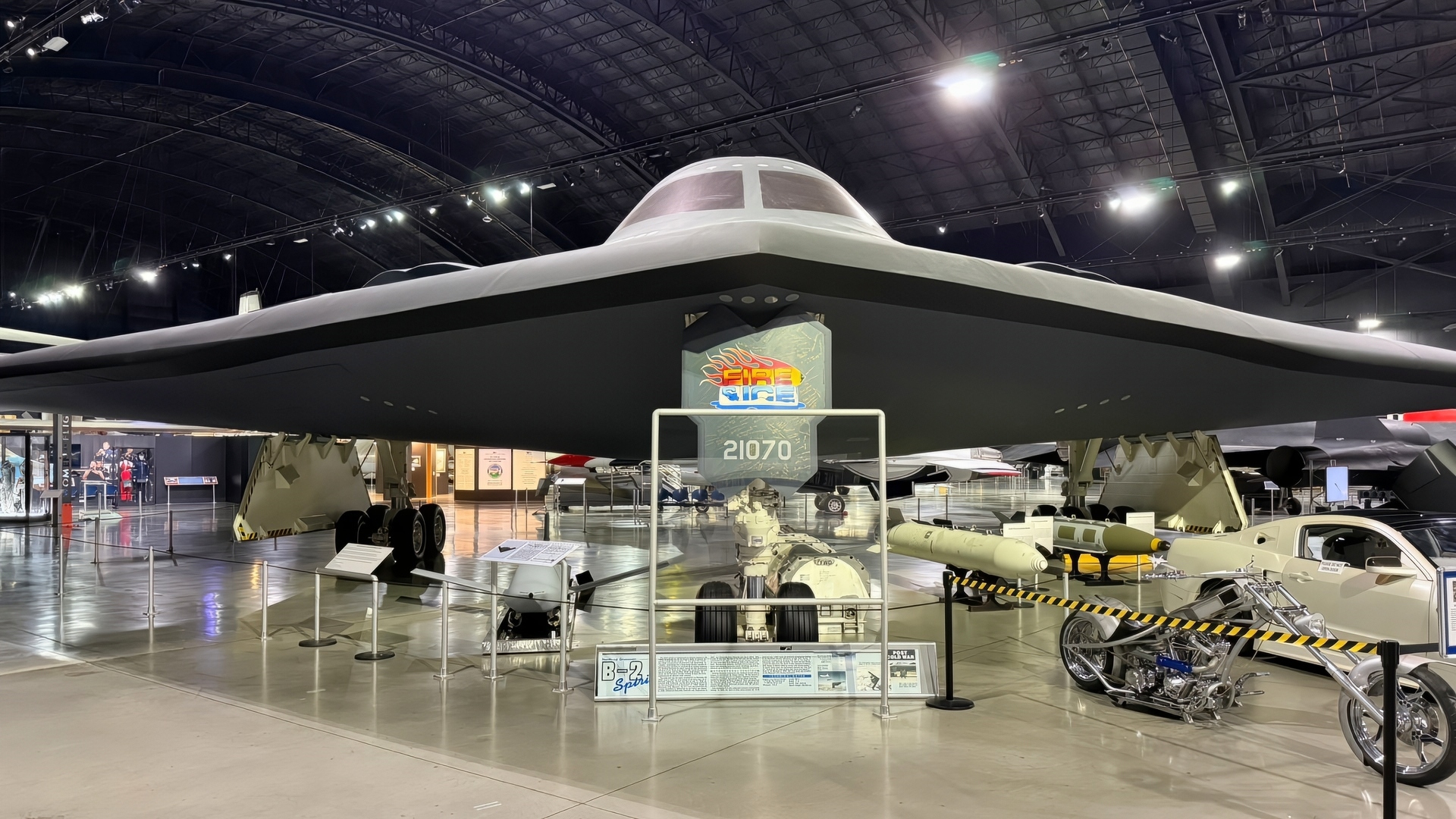
B-2A Spirit On Display. Image by Editor Harry J. Kazianis/National Security Journal.
What we know about the otherwise secretive B-21 program also indicates that the Raider is more than just an upgraded, smaller version of the B-2. For instance, there are multiple aircraft flying in the test and prototype stages.
Meanwhile, those test results have reportedly exceeded digital-model predictions. These developments have led to rapid production scaling of the B-21 by Northrop and the US Air Force. Because of this, the Air Force expects the first operational plane at Ellsworth Air Force Base in 2027.
But the multiple prototypes and the recent images of the landing B-21 look like there’s much more under the hood of this plane than what meets the eye. That, of course, makes sense because the Air Force is in dire need of a new long-range stealth bomber.
The B-2 first flew in 1989. While it remains a highly advanced plane, it’s getting old. And replacing it is a necessity for the Air Force to maintain its vaunted long-range strike capabilities.
Optimized for War with China
Those recent photos reinforce the importance of the B-21 Raider project from the perspective of the need for a next-generation stealth bomber. The B-21 clearly has optimal stealth. Indeed, its skin is an entirely new composite design compared to that of the B-2. Just looking at the photos of the B-21, one can tell that it is a much more technologically streamlined plane than its B-2 predecessor.

B-2A, serial #88-0331, ‘Spirit of South Carolina’ of the 509th Bomb Wing, Air Force Global Strike Command, on the parking ramp at Tinker Air Force Base, Oklahoma, during a visit April 11, 2017. The B-2A ‘stealth bomber’ visited the base to allow hundreds of personnel who work in direct support of the aircraft program through continuous software upgrades to see it in person and better understand the aircrafts’ role in the nation’s defense. (U.S. Air Force photo/Greg L. Davis)
Like the B-2, the B-21 is obviously heavily dependent on software-driven flight controls. More importantly, though, since it is truly a new, advanced stealth bomber, its software is likely more complex than that of its predecessor.
What’s more, the B-21 Raider is designed primarily for long-duration penetration missions against advanced air defenses, such as those fielded by the People’s Republic of China (PRC). Given all these factors, there is simply no way that the B-21 is just an upgraded B-2 Spirit bomber. It’s an entirely new, dynamic bomber that packs its own unique punch.
About the Author: Brandon J. Weichert
Brandon J. Weichert is Senior National Security Editor. He also manages The Weichert Brief on Substack. Weichert hosts “National Security Talk” on Rumble, too. He is the author of four bestselling national security books, the most recent of which is A Disaster of Our Own Making: How the West Lost Ukraine (Encounter Books). Follow him via Twitter/X @WeTheBrandon.


