


Warfare does two things: it obviously destroys, but it also forces adaptation upon the combatants. That is precisely what’s happening in the Iran War today. A leak of supposedly classified Russian intelligence documents has made its way onto the internet. Per those leaks, Moscow is not only supplying the Islamic Republic of Iran with Su-35 warplanes. The leaked contracts indicate that Russia is providing Iran with the weapons package needed to make those warplanes operational.
In fact, it seems that the contracts between Tehran and Moscow involve a broader Su-35 acquisition program that could eventually see up to 48 Su-35s worth six billion euros sold to Iran. Of course, this is Russian arms sales we are talking about, and many times, deals that seem solid never come to pass. It has happened many times, so we aren’t going to overstate this ‘arms sale’ either.
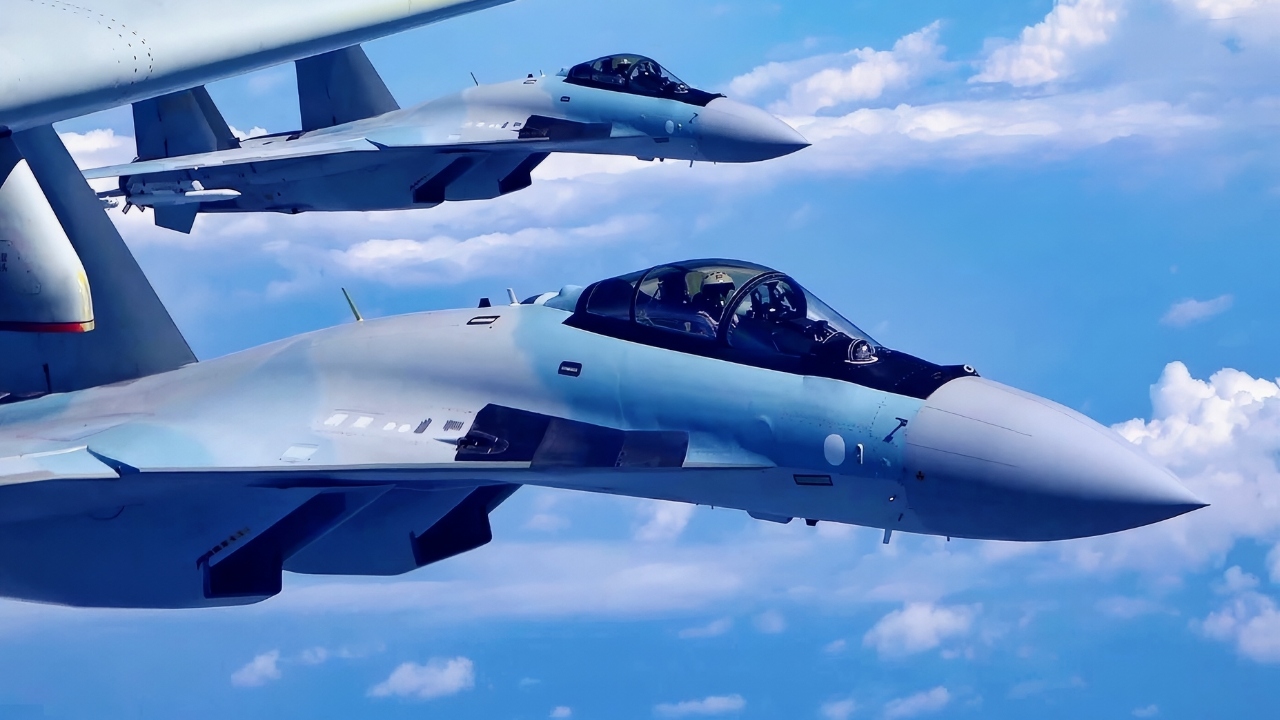
Su-35 from China. Image Credit: Chinese Air Force PLAAF.

Sukhoi Su-35 Fighter. Image Credit: Creative Commons.

Su-35 Fighter from Russia. Image Credit: Creative Commons.
Among the weapons in the purported Su-35 sale to Iran, Russia has provided R-77 beyond-visual-range (BVR) air-to-air missiles, R-73 short-range dogfighting missiles, Kh-31 anti-radiation and anti-ship ballistic missiles (ASBMs), Kh-38 precision-guided air-to-surface missiles, and all associated components and production support to sustain the program through at least 2027.
Here’s what this really means.
An Su-35 without modern missiles is little more than an expensive airframe. By selling Iran the necessary, advanced weapons, the Russians are ensuring that the Iranians can seriously threaten the US and Israeli militaries. If Iran really has–or is about to–receive all four weapons families, then its air force would gain capabilities that it has lacked for decades.
For years, Iran’s fighter force was essentially a museum collection. They had a hodgepodge of aging F-14 Tomcats, F-4 Phantoms, MiG-29s, and some limited indigenous upgrades. Needless to say, Iran’s conventional air force was never truly a threat to either the United States or Israel. Of course, it’s interesting that the Pentagon insisted for weeks that they’d destroyed the Iranian air force in the opening salvo of the Iran War, only to walk back those original, sweeping claims.
Nevertheless, the Russo-Iran Su-35 deal, if the leaked contracts online are true, indicates a rapid evolution in Iranian wartime capabilities. The addition of modern Russian weapons for the Su-35 would finally give Tehran credible offensive airpower. In other words, the war is forcing extreme, fast adaptation upon its combatants–all while degrading the US military’s capabilities and standing in the region (and weakening Israel).
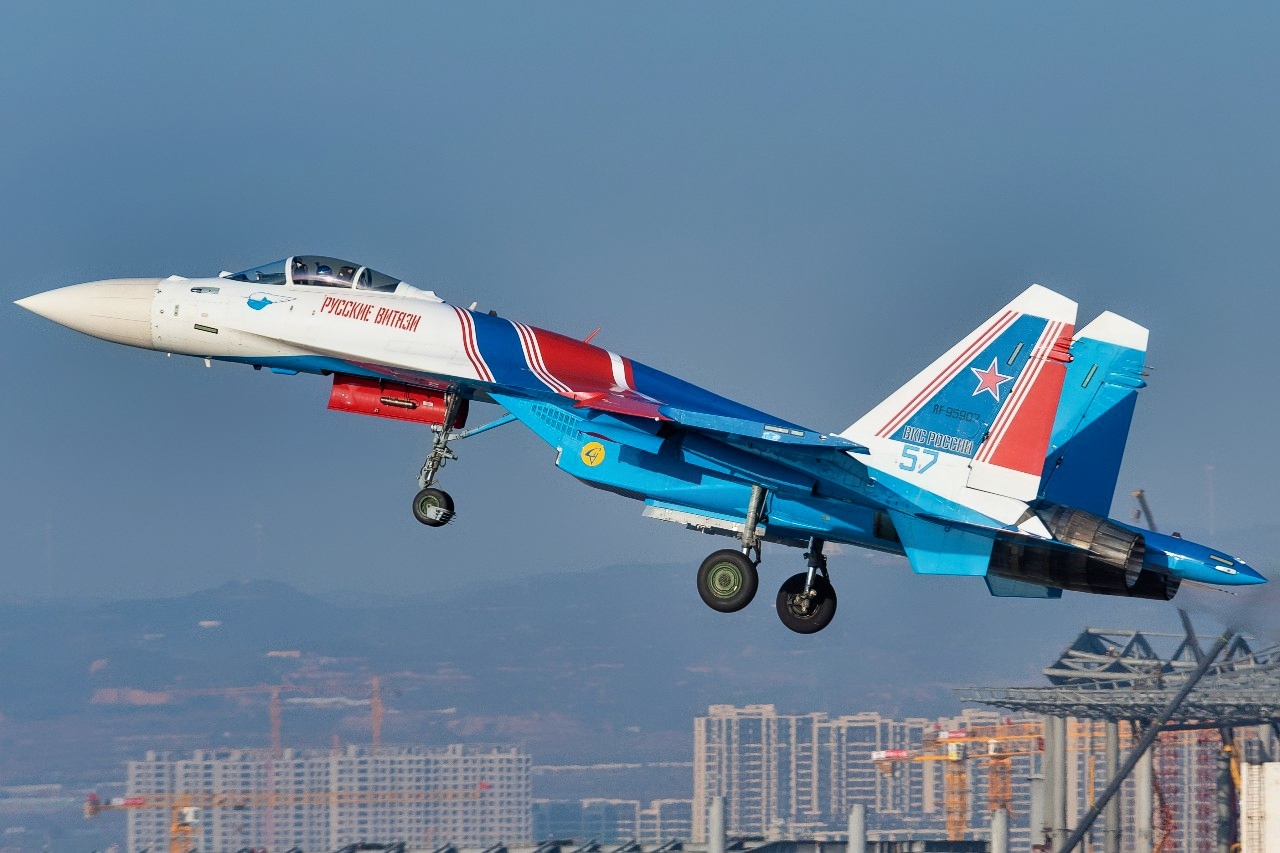
Su-35. Image Credit: Creative Commons.

Su-35 Fighter. Image Credit: Creative Commons.
The Ukraine War has demonstrated that BVR aerial warfare is now the defining feature of modern air war. Modern air defenses complicate air forces’ ability to reach their targets with conventional systems. To overcome this, modern air forces must strike far outside the increasing ranges of modern air defenses. Indeed, this is precisely how the Israelis and Americans have waged their air war upon Iran.
If reports are true, then Tehran is embracing the same concept–and Moscow is helping them do it. And the Iranians are adapting to BVR aerial warfare at a time in which most US air defenses and their attendant radar systems are either degraded or destroyed, and in which Israel is more constrained than it has been in decades.
That indicates a strategic flipping of the script by Iran (and Russia) at a seriously inopportune time for the US and Israeli militaries.
Will This Change the Balance Against Israel?
Not immediately. Even 48 Su-35s would not overturn Israeli air superiority. Over time, however, as US and Israeli air defenses degrade, it might have an impact. The more interesting concept to contemplate is how those 48 Su-35s, armed with Russia’s top BVR systems, could harass the Gulf Arab states.
The point to consider is that the Iran War is not going to end anytime soon. There will be no deal, in my view. At best, the world must settle into a frozen conflict.
Thus, over time, the upgrades Iran’s Armed Forces enjoy thanks to its alliance with Russia, especially if the Americans are truly on the decline in the region, mean that the Iranians will have gained a significant capability with which to threaten Israeli security.
What Worries Israel?
The provision of the Kh-31 anti-radiation missile should give Tel Aviv’s defenders heartburn. After all, Russia’s Kh-31 attacks radars and air defense systems. If (more like when) Iranian pilots became proficient with the Kh-31, they could theoretically threaten Israeli radar networks, airborne warning aircraft, naval assets, and regional air-defense nodes.
That would complicate Israeli planning even if it doesn’t overturn the overall balance.
What Matters Most?
It’s the political message this alleged deal with Moscow sends to the region. When the bombs started dropping on Iran in February, many claimed that the Russians had effectively abandoned Iran in its moment of need.
Many celebrations occurred in Western policy circles, with those policy elites assuming that the initial wave of US and Israeli strikes on the Islamic Republic had effectively collapsed the Russia-China-Iran alliance.
Clearly, those celebrations among Western policy elites were premature.
Russia is not willing to fight for Iran. Moscow, however, is more than happy to rearm the Iranians. That’s a much cheaper and safer strategy for the Kremlin. Plus, it’s far more beneficial for Russia than going to war on behalf of Iran.
This new deal indicates that the Russo-Iranian relationship is strong. It has endured. And it demonstrates how ineffective Western sanctions on Iran and Russia have been. By sanctioning these two ancient nations, the West has simply drawn these two closer together.
Further, this possible development of Russia selling not only Su-35s to Iran, but the supporting advanced weapons packages, showcases how Iran is already planning for a postwar environment in which they are a dominant Mideast power. It also highlights the way in which Tehran intends to defend itself against future threats from Israel or even the US.
War is an adaptive, iterative process. The side that adapts the fastest and survives is the winner. Russia is betting that Iran is winning, and it’s supplying it accordingly.
About the Author: Brandon J. Weichert
Brandon J. Weichert is Senior National Security Editor. He also manages The Weichert Brief on Substack. Weichert hosts “National Security Talk” on Rumble, too. He is the author of four bestselling national security books, the most recent of which is A Disaster of Our Own Making: How the West Lost Ukraine (Encounter Books). Follow him via Twitter/X @WeTheBrandon.


Hujjatullah M.H. Babu Sahib
June 10, 2026 at 2:21 pm
When viewed in the light of Russian performance in Assadian Syria, one can’t give much weight to Russian strategic outreach and services to I.R. Iran. Yes, Russia has been consistent in supporting Iran in the contemporary period but not quite unlike the U.S.’, Russia’s help to West Asian states too could be covertly if not as overtly pegged to the doctrine of never allowing these states to achieve any meaningful military technological superiority over Israel’s overall capacities. This inconvenient fact is perhaps why Iran also looks to the PRC for additional military-strategic supports.