

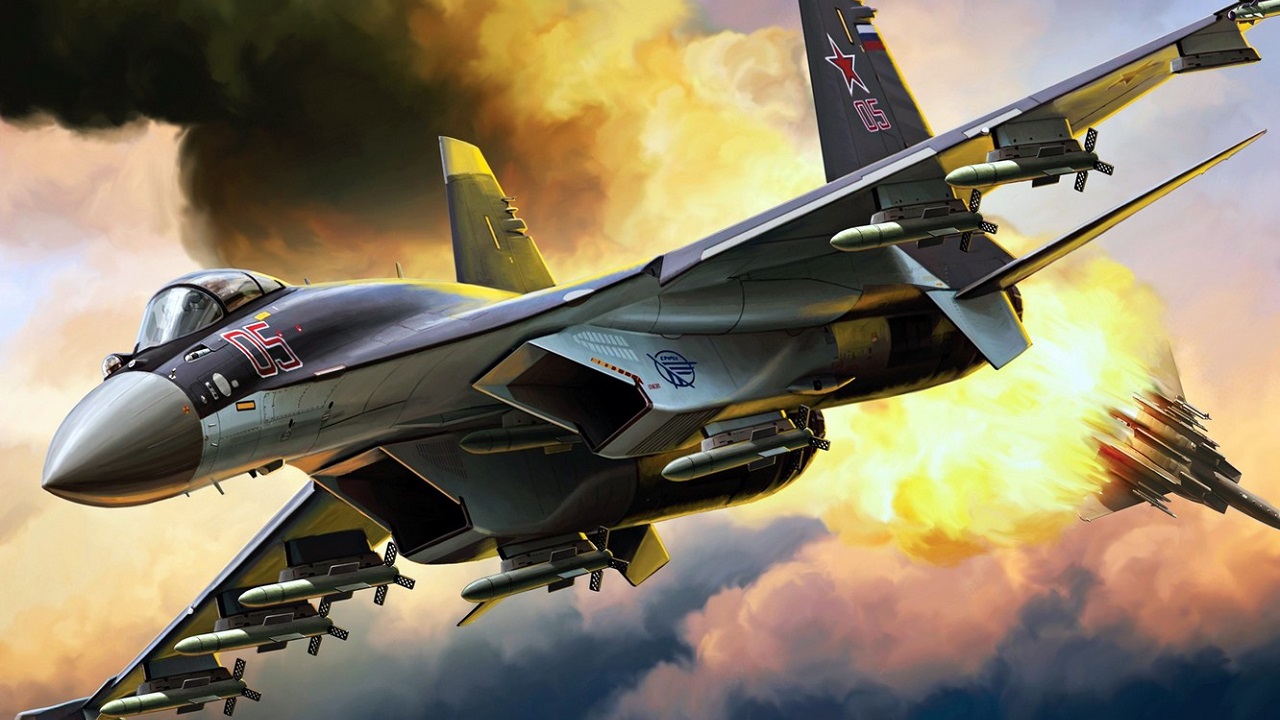
In 2015, China shocked the defense world by signing a $2.5 billion deal to buy 24 Russian Su-35 fighters from Moscow—the first foreign customer ever to receive Russia’s most advanced fourth-generation jet. Many speculated that Beijing wanted to reverse-engineer the powerful Saturn engines, which have long been Russia’s strongest aerospace export, but the truth turned out to be more complicated.
Su-35: Why Russia Sold Some of Its Best Fighters to China

Su-35 Fighter X Screenshot
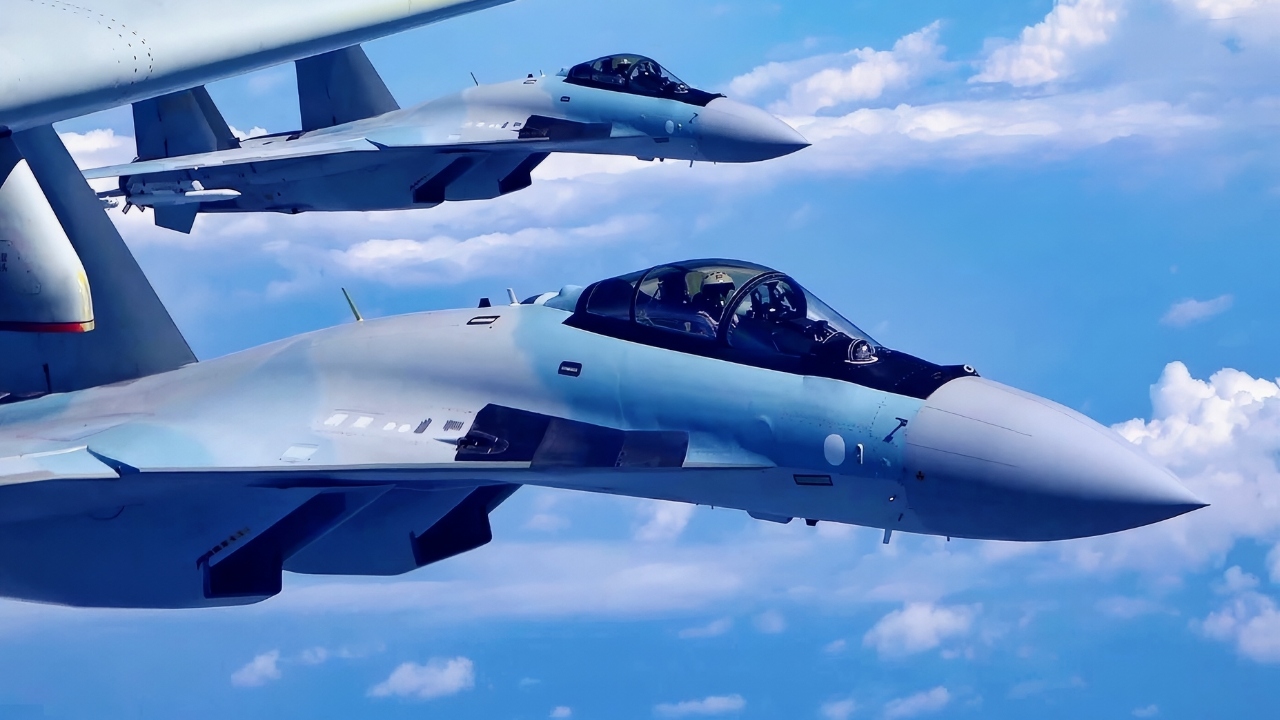
Su-35 from China. Image Credit: Chinese Air Force PLAAF.

Sukhoi Su-35 Fighter. Image Credit: Creative Commons.
Back in 2019, Russia made good on its sale of Su-35 fighters to China, completing the delivery of two dozen of the relatively advanced fourth-generation fighters.
The deal was worth 2.5 billion dollars and was agreed to in 2015.
The sale came after Europe slapped a number of sanctions on Russia following Moscow’s annexation of Crimea in 2014. Numerous theories have been put forward to explain why Russia approved the sale — a dire need for cash?
A burgeoning partnership with China? — though a definitive explanation remains elusive.
China was the first foreign buyer of Su-35s from Russia, and that deal also secured spare engines and reserve equipment to support the sale of two dozen fighters. The second purchaser of the Russian jet was Indonesia, according to TASS, the Russian state outlet, which explained that a deal had been inked in 2018.
However, that order was significantly smaller at just 11 Su-35 fighters. Interestingly, TASS explained that “the fulfillment of the Indonesian contract ran across some difficulties related to US sanctions, but a TASS source in military and diplomatic circles said these difficulties were ‘not critical’ and should not affect the deliveries of fighter jets.”
However, Jakarta ultimately abandoned its Su-35 aspirations thanks to pressure from the United States. Though the country sought access to the American-led F-35 stealth fighter program, that goal was never realized.
Red Bulb Flashing
The multinational, but American-led, F-35 program is the world’s leading fifth-generation fighter program.
Though it holds the notorious distinction of being the most expensive defense project in American history, to the tune of more than one trillion dollars, the three F-35 variants the project yielded are considered the gold standard, along with the F-22 Raptor, another American fifth-generation fighter.
Software updates and upgrades for that fighter are still being developed and downloaded, even as the United States Air Force advances toward the F-47. This upcoming sixth-generation air superiority fighter will eventually supplant the F-22.
Although Russia has put a handful of notionally fifth-generation fighters into service and even sold some future builds to Algeria, the Su-57 may not be as stealthy as other radar-defeating aircraft. One report compiled by the Center for European Policy Analysis went so far as to call the Su-57 a “fraud.”
China, on the other hand, has built several stealthy aircraft, including some that may be prototypes or demonstration aircraft, recently seen in flight. Beijing is making significant progress in developing homegrown, highly capable fifth- and potentially sixth-generation aircraft. But one area that has proven difficult to overcome is developing jet engines.
The Jet Engine Bottleneck
Outside experts estimate that some of China’s highest-performance jet engines may rival those of the United States in terms of raw performance. But they are also seen as significantly more fragile than their American counterparts.
Steve Russel, the top dog at General Electric’s advanced internal project unit, Edison Works, explained why the engines his unit builds — and those manufactured by GE rival Pratt & Whitney — are superior to those built in China.
“Our reliability tends to be still an order of magnitude better than theirs,” Russell explained in an interview given to Flight Global, an aerospace publication. He also stated that Chinese jet engines are quite capable on a pure performance basis, but that their servicing intervals are significantly more frequent than those of American engines.
Some jet engines that power American aircraft need servicing after accumulating thousands of flight hours. But China’s engines? After just hundreds of hours of use. “But they’re getting better, and we’re seeing them get better,” Russel added. “That’s why it’s important that we take this next generational leap to make sure that we maintain that advantage that we have.”
At first blush, China would have liked to glean valuable information on the engines that power the Su-35, raising the prospect of reverse-engineering them. There is precedent for China’s reverse engineering of various aircraft. China’s J-11 is a copy of the Soviet- and Russian-origin Su-27.
American helicopter technology, as well as some of the tech that went into the F-35, has been seen in China. Could the Su-35 purchase have been part of a bid to break China’s dependence on foreign jet engines?
The Rhyme Behind the Reason
Writing some time after the purchase, one analyst, writing for the Carnegie Moscow Center, provided his theory as to why China would be interested in such a small number of the relatively advanced fourth-generation fighters — and it was not about reverse engineering.
“Some have suggested that the Chinese bought the jets to reverse engineer them, but this is highly unlikely,” Vassily Kashin wrote. “The Su-35’s engines and avionics, including its powerful Irbis radar system, cannot be reverse-engineered in any reasonable amount of time.”
Instead, he opined, “the purchase is part of a larger Chinese push to develop its air force. Of the two Chinese aircraft being developed—the J-20 and the J-31—only the J-20 can be considered a true fifth-generation fighter. The J-31 uses stealth technology, but its main systems and components are borrowed from 4+ generation aircraft, including the J-10B, J-16, and FC-1. As for the J-20—the pinnacle of Chinese aviation engineering—it is unclear if and when it will be ready for combat, if the experience of the United States and other countries working on fifth-generation jets is any guide.”
Though Kashin suggested that the Su-35 order may have been enough at the time to alter the balance of power between China and Taiwan, that seems less likely today given the radically changed security environment. Not only does China have hundreds more capable fifth-generation aircraft in service, but they’re also building them at speed. Whatever benefit Beijing anticipated by the purchase has likely already been gained. But back in 2015, the jets may have been a great source of knowledge to the Chinese aerospace industry.
About the Author: Caleb Larson
Caleb Larson is an American multiformat journalist based in Berlin, Germany. His work covers the intersection of conflict and society, focusing on American foreign policy and European security. He has reported from Germany, Russia, and the United States. Most recently, he covered the war in Ukraine, reporting extensively on the war’s shifting battle lines from Donbas and writing on the war’s civilian and humanitarian toll. Previously, he worked as a Defense Reporter for POLITICO Europe. You can follow his latest work on X.


