


Oil prices may eventually hit $150 per barrel, according to economists. With the war in the Middle East heating up, oil prices are spiking as the Strait of Hormuz remains closed. Oil prices have been in a constant tug-of-war, fluctuating unpredictably with each passing day.
As the war continues, however, economists are certain that prices will continue to climb and remain high if a peace deal between the U.S. and Iran is not reached soon.

Iranian Army Tank. Image Credit: Creative Commons.
Why Oil Prices are Rising
After continuous fighting across the Middle East, the supply of oil from producer countries has been severely disrupted. In March, Iran targeted key oil infrastructure sites across the Gulf States, which resulted in several shutdowns in major oil fields.
In fact, estimates suggest that the conflict initially removed around 10 million barrels per day from global markets, creating a sharp imbalance between supply and demand.
The sudden contraction in available supply, combined with the limited short-term ability of other producers to compensate, has naturally driven prices upward.
These attacks against oil sites were further exacerbated by the closure of the Strait of Hormuz. This narrow waterway is one of the world’s most important oil transit corridors, carrying roughly one-fifth to one-third of global seaborne oil trade.

Iran’s missile capabilities. Image Credit: Creative Commons.
During the conflict, tanker traffic through the strait has been severely reduced, with some shipping companies halting operations entirely due to security risks. Even when oil is still being produced, the inability to move it efficiently to global markets effectively reduces supply.
Shipping reroutes around longer paths have increased both the time and cost of delivery, while insurance premiums for tankers have surged due to heightened risk, all of which are reflected in higher oil prices.
Restoring Control in an Uncertain Environment
In addition to the reduced output, oil prices have been driven higher by market expectations and uncertainty. Oil is traded globally through futures markets, meaning that current prices incorporate expectations about future supply conditions.
As geopolitical tensions rise, traders anticipate possible worsening disruptions and bid prices higher accordingly. This creates what economists refer to as a risk premium, where prices rise not only because of actual shortages but because of feared ones.
With the conflict escalating once more, there is a renewed sense of uncertainty among economists, which is driving prices higher again.
In response, the Trump administration has been doing everything in its power to keep oil prices from rising too dramatically. Despite the blockade on the Strait of Hormuz, some oil tankers managed to transit through with U.S. protection.
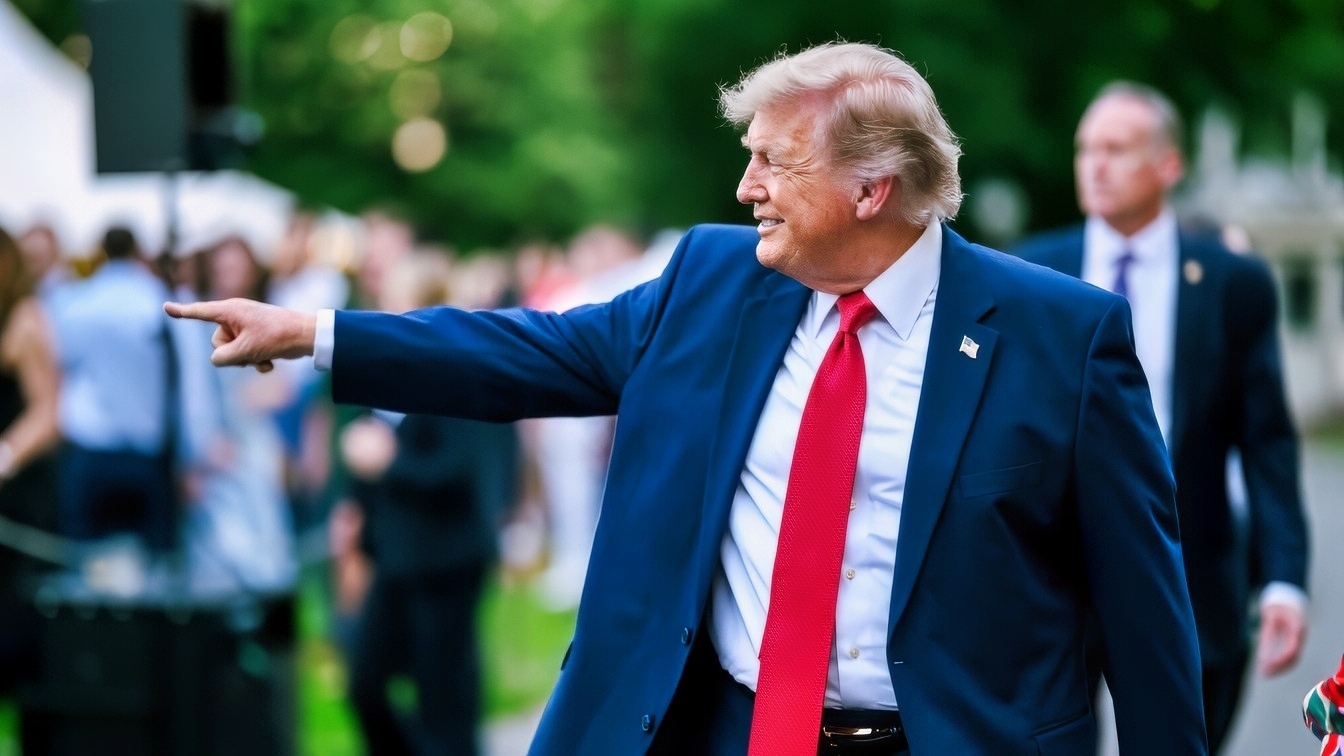
President Donald J. Trump and First Lady Melania Trump work the rope line at the Congressional Picnic on the South Lawn, Tuesday, May 19, 2026. (Official White House Photo by Daniel Torok)
Constant reassurances from Trump about the prospects of a ceasefire and an end to the conflict also helped to reassure the market and prevented it from spiraling out of control.
As a result, oil prices fell considerably in April, when the ceasefire was first enacted. Now that missiles are once again flying across the Middle East, prices are rising once more, and this time, economists are certain that they will stay up.
What Oil Prices Mean for the Average Consumer
So the price of oil goes up. So what? How does this affect regular folk around the world? One of the most immediate consequences is increased inflation.
Oil is a fundamental resource that affects multiple industries. The rise of oil prices will inevitably affect the rest of the economy. When fuel costs rise, so do the costs of shipping, electricity, and food production, leading to widespread increases in consumer prices.
This form of inflation, often called cost-push inflation by economists, reduces purchasing power, which hits lower-income households especially hard.
According to some global projections, the current energy shock is likely to trigger a chain reaction in which higher fuel prices lead to more expensive food and manufactured goods, amplifying inflation across economies.
As businesses face rising input costs, they may cut back on production, reduce investment, or pass costs on to consumers, all of which dampen economic activity.
Consumers, facing higher fuel and energy expenses, often reduce discretionary spending, further weakening demand. According to some estimates, for every 10 percent increase in oil prices, global economic growth can fall by around 0.5 percentage points while inflation increases.
This combination of slower growth and higher inflation creates the risk of stagflation, a particularly difficult economic condition because policy tools that address inflation can worsen growth and vice versa.
Some regions, especially energy-importing economies in Europe and Asia, are especially vulnerable and could face recession if high prices persist.
Russia: The Real Winner of the Iran War?
The war in the Middle East has had varying impacts around the world. Oil-exporting nations in the Middle East have seen higher revenues, though the windfall from higher prices has been curtailed by Iranian attacks on oil infrastructure.
Russia has also benefited from rising oil prices and has experienced record-high exports, although the Kremlin expects this boom to be temporary. In contrast, oil-importing nations like Europe have experienced high bills.
Poorer countries are hit particularly hard because energy and food account for a larger share of household expenditures, meaning that price increases have a disproportionate effect on living standards.
About the Author: Isaac Seitz
Isaac Seitz, a Defense Columnist, graduated from Patrick Henry College’s Strategic Intelligence and National Security program. He has also studied Russian at Middlebury Language Schools and has worked as an intelligence Analyst in the private sector.


