
Trump Can’t Afford Another Epic Fury Against Iran: Writing on Truth Social on Wednesday, U.S. President Donald Trump warned that Iran had taken too long to negotiate a peace deal and said that the regime would “pay the price.” The comments came after the United States responded to an Iranian drone attack that downed a U.S. Army AH-64 Apache helicopter near the Strait of Hormuz. Rather than reopening a full-scale air campaign resembling Operation Epic Fury from earlier this year, the president approved a series of targeted strikes against Iranian military infrastructure, including missile and radar sites. The administration, it seems, is determined to demonstrate its willingness to return to large-scale conflict without incurring the enormous costs of launching another major barrage of strikes.
And it seems combat operations are back on. A statement from the U.S. military now reads: “U.S. Central Command forces began launching additional self-defense strikes today at 5:15 p.m. ET against multiple targets in Iran at the Commander in Chief’s direction. The strikes are in response to Iran’s unwarranted and continued aggression.”
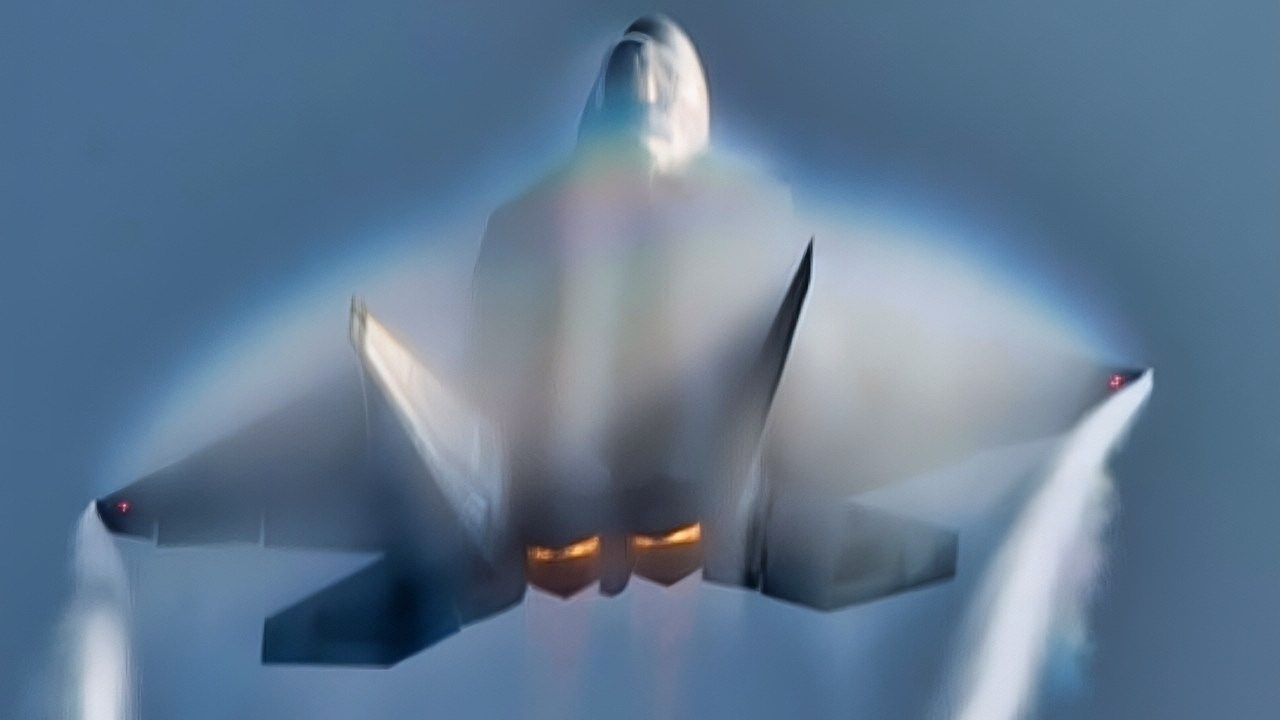
F-22 Raptor Fighter for US Air Force. Image Credit: Creative Commons.
But how long can this last? Even if the Trump administration wanted to return to war with Iran – and the president has proven so far that he is reluctant to resort to carpet bombing the country – doing so would be extremely costly and leave the United States vulnerable.
Trump’s Calculated, Calibrated Response After the Apache Incident
As noted above, U.S. Central Command confirmed on Tuesday evening that it had launched a series of “self-defense strikes” against Iran following the downing of the Apache helicopter near the Strait of Hormuz the night before.
On Wednesday, the president described how an Iranian drone had become lodged inside the aircraft but did not detonate, meaning the two crew members onboard the aircraft were able to escape. Both service members survived after being rescued by an American unmanned naval drone.
The strikes were deliberately limited in scope and also targeted runways and military facilities near the Strait of Hormuz. It was by no measure comparable to Operation Epic Fury, or anywhere near as destructive as Trump’s previous threat to bomb Iran “back to the Stone Ages.”
Strikes Begin Again
Defense Secretary Pete Hegseth made it clear on Wednesday afternoon that the military response was not over. Speaking from CENTCOM headquarters, Hegseth said that “Centcom will be busy tonight because the president has said that we will be hitting Iran hard.”

U.S. Air Force Capt. Nick “Laz” Le Tourneau, F-22 Raptor Aerial Demonstration Team commander, performs an aerial maneuver during the Hyundai Air and Sea show at Miami, Florida, May 25, 2025. The F-22 Aerial Demonstration Team highlights cutting-edge airpower, precision, skill, all while reinforcing public confidence in the Air Force’s ability to protect and defend. (U.S. Air Force photo by Staff Sgt. Lauren Cobin)
The next round of strikes is generally expected to demonstrate the United States’ willingness to escalate without committing it to an immediate and prolonged regional war. After 5 pm Eastern, open-source intelligence reporting indicated that explosions were being heard in Iran. The @Osint613 account, which boasts more than a million followers on X, reported that explosions had been heard at Bandar Abbas in Iran.
Reports are breaking that Iran has already launched counterattacks, although, at this point, National Security Journal cannot confirm that reporting on our own.
Pressure, Not Regime Change
The objective for Washington is likely fundamentally different from the maximalist rhetoric seen on the president’s Truth Social account. The administration appears to be engaging in what’s known as coercive diplomacy – forcing Iran to return to the negotiating table and sign the deal that the Trump White House has been promising for weeks is only “days away.”
Iran’s leadership is being presented with a choice between a return to negotiations under American terms or facing increasingly painful military consequences. The strategy carries risks for the United States, though, because limited strikes sometimes fail to alter an adversary’s behavior – and so far, this has been the case with Iran.
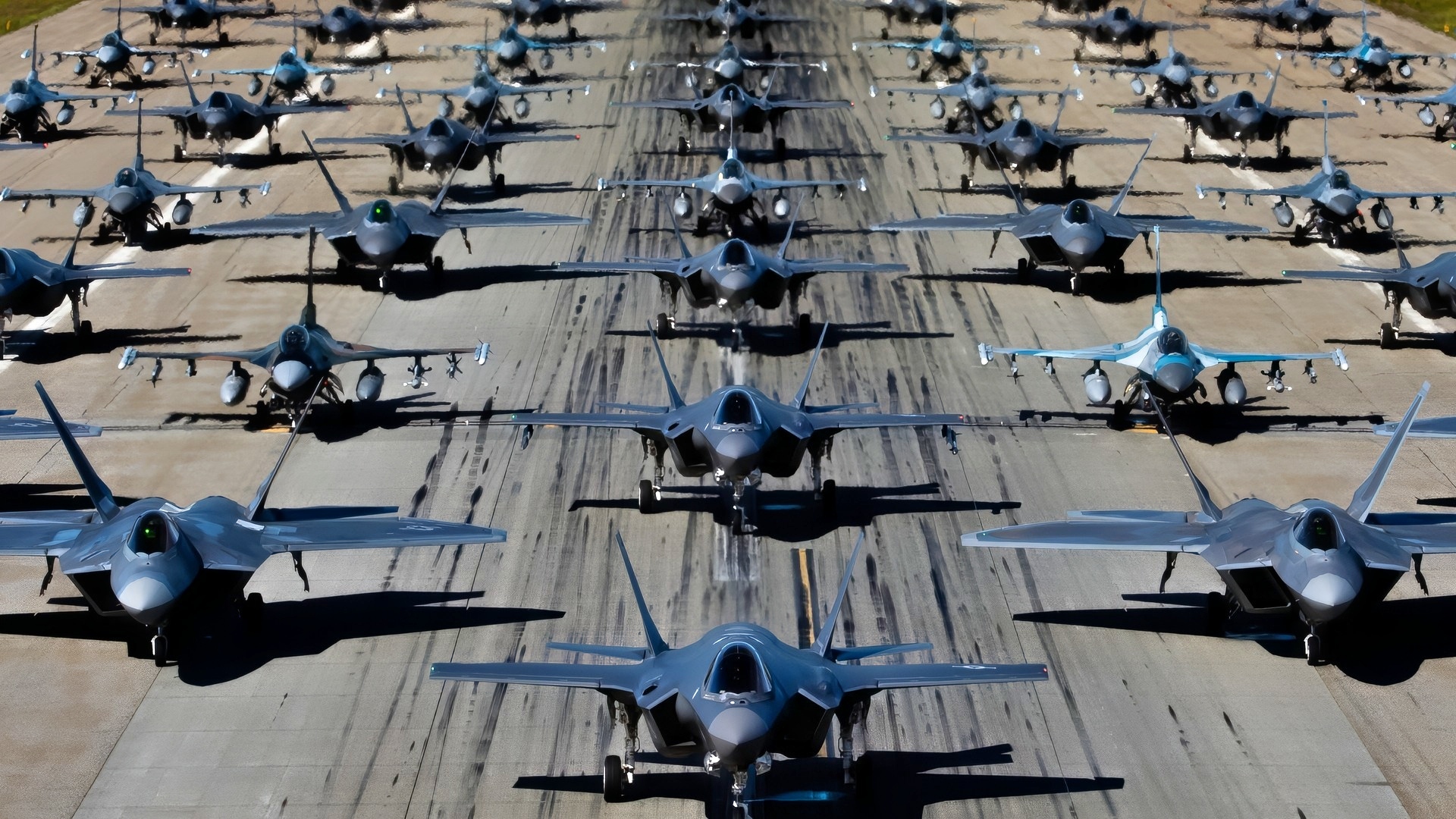
The 354th Fighter Wing conducts a 75-fighter jet formation at Eielson Air Force Base, Alaska, Aug. 12, 2022, in honor of the U.S. Air Force’s 75th Anniversary. This capabilities demonstration included F-35A Lightning II, F-16 Fighting Falcon and F-22 Raptor aircraft from across Pacific Air Forces. (U.S. Air Force photo by Senior Airman Gary Hilton)
The regime in Tehran might also calculate that Washington lacks both the political appetite for escalation and the capacity to launch another Epic Fury. And that assessment would be correct.
Another Epic Fury Wouldn’t Be Wise
Operation Epic Fury proved that the United States still possesses unparalleled military reach and capability – but it also demonstrated the limits of America’s existing missile inventories.
During the operation, U.S. forces expended enormous numbers of Tomahawk land-attack cruise missiles, Joint Air-to-Surface Standoff Missiles (JASSMs), Standard Missile interceptors, Patriot air-defense interceptors, and Terminal High Altitude Area Defense (THAAD) missiles. Some estimates suggest that the operation consumed more than 850 Tomahawk cruise missiles, over a thousand JASSMs, and more than 200 THAAD interceptors.
Repeating a campaign like that could consume hundreds more precision-guided munitions worth billions of dollars. Patriot interceptors cost around $4 million each, THAAD interceptors as much as $15 million each, and JASSM-ER missiles around $1.5 million. Tomahawks, meanwhile, cost around $2 million each. But beyond the cost, using such enormous numbers of missiles would leave the United States exposed, dramatically reducing its stockpile of weapons that take time to replace. Lockheed Martin, for example, produces Patriot interceptors in the hundreds annually, while THAAD production is also limited. It would take years to expand those inventories, not weeks.
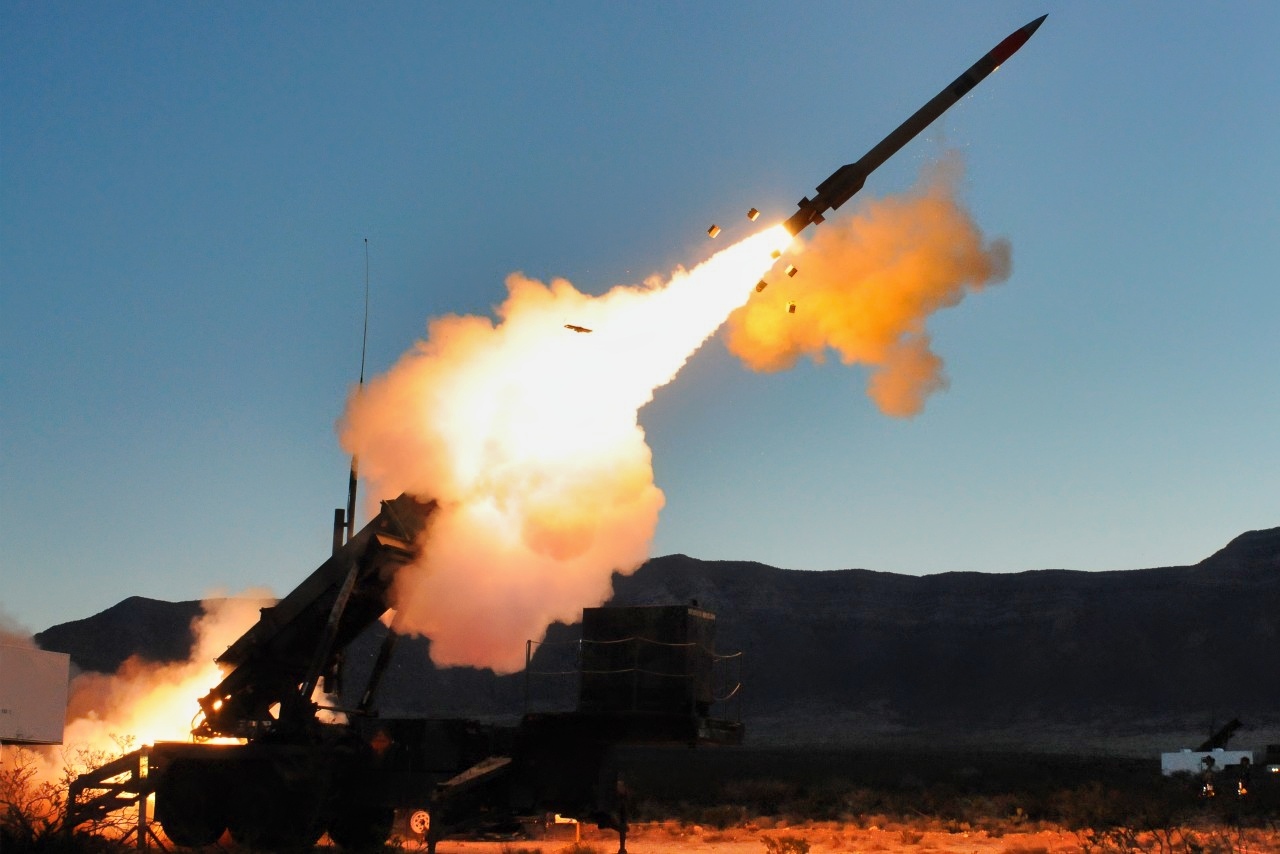
The PAC-3 MSE is a highly sought-after air defense munition due to its advanced capabilities and versatility. As a next-generation interceptor, it offers improved range, speed, and maneuverability, making it an effective counter to a wide range of threats, including tactical ballistic missiles, cruise missiles, and aircraft. (Official U.S. Army photo)
Launching an Epic Fury-style operation might technically succeed. In fact, it almost certainly would. But it would also draw down the stockpiles Washington relies upon to deter China in the Indo-Pacific and reassure allies in Europe. Without them, the U.S. would also be unable to respond to urgent crises involving, for example, North Korea or other adversaries.
Trump, then, needs a diplomatic breakthrough – and soon. The question now is whether additional strikes on key facilities are sufficient to pressure an ideological regime and compel it to engage in rational decision-making.
About the Author: Jack Buckby
Jack Buckby is a British researcher and analyst specializing in defense and national security, based in New York. His work focuses on military capability, procurement, and strategic competition, producing and editing analysis for policy and defense audiences. He brings extensive editorial experience, with a career output spanning over 1,000 articles at 19FortyFive and National Security Journal, and has previously authored books and papers on extremism and deradicalization.


righto
June 10, 2026 at 7:27 pm
America, or president donald trump, is fully prepared for another air war against iran.
Hell, trump is right now, fully prepared for even ww3.
Fully locked and loaded for any war, even a war to end mankind on Earth.
All the endless talk and whispers of ‘clinching a deal’ straight from the horse’s mouth is completely bogus.
The Horse has no intention of any deal short of total surrender.
But iran is a nation prepared to die rather than surrender to the evil.
Recall How iran survived the ruthless determination and might of saddam hussein for eight long years of indescribale suffering .
Who’s trump compared to saddam. Just a bloodthirsty flea. Compared to the alligator of the swamp.
yor uncle bob
June 10, 2026 at 8:37 pm
Now is not the time or the hour to profess How good yor present ability at msth, now is the time to prepare for the noon deaths shootout.
The o.k. Corral moment for this geopolitical year has at last arrived, today, june 2026.
Thus iran MUST immediately retrieve its negotiating team, and send an urgrnt MESSAGE to moscow.
We are about to die, please destroy their proxies, so that we can all die together.
What Does that mean.
It means russia must now wipe out trump’s proxies in western ukraine.
One stone to hit two birds, rifht on the head. No need to beat about the bush, anymore.
Shawn
June 10, 2026 at 9:07 pm
it must suck every time you have to eat your words when you say this crap – and constantly get proved wrong ng.
JingleBells
June 11, 2026 at 2:33 am
The latest math from western news agencies says Brent crude has hit US$93 per barrel, higher than the claimed price stated by trump today.
Trump says inflation is good, he loves it, but What abou3t the millions of people facing starvation or food shortages.
Trump, from time to time, whacks iran, then says it’s because of delays in negotiations.
But the real problem behind all. the constant attacks, hidden by US, the EU and arab countries, is the lack of a real independent and free palestinian homeland in the middle east.
The palestinians in gaza and the west bank, are daily, attacked by bombs bullets and shells and settlers and bulldozers. And Israeli soldiers and execution squads.
How about establishing a free palestinian state now, in 2026, by dividing jordan into two. Two states.
One for the ersatz jordanian ‘royal family’ and their goons, and one for the palestinian people.
Quartermaster
June 11, 2026 at 8:24 am
We don’t need an all out air war. We have not had one for many years. A few targets taken out can reduce Iran to the early 19th century.
Crotte
June 11, 2026 at 9:17 am
Opinions, opinions and more opinions!!!!! Try shutting up for awhile!!!!!!
Alex FITCH
June 11, 2026 at 3:14 pm
The readership here is as squirrely as the two-bit author.