

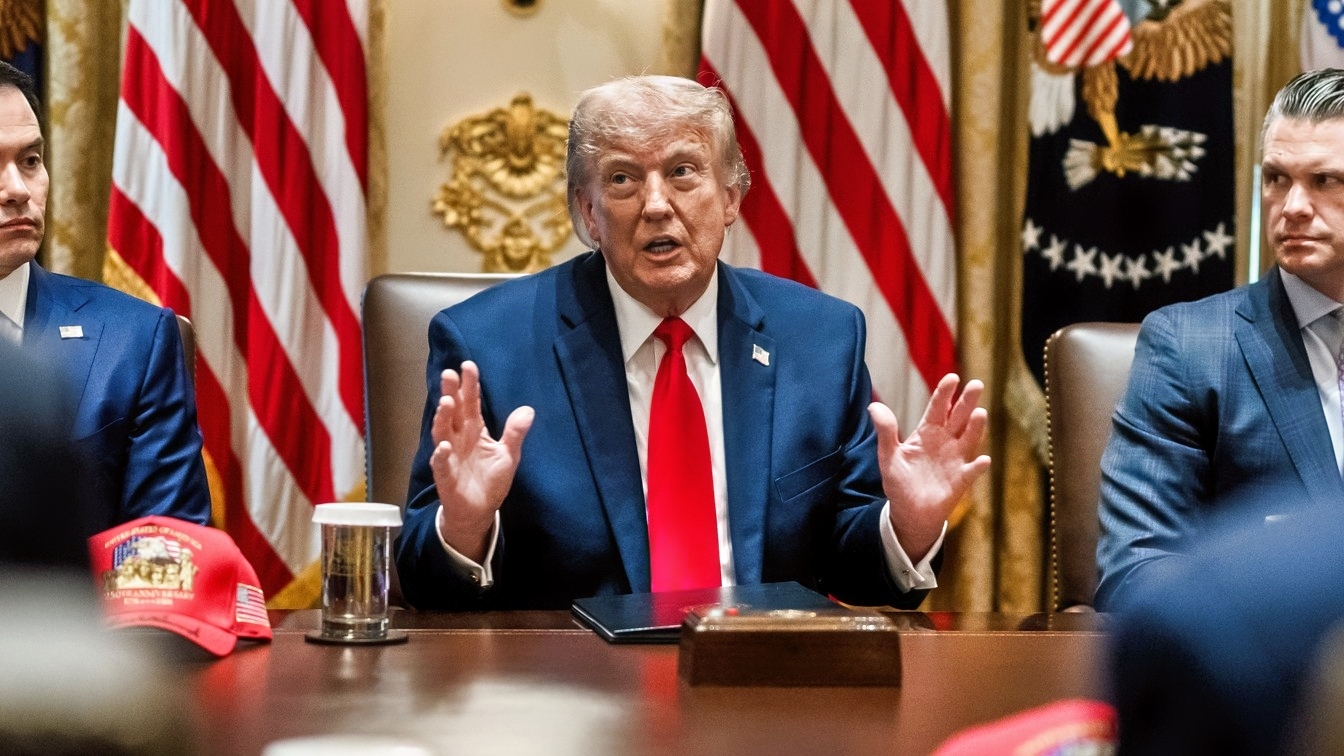
President Trump recently revealed that the US military has quietly helped escort roughly 200 commercial vessels carrying more than 100 million barrels of oil through the Strait of Hormuz. The administration is presenting the operation as evidence that global energy markets remain under control—but this is political spin. Naval escorts and dark tanker operations are unlikely to prevent a major oil shock. At best, the operations may buy time and temporarily stabilize prices, but they do not solve the larger supply problem created by the war in Iran.
Closing the Strait of Hormuz
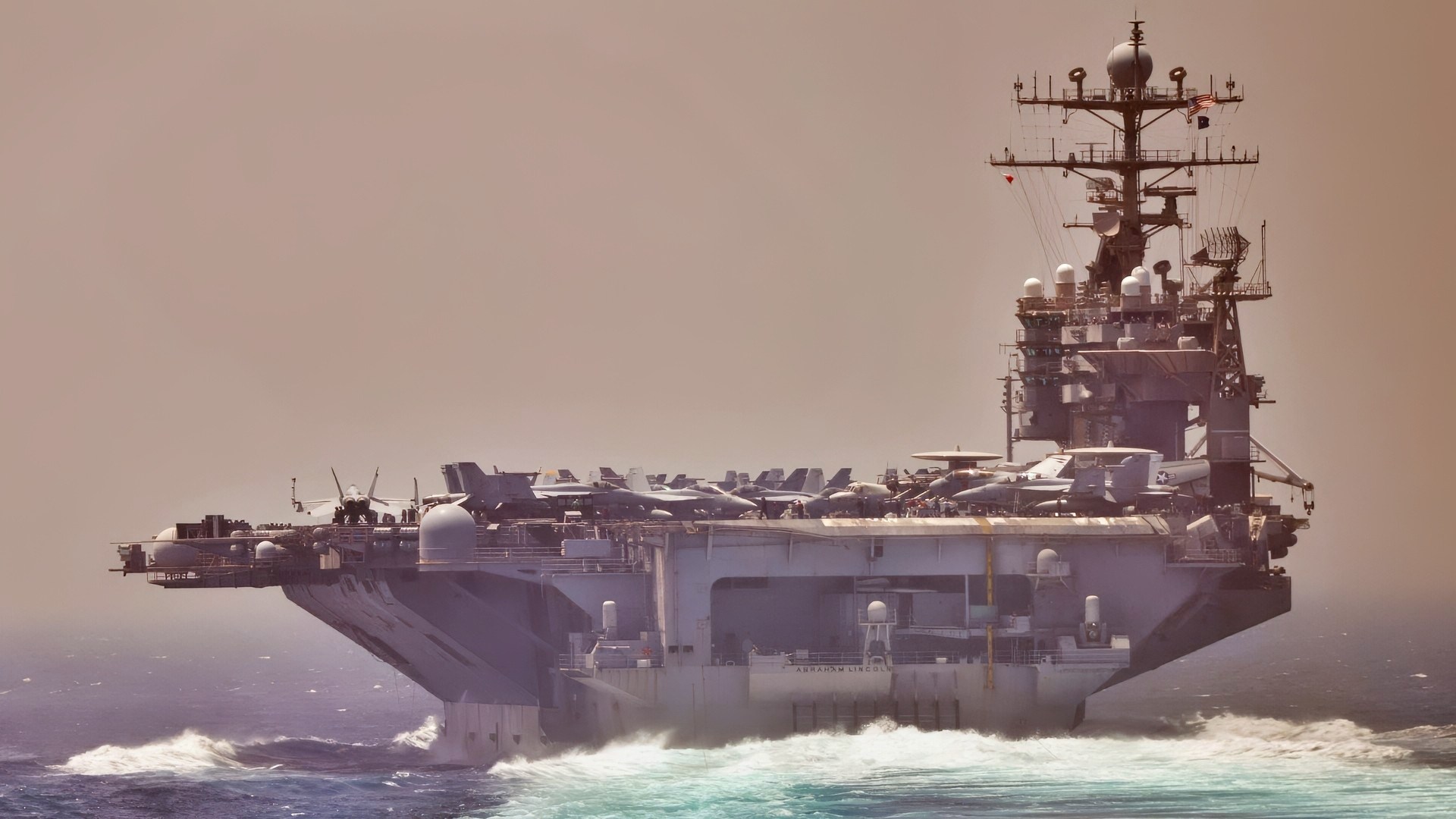
STRAIT OF HORMUZ (May 1, 2012) The aircraft carrier USS Abraham Lincoln (CVN 72), left, and the guided-missile cruiser USS Cape St. George (CG 71) transit the Strait of Hormuz. Abraham Lincoln and Cape St. George are deployed to the U.S. 5th Fleet area of responsibility conducting maritime security operations, theater security cooperation efforts and support missions as part of Operation Enduring Freedom. (U.S. Navy photo by Mass Communication Specialist 3rd Class Alex R. Forster/Released)
The problem is structural, stemming from the closure of the Strait of Hormuz—one of the world’s most important energy chokepoints. Before Operation Epic Fury commenced, 20 million barrels of oil flowed through the strait every day. That represented 20 percent of the global oil supply. In the past, even small disruptions in Hormuz tended to move oil prices; a prolonged disruption like this affects the entire global economy.
Trump’s Spin
Trump’s headline number sounds impressive here: 100 million barrels moved. But spread over a month, that amounts to about 3.3 million barrels per day—not even one-fifth of the 20 million barrels moved daily before the crisis. So even optimistic calculations suggest that a massive gap remains. The administration can highlight the barrels that were moved successfully, but markets will still react to the many millions of barrels that are missing.
Dark Tanker Strategy
How is Trump moving the oil? Reports indicate that some commercial vessels are turning off their AIS transponders, limiting electronic signatures, and moving under military protection. The administration is arguing that this covert approach allows oil to move despite Iranian threats.
Critics argue that this approach introduces new risks; for example, a disabled transponder hides a ship from civilian tracking networks, increasing the risk of navigational and collision incidents. And still, a thousand-foot tanker does not simply disappear from radar, drones, or visual observation; a ship of that size is hard to miss.
Oil Platform. Image Credit: Creative Commons.

Generic Oil Tanker Image. Image Credit: Creative Commons.
Prices Still Calm Even with Iran War
Oil prices have remained stable, but this does not necessarily mean the supply is stable. Markets have cushions, like commercial inventories, emergency reserves, and strategic petroleum stockpiles.
The administration can cite crude oil sitting around $90 per barrel as proof the catastrophic spikes people feared were overblown. But critics argue that this price stability may reflect temporary market management rather than a durable solution.
The Strategic Problem
Naval escorts alone do not reopen the Strait of Hormuz; they merely help selected vessels pass through. There is a major difference between these few selected ships passing through and the resumption of normal commerce.
The global economy depends on the resumption of normal commerce. Notably, many insurers continue to treat the area as an active war zone and offer coverage accordingly. Consequently, many commercial operators remain reluctant to transit the region, which keeps overall barrel movement numbers low.
Spin vs. Reality
The White House narrative proposes that the crisis has been managed, that oil is moving and shipping is protected, thus the mission has succeeded. But that narrative overlooks an alternative and plausible explanation: that the ongoing operation is just an emergency workaround.
As with the greater Iran war, this may be an example of a tactical success being offered as evidence of an elusive strategic success.
Escorting a handful of tankers through a dangerous waterway is not the same as restoring the normal flow of global energy supply.
What Next in the Iran War?
The best-case scenario is that diplomacy succeeds, tensions cool, and shipping normalizes.
Prices would stabilize. The worst-case scenario is that Iran increases pressure, another tanker incident occurs, insurance costs spike, and the energy markets panic.
Hopefully, Trump’s operation buys time. It doesn’t eliminate the underlying vulnerabilities, but it may provide a small buffer against an immediate market panic. The administration is understandably eager to showcase a success story.
But the Strait of Hormuz is not flowing normally, and as long as such a significant source of the world’s oil traffic remains disrupted, the world’s economy will remain vulnerable.
About the Author: Harrison Kass
Harrison Kass is a writer and attorney focused on national security, technology, and political culture. His work has appeared in City Journal, The Hill, Quillette, The Spectator, and The Cipher Brief. He holds a JD from the University of Oregon and a master’s in Global & Joint Program Studies from NYU. More at harrisonkass.com.


