

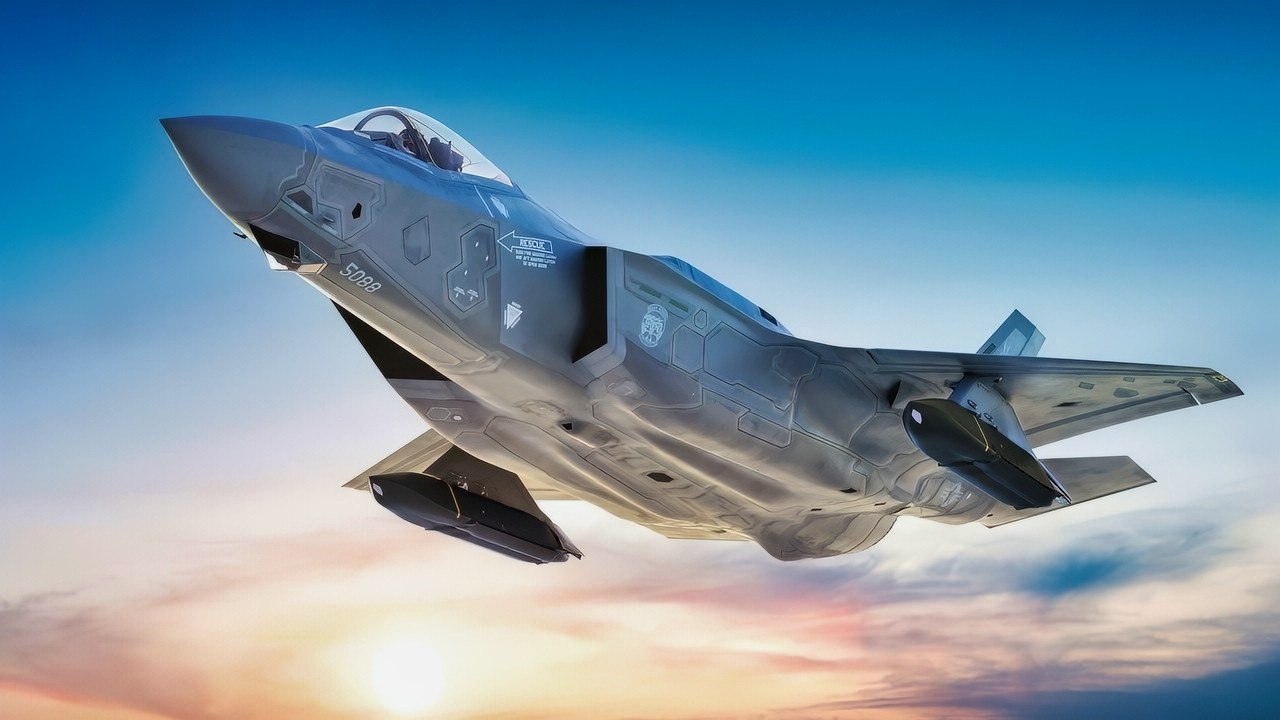
The cost of owning an F-35 – already the most expensive program in the history of the US Defense Department – keeps going up.
Lifecycle expenses for operating the aircraft continue to climb as Denmark, one of the aircraft’s more recent new users, has discovered.
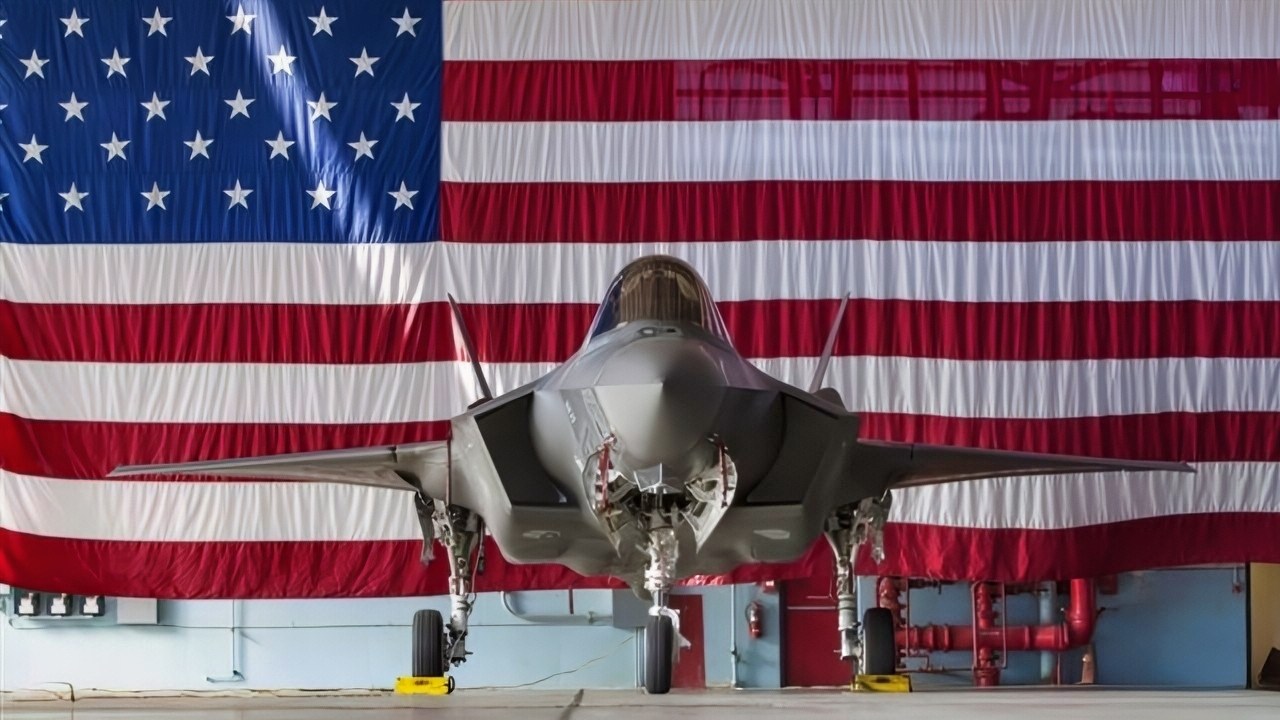
F-35 Fighter Image by Lockheed Martin

An F-35 Lightning II assigned to the 56th Fighter Wing performs a strafing run during exercise Haboob Havoc, April 26, 2023, over Barry M. Goldwater Range, Ariz. Haboob Havoc is a total force competition enabling pilots from various bases to demonstrate their skills across a diverse range of aircraft while also testing their abilities in different mission sets such as dogfighting and gun-runs. (U.S. Air Force photo by Airman 1st Class Mason Hargrove)
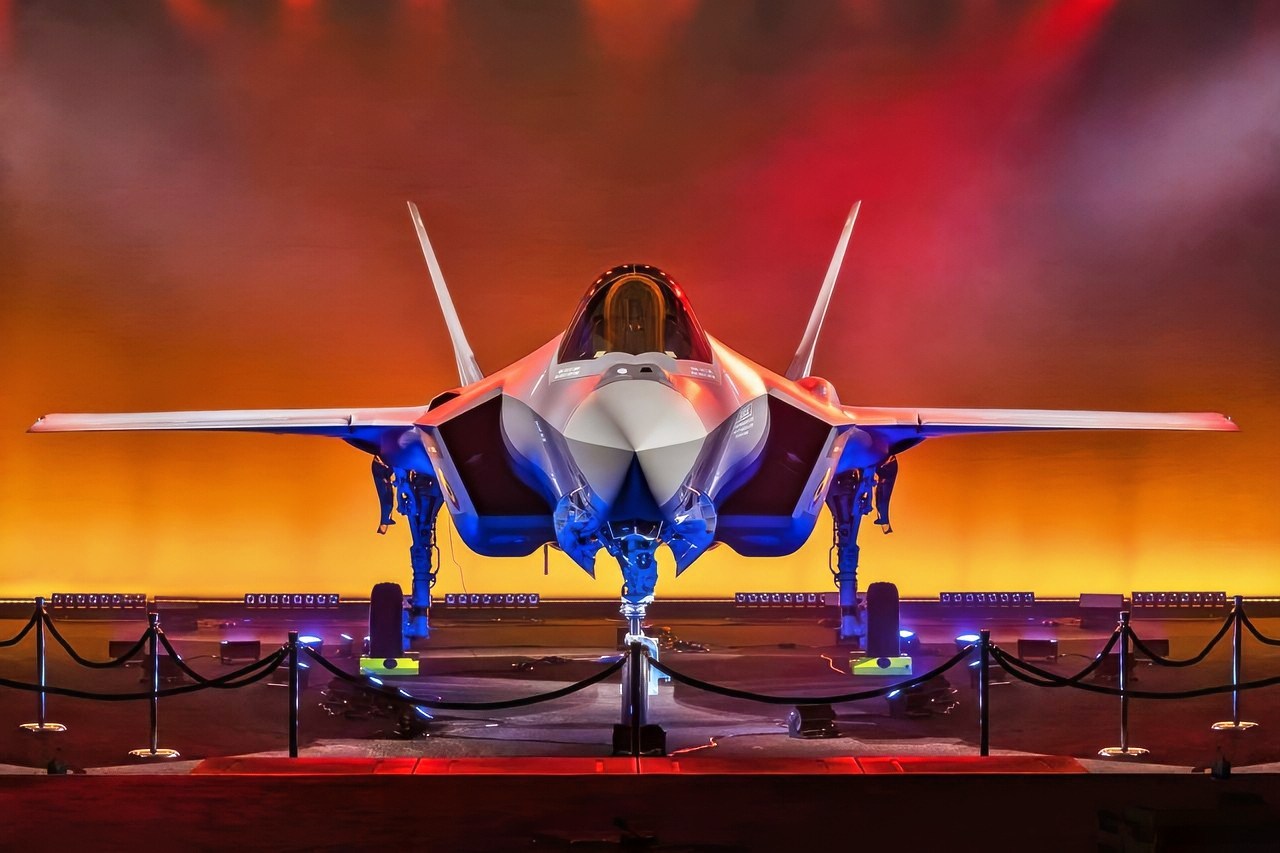
F-35 Fighter in Belgium. Image Credit: Creative Commons.
On Monday, Denmark’s National Audit Office (Rigsrevisionen) projected a €9.53 billion price tag for the 30-year lifecycle of the US-made stealth jet.
The original estimate for the costs over the life of the program was €7.64 billion.
These costs are those incurred in the initial procurement of the fighter, servicing and maintenance, pilot training, etc.
Despite the now roughly 25 percent increase, Denmark is supposedly considering procuring 16 more of the aircraft anyway.
But further south, the same rise in ownership costs is forcing the neutral, non-NATO state of Switzerland to scale back its F-35 order from 36 to 30 aircraft.
“Paying more for less doesn’t sound like a great deal, but this is where Switzerland has landed in the purchase of its next combat aircraft, the Lockheed Martin F-35A Lightning II,” reads a report from last month from the International Institute for Strategic Studies (IISS).
The Swiss Ministry of Defense (MoD )’s initial plan had been to purchase 36 of the jets, but the defense budget, even though it has seen a moderate increase, will now probably pay for no more than 30 of the ground-attack and fighter aircraft.
Switzerland’s acquisition of the F-35A is the most expensive defense procurement in the nation’s history.

A U.S. Marine Corps F-35B Lightning II aircraft with Marine Fighter Attack Squadron (VMFA) 242 conducts a low pass next to the Japanese Ship Izumo off the coast of Japan, Oct. 3, 2021. U.S. Marines and Sailors embarked aboard the Japanese Ship Izumo in support of the first ever F-35B Lightning II operations aboard a Japanese vessel. The U.S. and Japan continue to work closely together to broaden their operational capabilities, support the Treaty of mutual Cooperation and Security, and maintain a free and open Indo-Pacific. (U.S. Marine Corps photo by Lance Cpl. Tyler Harmon)
The selection of the F-35 has also been controversial. During negotiations with the US in 2025, as the report reads, “it became clear that the price tag for 36 F-35A aircraft could increase by up to CHF1.3 billion (US $1.56 billion).”
The “Crown” in Denmark’s Air Force
Previously, Denmark’s defense ministry estimated the project would cost 57.1 billion Danish crowns (approximately €7.64 billion), but this figure has now been revised to 71.2 billion Danish crowns (approximately €9.53 billion) to be spent on the fighter over its projected 30-year service life.
This is a €1.89 billion difference, reports the BFM Business TV network.
Rigsrevisionen is now ringing alarm bells over what it sees as the Danish defense department’s inability to accurately project real costs.
The auditors found that the ministry used overly optimistic projections to calculate long-term costs. As such, they were unable to adequately assess the program’s actual financial needs.
The issue now, says the auditing agency, is not the total figure, which, in the long term, is not an unmanageable sum.
The larger concern is that, as the audit office states, overall defense spending will now require increasing or securing financing for the F-35 program.
Another possible unhappy move is that other programs in the defense budget will have to be cut back, and/or additional reductions may be imposed to cover these increased costs.
Unlike Switzerland, which will largely use its F-35A models for air policing requirements, reducing the number to be procured is not an option for Denmark, given its responsibilities within NATO.
The Danes have already received 23 aircraft, and the remaining four still on order are scheduled for delivery by early 2027. Total overspending per aircraft will therefore amount to €70 million, but will be incurred over the aircraft’s total service life.
Infrequent Assessments
Overall, the Danish auditors say this event has shown that more frequent cost reviews are needed for major procurements.
This is especially the case when a program is high-cost, such as the F-35, and is still in the process of replacing major systems (e.g., the F-35 engine and the AN/APG-81 radar) with more advanced follow-on designs.
The Danish auditors thus fault defense officials for failing to reassess the costs of the F-35 program over nearly 10 years.
Those possible increases went unexplored despite a wealth of information about problems with the program that was unearthed in the intervening years.
Among those indicators were even memoranda from the F-35 program office itself warning of increased operational costs.
Another ignored factor that would have increased the cost numbers was the decision to push Turkey out of the program.
That reduced economies of scale associated with the total number to be produced, which would also impact costs over the life of the F-35 in fleets around the world.
The increased cost is “primarily due to the F-35 being more expensive to use than expected,” reads the Rigsrevisionen report.
Other factors that also contributed include increased salaries for personnel to support the aircraft, the costs of international cooperation, such as maintenance, plus anticipated upgrades, and the need to correct any as-yet undiscovered design flaws.
The auditors’ report also states that these estimates do not factor in the government’s plans to procure an additional batch of 16 aircraft, which, as of today, are still in their preliminary stages.
The same auditors have also criticized Danish defense officials for not having “adequately informed” the country’s lawmakers about these anticipated cost overruns.
About the Author: Reuben F. Johnson
Reuben F. Johnson has thirty-six years of experience analyzing and reporting on foreign weapons systems, defense technologies, and international arms export policy. Johnson is the Director of Research at the Casimir Pulaski Foundation. He is also a survivor of the Russian invasion of Ukraine in February 2022. He worked for years in the American defense industry as a foreign technology analyst and later as a consultant for the U.S. Department of Defense, the Departments of the Navy and Air Force, and the governments of the United Kingdom and Australia. In 2022-2023, he won two awards in a row for his defense reporting. He holds a bachelor’s degree from DePauw University and a master’s degree from Miami University in Ohio, specializing in Soviet and Russian studies. He lives in Warsaw.


