


The war is over. Peace in our time. At least for the next five days. If we’re lucky, the next 60 days. Certainly, though, we will not have true peace breaking out between the United States, the Islamic Republic of Iran, and Israel.
Peace In Our Time?

Capt. Karla Arango, 20th Bomb Squadron pilot, communicates to crew inside a B-52 Stratofortress during Global Thunder 2019 at Barksdale Air Force Base, La., Nov. 3, 2018. Global Thunder is an annual U.S. Strategic Command (USSTRATCOM) exercise designed to provide training opportunities to test and validate command, control and operational procedures. The training is based on a notional scenario developed to drive execution of USSTRATCOM and component forces’ ability to support the geographic combatant commands, deter adversaries and, if necessary, employ forces as directed by the President of the United States. (U.S. Air Force photo by Senior Airman Philip Bryant)
Even if the war is truly over, and we do make it to the official signing ceremony on Friday, and the war doesn’t restart between now and two months from now.
Even if the ceasefire leads to a real peace deal with Iran, the economic damage from the last more than 100 days of warfare in the Middle East is already baked into the proverbial cake.
According to a recent report from CNN, the Iran War has massively disrupted critical energy, agricultural, and industrial inputs that usually flow daily through the Strait of Hormuz.
Per the CNN report, there is an estimated 0.3 percent drag on the US gross domestic product (GDP). But that’s just the start.
The more than 100-day war created significant uncertainty in the global economic environment.
Even though the US leadership clearly believes any damage will be mitigated once the conflict has ended (or at least they think it has).
The fact remains that the disruptions since March have spiked inflation, drained the already-declining buffers of America’s oil supply, and raised the price of everything.

A B-52 Stratofortress lands at Patrick Space Force Base, Florida, April 15, 2021. The aircraft was featured at the Cocoa Beach Air Show April 17 – 18. The B-52 is is a long-range, heavy bomber capable of flying at up to 50,000 feet. (U.S. Space Force photo by Tech. Sgt. James Hodgman)
There is now no avoiding at least some of the damage.
The Direct Costs of War
First, let’s look at the tens of billions that taxpayers were asked to front for the physical movement and sustainment of US military forces and operations in the Greater Middle East during the 100-plus-day war.
US military fuel consumption alone added billions to projected interest payments on debt. Then there was the serious loss of equipment.
More than 40 military planes were destroyed. There was a successful, yet costly, operation in the heart of Iran to rescue two downed American fliers early in the war. The Iranians decimated a large portion of America’s MQ-9 Reaper drone fleet.
And then there’s the damage to US military infrastructure across the Middle East. Indeed, those losses are far greater than what we fully understand.
The US Navy’s Fifth Fleet headquarters in Bahrain, possibly the most US military facility in the region, has been hit hard, according to various reports.
Whatever remains is a fraction of its former self, meaning that the serious capabilities that the Fifth Fleet HQ provided the US military in the region have been greatly reduced.
If the Pentagon wants to reconstitute those lost capabilities, it will require a government in Bahrain amenable to being targeted by Iranian ire yet again, and it will require many billions more dollars to restore them.
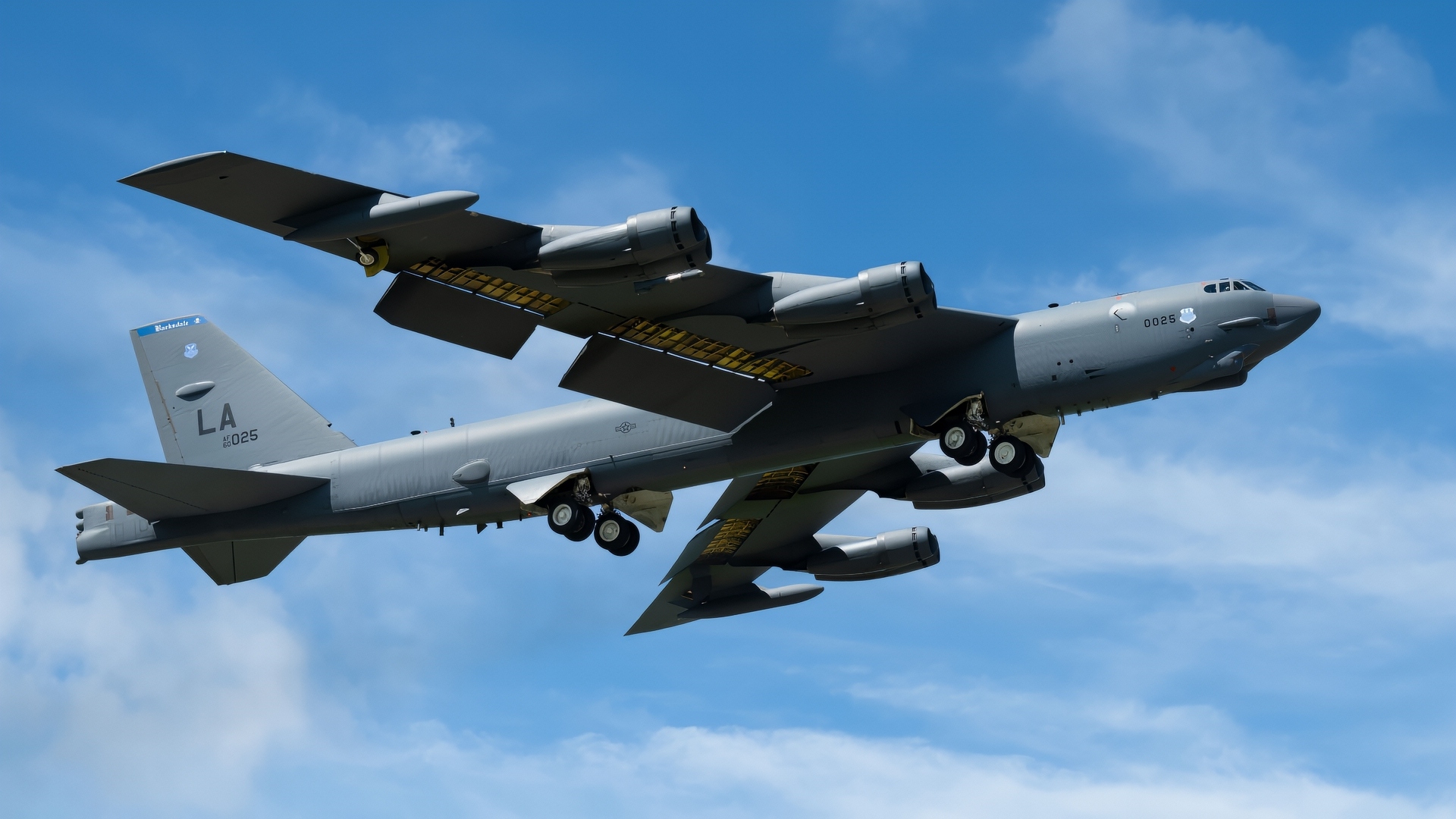
B-52 Bomber Flying High in Sky. Image Credit: Creative Commons.
America’s Regional Military Architecture Has Been Degraded
In fact, much of the US military’s defense architecture arrayed across the region has been seriously degraded.
For instance, early warning radar and tracking systems that are essential for air defense in the Arab states and Israel were among the first targets destroyed in the kinetic phase of the Iran War.
It is unlikely that these capabilities will be reconstituted.
If they are, it will be a great diplomatic cost and lead to high economic costs that will take years to repair.
In the meantime, Iran will merely solidify its military standing in the region while the Americans pay gobs of tax dollars to just return their stance to what it was before the war.
The Institute for Economics and Peace estimates that the conflict itself costs the global economy roughly $2.2 trillion, notably harming global trade and travel sectors.
America’s Energy Buffers Are Running Out
As the United States approaches its 250th anniversary, energy experts warn that the United States will be reaching the “bottom” of its energy buffers beginning as early as June 22.
That’s a massive problem, considering that the heavy crude oil that America’s Gulf Coast refineries require will not be flowing out of the Mideast into those refineries anytime soon.
With the “bottom” of those buffers reached in just a week or so, the US government’s ability to artificially deflate the relatively high price of oil will be harder.
And, as that becomes more difficult, the chances that we’re still in store for higher oil prices, irrespective of whatever the markets did today responding to the news of a 60-day ceasefire, are higher.
The New Cost of Shipping Through Hormuz
Not only has regular shipping through the Strait not been fully restored to prewar levels, but there is also growing evidence that Tehran intends to exact tolls or fees in the form of institutionalized service, transit, and environmental charges.
It will take months, if not likely years, before the international shipping industry comes to terms with these new costs of doing business in the region.
And as they incorporate those new costs, they will pass those increases on to their consumers globally.
That’s to say nothing of the shipping industry’s insurers, such as Lloyd’s of London, that will restore operations in the Strait with great caution.
In the time it takes to restore those operations, prices will remain. Those, too, will be passed on to global customers, making everything more expensive and likely leading to shortages.
Inflation Is Back–and Interest Rates Are Going Up
Which brings us to the issues of inflation and interest rates. That was probably the most powerful factor behind Donald Trump’s reelection victory over Vice-President Kamala Harris in 2024.
People were fed up with the high inflation rates of the Biden years. The assumption was that Trump would bring interest rates down.
To be fair, the forty-seventh president had started doing that. Until he started the war against Iran on February 28.
Since then, oil prices have generally risen, which has, in turn, increased the inflation rate.
Today, inflation has gone from slightly above two percent (where the Federal Reserve likes it) to more than four percent.
It is projected that the rate will increase over the summer, too. Too bad for the new Fed Chairman, Kevin Warsh.
After all, he was picked by Trump because he basically vowed to keep interest rates low if he became the replacement for Jerome Powell.
Now, Warsh will be tasked with raising interest rates to combat inflation.
That will, in turn, have a stultifying effect on the broader economy, creating a massive slowdown that likely snowballs into high unemployment, high prices, and low wages.
In other words, stagflation is coming.
The Coming Fertilizer and Food Problem
And there are already shortages beyond the oil and natural gas coming out of the Mideast. Fertilizer is going to be a big problem, especially during this planting season (which is occurring).
It’ll truly harm Asia, Europe, and Africa. But its effects, while likely to be felt only next year, will be felt nonetheless (because the food we’re consuming today was planted in last year’s growing season).
There’s no ameliorating these shortages that are set to begin at the end of this month.
All we can do is mitigate their long-term impacts. And that’s only achieved by fully restoring global trade via the Strait of Hormuz.
But, the shortages and price hikes–as well as overall slowdown–will be felt so much that the Republicans likely lose the Midterm elections.
In other words, the economic damage will be felt for the rest of the year, and the harm to the political order will be profound.
Victory On Paper, Defeat In Practice
The great irony is that Washington may soon declare total victory while living with the consequences of defeat.
Perhaps the ceasefire holds. Maybe the formal signing ceremony takes place without incident.
It’s possible negotiators eventually transform this fragile 60-day Memorandum of Understanding (MoU) into a broader settlement.
None of that changes the underlying reality that more than 100 days of war have permanently altered the economic landscape.
Supply chains were disrupted. Energy markets were shocked. Strategic stockpiles were depleted. Military infrastructure was damaged.
Insurance rates rose. Shipping patterns changed. Investor confidence, while high right now, won’t be in another quarter.
Those realities do not disappear just because diplomats sign a document or because traders enjoy a bit of irrational exuberance on Wall Street.
For decades, American leaders have assumed that wars in the Middle East could be fought at relatively low cost to the homeland.
The Iran War shattered that assumption.
Even if not a single shot is fired from this point forward, Americans will continue paying for this conflict every time they fill their gas tanks, buy groceries, finance a home, or confront a weakening labor market.
That is the uncomfortable truth lurking beneath the celebrations of ceasefire and peace talks. The shooting may be ending. The bill is only beginning to arrive.
And unlike the war itself, there will be no ceasefire from the economic consequences. They are now part of our future.
About the Author: Brandon J. Weichert
Brandon J. Weichert is Senior National Security Editor. He also manages The Weichert Brief on Substack. Weichert also hosts “National Security Talk” on Rumble. He is the author of four bestselling national security books, the most recent of which is A Disaster of Our Own Making: How the West Lost Ukraine (Encounter Books). Follow him via Twitter/X @WeTheBrandon.


