

Trump Is Looking for an Exit From Iran, Not Another War: Trump may bomb Iran again. He says he will if there is no deal, or if Iran cheats, or if the final terms look wrong to him. That is worth taking seriously. The United States has already struck Iran. Tehran cannot assume the threat is theater.
The more likely outcome is still that Trump takes a thin deal, calls it a major victory, and moves on.

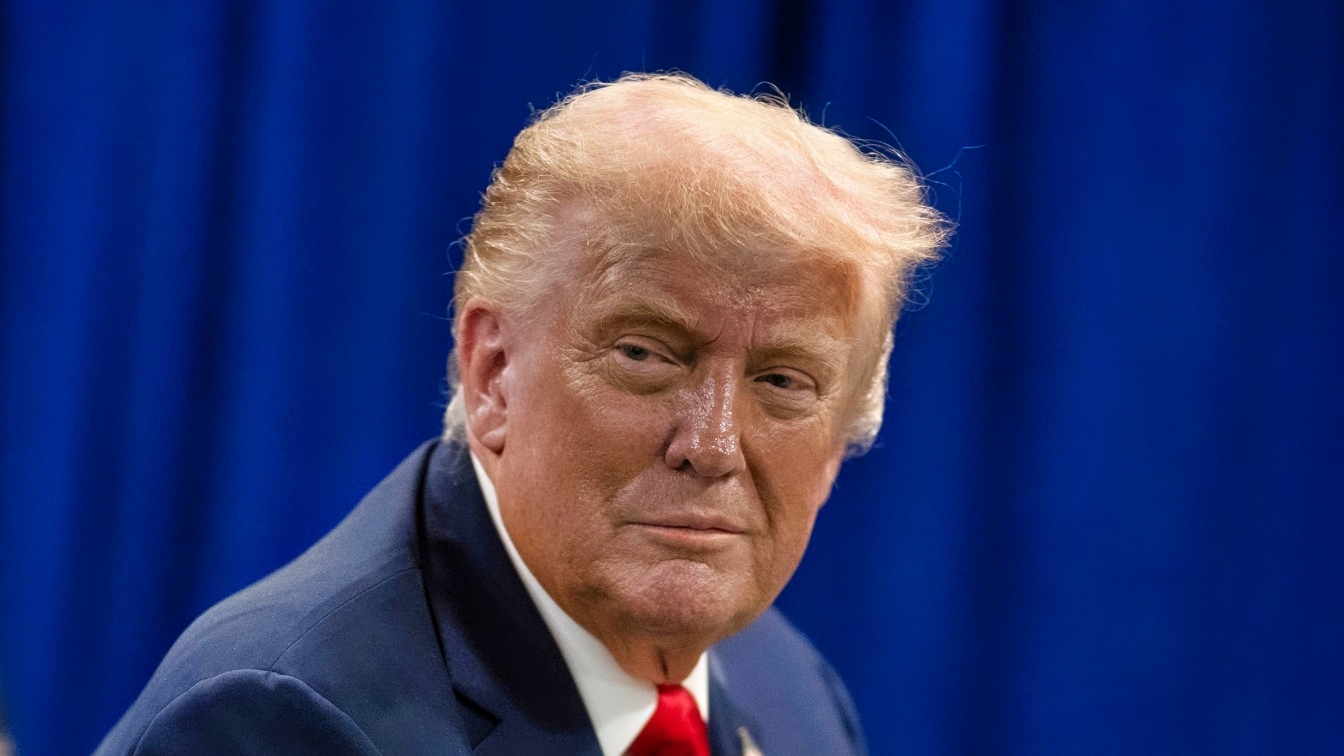
Donald Trump Giving a Speech. Image Credit: Gage Skidmore.
That sounds cynical only if we pretend wars end in clean strategic settlements. They usually do not. They end when the main actors find something they can live with, or at least something they can explain. The 2015 JCPOA itself was a time-limited cap rather than a dismantlement, purchased with sanctions relief and accepted by an Iranian government that needed the money. It held just long enough to become someone else’s problem.
Trump’s need is obvious. He needs enough Iranian movement to say the force worked. He needs enough quiet in the Gulf to keep the war from becoming a domestic economic problem. He needs enough ambiguity in the nuclear file to avoid admitting how much remains unresolved.
He does not need a perfect deal. He needs an exit he can sell.
Trump Has His Proof
The first round of strikes gave Trump the thing he often wants most in foreign policy: a visible act of power. He can say he did what weaker presidents only talked about: that Iran came to the table because he made it come to the table.
Some of that may be inflated. Iran may have preserved more of its nuclear infrastructure than Washington wants to admit. It may have traded a Gulf crisis for sanctions relief, asset relief, and time.
Still, Trump now has a usable story, and another strike would complicate it. A second bombing campaign would not simply repeat the first. It would open a new stage of the war. Iran could hit U.S. forces or regional infrastructure. Oil markets could start moving again. Israel could decide that the American track leaves too much Iranian capacity intact. Congress would discover war powers for the afternoon. Cable news would go back to the maps.
Trump likes threats. He likes visible power. He does not like owning an open-ended mess once he has already announced that he solved it.
The Threat Still Matters
This is why his threat to bomb again should not be dismissed. It helps him negotiate and sell whatever comes next.
If Republican hawks say the deal is weak, Trump can say Iran knows what happens if it cheats. If the nuclear language is vague, he can lean on the military threat rather than the text.

President Donald Trump attends an event celebrating Women’s History Month, Wednesday, March 26, 2025, in the East Room of the White House. (Official White House Photo by Molly Riley
That may be enough for his purposes. Trump has spent years denouncing the 2015 nuclear deal as a humiliation. Now he is dealing with a framework that leaves serious questions for later. His answer is to say that this agreement came after American forces, so it belongs in a different category.
The threat lets him accept less than maximal surrender while still sounding as if he forced one. It keeps fear in the room.
None of this makes him a careful strategist. It makes him a politician trying to turn coercion into an exit.
Hormuz Is the Part Voters Can Feel
The nuclear file can be made hard to follow. Hormuz cannot be hidden for long.
Enrichment levels, stockpile accounting, inspection protocols, and centrifuge capacity can be lost in technical language. Diplomats know how to do that. The missile file can be postponed. Proxy activity can be described in language loose enough to survive contact with Lebanon, Iraq, Syria, and Yemen.
A closed or unstable Strait of Hormuz is harder to bury. Tankers either move with some confidence or they do not. A mine, a drone, or a militia strike near the wrong piece of infrastructure can move oil prices before Washington has finished explaining what happened.
That is why the Gulf shipping question matters so much for Trump. If traffic resumes and energy pressure eases, he can say he restored order, that Iran backed down, that the market reaction proves the war worked.
The deeper Iran problem can wait, at least politically. It is how states often behave when a war starts costing more than the original problem seemed to justify.
Tehran can probably read this. That does not mean Iran is unified behind a settlement. Khamenei has spent forty years treating negotiated limits on the nuclear program as capitulation. What matters is whether the Supreme Leader decides a deal protects enough of the program’s core to be worth the political cost of signing one. The strikes gave him cover to negotiate — force majeure rather than concession. Still, Iran does not have to give Trump everything. It has to give him enough to leave. Some enrichment ceiling Iran can live within while preserving the technical knowledge to return. Inspection language broad enough to satisfy Washington and loose enough to argue over later. Enough calm in Hormuz. A little care in how loudly it claims success at home.
The danger is that Iran is not the only one on the board. Israel is the variable most likely to wreck whatever Washington thinks it has settled. Israeli security doctrine does not stop at preventing an Iranian bomb. It aims to prevent the capacity to build one, and the threshold for Israeli tolerance of residual Iranian enrichment sits well below whatever Trump is prepared to accept as a win. If Israeli officials conclude that the American framework leaves too much intact, they retain both the motive and, as they have demonstrated before, the means to act independently.
A unilateral Israeli strike does not simply complicate Trump’s exit narrative. It restarts the war on terms Washington did not choose. Hezbollah has its own incentives. Gulf states will hedge if they think Washington is improvising. A ceasefire can be damaged by actors who never signed the script.
Another strike becomes more likely if Iran makes Trump look foolish in public. Expel inspectors. Resume high-level enrichment in a way no one can explain away. Kill Americans. Turn Hormuz back into a crisis. Present the deal as an American climbdown and dare him to answer.
Short of that, Trump probably takes what he can get.
The deal may leave Iran with too much nuclear knowledge, too many missiles, and too much room to rebuild. It may also set a bad precedent in Hormuz, where Iran learned once again that pressure on shipping can buy attention quickly. A reopened strait is useful. It is not the same as restoring American control over the terms of maritime order in the Gulf. That should bother anyone who cares about the difference between ending a crisis and solving the problem that produced it. A settlement can work politically while leaving the strategic problem mostly alive.
Trump may decide that is enough. Each side can tell its own public that it endured, forced concessions, and gave away less than the other side claims.
The bombers may come back if that arrangement breaks. For now, they are more useful waiting offstage while Trump looks for the door.
About the Author: Dr. Andrew Latham
Andrew Latham is a professor of international relations and political theory at Macalester College in Saint Paul, MN. You can follow him on X: @aakatham.


bishnoi-noi
June 19, 2026 at 1:29 pm
President trump has delegated the Iran problem to…..
To J D Vance.
Vance is thus telling netanyahu, “Ya can’t kill ya way out of ya security worry.”
So, now what.
Now’s the time to recognize Hamas as the representative of the Palestinian people and reward it with the eastern half of Cyprus.
The others.
The others, well, they can go straight to UK as refugees.