

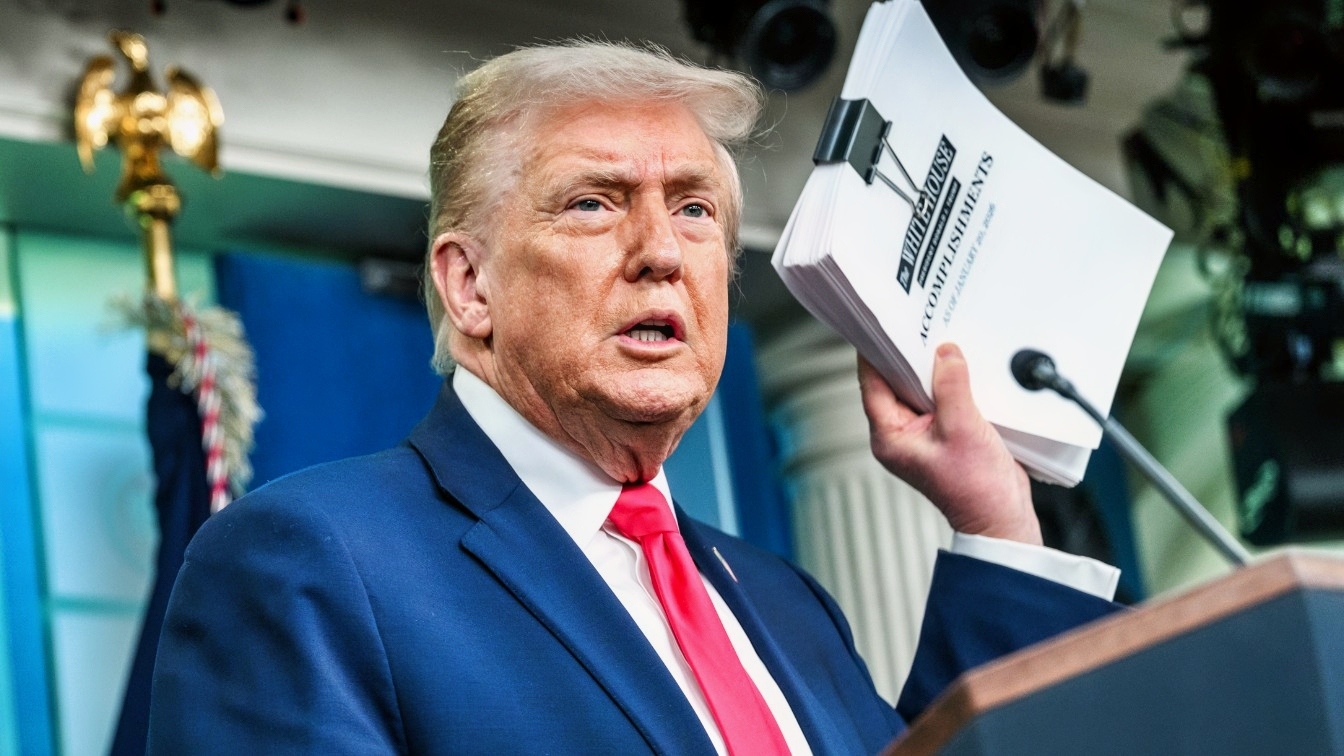
The memorandum of understanding that the U.S. is expected to sign in person with Iran on Friday has managed something rare in American politics: uniting President Donald J. Trump’s hawkish allies and his anti-war base against him, for opposite reasons. The hawks think it gives Tehran too much; the America First wing never wanted the war that produced it. The reason Trump is signing, anyway, is not stated in any of the document’s fourteen points. It is in two numbers that had been falling fast for sixteen weeks — the level of America’s strategic oil reserve, and the depth of its missile and interceptor stockpiles.
By mid-June, both had dropped far enough that continuing the war risked an oil-driven recession and a hollowed-out military.

A Terminal High Altitude Area Defense (THAAD) interceptor is launched from the Pacific Spaceport Complex Alaska in Kodiak, Alaska, during Flight Experiment THAAD (FET)-01 on July 30, 2017 (EDT). During the test, the THAAD weapon system successfully intercepted an air-launched, medium-range ballistic missile (MRBM) target.
The deal is not the product of a president negotiating from strength. It is the product of a president who had run out of time.
Why Trump Needed A Deal: The Oil Reserve Hit A 1983 Low
The most concrete pressure was energy. After the United States and Israel began striking Iran on February 28, Tehran retaliated by threatening and attacking ships in the Strait of Hormuz, the chokepoint through which roughly one-fifth of the world’s oil passes, and by early March, Iranian forces had declared the Strait “closed”. Insurance for tankers became unavailable or unaffordable, traffic collapsed, and the waterway was effectively shut. Brent crude, which had traded near $70 before the war, surged above $100 a barrel — the highest since 2022 — and American gasoline climbed past $4.50 a gallon. Where I live, just south of Orlando, Florida, I paid almost $6.00 per gallon for 93-octane gas.
Washington’s response was to drain its emergency reserves, and that is where the clock became unforgiving. The U.S. Strategic Petroleum Reserve held about 415 million barrels in February; by this week, it had fallen to 340.3 million barrels, its lowest level since 1983. The reserve cannot simply be emptied to zero — it must retain a minimum volume to prevent structural damage to the cavern system that holds it, and even at full tilt, it can release only so fast, with oil taking days to reach refineries.
The global buffer was vanishing at a pace without modern precedent: one analysis found world oil stockpiles drew down by roughly 4.8 million barrels a day between early March and late April, exceeding the previous record for a quarterly drawdown, with cumulative Hormuz supply losses topping a billion barrels.
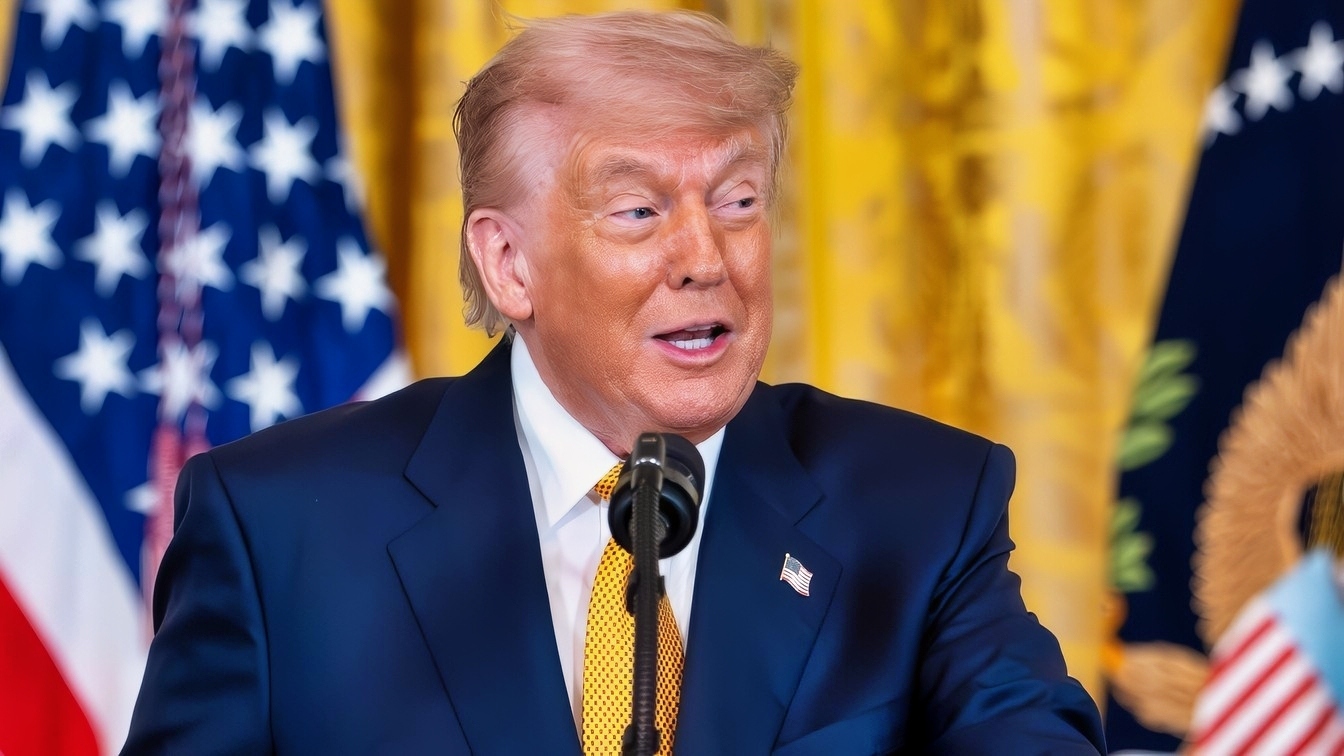
President Donald J. Trump delivers remarks at a Military Mothers’ Day event, Wednesday, May 6, 2026, in the East Room of the White House. (Official White House Photo by Andrea Hanks)
A few more weeks of war would have drawn the usable cushion down to the point where Washington had little left to deploy against the next price spike — and with it, a rising risk of recession in an economy already straining under fuel costs.
The deal’s effect on prices was immediate: gasoline eased back toward $4.06 a gallon on expectations that the Strait of Hormuz would reopen.
The Empty Magazines: How The Iran War Drained America’s Missiles
The second pressure was military, and in the long run, it is the more dangerous.
Sustaining the campaign against Iran burned through American precision munitions and air-defense interceptors at rates the industrial base cannot match.
According to a Center for Strategic and International Studies analysis and people familiar with internal Pentagon stockpile assessments, over the first seven weeks of the war the U.S. expended at least half its inventory of THAAD interceptors, nearly 50 percent of its Patriot interceptors, and about 30 percent of its Tomahawk missiles, along with at least 45 percent of its Precision Strike Missiles and roughly 20 percent of its SM-3 and SM-6 interceptors — and it would take four to five years to replace those systems. The Payne Institute estimated U.S. forces fired 535 Tomahawks and 402 Patriot interceptors in just the first sixteen days of Operation Epic Fury.
The high-end interceptors are the real constraint, because they are the slowest and costliest to build. Each THAAD interceptor runs about $15.5 million, and production lines that turn out a few hundred a year cannot refill a magazine that a war empties in weeks. The Senate Armed Services Committee chairman, Roger Wicker, told a March hearing that “our defense industrial base has struggled to keep pace,” and the Pentagon has scrambled to shift funds to accelerate purchases while Trump has asked manufacturers to quadruple output.
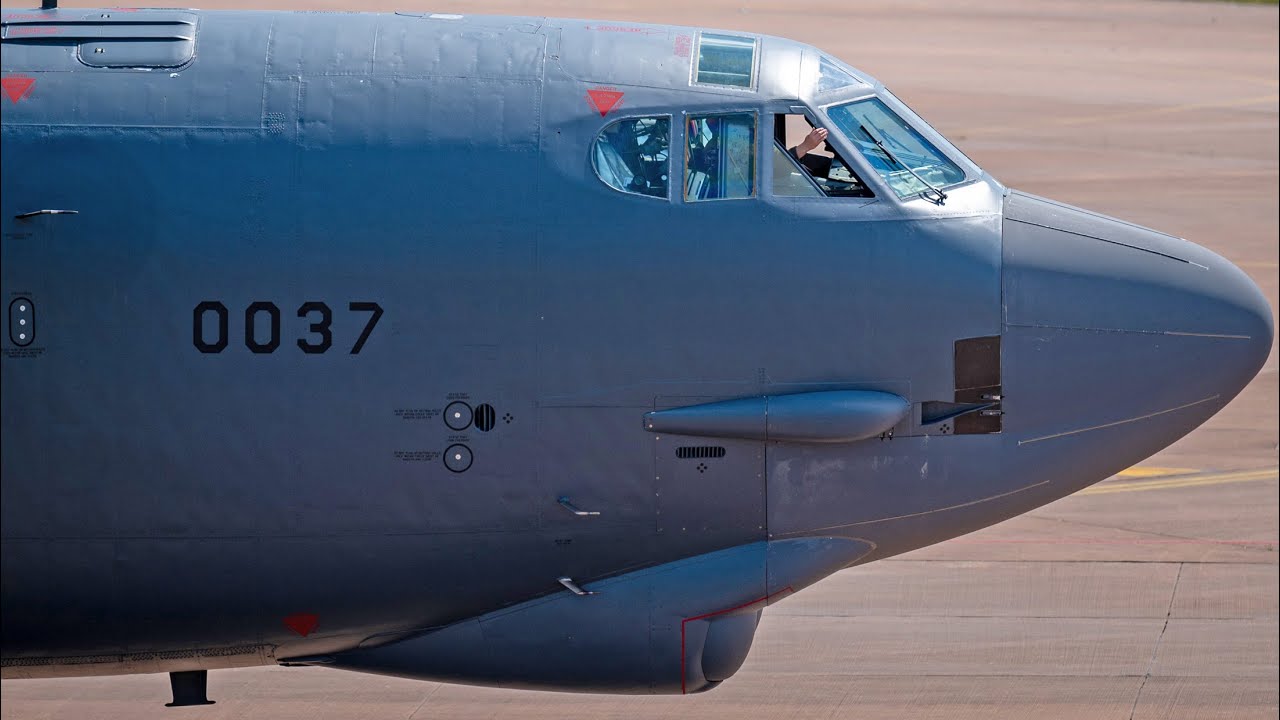
B-52 bomber. Image Credit: Creative Commons/USAF.
Analysts warned that at the war’s burn rate, the United States would exhaust roughly half its entire interceptor stockpile in four to five weeks, and a defense think tank cautioned that the high-end interceptors could be drawn down to dangerous levels within days of sustained combat, which is partly why the 2026 defense authorization act ordered multiyear purchases of Patriot, THAAD, SM-3, SM-6, and Tomahawk. Continuing the war would have pushed those magazines toward levels that degraded American readiness for any other contingency.
That contingency has a name: the strategic argument for ending the war quickly. THAAD and SM-3 interceptors would be in even greater demand in a high-end fight against China in the Pacific, where the threat from Chinese ballistic missiles grows by the month. Every interceptor spent over the Persian Gulf is one not available over the Taiwan Strait, and the war against Iran was opening a window of vulnerability in the theater the Pentagon treats as its priority.
A president watching his most exquisite munitions drain away, with years needed to rebuild them, had a powerful reason to stop — independent of anything Iran offered at the table.
The Backlash From Both Flanks: Levin, Carlson, And Greene
The clearest sign that Trump took this deal under duress is who is attacking it.
On the hawkish right, Fox News host Mark Levin — who had spent months savaging the war’s critics — turned his fire on the agreement itself, writing as the signing approached that he “sure as hell hope I am misreading and mishearing things.” Pro-Israel conservatives and prominent Republican senators have warned that the deal falls well short of what Trump promised, and the criticism has grown sharp enough that his own advisers are pushing back at members of their own party.
On the other flank, the America First wing that opposed the war from the start is no happier. Tucker Carlson called the war “disgusting and evil” in the days after the strikes began, and Marjorie Taylor Greene blasted the administration for breaking its promises, writing that “we voted for America First and ZERO wars.”
A deal that draws fire simultaneously from the people who wanted to hit Iran harder and the people who never wanted to hit it at all is, almost by definition, a deal its author accepted because he had to, not because he wanted to.

A U.S. Air Force B-52H Stratofortress strategic bomber assigned to the 69th Expeditionary Bomb Squadron flies within the U.S. Central Command area of responsibility, Nov. 15, 2024. The B-52H provides strategic options and flexibility to U.S. and coalition senior leaders with the aircraft’s ability to employ a wide range of weapons with precision and deliver a decisive response to adversaries who threaten peace and security across the region. (U.S. Air Force photo)
The Sequencing Matters: The Anger Came Before The Text
It is important to be precise about what these critics were reacting to, because the timing tells the story. Most of this anger predates the document now headed for signature.
The America First wing turned on the war when it began in late February — Carlson’s and Greene’s harshest words were aimed at the decision to fight, not at any negotiated terms.
The hawks turned later, in May, as reports emerged that the administration was anxious to cut a deal, and Republican hawks grew openly worried Trump would settle for far less than he had demanded.
Even now, with senior U.S. officials having only just read a draft to reporters and Iran not yet having released its own text, pro-Israel conservatives are demanding to see the full agreement rather than responding to its specifics.
In other words, the cross-spectrum revolt is not a reaction to the fourteen points as written; it is a reaction to the war, to the prospect of a soft exit, and to the secrecy surrounding it — a backlash that was building for months before the deal reached the page, and that the terms now emerging are unlikely to quiet.

A B-52H Stratofortress taxis down the runway at Minot Air Force Base, N.D., Sept. 16, 2021. The bomber is capable of flying at high subsonic speeds at altitudes up to 50,000 feet. (U.S. Air Force photo by Airman 1st Class Zachary Wright)
The Administration’s Case — And Why The Timing Undercuts It
The White House tells a different story, and it deserves to be heard.
In its telling, the strikes crippled Iran’s nuclear program, Tehran came to the table because American force left it no choice, and the agreement is peace through strength rather than retreat.
Trump has insisted he is not eager to resume fighting but warned that enforcement rests on the credible threat of more bombing — asked how he would hold Iran to the deal, he said the United States would “bomb the hell out of them if they violate the agreement.”
He has also hedged on whether he will personally sign, suggesting it may not be the kind of document a president should put his name to and joking that he would blame Vice President JD Vance if it fell apart.
The trouble with the strength narrative is that the terms and timing point in the opposite direction. The draft has the United States waiving broad sanctions, committing with regional partners to a reconstruction plan worth at least $300 billion, agreeing to discuss Iran’s enrichment rather than ending it outright, and resting enforcement on the threat of future strikes rather than on any binding mechanism.

B-1B Lancer Bomber. Image Credit: Creative Commons.
Those are the concessions of a party that wanted the war over, paired with toll-free passage through Hormuz that the draft guarantees for only sixty days. When the buffer protecting the economy is at a forty-three-year low, and the magazines protecting the military are half empty, the side that needs the war to end is the side that gives ground to end it.
The President’s own hedging about whether to sign, and his reliance on the threat of renewed bombing to enforce it, read less like confidence than like a man making the best of a position he would rather not be in.
The Verdict: A Deal Signed Under Pressure, Not From Strength
The Iran agreement Trump is poised to sign on Friday will be sold as a triumph, and for the country, it may well be the right outcome — an off-ramp from a war that was bleeding the economy and the arsenal at an unsustainable rate. But the case that he chose it freely does not survive contact with the numbers. The Strategic Petroleum Reserve had fallen to its lowest point since 1983, the Strait of Hormuz was closed, and oil sat above $100, and a few more weeks would have spent the last of the cushion standing between American consumers and a price shock. The military had burned through half its THAAD and Patriot interceptors and a third of its Tomahawks, with years required to rebuild them and China watching the drawdown from across the Pacific. And the deal itself satisfies neither the hawks who wanted Iran broken nor the base that wanted no war at all.
That combination — empty reserves, empty magazines, and a coalition united only in its disappointment — is not the signature of a president dictating terms. It is the signature of a president who needed an exit and took the one available.
Trump did not sign this deal because he had won. He signed it because the alternative, a few weeks further on, was an oil crisis at home and a hollow force abroad, and those were prices even he could not pay.
About the Author: Harry J. Kazianis
Harry J. Kazianis (@Grecianformula) was the former Senior Director of National Security Affairs at the Center for the National Interest (CFTNI), a foreign policy think tank founded by Richard Nixon based in Washington, DC. Harry has over a decade of experience in think tanks and national security publishing. His ideas have been published in the NY Times, The Washington Post, The Wall Street Journal, CNN, and many other outlets worldwide. He has held positions at CSIS, the Heritage Foundation, the University of Nottingham, and several other institutions related to national security research and studies. He is the former Executive Editor of the National Interest and the Diplomat. He holds a Master’s degree focusing on international affairs from Harvard University.


