

Ships Passing Through The Strait of Hormuz Are The Most Since March: Oil tanker traffic passing through the Strait of Hormuz has picked up amid negotiations between the U.S. and Iran aimed at ending the conflict, which has caused oil prices to decline as more supply hits the market.
Since the deal was announced at the G7 summit in France, tanker traffic, some of which had been stranded for months, has finally started moving toward their destinations, most of which are in Asian markets.

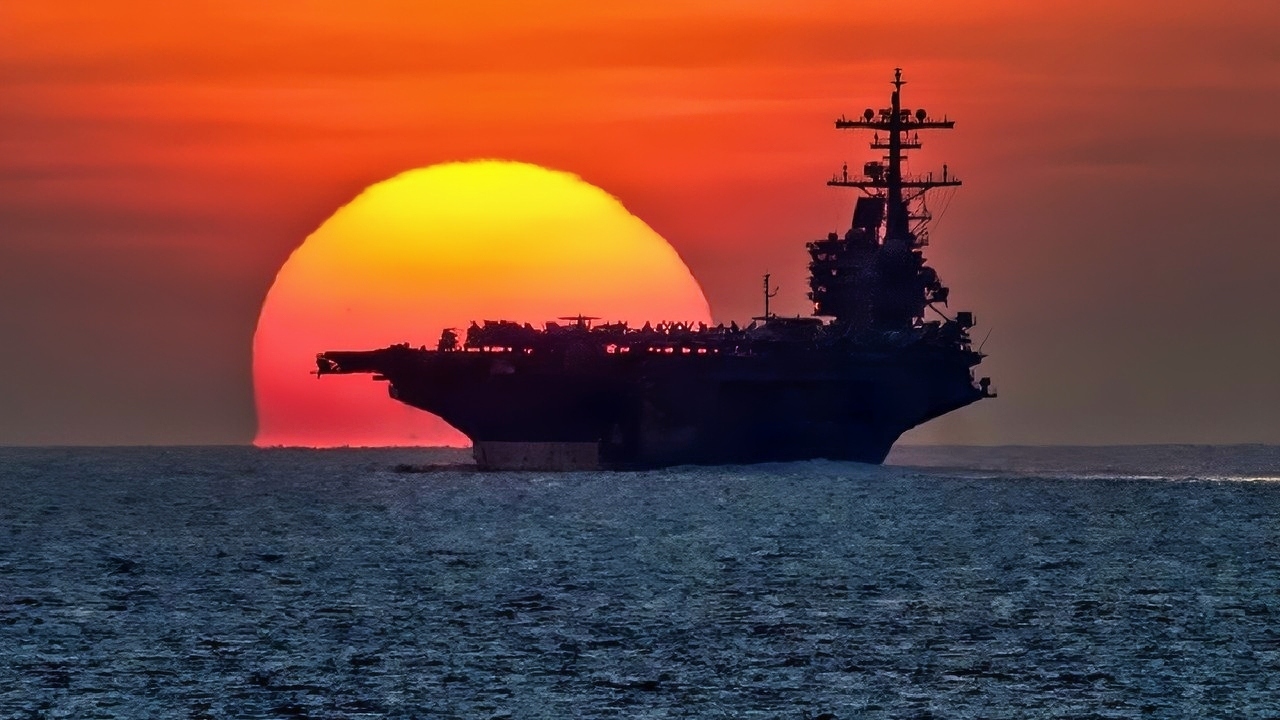
NAVAL AIR STATION NORTH ISLAND, Calif. (July 10, 2024) USS George Washington (CVN 73) arrives at Naval Air Station North Island, July 10, 2024. USS George Washington and crew are in the process of completing a homeport change, replacing USS Ronald Reagan (CVN 76) as the forward-deployed U.S. Naval Forces Japan aircraft carrier at Fleet Activities Yokosuka, Japan.(U.S. Navy photo by Mass Communication Specialist 1st Class Keenan Daniels)
President Trump posted on his Truth Social page that, “19 Million Barrels of Oil flowed out of the Hormuz Strait yesterday, an all-time RECORD. Oil prices are tumbling down, and the World is a much safer place!!!” Reuters reported that four tankers carrying six million barrels of oil passed through the Strait on Thursday.
However, hundreds of ships are still waiting to pass through the Strait.
As of June 25 at 2:30 p.m. ET, the price of oil has dropped to $71.83 a barrel. That is basically the cost of oil at the time the conflict began.
Bloomberg reported that the surge in tanker traffic since last week has also caused a shift in North Sea crude prices, with Forties crude trading at its lowest level in two years on Monday.
Traffic Through The Strait Surged Over The Weekend
Between Saturday and Monday, 109 tankers have transited the Strait, according to Kpler, a firm that tracks global shipping traffic. Most of the traffic is using the Omani route, but traffic is still not where it would normally be, as Iran has yet to remove the mines on their side of the Strait.
Kpler did say that while tankers are finally moving, container ships are still not moving, with an estimated 79 percent of container ships still waiting to move.
Kpler confirmed that oil shipments through the Strait of Hormuz have risen to around 4.8 million barrels per day since the U.S.-Iran deal was announced. However, exports remain well below preconflict levels when 15 million barrels per day traveled through the strait.
Iranian Tanker Traffic Surging After The Lift Of the US Blockade
Iranian oil tankers carrying about 21 million barrels of oil exited the Strait of Hormuz in June. The U.S. Navy lifted its blockade of Iran on June 18, and President Trump announced that the Treasury Department this week waived sanctions on the country’s oil sales through August.
This was reportedly so that Iran can purchase food, some of which is corn and soybeans, from American farmers. Iranian leaders, however, denied this.

A U.S. Navy F/A-18E Super Hornet aircraft assigned to Strike Fighter Squadron (VFA) 14 participates in an air power demonstration near the aircraft carrier USS John C. Stennis (CVN 74) April 24, 2013, in the Pacific Ocean. The John C. Stennis Carrier Strike Group was returning from an eight-month deployment to the U.S. 5th Fleet and U.S. 7th Fleet areas of responsibility. (U.S. Navy photo by Mass Communication Specialist Seaman Apprentice Ignacio D. Perez/Released)
It has been estimated that some 51 million barrels of oil passed through the Strait during the period it was shut down. Most of these had their transponders switched off so they wouldn’t be tracked and attacked by IRGC swift boats.
Some analysts believe those numbers are even higher.
The Threat Level For The Strait Of Hormuz Is Lowered
The Joint Maritime Information Center (JMIC), a U.S.-led international maritime security organization based in Bahrain, lowered the regional threat level to moderate on June 18 after the U.S. and Iran agreed to the MoU and open the waterway during the 60-day negotiating window.
However, it noted that there are still confirmed mines in the waterway on the Iranian side of the Strait and recommended that vessels use the southern route near Oman, as it has been cleared of mines.
“Mariners should be advised of the existence of mines and expect naval presence as clearance operations continue,” JMIC said in its announcement. “Mariners should also expect congestion through transit routes and potential VHF hailing from naval forces to support free flow.”
“An attack is possible but not likely, and overall risk has decreased following the implementation of the U.S.–Iran Memorandum of Understanding,” the JMIC said in its latest advisory published on Tuesday.
Stranded Sailors Will Soon Be Evacuated
The International Maritime Organization, a United Nations agency, said Tuesday that it will implement an evacuation plan for the more than 11,000 sailors still stuck in the Persian Gulf. The plan was agreed upon by the IMO Council and in close coordination with Member States and industry.
“We have secured the necessary safety guarantees and have thoroughly verified the conditions for safe navigation to support these operations,” IMO Secretary-General Arsenio Dominguez said in a released statement.
The Oil Markets Have Rebalanced
While consumers have been dealing with high current prices amid disruptions from the Gulf, markets are still in the rebalancing phase. Pump prices have not yet reflected the drop in global oil prices.
Inflation may continue to rise, but many analysts believe that will quickly change.
About the Author: Steve Balestrieri
Steve Balestrieri is a National Security Columnist. He served as a US Army Special Forces NCO and Warrant Officer. In addition to writing on defense, he covers the NFL for PatsFans.com and is a member of the Pro Football Writers of America (PFWA). His work was regularly featured in many military publications.


