

The US Navy has unveiled an ambitious long-term shipbuilding plan that envisions expanding the fleet to roughly 450 vessels by the early 2030s, combining traditional warships with a growing number of unmanned surface and undersea systems.
The new proposal represents more than another procurement plan—it’s a broader shift in how the Navy expects future wars, particularly against China, to be fought.

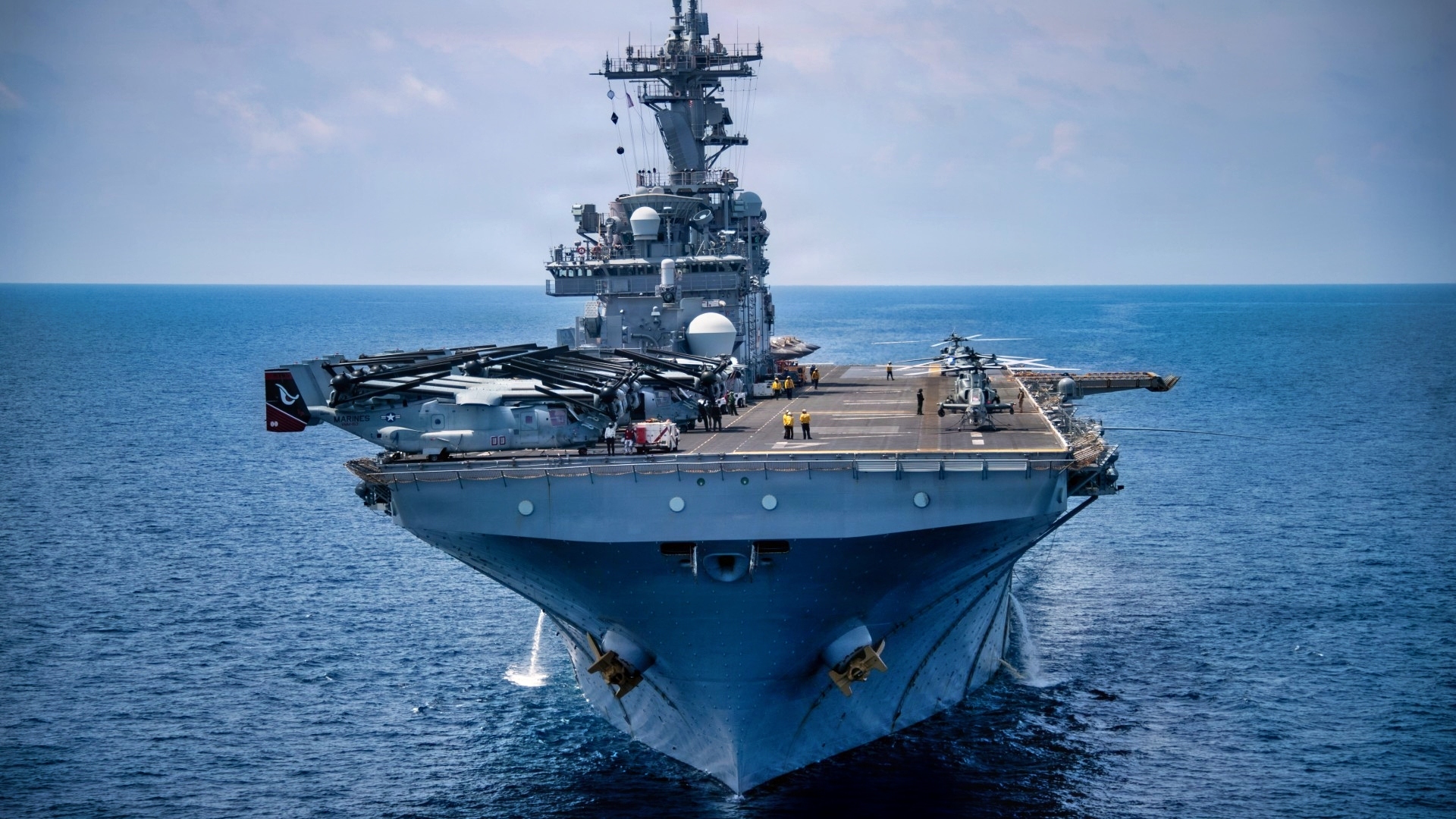
An F/A-18F Super Hornet Strike Fighter Squadron 103 is parked on the flight deck of the aircraft carrier USS Dwight D. Eisenhower (CVN 69) as the ship operates in the Arabian Sea on Dec. 5, 2006. The Eisenhower is in the Arabian Sea in support of maritime security operations.
Instead of relying solely on a small number of exquisite capital ships, the Navy is increasingly embracing a “high-low” mix designed to create greater mass, resilience, and distributed combat power—a shift consistent with broader combat trends.
Countering China
The Navy’s new plan exists to counter China, which now possesses the world’s largest navy by hull count. China is continuing to expand—at a pace the US will be hard-pressed to match.
Chinese shipyards produce both civilian and military vessels at an enormous scale, while US shipbuilding remains constrained by limited dry docks, workforce shortages, industrial bottlenecks, and lengthy construction timelines.
The Navy is increasingly aware that it cannot outbuild China in terms of traditional billion-dollar warships.
The 450
The Navy’s plan to expand to 450 ships does not mean 450 manned warships. Instead, the 450 will include a mixture of high and low vessels.
The high-end fleet will include 299 traditional manned vessels, such as aircraft carriers, nuclear submarines, guided-missile destroyers, and amphibious ships.
The low-end fleet includes 83 unmanned systems, like Unmanned Surface Vessels (USVs), Extra-Large Unmanned Undersea Vehicles (XLUUVs), autonomous sensor platforms, missile carriers, and electronic warfare assets.
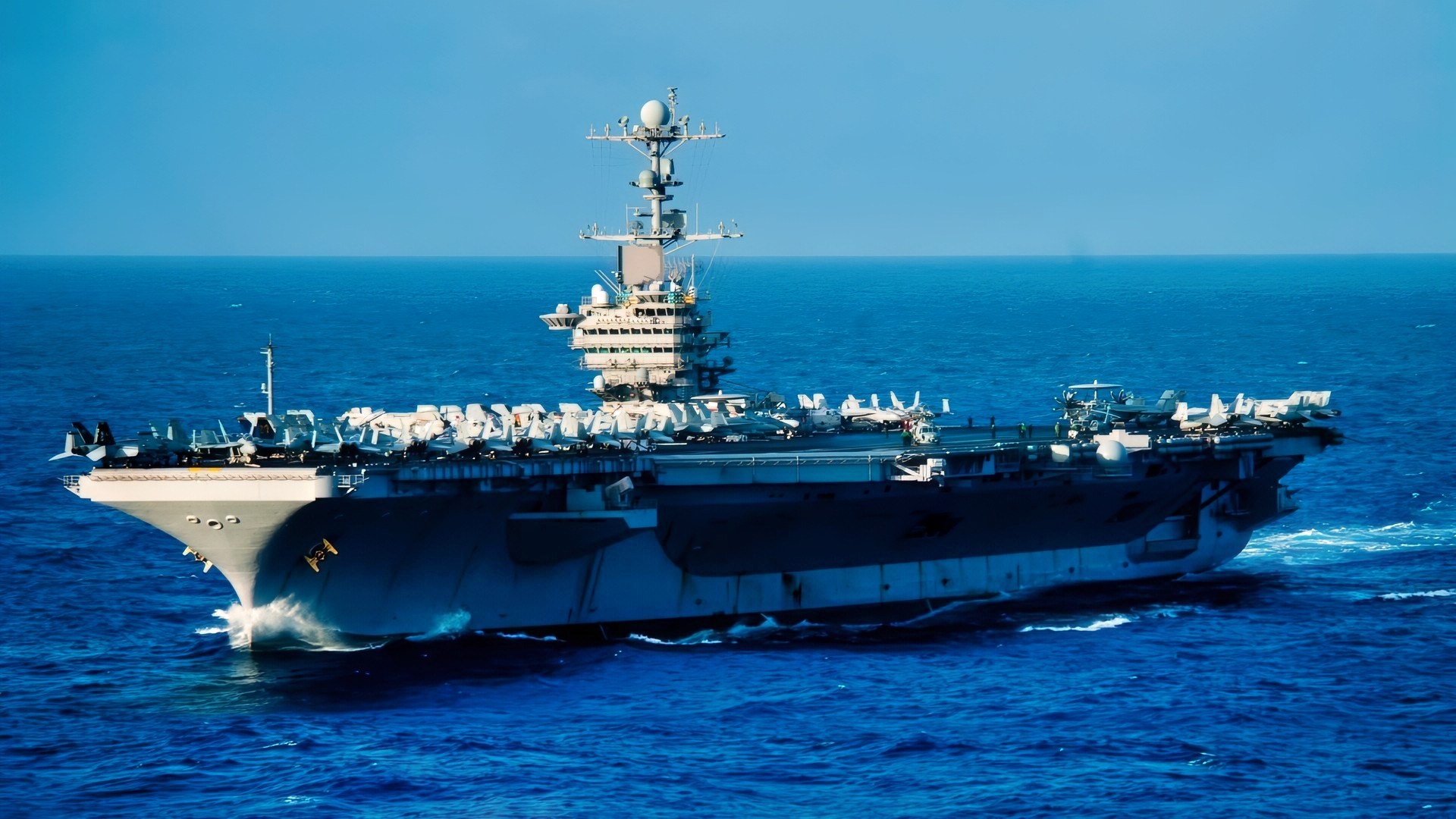
PACIFIC OCEAN (Feb. 9, 2012) The Nimitz-class aircraft carrier USS John C. Stennis (CVN 74) transits the Pacific Ocean. John C. Stennis is operating in the U.S. 7th Fleet area of responsibility while on a seven-month deployment. (U.S. Navy photo by Mass Communication Specialist 3rd Class Kenneth Abbate/Released)
The high-low shift is significant.
Previous doctrine emphasized fewer, larger, extremely capable ships.
The problem here was that every destroyer or cruiser cost billions and took years to build, meaning that every loss was strategically significant.
Instead, by fielding large numbers of cheaper autonomous vessels, the Navy unlocks more targets, more sensors, more missile launch points, and more operational redundancy—lessons learned from Ukraine and Iran.
The Manned vs. Unmanned Role
The expensive ships won’t disappear; they remain an integral part of the force structure.
But instead, they will serve modified roles, becoming command nodes, battle managers, long-range strike platforms, air-defense hubs, and submarine hunters.
In effect, carriers, destroyers, and other expensive platforms will be responsible for directing networks of autonomous platforms rather than doing every mission themselves.
Unmanned ships, meanwhile, will conduct missions like ISR, electronic warfare, decoys, mine warfare, anti-submarine surveillance, missile launch platforms, and communications relays.
Others may intentionally absorb enemy attacks.
They are, essentially, expendable. This high-low naval configuration mirrors trends in aerospace, where expensive platforms like the F-47 and F-35 will serve as quarterbacks for unmanned systems, like the CCA, which will perform delegated tasks.
Aimed at China
China has spent decades building an Anti-Access/Area-Denial (A2/AD) network intended to make operations near Taiwan extremely costly.
That network includes a large surface fleet, submarines, land-based missiles, aircraft, and integrated sensors. The concern is that concentrated American fleets have become lucrative targets, whereas distributed fleets will complicate Chinese targeting. In the old model, combat power was concentrated.
In the new model, sensors, shooters, and command are all spread across various nodes.
This forces an adversary to find and defeat dozens of nodes rather than a handful of major warships, the destruction of which would mark a multi-billion-dollar, multi-year setback.
The Industrial Angle
Another motivation for the shift is purely practical.
Traditional vessels are expensive, take years to build, and require complex supply chains. Smaller unmanned vessels are simpler, cheaper, faster—and have the potential to be built outside traditional naval shipyards.
The Navy is attempting to generate fleet mass despite industrial limitations.
The plan makes sense on paper—but it still faces significant obstacles. For starters, funding, which will require hundreds of billions over many years.
Other hurdles are technological, like autonomous navigation, secure networking, AI decision support, and cyber resilience. And of course, US industrial capacity remains a concern.
Ultimately, congressional support is required as well; long-term procurement will need to survive multiple administrations.
Regardless, the proposal reflects a broader recognition that warfare is trending towards cheap, distributed, and autonomous.
About the Author: Harrison Kass
Harrison Kass is a writer and attorney focused on national security, technology, and political culture. His work has appeared in Tablet, City Journal, The Hill, The Spectator, and The Cipher Brief. He holds a JD from the University of Oregon and a master’s in Global & Joint Program Studies from NYU. More at harrisonkass.com.


