
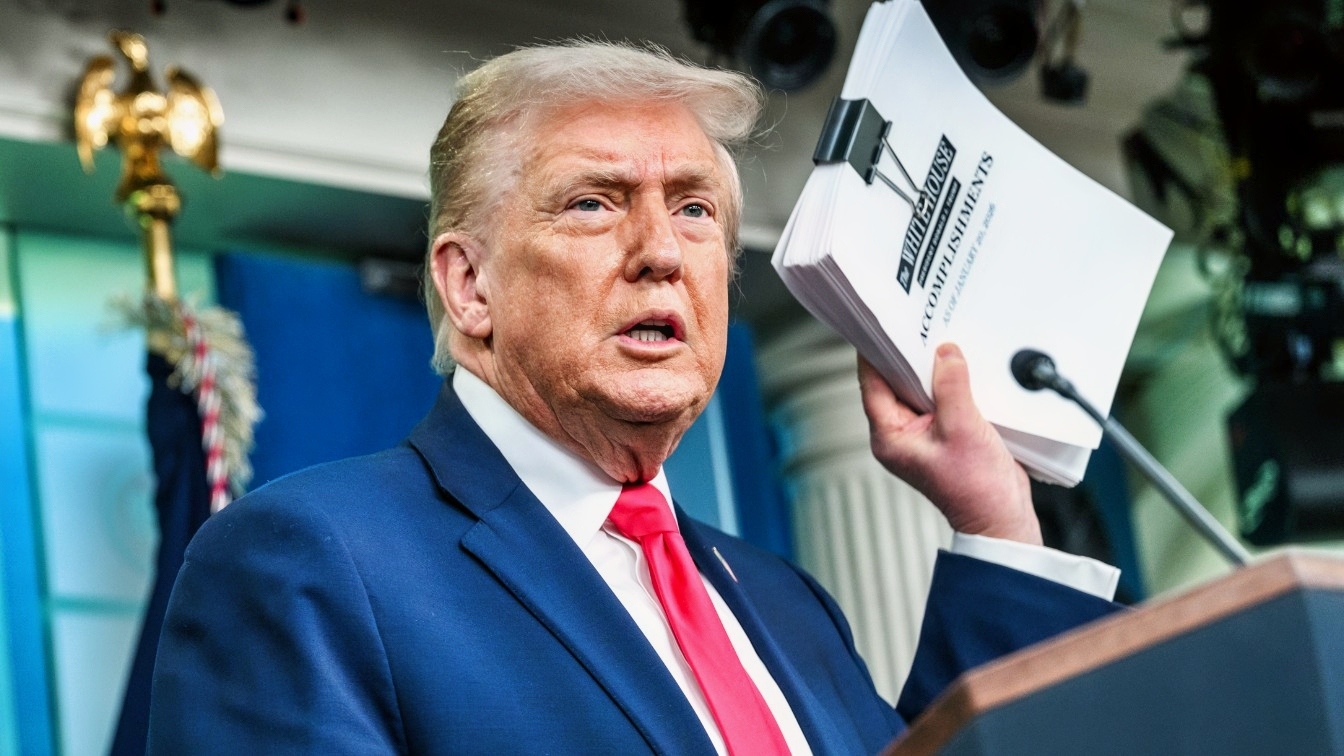
On Monday, June 22, Vice President JD Vance expressed optimism that a deal with Iran was possible, and outlined what he called a “lot of good progress.”
The comments came a day after the vice president was visibly snubbed by the Iranian delegation in Switzerland, who avoided handshakes and deliberately declined a planned photo opportunity with the negotiating teams present.

U.S. Senator J. D. Vance speaking with attendees at the 2023 Turning Point Action Conference at the Palm Beach County Convention Center in West Palm Beach, Florida. Image Credit: Gage Skidmore.
While Washington still believes – and hopes – a deal is possible, the chance it falls through is still high. And if the Strait of Hormuz is closed again, as Tehran claimed it was only days ago, the global economy could face dire consequences.
What Vance Said on Iran Talks
Speaking in Switzerland, the vice president described the day prior as a “very, very good day,” adding that the U.S. had done “exactly what we wanted to do.”
Vance also claimed that the Iranians had agreed to allow International Atomic Energy Agency (IAEA) inspectors back into the country, paving the way for future inspections of its nuclear facilities and sites.
“That is a major milestone for the American people. And the first step in permanently denuclearizing – permanently ending a nuclear weapons program in Iran,” Vance said.
The comments were optimistic, and somewhat jarring; after all, the Iranian delegation had threatened to walk away from the talks only a day earlier – and did, in fact, walk out of the peace talks before the end of the day.
Iranian officials even reportedly insisted that they would not continue to work with the United States unless U.S. President Donald Trump issued a personal apology for his most recent threats.
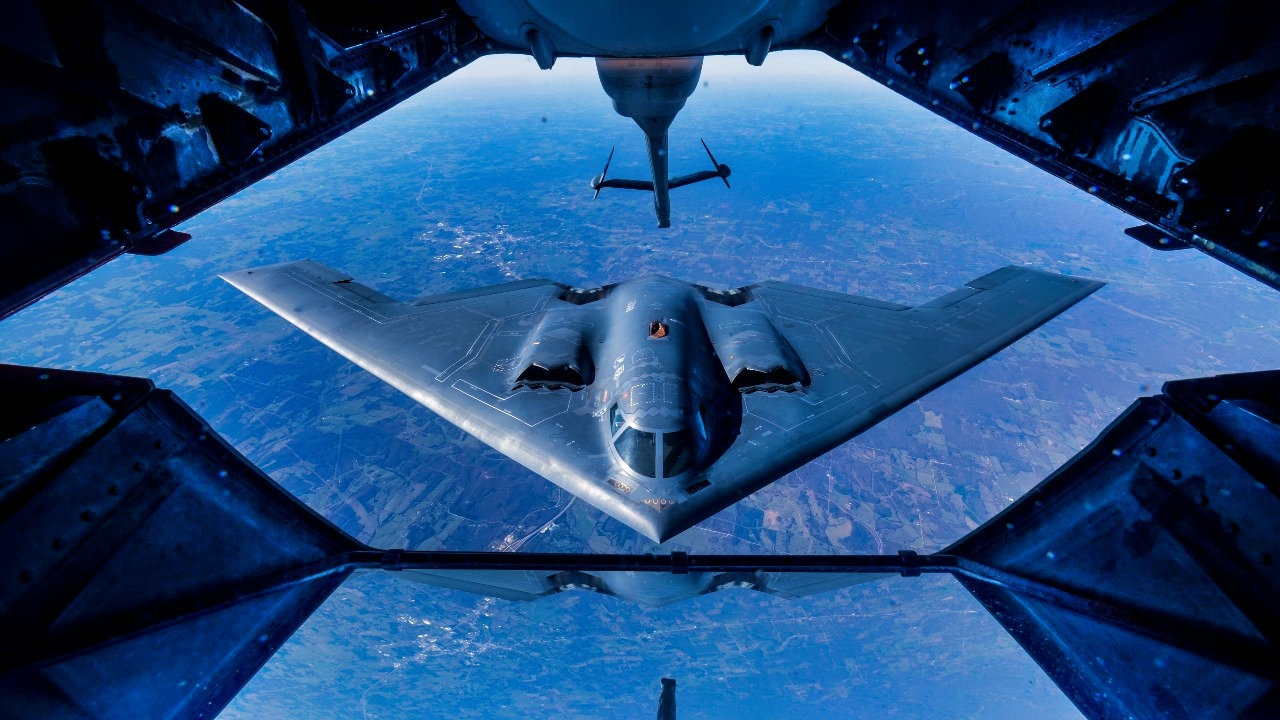
A 2nd Air Refueling Squadron KC-10 Extender from Joint Base McGuire-Dix-Lakehurst, N.J., prepares to refuel a B-2 Spirit, during a training exercise near Kansas, Nov. 10, 2016. The KC-10 Extender is an Air Mobility Command advanced tanker and cargo aircraft designed to provide increased global mobility for U.S. armed forces. Although the KC-l0’s primary mission is aerial refueling, it can combine the tasks of a tanker and cargo aircraft by refueling fighters and simultaneously carry the fighter support personnel and equipment on overseas deployments. (U.S. Air Force photo by Senior Airman Keith James/Released)
Where We Stand Now
Last week, Iran claimed that the Strait of Hormuz was once again closed, following renewed strikes between Hezbollah and Israel.
The United States, however, insists it remains open. After agreeing to a 60-day ceasefire, which opened the Strait of Hormuz, the Islamic Revolutionary Guard Corps (IRGC) claimed on Saturday, June 20, that the Strait of Hormuz was closed to commercial traffic.
In a social media post, however, President Donald Trump contradicted the claims, saying that no toll would be charged for passing through the strait over the next sixty days.
U.S. Central Command also said that 55 merchant ships had moved through the strait that very day.
The announcement of the memorandum of understanding’s signing had an immediate impact on global energy markets.
On June 15, the day the agreement was announced, Brent crude fell by more than 7% as traders bet that the risk of a prolonged conflict in the region had eased.
Global leaders expressed confidence that the Strait of Hormuz would remain open for the foreseeable future and that Washington could negotiate a deal within 60 days.
Prices dropped from around $89 per barrel to approximately $83 per barrel within hours of the announcement, and in the days that came after, oil continued to fluctuate.
What If A Deal Fails?
There is no guarantee that a deal will be made over the next sixty days – or even at all.
President Trump himself told reporters recently that the sixty-day deadline set by the memorandum of understanding matters less to him than whether Iran is “behaving,” while regime officials have indicated time and time again that Iran is less interested in negotiations than it is in “victory.”
That means talks could still drag on for months, creating prolonged uncertainty for global markets.
If negotiations collapse entirely, however, the consequences could be severe.
Roughly one-fifth of the world’s oil supply passes through the Strait of Hormuz, and a sustained closure will further disrupt exports from Saudi Arabia, Iraq, Kuwait, the United Arab Emirates, and other producers across the Gulf.
It would mean that China would continue to draw from its reserves, the United States would be forced to choose between continuing to export oil from its reserves to Asia, and economies dependent on Gulf oil would continue to compete for alternative supplies.
Oil prices will surpass $100 again, and could begin to reach the worst-case predictions of $150 to $200 per barrel by the end of summer – and after that, all bets are off.
An Oil Crisis Is Probably Coming
That oil crisis could well be coming, too, as Iranian Foreign Ministry spokesman Esmaeil Baqaei contradicted claims made by Vice President Vance on Monday, telling reporters that the regime had “accepted no new commitments.”
Baqaei also specifically denied that the two sides had discussed the nation’s nuclear program.
Once again, the United States and Iran are making very different public statements.
Washington may well be publicly optimistic, but recent history shows that such optimism means nothing.
After all, the public celebration of the signing of the memorandum of understanding was quickly undercut by renewed strikes in Lebanon and the closing of the Strait of Hormuz.
At this rate, an oil crisis is probably coming.
About the Author: Jack Buckby
Jack Buckby is a British researcher and analyst specializing in defense and national security, based in New York. His work focuses on military capability, procurement, and strategic competition, producing and editing analysis for policy and defense audiences. He brings extensive editorial experience, with a career output spanning over 1,000 articles at 19FortyFive and National Security Journal, and has previously authored books and papers on extremism and deradicalization.


