


The fuel shortages set off by Ukraine’s drone campaign against Russian refineries have spread to the far edges of the country, reaching Siberia and the Pacific coast thousands of miles from any fighting.
By late June, more than half of Russia’s regions were limiting gasoline sales, turning a war aimed at oil refineries near the front into a nationwide problem at the pump. The shortages have now reached even the regions that produce much of Russia’s oil, where drivers wait in line for fuel, a situation their own government helped create.

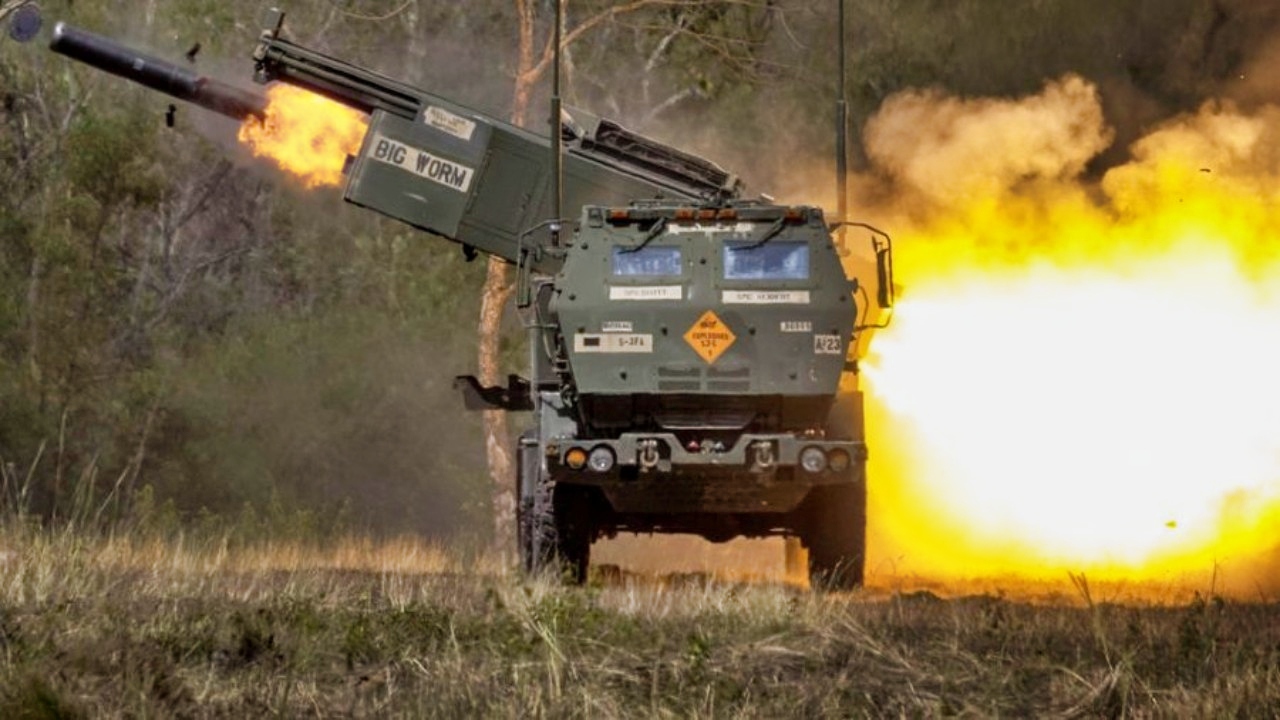
HIMARS Rocket. Image Credit: Creative Commons.
Fuel Rationing Reaches Siberia And The Far East
The scale is striking. As of late June, at least 55 of Russia’s 83 federal regions were reporting restrictions on gasoline or diesel sales, either mandatory limits set by officials or caps imposed by the private chains that run the stations, according to a tally by RFE/RL, which attributed the scarcity mainly to the widening campaign of Ukrainian strikes on refineries, pipelines, and oil terminals.
In Irkutsk, deep in eastern Siberia, the governor capped purchases at 50 liters per vehicle per day at state-run Rosneft stations and shifted to what he called a manual mode, with authorities setting fuel volumes for each recipient by hand.
Private networks in Irkutsk and neighboring Tomsk had already begun limiting sales.
Farther east, in Primorsky Krai on the Pacific coast, the price of AI-92 gasoline climbed to 130 rubles ($1.75) per liter and diesel to 150 rubles ($2) per liter, with one cheaper station drawing constant lines.
In the southern Siberian republic of Tyva, which borders Mongolia and has no railways, leaving every delivery to arrive by truck, prices were the highest in the country at around 90 rubles ($1.21) per liter, and stations were refusing to sell, reserving what they had for emergency services.
Authorities in Yakutia, Krasnoyarsk, and the Kamchatka peninsula banned filling jerrycans, and the oil-and-gas hub of Sakhalin introduced what it called preventive rationing in the northern Kuril Islands.
HIMARS. Image Credit: U.S. Government.
The clearest sign of how the crisis spreads came from Novosibirsk, where the governor said the region had no shortage of its own but restricted sales anyway because its neighbors already had, a precaution against panic-buying jumping across regional lines.
Oil-Rich Regions Without Gasoline
The sharpest irony is that some of the regions running short are the ones that pump Russia’s crude.
The Khanty-Mansi Autonomous District in western Siberia, one of the world’s largest oil-producing regions and the source of roughly 40 percent of Russia’s oil, imposed limits at several gas stations this week.
A resident of an oil town there told an independent outlet that the situation made no sense, saying the region was “up to our ears in oil” while wells were being shut for lack of storage, yet there was no gasoline at the pumps.
In Tatarstan, home to the major producer Tatneft, authorities began rationing after a June 12 Ukrainian strike on Tatneft’s Taneco refinery, which pushed the company to limit purchases at its stations nationwide and triggered panic-buying.
The pattern points to the real bottleneck. Russia has no shortage of crude oil, but crude is not what goes into a car.
The fuel shortage is a refining problem, and refining is exactly what Ukraine has been targeting, which is why a country awash in oil cannot keep gasoline flowing to its own gas stations.
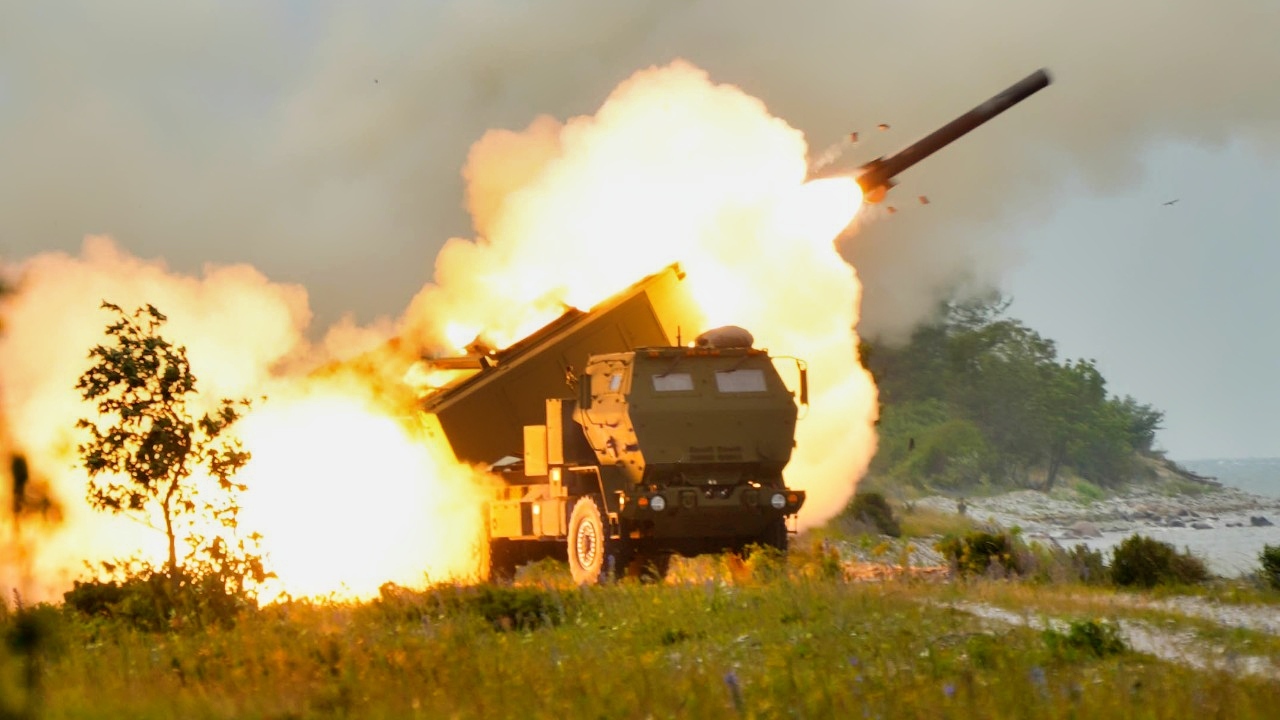
An Estonian Defense Forces M142 High Mobility Artillery Rocket System (HIMARS) fires a training rocket during a live-fire exercise in Undva, Estonia, July 11, 2025. U.S. Army elements from Bravo Battery, 1st Battalion, 14th Field Artillery Regiment, 75th Field Artillery Brigade, supporting Task Force Voit, assisted in the training process. The task force was originally formed in 2023 to support the Estonian Defense Forces in the creation of a HIMARS unit. Task Force Voit works closely with the Estonian Armed Forces, sharing critical defense strategies, training, and military readiness support. The presence of U.S. troops in the region serves as a cornerstone of NATO’s commitment to security in the Baltic region. The task force provides combat-credible forces to V Corps, America’s only forward-deployed corps in Europe. (U.S. Army photo by Staff Sgt. Rose Di Trolio)
What Is Driving It
The strikes are the major cause, though not the only one. Reuters reported that Russia’s gasoline output fell by roughly 25 percent in early June as refineries were knocked offline, and the largest supplier to the Moscow region, the Kapotnya refinery, is expected to stay down through at least the end of 2026.
That lost refining capacity is the engine of the shortages spreading across the country.
Russian officials have offered other explanations alongside the strikes. Regional authorities have attributed the restrictions to a mix of logistical difficulties, rising demand, and rising prices, and some have blamed sellers for exploiting panic buying.
Sakhalin’s officials insisted their Kuril Islands rationing was preventive and not tied to an actual shortage, with the next delivery due within a week. Seasonal demand, refinery maintenance schedules, and Western sanctions on equipment also play a role in Russia’s fuel market.
The evidence supports the conclusion that the drone campaign is the dominant factor driving a manageable market into a nationwide squeeze, even if it is not the sole one.
The shortages are serious but not a collapse. Russia remains one of the world’s top oil exporters; the limits are caps and lines rather than empty pumps everywhere, and the government is importing fuel and reshuffling exports to ease the strain.
The reach is what stands out. A drone war fought on Ukraine’s borders has put 50-liter limits on gas pumps in Siberia and emptied stations on the Pacific coast, part of the broader campaign Ukraine has waged to make the war felt deep inside Russia.
Vladimir Putin acknowledged the fuel deficit for the first time over the weekend, but with refineries from Moscow to Tatarstan still being hit, the lines forming in Irkutsk, Tyva, and Primorsky show how far from the front this war now reaches.
About the Author: Harry J. Kazianis
Harry J. Kazianis (@Grecianformula) was the former Senior Director of National Security Affairs at the Center for the National Interest (CFTNI), a foreign policy think tank founded by Richard Nixon based in Washington, DC. Harry has over a decade of experience in think tanks and national security publishing. His ideas have been published in the NY Times, The Washington Post, The Wall Street Journal, CNN, and many other outlets worldwide. He has held positions at CSIS, the Heritage Foundation, the University of Nottingham, and several other institutions related to national security research and studies. He is the former Executive Editor of the National Interest and the Diplomat. He holds a Master’s degree focusing on international affairs from Harvard University.


