

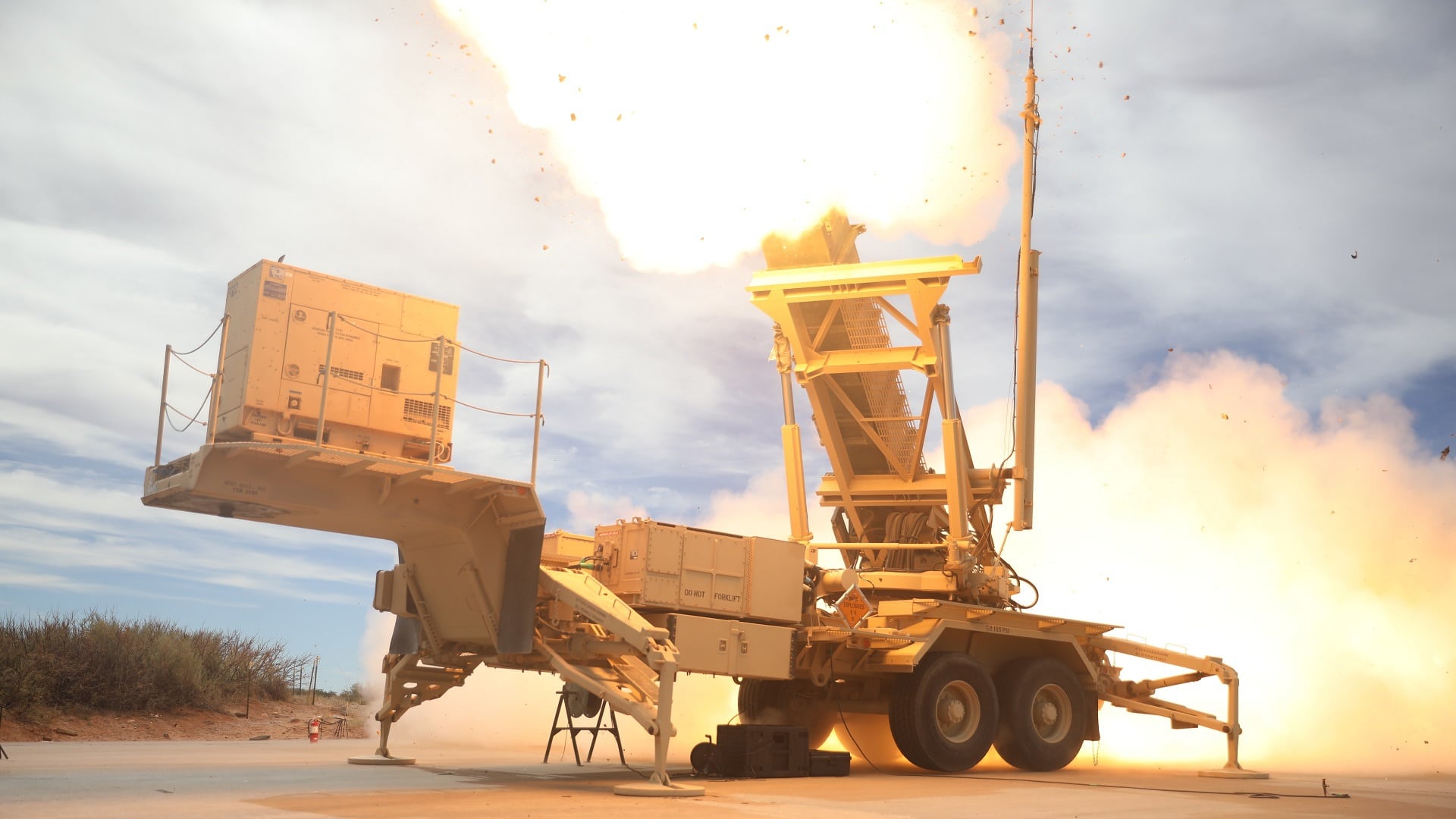
There continues to be confusion about just what weapon Ukraine fired at Moscow on Tuesday, 30 June, during a missile alert. Russia’s Defense Ministry (MoD) has claimed that Ukraine used a ballistic missile in an attack on Moscow for the first time, although the model and type of missile remain to be identified.
In the MoD Thursday daily briefing, the Russia briefer stated that Moscow’s air defenses had intercepted what it called a “long-range operational-tactical missile” within the past 24 hours. That missile was part of a combined attack that included 7 guided aerial bombs and 602 fixed-wing drones, as Bloomberg and other outlets have reported.
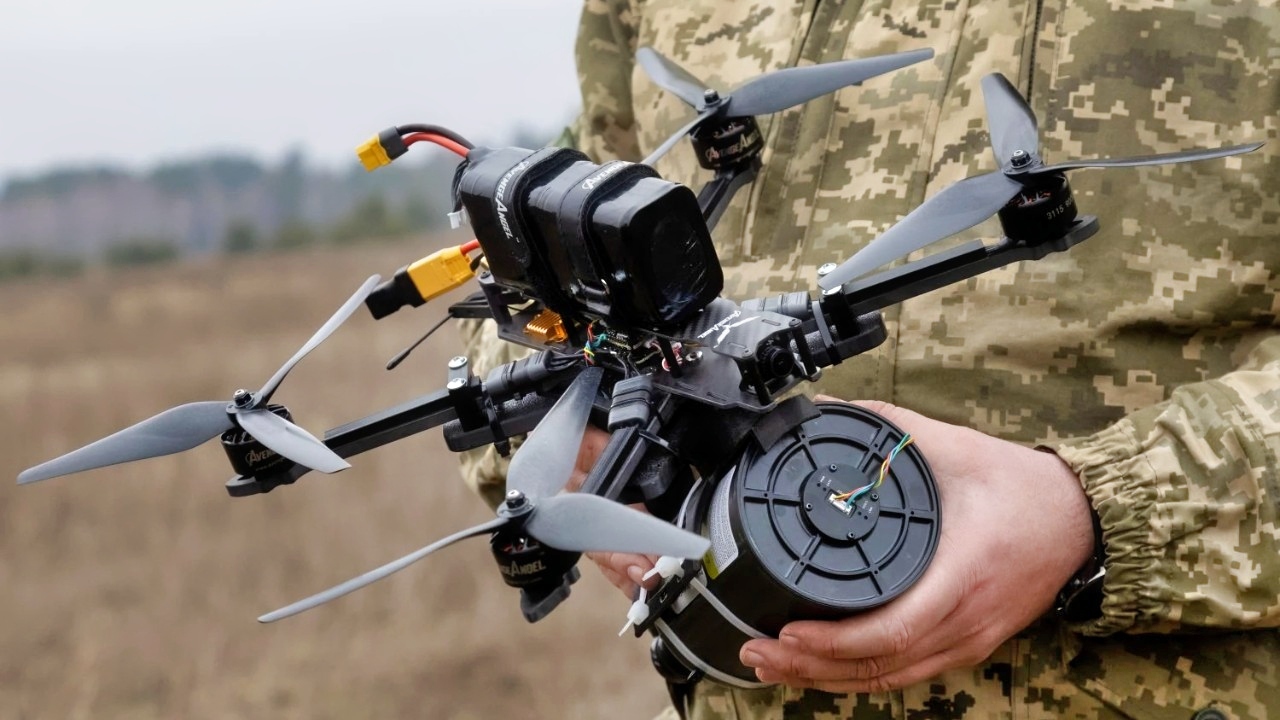
Ukraine Drone. Image Credit: Creative Commons.
If the reports are accurate, this would mean that Ukraine has acquired a dramatic improvement in its ability to conduct long-range strikes against Russian targets. The Russian MoD provided no specifics as to the type of missile the Ukrainians launched or any other details. It also appears, as of this writing, that the ministry may now have deleted this official statement from all official Russian channels.
Unofficial sources, such as the Russian military blog Voyennyy Osvedomitel (Military Informer) Telegram channel, claimed a Ukrainian ballistic missile may have been shot down in the Moscow region during the 30 June missile alert. According to Voyennyy Osvedomitel, one of the Almaz-Antei S-300/S-400 air defense batteries deployed to protect the region had engaged a target “at a high altitude.”
Moscow Questions: What Made This Crater?
The Telegram channel further described the engagement profile as unusual for a drone or cruise missile and noted that a large crater had been created by the intercepted object. It said that the possibility that this was a Ukrainian ballistic missile could not be ruled out, but added that the available evidence was entirely indirect.
The Ukrainian OSINT group CyberBoroshno later geolocated a crater near the village of Yudanovka in Moscow Oblast, along the Warsaw Highway corridor that runs southwest of Moscow. This site is located deep inside Russian territory, which has made it one of the main data points indicating the intercepted object was a ballistic missile.

Shahed Drone from Ukraine. Image Credit: Creative Commons.
Given the impact area’s distance from Ukraine and its reported characteristics, it is assessed that a drone would not have been large enough or traveling fast enough to create a crater of these dimensions and depth. “It is not excluded that this could have been the interception of a Ukrainian ballistic missile,” the channel wrote.
There has also been footage showing a smoke plume and a column of smoke near the presumed crash site, plus footage showing what is purported to be the missile’s intercept that was also published by the Ukrainian monitoring channel Exilenova+
On 1 July, the Russian MoD did not confirm that the Yudanovka crater was caused by the missile it says was intercepted. It also did not confirm that the weapon was ballistic.
However, the phrase “long-range operational-tactical missile” used in the Ministry’s statement is worth noting, as it is different from the terminology used in typical Russian official references to Ukrainian drones, guided bombs, HIMARS rockets, or cruise missiles.
A Possible Ukraine Test Firing
Other pro-Russian Telegram channels, including Pora Domoj and Pozuvnoy OSETIN, have also speculated that the object could have been a test firing of the Ukrainian-developed FP-9 ballistic missile, previously announced by Fire Point.
“Nobody has transferred such [ballistic] missiles to Kyiv and is unlikely to do so. At the very least, there would have been rumors about it. The only missile they could have used is the FP-9, which is still under development,” one of the Telegram channels claimed.
Fire Point chief designer and co-owner Denys Shtilyerman has since denied that the missile intercepted was the company’s FP-9 heavy ballistic missile. That missile was only supposed to complete its test program at the end of the summer months in 2026, and that battlefield testing would only occur in the autumn.
Ukrainian defense outlets report Shtilyerman calling out the FP-9 engine as the remaining major developmental hurdle – and one that remained unresolved. This makes any unusually long-range ballistic incident near Moscow an even greater mystery.
So, just what exactly did Russian air defenses engage over Moscow Oblast this past week?
About the Author: Reuben F. Johnson
Reuben F. Johnson has thirty-six years of experience analyzing and reporting on foreign weapons systems, defense technologies, and international arms export policy. Johnson is the Director of Research at the Casimir Pulaski Foundation. He is also a survivor of the Russian invasion of Ukraine in February 2022. He worked for years in the American defense industry as a foreign technology analyst and later as a consultant for the U.S. Department of Defense, the Departments of the Navy and Air Force, and the governments of the United Kingdom and Australia. In 2022-2023, he won two awards in a row for his defense reporting. He holds a bachelor’s degree from DePauw University and a master’s degree from Miami University in Ohio, specializing in Soviet and Russian studies. He lives in Warsaw.


