
Why Ukraine and Russia Can’t Agree On This Donetsk City: Russia claimed on Friday, July 3, that its forces had captured the strategically important city of Kostiantynivka, located in eastern Ukraine. President Vladimir Putin described the industrial city as a “key transport and large industrial center of Donbas” – but within hours of the Russian leader making the claim, Kyiv was mocking it. Ukrainian President Volodymyr Zelenskyy rejected the announcement entirely, dismissing it as “another Russian lie,” and insisted that Putin should meet him there if he really believes he has taken control of the city.
The claim is significant. If Moscow has indeed captured Kostiantynivka, it is a convenient victory at a time when Russian gains on the front lines are slowing dramatically and becoming more difficult and costly to achieve by the day. It would be the biggest Russian territorial gain in months and bring its forces closer to Ukraine’s remaining strongholds in Donetsk. But if Ukraine’s account of what happened is accurate, it could suggest that the Kremlin is attempting to claim a symbolic victory before it has actually been decided on the battlefield.

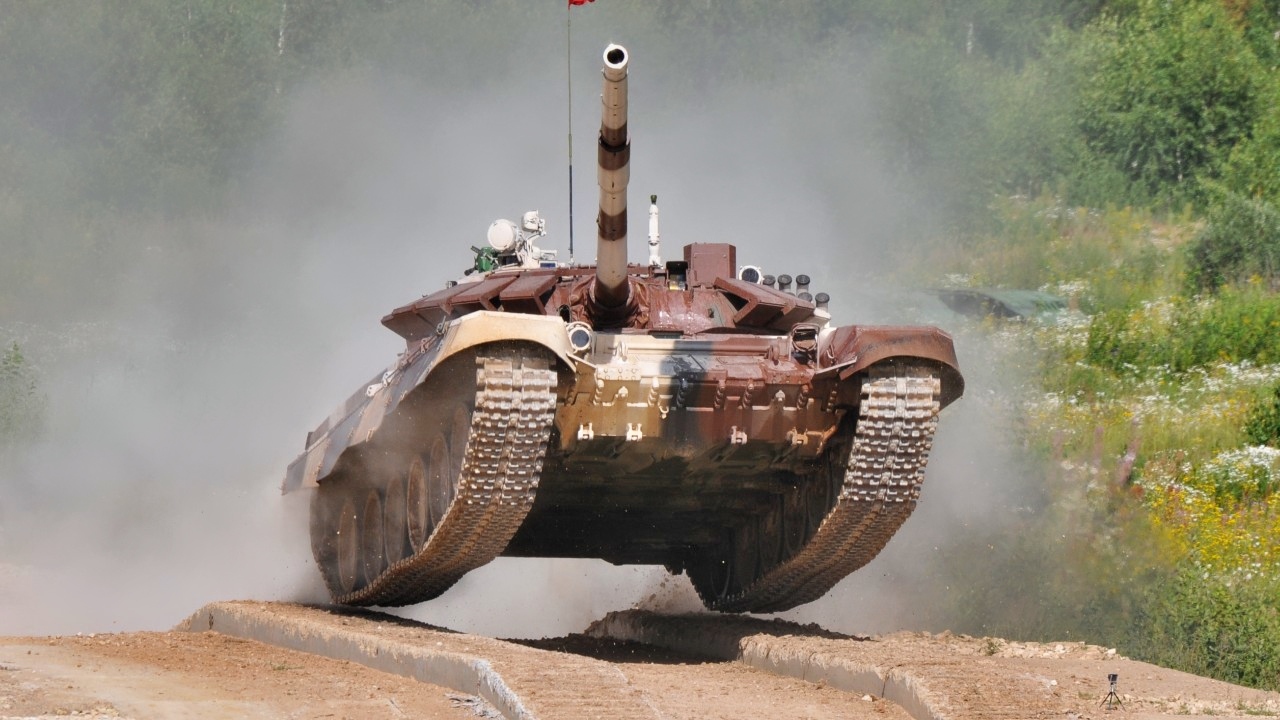
Tim Murry, a foreign threats compound contractor, drives a T-72 battle tank into position to serve as adversary targets for a joint service exercise, Emerald Flag, at Eglin Air Force Base, Fla., Nov. 30. Emerald Flag is a multi-service exercise aimed to unify information sharing across joint domain platforms. (U.S. Air Force photo/1st Lt Karissa Rodriguez)
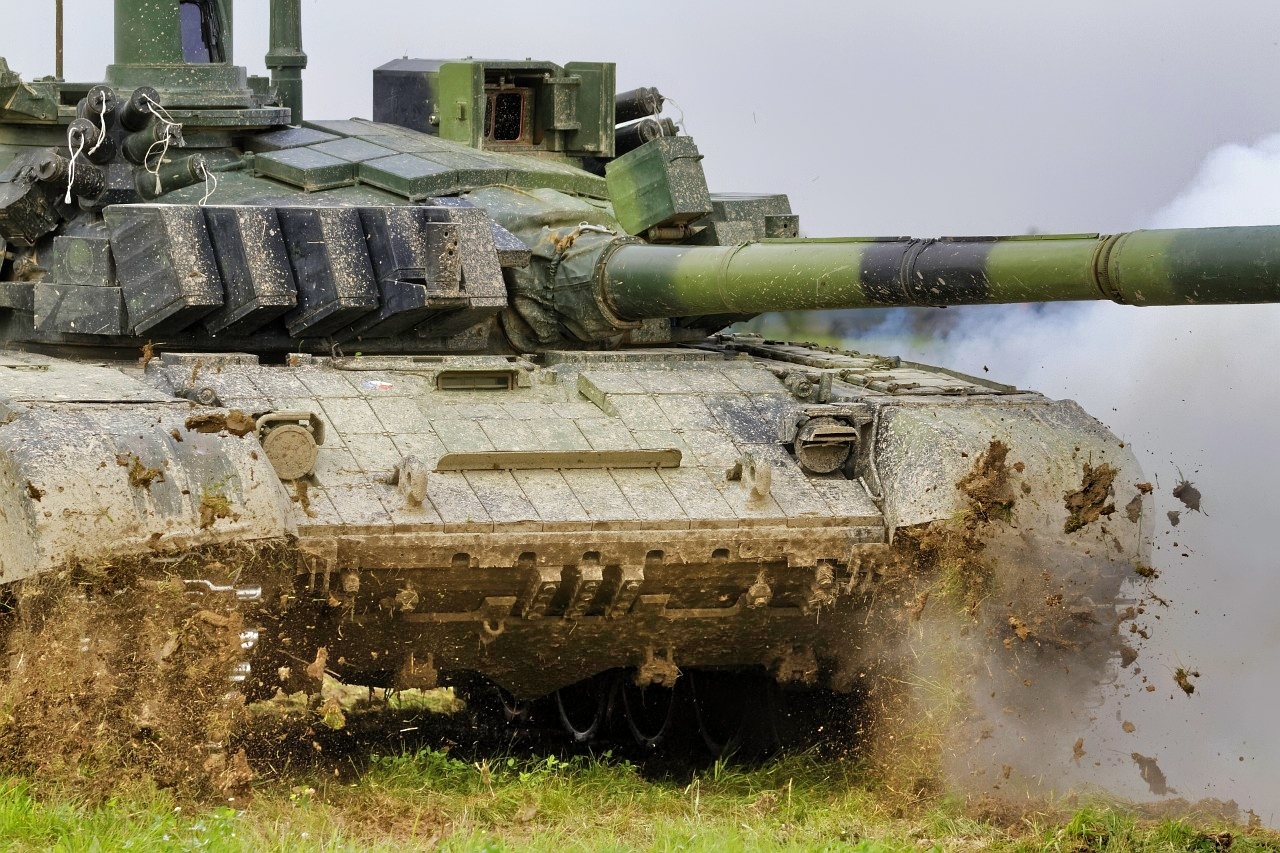
T-72 Tank. Image Credit: Creative Commons.
What Russia Claimed
Russia made the claim on Friday, July 3, during a military briefing for President Vladimir Putin. Gen. Valery Gerasimov, the Russian chief of the General Staff, told the Russian president that his troops had taken control of Kostiantynivka in Donetsk Oblast.
Gerasimov said that Russia’s southern grouping was continuing operations to seize the rest of the Donetsk region, stating, “the troops of the group have liberated the city of Kostiantynivka, one of the main defensive hubs of the enemy within the Sloviansk-Kramatorsk-Kostiantynivka fortified area.”
A Telegram statement issued by the Russian Defense Ministry sought to prove its claim with photographs of the town with Russian troops holding up flags. Behind them, buildings were visibly destroyed.
Putin, who was visiting an undisclosed location on the front lines for the first time in around six months, described the capture as a major achievement. The Russian president also claimed that his forces had taken control of 133 settlements and more than 3,000 square kilometers across Novorossiya and Donbas since the beginning of the year.
Russia continued to double down on the claim, with a statement from its Ministry of Defense announcing plans to carry out “humanitarian” work in the region.
“With the liberation of the city of Kostiantynivka by Russian troops and the establishment of full control over it, the Russian side is ready to carry out a humanitarian action to hand over the bodies of deceased Ukrainian servicemen in this settlement,” a Telegram statement reads.
The same statement also said that Moscow was proposing a six-hour ceasefire around the town that would permit the exchange of bodies.
Zelenskyy Says Otherwise
Ukraine immediately rejected the claim. On Saturday, July 4, President Volodymyr Zelenskyy took to social media to publicly deny the claim.
“Of course, that is not true. It is just another Russian lie, an attempt to generate some kind of a news story,” the Ukrainian president said on social media platform X.
Zelenskyy went on to challenge Putin to meet him in the region if he believed that Russian forces were in control.
“If Kostiantynivka were under Russian control, then perhaps [Russian President Vladimir] Putin would have no problem meeting me there to find a diplomatic way to finally end this war,” he said.
Zelenskyy’s comments were also supported by Ukraine’s military leadership. In a statement issued on the same day, the General Staff of the Armed Forces of Ukraine said that Russia’s claims of full control were false and that Ukrainian troops are continuing to defend the city against invaders.
“Military units and subunits of the 19th Army Corps of the Eastern Grouping continue to conduct defensive operations on designated lines within the town and on its approaches,” an official statement reads.
Why Kostiantynivka Matters
It should come as no surprise that Ukraine is pushing back – or, indeed, that Russia may be exaggerating at a time when it needs every victory it can get. Kostiantynivka has been one of the most strategically important locations for Russia to seize during its campaign in Donetsk Oblast. The city is part of Ukraine’s heavily fortified defensive belt that runs through Sloviansk, Kramatorsk and Druzhkivka. That belt has prevented Russian forces from taking full control of the region since the early days of the invasion, and if Russian forces have indeed taken control, it is a significant development in the war – even if Russian gains are slowing more broadly.
The city is also an important rail and road hub. Much like Crimea serves as a logistics hub for Russian operations in the south, Kostiantynivka is used by Ukrainian forces to move troops, ammunition, supplies, and equipment between defensive positions across eastern Ukraine. If Russia were to establish full control over the city, it would not only remove one of Ukraine’s primary defensive strongholds, but also place Moscow in a much stronger position as it advances toward Kramatorsk and Sloviansk – the largest Ukrainian-held cities in Donetsk today.
About the Author: Jack Buckby
Jack Buckby is a British researcher and analyst specializing in defense and national security, based in New York. His work focuses on military capability, procurement, and strategic competition, producing and editing analysis for policy and defense audiences. He brings extensive editorial experience, with a career output spanning over 1,000 articles at 19FortyFive and National Security Journal, and has previously authored books and papers on extremism and deradicalization.


phil lindsey
July 7, 2026 at 6:13 am
Russian troops have been geolocated on the western edge of the city, satellite imagery shows Russian troops and equipment in all regions of the city and Russian flags are flying throughout the city.
Zelenskyy is ‘getting high on his own supply’ again.