
Russian Missile Barrage Kills 20 Ahead of NATO Summit: Russia launched one of its largest missile and drone barrages of the year overnight into Monday, killing at least 20 people in and around Kyiv. The strikes also damaged dozens of residential buildings and lent weight to Ukrainian President Volodymyr Zelenskyy’s argument that Ukraine desperately needs more air defense interceptors. The strikes took place just a day before a NATO summit in Ankara.
The attack also follows public warnings from the Ukrainian president that intelligence indicated Russia was preparing another major strike ahead of his planned meeting with U.S. President Donald Trump during the NATO summit.

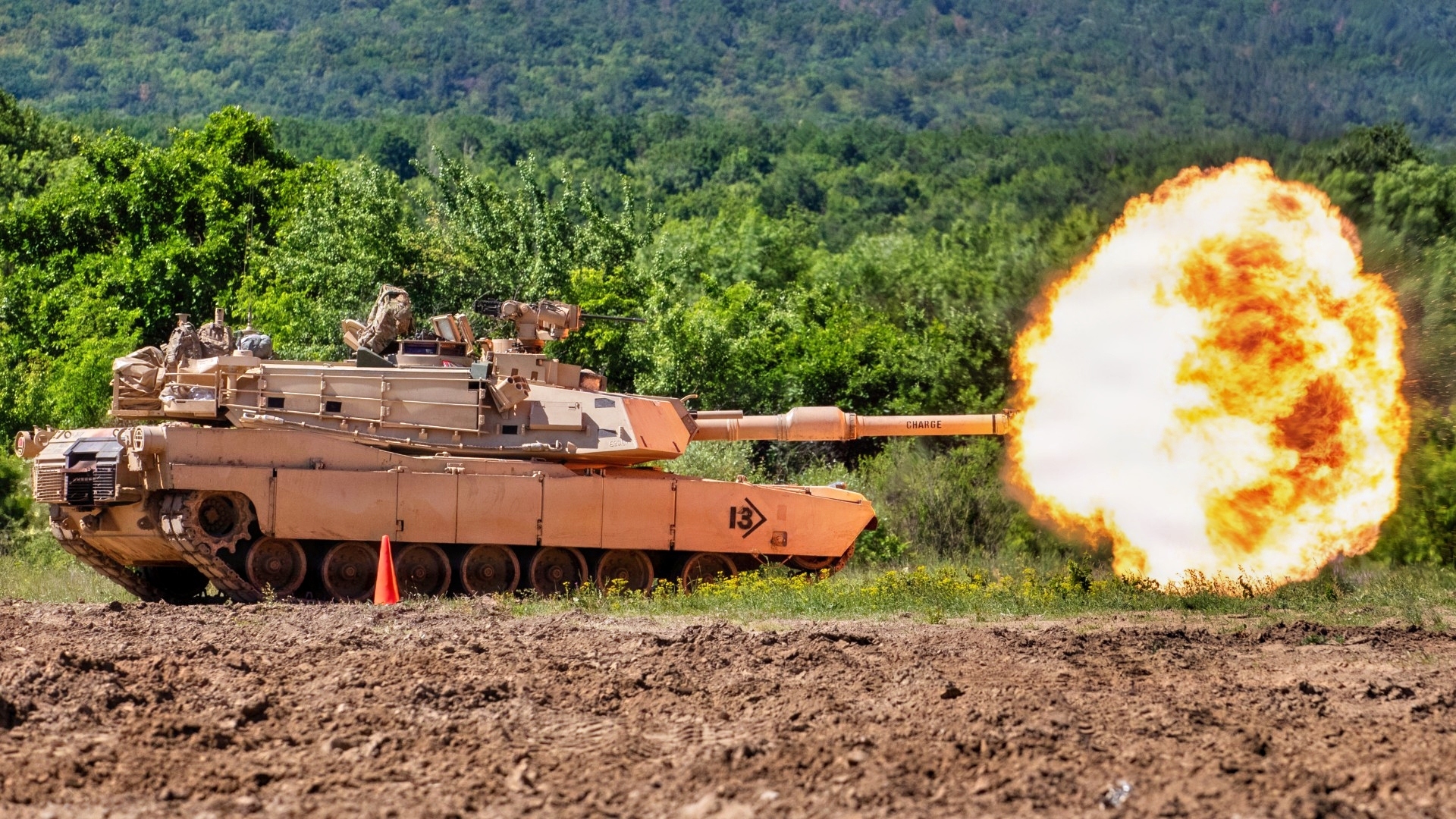
A U.S. Army M1A2 SEPv2 Abrams assigned to Alpha Company, 1st Battalion, 67th Armor Regiment, 3rd Brigade Combat Team, 1st Armored Division prepares to move off the live fire range after completing the day portion of Table VI Tank Gunnery conducted at McGregor Range, New Mexico, Sept. 29, 2023. Gunnery Table VI evaluates crews on engaging stationary and moving targets while utilizing all weapons systems in offensive and defensive positions, ensuring our crews are trained and ready for any mission. (U.S. Army photo by Spc. David Poleski)
What Happened Overnight in the Ukraine War
According to Ukraine’s Air Force, Russia launched 68 missiles and 351 drones during the overnight assault, specifically targeting Kyiv but also reaching a number of surrounding regions. Ukraine says that the attack killed at least 14 people in the capital, with another six people killed in areas surrounding the capital city.
Dozens more were reportedly injured, and emergency crews continued to search through the debris around collapsed apartment buildings and damaged homes into Monday afternoon.
Kyiv City Military Administration chief Tymur Tkachenko said that rescue operations were ongoing and that the casualty figures were likely to rise.
“Unfortunately, this is not the final information,” Tkachenko said.
According to The Kyiv Independent, the first explosions were heard at approximately 1:40 am local time, with additional waves of strikes arriving over the following two hours. As sirens sounded across the capital, thousands of residents sought shelter in underground bunkers and metro stations.
It was the second major assault on Kyiv in less than a week and comes as Ukraine ramps up its announced 40-day, long-range strike campaign against Russian targets. The previous Kyiv strike killed 31 people in what Ukrainian officials described as the deadliest attack on the capital this year.

U.S. Marine Corps M1A1 Abrams tank provides suppressive fire against simulated insurgents during day 18 of the Integrated Training Exercise 13-1 at Twentynine Palms Marine Corps Base, Calif., Jan 22, 2013. The ITX is the training exercise that Marines come to prior to deploying. (U.S. Air Force photo by Staff Sgt. Stephany Richards)
Zelenskyy Issued A Warning
Just hours before Russia launched the overnight barrage, President Volodymyr Zelenskyy publicly warned that Ukrainian intelligence had detected preparations for another major Russian attack. Speaking during his nightly video address on Sunday, July 5, the Ukrainian leader urged civilians to remain vigilant and said that the timing of the expected strike was likely intended to send a political message ahead of this week’s NATO summit.
“Intelligence once again indicates that the Russians are preparing a new massive strike. This is in Putin’s spirit: right after America’s Independence Day and before the NATO Summit in Ankara. Russia wants to bring more evil and kill people. Please stay safe and heed any air raid alerts,” Zelenskyy said.
The Ukrainian president also used the address to push for additional Western air-defense systems and interceptors – particularly Patriot interceptors. He argued that delays in supplying the systems were directly costing Ukrainian lives.
“Separately, to partners: any delay with missiles for our air defense – missiles for Patriots – means the loss of lives, and it encourages Russia to continue the war. The world has the necessary quantity and quality of air defense,” Zelenskyy said.
“What is needed are your decisions to ensure real protection of lives in Ukraine. Above all, these are, of course, decisions by the United States, decisions by the strong countries in Europe and around the world. Please be active in your decisions and protect lives. Missiles for Patriots are needed not in warehouses right now, but in Patriot units in Ukraine. I thank everyone who is providing real help.”
All Eyes On NATO
The strikes came a day before NATO leaders gather in Ankara, Turkey, for the alliance’s annual summit, which will take place on July 7 and 8. The summit will be held at the Beştepe Presidential Complex and is set to bring together the heads of state and government of all 32 NATO member countries, as well as NATO Secretary General Mark Rutte and senior European Union officials. Ukraine will also be in attendance, with President Zelenskyy expected to attend as a partner nation leader. Zelenskyy is expected to meet with U.S. President Donald Trump on the sidelines of the summit.
The White House has also confirmed that the two leaders will discuss the situation on the battlefield as well as new efforts to bring the war to an end diplomatically. It comes after President Trump spoke personally with the leaders of Russia and Ukraine over the weekend.
For Kyiv, the summit is an important diplomatic opportunity – arguably the biggest of the year, in fact. Zelenskyy will use it as a chance to press allies for more Patriot air defense systems and interceptor missiles, after warning that Ukraine’s existing supplies are running dangerously low. The Monday barrage against Kyiv, which included dozens of ballistic missiles, only proves Zelenskyy’s point: Ukraine needs more interceptors to neutralize Russian efforts to overwhelm Ukrainian air defense systems with large-scale combined attacks on its biggest cities.
About the Author: Jack Buckby
Jack Buckby is a British researcher and analyst specializing in defense and national security, based in New York. His work focuses on military capability, procurement, and strategic competition, producing and editing analysis for policy and defense audiences. He brings extensive editorial experience, with a career output spanning over 1,000 articles at 19FortyFive and National Security Journal, and has previously authored books and papers on extremism and deradicalization.


