

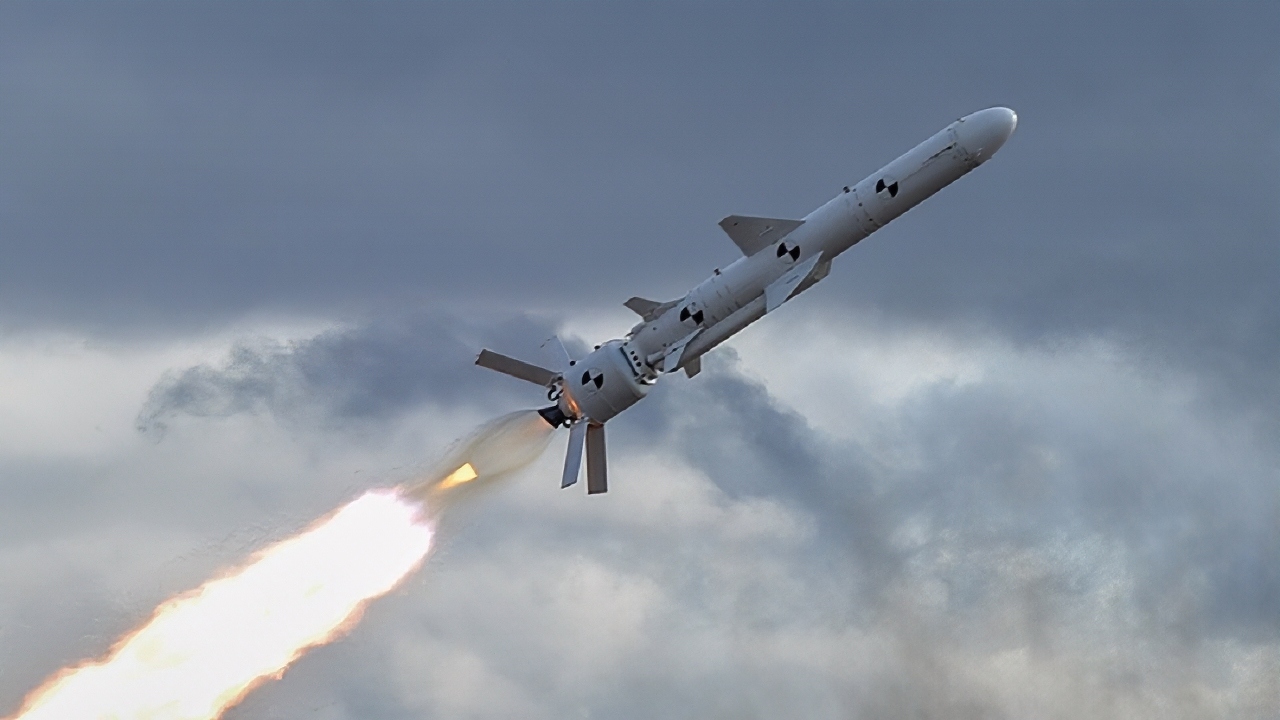
On Monday, 6 July, the Ukrainian military announced its drones had hit Russia’s largest oil refinery, which is located in the city of Omsk. This city is in the western region of Siberia, which makes this one of the deepest attacks on Russian territory since the full-scale invasion of Ukraine in February 2022. NASA satellites also recorded multiple heat plumes indicating intense fires at the facility on Monday evening.
Ukraine’s Special Operations Forces (@SOF_UKR) reported that they struck the Omsk oil refinery despite it being nearly 2,500 km (1550 miles) from Ukraine’s border. That Ukraine can now hit targets in Russia at this range is proof positive that there is no site or facility or military base in all of Russia that is safe from Ukraine’s attacks.
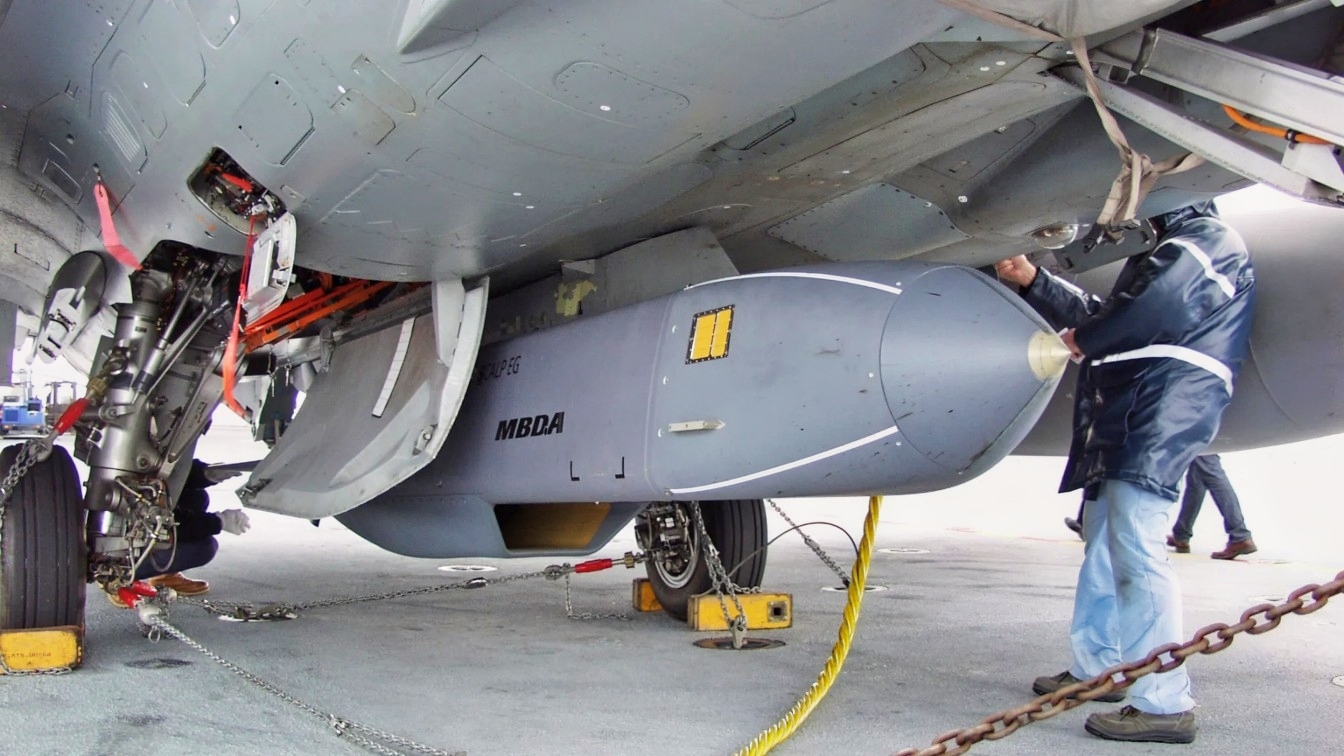
SCALP Missile Ukraine Military Photo
In conversations over the past two months with now-retired US intelligence officials and Ukrainian defense enterprises, the subject of Omsk came up regularly.
It was always described as something along the lines of the Holy Grail of Russian oil industry targets – and once it was proven it could be attacked, this would be a watershed moment in Ukraine’s long-range strike campaign.
“I keep watching Omsk and thinking that once they [the Ukrainians] hit this facility that it will be one of those red-letter days of this war,” said one long-time intelligence official who has spent years analyzing the then-Soviet – and later the Russian–oil industry. It has not been reported in much detail, but this giant oil refinery is not only critically important to the Russian economy in general but also to some of Moscow’s higher-priority military formations.
The Last Of The Big Oil Facility Targets
Omsk was also being described as the last untouched target out of Russia’s largest petrol producers. It is Russia’s highest-capacity refinery and processes more than 21 million tons of oil per year. This is equivalent to 460,000 barrels of oil daily last year, which is enough to supply all the Russian military units that are operating on seized and occupied Ukrainian territory.

Putin Back in 2016 Image Credit Russian Federation
“This is the last of the 11 largest gasoline producers in the Russian Federation that Ukrainian soldiers have struck. It is the most powerful oil refining enterprise in the Russian Federation (over 21 million tons per year) and specializes in the production of a wide range of fuels, lubricants, and petrochemical products,” said the statement from the Ukraine General Staff.
“The plant has one of the highest oil refining depth indicators in the Russian Federation (about 99 percent). The refinery produces high-octane motor gasolines (AI-92, AI-95, G-Drive 100), diesel fuel of the ‘Euro-5’ class, and aviation kerosene (grades TS-1 and RT). It is also a producer of benzene, paraxylene, and orthoxylene, specialized products and lubricants, raw materials for carbon black, motor and industrial oils,” reads the rest of the General Staff statement.
Simultaneously, Ukraine’s Unmanned Systems Forces also hit several other oil industry targets, including two Russian shadow fleet tankers in the Sea of Azov. These two ships were carrying a combined 7,000 metric tons of fuel to occupied Crimea, according to the Unmanned Systems Commander Robert “Madyar” Brovdi. This volume of fuel is the equivalent of nearly 200 rail tank cars, according to Brovdi.
Say Welcome to the New FP-1
This attack on the Omsk site is likely to have been carried out using a newly modified version of the Fire Point FP-1 drone, which has been used in numerous high-profile attacks recently. The company’s co-owner and chief designer, Denis Shtilyerman, explained that this new modification of the long-range variant FP-1 differs from the original in several respects.
Outwardly, the drone now has a new trapezoidal wing, with a straight leading edge and a trailing edge that tapers toward the wingtip. When flying at cruising speed, the wing shape provides less drag and distributes lift more evenly across the entire wing surface. This also reduces fuel consumption and extends the vehicle’s range.
Internally, the new wing also now functions as a fuel tank. This will now increase the usable volume for the explosive payload inside the drone’s fuselage. This internal wing space is large enough that it can be used both as an additional fuel tank and to increase the payload capacity.
Shtilyerman made note of how this new modification of his design has had a major impact in the war on Russian oil. On his X page, he wrote: “The Omsk Refinery welcomes the new FP1!”
“We are doing everything to ensure that Russia pays every day for its crimes. While the enemy shells peaceful Ukrainian cities, its military and fuel infrastructure will continue to suffer significant losses,” SBU chief Yevhenii Khmara said in his announcement of the attack on Omsk and other oil industry sites.
About the Author: Reuben F. Johnson
Reuben F. Johnson has thirty-six years of experience analyzing and reporting on foreign weapons systems, defense technologies, and international arms export policy. Johnson is the Director of Research at the Casimir Pulaski Foundation. He is also a survivor of the Russian invasion of Ukraine in February 2022. He worked for years in the American defense industry as a foreign technology analyst and later as a consultant for the U.S. Department of Defense, the Departments of the Navy and Air Force, and the governments of the United Kingdom and Australia. In 2022-2023, he won two awards in a row for his defense reporting. He holds a bachelor’s degree from DePauw University and a master’s degree from Miami University in Ohio, specializing in Soviet and Russian studies. He lives in Warsaw.


diver_night
July 7, 2026 at 10:20 am
Awesome, Putin takes another one on the chin.
lars
July 7, 2026 at 11:15 am
NATO and Russia are using the Ukraine war to test and develop new types of warfare mostly drones and drone defense. Every mistake and attack is a new lesson learned.
Michael Eiford
July 7, 2026 at 11:59 am
Much like Spain prior to WWII. The WarMachine always does this.