

Ukraine launched several dozen drones at Moscow on Tuesday night, marking the ninth consecutive night of strikes in the Russian capital city.
Moscow’s four major airports, Domodedovo, Sheremetyevo, Vnukovo, and Zhukovsky, all experienced delays or disruptions, and an oil refinery complex was struck.
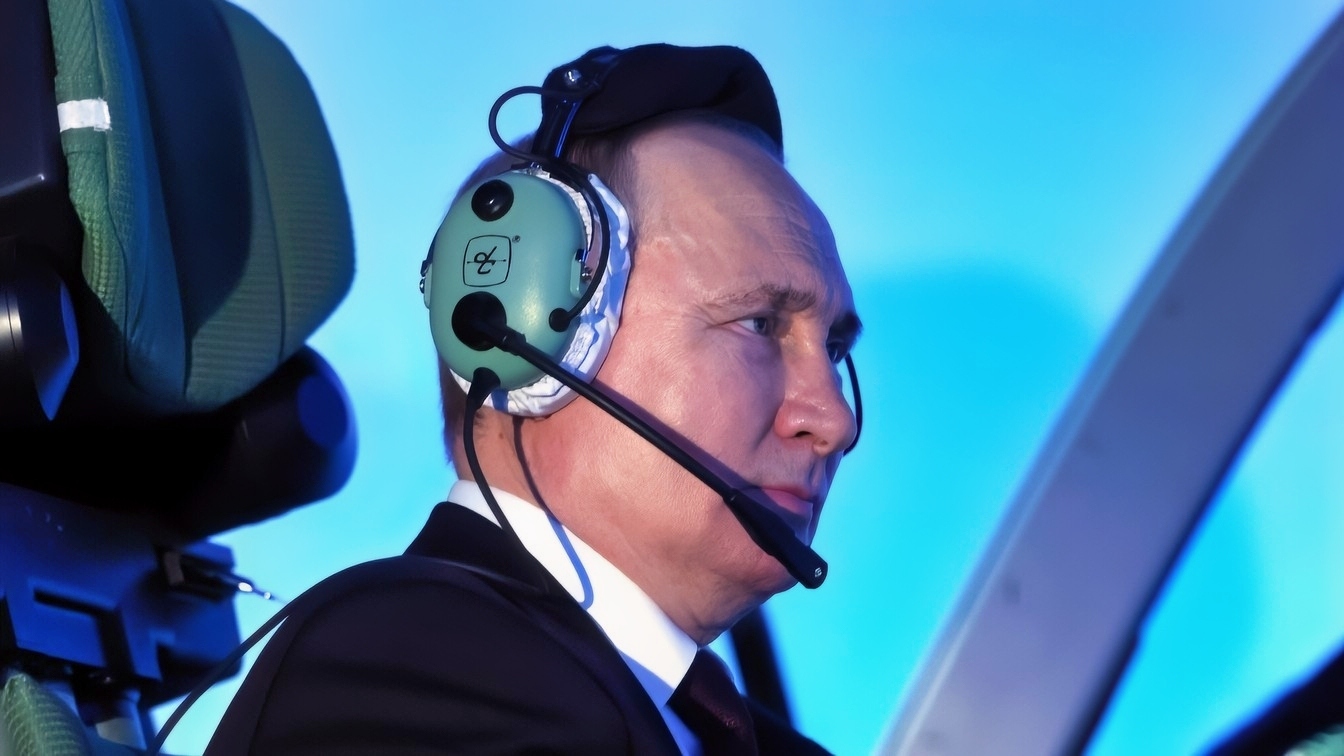
Putin In Airplane Simulator Russian Government Photo
Posting to his Telegram channel, Moscow mayor Sergey Sobyanin explained that “twenty-five unmanned aerial vehicles have been destroyed by the Ministry of Defense’s air defense system.
Emergency response teams are working at the crash site.”
“Over the past 24 hours, enemy drones have continued to attack Moscow,” the mayor added. “One of the drones damaged a facility on the grounds of the Moscow Refinery.
There were no casualties. Emergency services are working at the scene.”
Videos posted to social media showed clouds of black smoke billowing from a Russian state-owned oil refinery in the Moscow region.
Close to 90 Ukrainian drones were reportedly downed or disabled by Russian air defenses.
Long-range Sanctions
The ongoing Ukrainian strike campaign is part of what Ukrainian President Volodymyr Zelensky has dubbed his country’s “long-range sanctions” regime.
The plan, which has seen home-grown Ukrainian drones and cruise missiles pummel targets throughout Russia, aims to squeeze the Russian economy and bring the war in Ukraine more vividly alive to the Russian population.
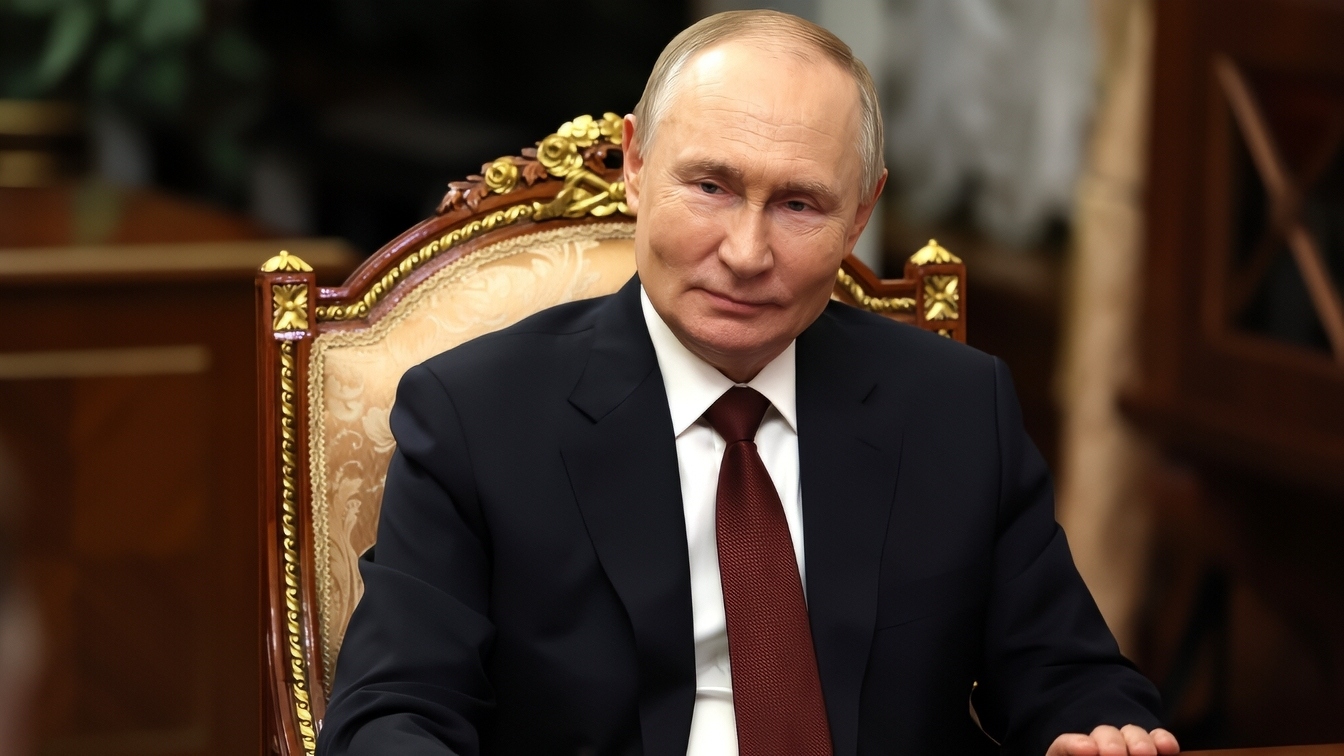
Putin in a Meeting. Russian Federation Photo.
Posting to his X account, President Zelensky explained that “Our long-range sanctions… have yielded good results.”
Though Russia gained a small windfall thanks to the war in Iran and the subsequent spike in oil prices, the ongoing strikes by Ukraine against Russian oil and gas infrastructure have dented the Kremlin’s ability to finance its war.
By itself, Ukraine’s long-range sanctions regime might not be enough to end the war — but for the first time since the 2023 Ukrainian counteroffensive, which culminated with the liberation of Kherson and the ejection of Russian forces west of the Dnieper River, Ukraine is liberating parts of the country.
Ukrainian Strikes Increasing in Size, Sophistication
According to Moscow Mayor Sobyanin, Russia has intercepted or disabled more drones in 2026 than in all of 2025.
Many of Ukraine’s long-range drone strikes have seen Russia’s oil refinery and transportation infrastructure under pressure.
Against the backdrop of parts of Moscow burning, President Zelensky met with the leaders of the G7 countries at Evian-les-Bains, in France, where the Ukrainian leader appealed for additional pressure on Russia to find an end to the war.
Exchanging Fire
Russia launched nearly 120 drones of several kinds against Ukraine overnight on Tuesday, with several landing on targets within the country.
In a post to its Telegram channel, the Ukrainian Air Force explained that of the 119 UAVs launched by Russia, 97 were intercepted or jammed — an interception rate of nearly 82 percent.
Russia’s Declining Advantage in Manpower
While Russia’s population dwarfs that of Ukraine, the distinct recruitment advantage enjoyed by Russian forces appears to be on the wane, with recruitment reportedly down by a fifth this year already.
Tempted by incredibly high cash sign-on bonuses, lucrative post-service benefits, including preferential mortgage and university applications, as well as generous debt relief for veterans, Moscow has managed to keep its ranks filled.
But that advantage seems to be dissolving.
As much as eighty-plus percent of Russian casualties are inflicted by explosive-laden FPV drones, and they have seemingly managed to keep pace with Russian recruitment numbers.
But as Russia struggles to attract more recruits, Ukrainian pressure seems to be enjoying a period of relative success.
According to Western intelligence reports, half a million Russian troops have died in Ukraine, with hundreds of thousands of others wounded or left Russia to escape recruitment.
Consequently, Russia is in the throes of one of the most severe labor shortages it has faced in recent memory, as the private sector cannot compete with the high wages offered by the Russian Ministry of Defense.
Though Russian President Vladimir Putin has avoided a second round of mobilization, the current trajectory of the war could force a reckoning: either a partial, shadow mobilization or a readjustment of its war aims to something more modest.
About the Author: Caleb Larson
Caleb Larson is an American multiformat journalist based in Berlin, Germany. His work covers the intersection of conflict and society, focusing on American foreign policy and European security. He has reported from Germany, Russia, and the United States. Most recently, he covered the war in Ukraine, reporting extensively on the war’s shifting battle lines in the Donbas and writing about its civilian and humanitarian toll. Previously, he worked as a Defense Reporter for POLITICO Europe. You can follow his latest work on X.


